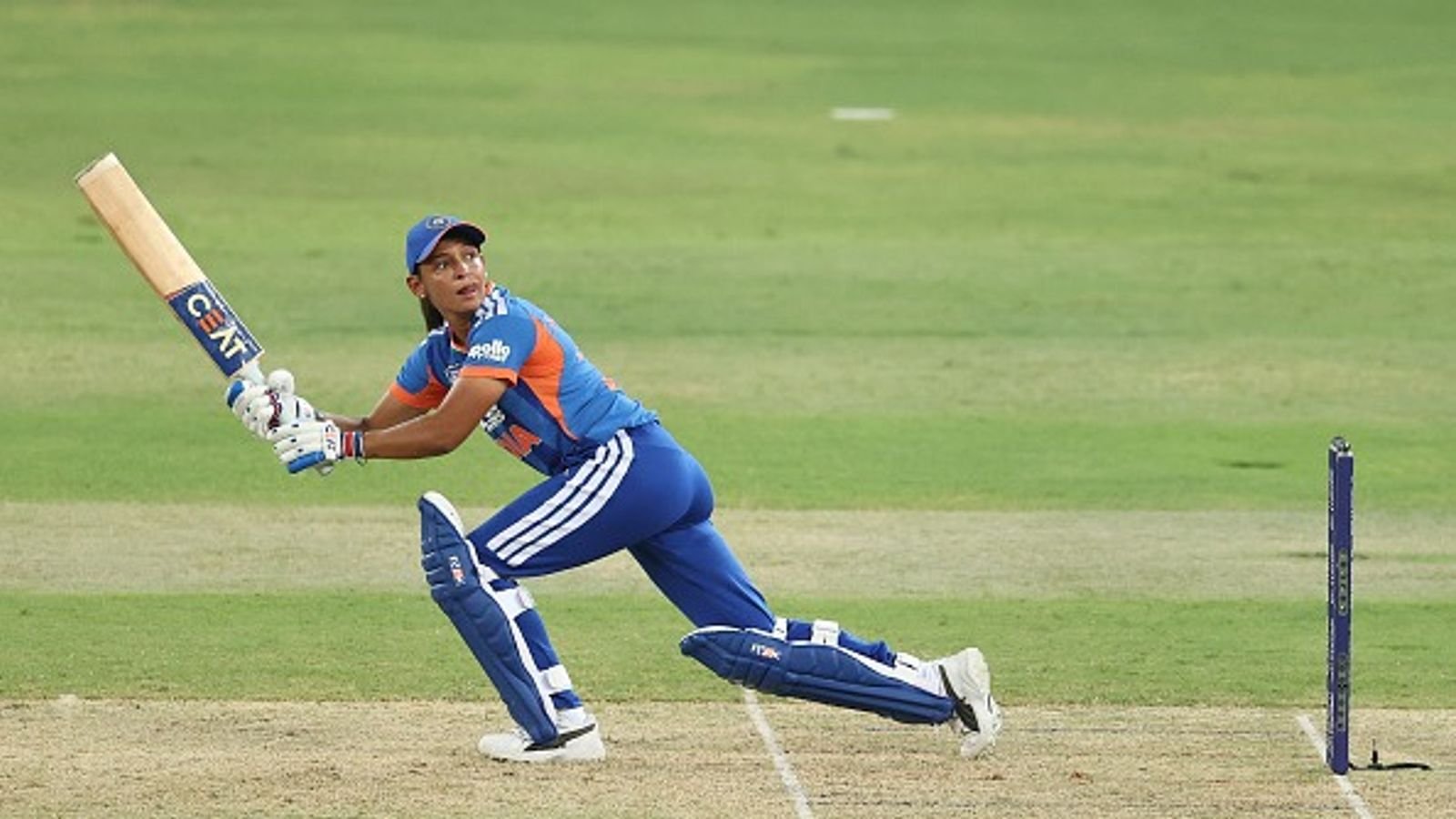
Harmanpreet Kaur T20I captaincy record reached a remarkable milestone on September 5, 2026, when the India captain walked out for the Women’s Asia Cup clash against Pakistan in Dubai. The landmark appearance made her the first player in international T20 cricket, across both men’s and women’s cricket, to captain a team in 150 T20I matches.
The achievement represents more than a numerical milestone. It reflects an extraordinary period of longevity at the highest level of the shortest international format. Harmanpreet had already established herself as one of the defining figures in India’s women’s cricket history, and the 150-match captaincy mark adds another major achievement to her career.
Before the Pakistan game, Harmanpreet had led India in 149 T20Is and had registered 86 outright victories. Her latest appearance pushed her captaincy tally to 150 and placed her comfortably ahead of the leading captains in women’s T20I cricket.
Harmanpreet Kaur Becomes the First 150-Match T20I Captain
The significance of Harmanpreet’s achievement becomes clearer when the numbers are compared with the leading captains from around the world.
Sri Lanka’s Chamari Athapaththu was the second-highest among women’s T20I captains with 121 matches. Rwanda’s Marie Bimenyimana had captained 101 T20Is, while Australia’s former captain Meg Lanning had reached 100.
Harmanpreet therefore entered the Pakistan fixture with a substantial lead over her closest competitors. Reaching 150 as captain is particularly remarkable because captaincy itself requires a player to remain a regular selection option over an extended period.
| Player | Team | T20Is as Captain |
|---|---|---|
| Harmanpreet Kaur | India | 150 |
| Chamari Athapaththu | Sri Lanka | 121 |
| Marie Bimenyimana | Rwanda | 101 |
| Meg Lanning | Australia | 100 |
No Men’s T20I Captain Has Reached 100 Matches
Harmanpreet’s record becomes even more striking when the women’s and men’s lists are considered together.
No men’s T20I captain had reached the 100-match mark at the time of Harmanpreet’s 150th captaincy appearance. Namibia’s Gerhard Erasmus led the men’s list with 91 matches as captain, followed by Rwanda’s Clinton Rubagumya with 90.
That means Harmanpreet’s record is not merely the highest among women. It is a benchmark across the entire international T20I game.
| Men’s T20I Captain | Team | T20Is as Captain |
|---|---|---|
| Gerhard Erasmus | Namibia | 91 |
| Clinton Rubagumya | Rwanda | 90 |
The gap between Harmanpreet’s 150 and the leading men’s mark of 91 highlights the extraordinary length of her captaincy journey in the format.
Her Leadership Record Goes Beyond Appearances
Reaching 150 matches would be significant on its own, but Harmanpreet’s record also includes a substantial number of victories.
She entered the Pakistan match with 86 outright wins from her previous 149 matches as captain. That record underlines the competitive success India has enjoyed during her leadership tenure.
Captaincy in T20 cricket requires rapid decision-making. Unlike longer formats, there is limited time to recover from tactical errors. Bowling changes, field placements, batting orders and matchups can influence the outcome within a handful of deliveries.
Maintaining a successful record while leading for such an extended period therefore requires more than individual talent. It requires adaptability as teammates, opponents, coaching staff and playing conditions change.
Harmanpreet Has Also Made a Major Contribution With the Bat
Harmanpreet’s importance to India has never been restricted to leadership. She has also contributed significantly with the bat throughout her captaincy career.
Before the Pakistan contest, she had accumulated 3,301 T20I runs as captain, placing her second on the all-time list for women’s T20I captaincy run-scorers.
That combination of leadership and batting responsibility makes her milestone particularly notable. She has not simply been a captain selected for her tactical experience; she has remained an important contributor to India’s batting lineup.
The dual responsibility can also make longevity more difficult. A captain who is expected to perform with the bat must manage the mental demands of leadership while maintaining personal performance standards.
Harmanpreet’s Place in India’s T20I Story
India’s women’s T20I journey has developed significantly over the years, and Harmanpreet has been one of its most recognisable figures.
Her career has spanned different generations of Indian players, meaning she has experienced changes in playing styles, coaching approaches, tournament structures and the growing popularity of women’s cricket.
The evolution of T20 cricket has also increased the tactical demands placed on captains. Modern teams increasingly rely on specialised roles, matchup-based bowling and aggressive batting strategies.
Harmanpreet’s ability to remain a central figure through these changes is a major part of the significance behind the 150-match milestone.
India vs Pakistan Provides a Fitting Stage for the Record
The milestone arrived during one of the most high-profile fixtures on India’s Women’s Asia Cup schedule.
India and Pakistan entered their Group A contest at the Dubai International Cricket Stadium with both teams retaining unchanged XIs. Pakistan won the toss and chose to bat first, giving India the opportunity to make an immediate impact with the ball.
The occasion therefore combined a personal milestone for Harmanpreet with an important team contest. Her challenge was to celebrate the achievement without allowing it to distract from India’s tactical objectives.
That balance is a crucial part of captaincy. Records are remembered individually, but the captain ultimately remains responsible for making decisions that give the team its best chance of winning.
India Women Playing XI
- Smriti Mandhana
- Shafali Verma
- Pratika Rawal
- Harmanpreet Kaur (Captain)
- Bharti Fulmali
- Richa Ghosh (Wicketkeeper)
- Deepti Sharma
- Prema Rawat
- Nandani Sharma
- Shree Charani
- Kranti Gaud
Pakistan Women Playing XI
- Muneeba Ali (Wicketkeeper)
- Shawaal Zulfiqar
- Gull Feroza
- Ayesha Zafar
- Sadaf Shamas
- Fatima Sana (Captain)
- Umm-e-Hani
- Eyman Fatima
- Tuba Hassan
- Nashra Sandhu
- Sadia Iqbal
Why 150 Matches as Captain Is Such a Rare Achievement
Captaincy records are fundamentally different from ordinary appearance records.
A player can accumulate international appearances by remaining part of a squad, but becoming captain for 150 matches requires repeated selection as the team’s leader. It also requires a board and team management to maintain confidence in the player’s leadership over many years.
In T20 cricket, where leadership changes can happen quickly, reaching such a figure is even more difficult.
Players can lose their place because of form, injuries or changes in team strategy. Captains can also be replaced when teams enter rebuilding phases. Harmanpreet’s ability to remain India’s leader through these challenges makes her milestone a significant marker of consistency.
Harmanpreet vs the Leading Women’s T20I Captains
The numbers show how far ahead Harmanpreet currently stands among the most experienced women’s T20I captains.
| Ranking | Captain | Captaincy T20Is |
|---|---|---|
| 1 | Harmanpreet Kaur | 150 |
| 2 | Chamari Athapaththu | 121 |
| 3 | Marie Bimenyimana | 101 |
| 4 | Meg Lanning | 100 |
The difference between Harmanpreet and the second-placed Athapaththu is 29 matches. Compared with Lanning, the gap stands at 50 matches.
Such a margin suggests that Harmanpreet’s record is unlikely to be challenged quickly. A future captain would need not only an exceptionally long international career but also sustained leadership responsibility to approach the mark.
The Tactical Demands of T20 Captaincy
Modern T20 captaincy is built around small windows of opportunity.
A captain must constantly assess the match situation and decide when to introduce a particular bowler, when to alter the field and when to attack or defend. Batting decisions can be equally important, especially when determining the timing of acceleration.
Harmanpreet’s long tenure has allowed her to develop experience across a wide range of match situations. That experience can become particularly valuable during high-pressure encounters such as India-Pakistan fixtures.
Her leadership record therefore represents not only time spent as captain but also years of exposure to evolving T20 tactics.
India’s Unchanged XI Shows Confidence in the Combination
India retained the same playing XI for the Pakistan match, suggesting that the team management was satisfied with the combination that had delivered results earlier in the tournament.
The lineup includes a strong blend of top-order batting, wicketkeeping options, all-round ability and spin resources. Smriti Mandhana and Shafali Verma provide attacking options at the top, while Richa Ghosh adds power in the middle order.
Deepti Sharma contributes balance, while the bowling group gives Harmanpreet multiple options to manage the Pakistan innings.
For the captain, the unchanged lineup also means familiarity. Rather than introducing a new combination on a high-pressure occasion, India entered the match with a group that already understood its roles.
Pakistan’s Toss Decision Adds Another Tactical Layer
Pakistan captain Fatima Sana chose to bat first after winning the toss, aiming to build a challenging total before handing responsibility to her bowling attack.
The strategy meant Pakistan’s batters had the first opportunity to establish control. However, India’s bowlers were expected to make the most of the new-ball and middle-over phases.
For Harmanpreet, the toss result meant that her captaincy milestone immediately had a tactical component: she needed to use her bowling resources effectively before turning her attention to the chase.
Harmanpreet’s Record Could Inspire the Next Generation
Records of this magnitude can have an influence beyond statistics. Young players watching India’s women’s team now have a clear example of how longevity and sustained performance can shape an international career.
The growing depth of women’s cricket also means future players are entering the sport in a more professional environment, with greater exposure to T20 competitions and international tournaments.
Harmanpreet’s journey demonstrates how a player can evolve alongside the format. The T20 game has changed dramatically since its early international years, yet she has remained relevant through those changes.
What Makes This World Record Different?
Several factors separate Harmanpreet’s achievement from an ordinary statistical milestone:
- Global record: She became the first captain from men’s or women’s international cricket to reach 150 T20I matches.
- Longevity: The record reflects an extended period of leadership at the international level.
- Performance: Her captaincy record includes 86 outright victories before the landmark match.
- Batting contribution: She had scored 3,301 T20I runs as captain before the Pakistan clash.
- Leadership gap: She entered the milestone match well ahead of the leading women’s and men’s T20I captains.
What the Record Means for India’s Future
Harmanpreet’s milestone also raises an interesting question about India’s future leadership structure.
Every long-serving captain eventually faces the challenge of succession. India’s growing pool of talented players means the team has several potential future leaders, but replacing an experienced captain is never simply a matter of naming someone new.
The knowledge gained from 150 T20I captaincy appearances represents an enormous amount of tactical experience. India’s future leadership group can potentially benefit from that experience, whether Harmanpreet continues in the role or eventually transitions away from captaincy.
The key lesson for Indian cricket is therefore not just the number 150. It is the importance of developing leadership depth so that the next generation is prepared when the transition eventually arrives.
Harmanpreet Kaur’s Record in Perspective
It is tempting to view the milestone simply as another record in the growing list of achievements associated with Indian women’s cricket. But its broader significance lies in what it says about the evolution of the women’s game.
Reaching 150 T20I matches as captain would have been almost unimaginable during the early stages of women’s T20 international cricket. Today, the format has become a central part of the international calendar, and elite players are building careers that span multiple generations of the game.
Harmanpreet stands at the centre of that transformation. Her record is therefore both a personal achievement and a reflection of how far women’s T20 cricket has developed.
Final Takeaway
Harmanpreet Kaur made history during India vs Pakistan in the Women’s Asia Cup 2026 by becoming the first cricketer in the world to captain a team in 150 T20I matches.
She entered the landmark fixture with 86 outright wins from her previous 149 matches as captain and 3,301 T20I runs as skipper. Her lead over the other top women’s captains is substantial, while no men’s T20I captain had reached even 100 matches.
The record is a powerful measure of longevity, trust and sustained relevance in international cricket. Yet the milestone arrived during an important India-Pakistan contest, meaning Harmanpreet’s immediate responsibility remained the same: turn experience into effective leadership on the field.
For Indian women’s cricket, the 150-match mark is more than a number. It is a landmark that captures the extraordinary length of Harmanpreet Kaur’s leadership journey and sets a new standard for future generations of T20I captains.
For breaking news and live news updates, like us on Facebook or follow us on Twitter and Instagram. Read more on Latest Cricket on thefoxdaily.com.






COMMENTS 0