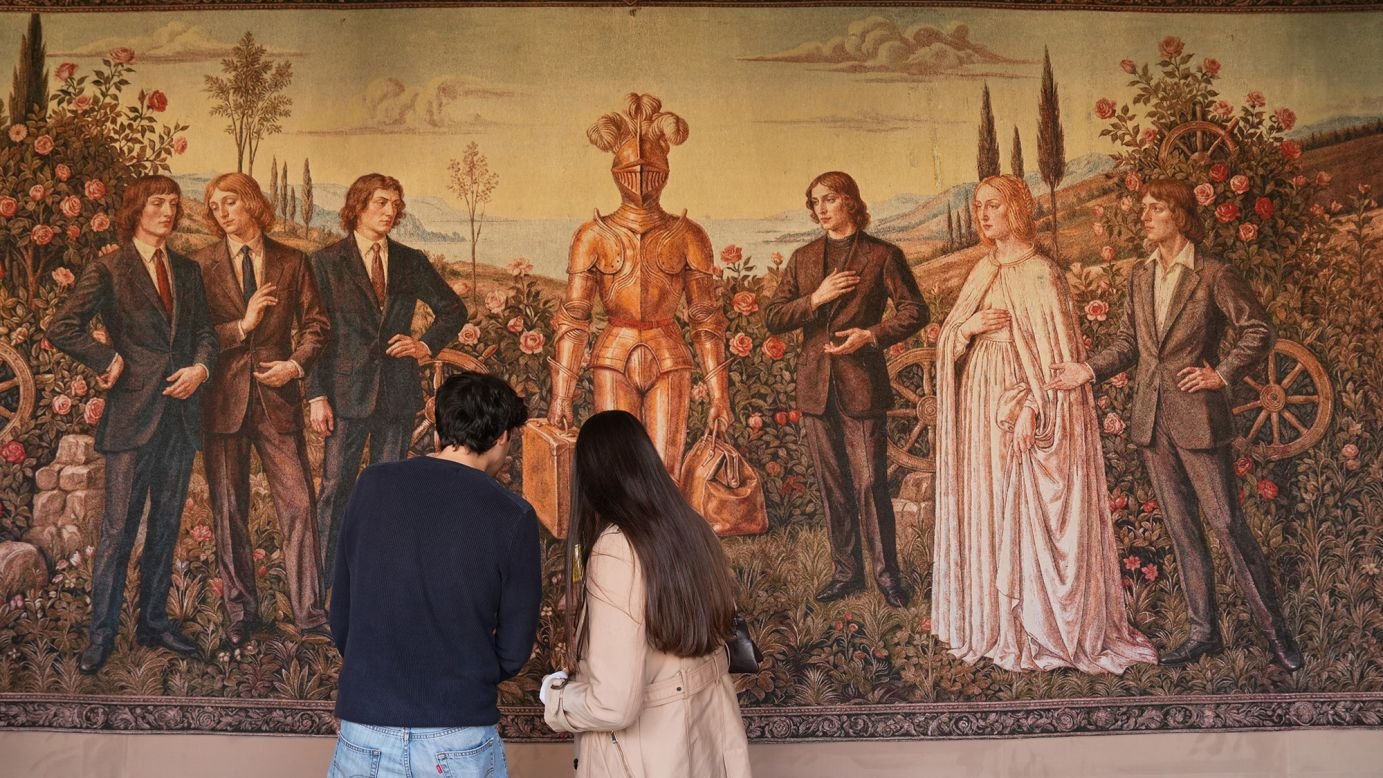
Luxury brands are increasingly turning to exclusive experiences, behind-the-scenes tours and craftsmanship exhibitions to attract younger consumers and rebuild trust among aspirational shoppers. As rising prices push some customers towards emerging labels and second-hand products, established fashion houses are finding new ways to demonstrate why their products command premium prices.
From jewellery-making workshops at Tiffany & Co. to museum-style exhibitions organised by Gucci and Chanel, luxury companies are opening their doors to let customers experience the skills, materials and processes behind their products. The strategy aims to make the value of luxury goods more visible rather than relying only on brand reputation and heritage.
The shift comes at a challenging time for the luxury industry. Prices have increased significantly in recent years, while some established companies have experienced weaker sales. Younger professionals and middle-class consumers, who have traditionally aspired to own luxury products, are becoming more selective about their purchases.
Key Highlights
- Luxury brands are using workshops, exhibitions and exclusive events to showcase craftsmanship and product quality.
- Tiffany & Co. invited visitors to observe jewellery designers and craftspeople at its New York innovation and design workshop.
- Luxury prices increased by an average of 61% between 2019 and 2025, according to McKinsey’s State of Fashion report.
- LVMH’s revenue declined around 5% to $80.8 billion in 2025, marking its second consecutive year of revenue decline.
- Brands are attempting to reconnect with younger and middle-class shoppers through greater transparency and memorable customer experiences.
Why Luxury Brands Are Opening Their Doors to Customers
One example of this approach is Tiffany & Co.’s Jewelry Innovation & Design workshop in New York City. Visitors were given an opportunity to observe craftspeople cleaning and carving small silver pieces under microscopes and working with traditional jewellery-making tools.
The experience also offered a closer look at the company’s design and innovation processes, including the presentation of a 3D-printed necklace and intricate jewellery pieces. Some of the traditional tools displayed at the workshop, including hammers, were more than a century old.
For visitors, the experience was about understanding the work behind the finished product. Inga Eilenkrig, who attended with her daughter Isabelle, a Fashion Institute of Technology student, said seeing the manufacturing process helped them appreciate the amount of effort involved in creating luxury jewellery.
Such experiences allow established brands to communicate the craftsmanship and expertise behind their products. Instead of presenting jewellery or fashion items only as finished luxury goods, companies can show customers the time, skills and processes involved in making them.
LVMH’s Les Journées Particulières Highlights Luxury Craftsmanship
Tiffany’s workshop is part of a wider effort by luxury companies to create stronger connections with customers. Its parent company, LVMH, has developed several initiatives to introduce visitors to the people and processes behind its brands.
One of its most prominent programmes is Les Journées Particulières, launched in 2011. The initiative was created by Antoine Arnault, son of LVMH chairman and CEO Bernard Arnault, to showcase the work of artisans across the group’s luxury businesses.
Through the programme, visitors can gain access to selected workshops and production facilities, offering a closer look at how luxury products are designed and manufactured. LVMH has also introduced customers to artisans and production processes associated with brands such as Loewe in Spain and Hennessy in France.
Antoine Arnault has said the programme is not simply a response to the current difficulties facing the luxury industry. Its broader purpose is to highlight the expertise and craftsmanship that define the group’s brands.
Other luxury companies are following similar approaches. Gucci has organised museum-style exhibitions covering its 105-year history, while Chanel established Galerie du 19M in 2021 as an exhibition space showcasing craftsmanship associated with luxury products.
Rising Luxury Prices Are Testing Customer Trust
One of the biggest challenges facing traditional luxury brands is the sharp increase in product prices. According to McKinsey & Co.’s State of Fashion report, luxury prices rose by an average of 61% between 2019 and 2025.
During the pandemic, luxury companies benefited from increased spending by consumers who were willing to spend more on premium products. Brands also raised prices to offset higher fuel, manufacturing and other business expenses in 2022.
However, repeated price increases created a different challenge. Many aspirational buyers began questioning whether the quality of luxury products justified their higher prices. Some younger shoppers and professionals found themselves priced out of brands they previously hoped to purchase.
According to Gemma D’Auria, senior partner and global leader of luxury at McKinsey, post-pandemic price increases damaged customer trust. Consumers increasingly wanted to understand whether higher prices reflected better materials, stronger craftsmanship and genuine product value.
This has made transparency an important part of luxury marketing. By showing how products are made and introducing customers to the artisans behind them, brands can provide a clearer explanation of what customers are paying for.
Why Younger and Middle-Class Consumers Matter to Luxury Brands
Luxury companies are not focusing exclusively on their wealthiest customers. Middle-class and aspirational consumers remain an important part of the market, including younger professionals who may purchase entry-level luxury products rather than expensive fashion collections.
Bernstein analyst Luca Solca has highlighted the importance of reconnecting with these consumers. According to Solca, middle-class shoppers represent more than half of the luxury market, making their interest important for established brands.
However, these customers now have more alternatives. Smaller and independent fashion houses are attracting attention by offering a different identity and a sense of exclusivity.
McKinsey found that 66% of American luxury clients surveyed said challenger brands, which are smaller and less established fashion houses, felt more exclusive than traditional luxury brands.
This finding points to a challenge for heritage companies. A long history and a recognisable logo may not be enough to persuade younger consumers if they feel newer brands offer a more distinctive experience or better perceived value.
For established luxury houses, the task is to preserve their heritage while making their products relevant to a generation that expects greater transparency and meaningful customer engagement.
Luxury Experiences Are Becoming a Competitive Advantage
Luxury experiences can help brands communicate value in ways that conventional advertising may not achieve. When customers visit a workshop, observe artisans at work or learn about the materials used in a product, they gain a more direct understanding of the manufacturing process.
Thomaï Serdari, a marketing professor at New York University, described LVMH’s workshops as similar to museum-level exhibitions. Such events can reinforce a brand’s history, identity and purpose by allowing visitors to experience its craftsmanship firsthand.
Silvia Bellezza, a marketing professor at Columbia University, has also highlighted the commercial value of these experiences. Her research has found that learning about how products are manufactured can increase consumers’ willingness to commit to a purchase.
For luxury brands, this means physical customer interactions can become an important part of the shopping experience. An exhibition or workshop visit can help create a stronger emotional connection than simply viewing a product in a store or through an online advertisement.
However, these experiences cannot replace product quality. Customers still need to feel that the materials, design, durability and craftsmanship justify the price. Experiences can explain value, but the product itself must support the brand’s promise.
LVMH Faces Pressure as Luxury Sales Remain Weak
The renewed focus on customer engagement comes as some of the world’s largest luxury companies face weaker financial performance. LVMH reported revenue of $80.8 billion in 2025, a decline of around 5% compared with the previous year.
The decline marked the company’s second consecutive year of falling revenue, highlighting the difficult environment facing major luxury businesses.
For LVMH and other established groups, attracting younger consumers is therefore important beyond brand image. Rebuilding relationships with aspirational buyers could help companies broaden their customer base and strengthen long-term demand.
At the same time, the industry faces the challenge of balancing premium positioning with the expectations of customers who are increasingly careful about spending. Greater transparency and access to craftsmanship are among the approaches companies are using to address this issue.
Can Behind-the-Scenes Experiences Bring Younger Shoppers Back?
Experiences such as Tiffany’s jewellery workshop and LVMH’s Les Journées Particulières demonstrate how luxury brands are adapting their customer engagement strategies. By opening selected production spaces and showcasing artisans, companies are attempting to make their heritage and manufacturing expertise more accessible.
For younger consumers, these experiences can offer something beyond the opportunity to purchase an expensive product. They provide insight into design, materials, production techniques and the people responsible for creating luxury goods.
However, rebuilding trust will require more than exhibitions and special events. Luxury companies will also need to maintain consistent product quality, explain their pricing and demonstrate that their products deliver the value customers expect.
As competition from independent labels and the second-hand market grows, established brands are increasingly recognising that heritage alone may not be enough. Their ability to combine craftsmanship, transparency and meaningful customer experiences could play an important role in reconnecting with the next generation of luxury shoppers.
For breaking news and live news updates, like us on Facebook or follow us on Twitter and Instagram. Read more on Latest Business on thefoxdaily.com.





COMMENTS 0