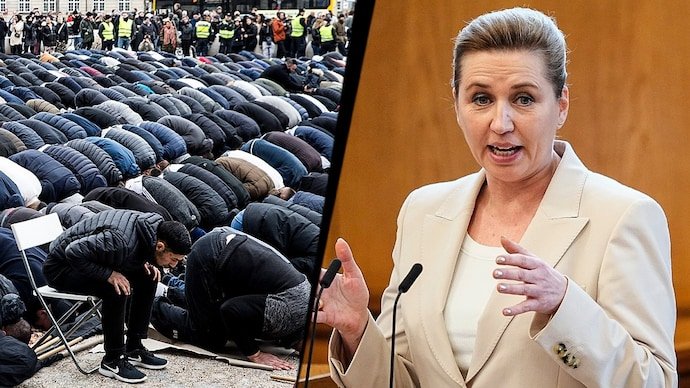
Denmark‘s renewed push to ban the public broadcast of the Islamic call to prayer, or azaan, has once again placed the country at the centre of one of Europe‘s most contentious debates: where should democratic societies draw the line between protecting national identity and safeguarding Religious Freedom?
The proposal, which has resurfaced after years of political discussion, comes as Denmark continues to pursue one of the toughest Immigration and integration policies in Europe. While supporters argue that the measure is about preserving Danish cultural traditions rather than targeting a particular religion, opponents believe it reflects a broader political shift that increasingly views visible expressions of Islam with suspicion.
The issue extends well beyond loudspeakers or mosque announcements. It touches on questions of immigration, social integration, constitutional rights, demographic change and the future of multiculturalism across Europe.
WHAT DENMARK IS PROPOSING
The Danish government is exploring whether the Islamic call to prayer can be prohibited nationwide without violating constitutional protections for religious freedom.
Immigration Minister Morten Bodskov argued that Denmark should not allow public broadcasts of the azaan to become a regular feature of daily life. Speaking to Danish media, he said the call to prayer “should not be heard over Danish rooftops” and warned against parts of Denmark beginning to resemble “a suburb of Islamabad.”
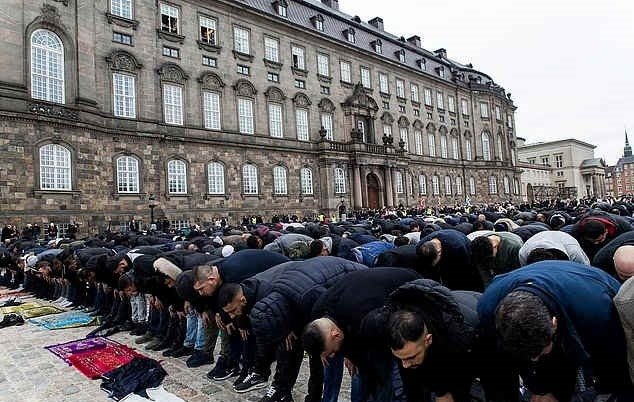
The remarks quickly attracted international attention because of both their tone and timing.
Rather than introducing immediate legislation, the government has indicated that it will first examine whether such a ban would be legally compatible with Denmark’s Constitution and the country’s obligations under European Human Rights law.
NOT THE FIRST TIME THE ISSUE HAS SURFACED
This is not the first attempt to regulate public Islamic prayer broadcasts.
Similar proposals were discussed in 2020 and again in 2025 but failed to advance into legislation. In practice, many Danish municipalities already impose strict noise regulations that effectively prevent mosques from broadcasting the azaan through loudspeakers.
For example, Copenhagen’s Grand Mosque does not regularly broadcast the call to prayer outdoors because of existing local restrictions.
The current proposal, however, would move beyond municipal regulations by potentially creating a nationwide framework.
PART OF A BROADER IMMIGRATION STRATEGY
The renewed debate cannot be separated from Denmark’s wider immigration policies.
Over the past decade—and particularly under Prime Minister Mette Frederiksen’s government—the country has steadily tightened asylum rules, strengthened deportation policies and introduced stricter integration requirements.
Recent measures include restrictions on full-face Islamic veils in public spaces, efforts to remove dedicated prayer rooms from some educational institutions and policies aimed at reducing residential segregation in neighbourhoods with high immigrant populations.
Supporters argue these initiatives encourage integration into Danish society rather than the formation of parallel communities.
Critics, however, contend that many of these policies disproportionately affect Muslims and risk alienating communities that are already well integrated into Danish life.
WHY THE GOVERNMENT BELIEVES THE ISSUE MATTERS
Government officials argue that public religious broadcasts differ from private religious practice.
According to supporters of the proposal, nobody is attempting to prevent Muslims from praying or practising their faith. Instead, they argue that broadcasting religious messages over loudspeakers transforms private worship into a public assertion of religious identity.
For politicians advocating tighter controls, limiting public calls to prayer is presented as part of protecting Denmark’s secular public sphere and preserving what they describe as the country’s cultural character.
These arguments have gained political traction as immigration continues to rank among the most important issues for Danish voters.
CRITICS WARN OF CONSTITUTIONAL AND LEGAL CHALLENGES
Legal experts caution that implementing a nationwide ban may prove considerably more complicated than announcing one.
Denmark’s Constitution protects freedom of religion, while the country is also bound by the European Convention on Human Rights, which safeguards the right to manifest religious beliefs.
If the legislation specifically targets Islamic calls to prayer while allowing similar practices associated with other faiths, courts could be asked to determine whether the measure amounts to unequal treatment.
Human rights organisations have also argued that any restriction must satisfy tests of necessity, proportionality and equal application under European law.
These legal questions explain why the Danish government is proceeding cautiously before introducing formal legislation.
EUROPE’S WIDER DEBATE OVER ISLAM AND INTEGRATION
Denmark is far from alone in confronting these questions.
Across Europe, governments have introduced measures affecting Islamic practices, including restrictions on face coverings, tighter oversight of religious institutions and increased scrutiny of foreign funding for mosques.
Countries such as France, Austria, Belgium and Switzerland have all witnessed heated political debates over the visibility of religion in public life.
Supporters often frame such measures as necessary to strengthen integration, social cohesion and National Security.
Opponents argue they contribute to growing Islamophobia and risk portraying entire communities through the actions of a small minority.
The debate has become even more politically charged following recent migration waves, terrorist attacks in Europe and rising support for nationalist parties across several European countries.
HOW LARGE IS DENMARK’S MUSLIM POPULATION?
Muslims account for roughly five per cent of Denmark’s population, making Islam the country’s largest minority religion.
Most Muslims in Denmark are descendants of immigrants WHO arrived over several decades from countries including Turkey, Pakistan, Syria, iraq, Somalia and Bosnia.
While many are well integrated into Danish society, immigration and cultural integration continue to dominate political discourse, particularly during election campaigns.
Public opinion surveys have consistently shown immigration among the issues most likely to influence Danish voters.
THE BROADER POLITICAL MESSAGE
The proposed azaan ban is unlikely to be decided solely on legal grounds.
It has become part of a much broader political conversation about national identity, integration and the role of religion in public life.
For supporters, the proposal represents an effort to preserve Denmark’s cultural traditions and reinforce expectations that newcomers adapt to local norms.
For critics, it raises concerns that governments may gradually restrict visible expressions of one particular faith while presenting those measures as integration policy.
WHAT HAPPENS NEXT?
The Danish government is expected to complete its legal assessment before deciding whether to introduce legislation in Parliament.
If a nationwide ban is formally proposed, it is likely to face extensive parliamentary debate and could ultimately be challenged before Danish or European courts.
Whatever the outcome, the controversy illustrates how immigration, religion and national identity remain deeply interconnected political issues—not only in Denmark, but across much of Europe.
As European governments continue searching for a balance between integration, secular Governance and constitutional freedoms, Denmark’s decision may become another important test case in the continent’s evolving debate over multiculturalism and the limits of state intervention in religious expression.
For breaking news and live news updates, like us on Facebook or follow us on Twitter and Instagram. Read more on Latest World on thefoxdaily.com.




COMMENTS 0