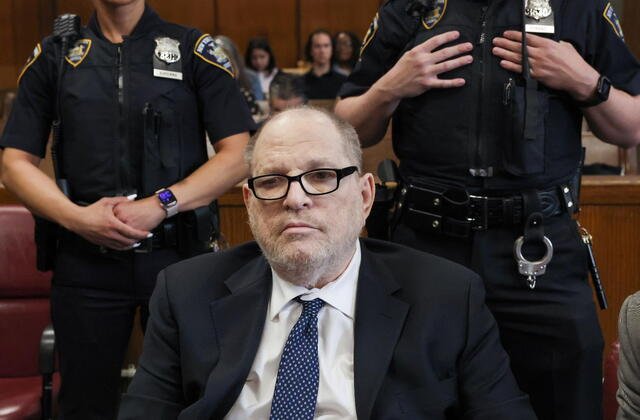
The legal saga surrounding Harvey Weinstein, once one of the most powerful figures in the global Entertainment industry, has entered another significant chapter. New York prosecutors have announced they will no longer pursue the unresolved rape charge against the former film producer after two successive retrials ended without a verdict.
The decision effectively ends efforts to retry Weinstein on allegations made by actor and hairstylist Jessica Mann, whose testimony played a central role in the original case that helped transform public conversations about sexual misconduct, abuse of power and accountability in Hollywood.
While the dropped charge represents a notable legal development, it does not mean Weinstein is walking free. The 74-year-old remains incarcerated due to other sexual assault convictions and continues to face the long-term consequences of one of the most consequential scandals in modern entertainment History.
The case’s conclusion also raises broader questions about the challenges of prosecuting decades-old sexual assault allegations, the limits of the criminal justice system, and the lasting legacy of the #MeToo movement that reshaped workplaces around the world.
Why Prosecutors Decided to Drop the Charge
The rape charge stemmed from allegations by Jessica Mann, WHO accused Weinstein of raping her in a Manhattan hotel room in 2013.
After Weinstein’s original conviction was overturned on appeal, prosecutors attempted to secure a new conviction through retrials. However, juries repeatedly failed to reach unanimous decisions.
In criminal law, a conviction requires jurors to agree beyond a reasonable doubt. When jurors cannot reach a unanimous verdict, courts declare a mistrial due to a hung jury.
After two separate retrials ended in deadlock, prosecutors faced a difficult decision: pursue a fourth trial or conclude that further proceedings were unlikely to produce a different outcome.
Ultimately, they chose to drop the charge.
The move reflects a practical reality of criminal prosecutions. Even when prosecutors believe a case has merit, repeated jury deadlocks can indicate substantial challenges in securing a unanimous verdict.
The Allegations at the Center of the Case
Jessica Mann testified that Weinstein sexually assaulted her in a New York hotel room after an on-and-off relationship that she described as complicated and emotionally coercive.
According to her testimony, she repeatedly attempted to distance herself from Weinstein but felt pressured due to his influence within the entertainment industry.
The defense, meanwhile, argued that their interactions were consensual and pointed to evidence of continued communication between the two after the alleged assault.
This became one of the central issues debated throughout the proceedings.
Cases involving allegations of sexual assault often present unique evidentiary challenges, particularly when Relationships between the parties continued after the alleged incidents or when events occurred years before legal action was initiated.
These complexities contributed significantly to the lengthy legal battle.
How Harvey Weinstein Became the Face of the #MeToo Era
Before becoming synonymous with one of Hollywood’s biggest scandals, Harvey Weinstein was considered one of the entertainment industry’s most influential producers.
Through Miramax and later The Weinstein Company, he played a major role in producing critically acclaimed and commercially successful films.
His projects included numerous Academy Award-winning productions that helped shape modern independent Cinema.
That reputation collapsed dramatically in 2017 when multiple women publicly accused him of sexual harassment, sexual misconduct and assault.
The allegations quickly expanded beyond a single news story, revealing a pattern of accusations spanning decades.
The revelations became a defining moment in the emergence of the #MeToo movement.
The #MeToo Movement Changed More Than Hollywood
Although Weinstein’s case originated within the Film Industry, its impact extended far beyond Hollywood.
The #MeToo movement encouraged millions of women and men worldwide to share experiences involving Workplace Harassment, abuse of authority and sexual misconduct.
The movement triggered significant changes across multiple sectors, including:
- Corporate workplace policies.
- Human resources procedures.
- University reporting systems.
- Media industry standards.
- Legal approaches to harassment complaints.
- Public discussions about power dynamics.
Many organizations introduced stronger reporting mechanisms, mandatory training programs and new accountability frameworks in response to growing public scrutiny.
Regardless of the outcome of individual cases, the Weinstein scandal remains one of the defining catalysts behind these broader societal changes.
Why the Original Conviction Was Overturned
A key turning point came when an appeals court overturned Weinstein’s original New York conviction.
The decision was not based on a finding that the allegations were false.
Instead, appellate judges concluded that legal errors occurred during the trial process.
Appeals courts often focus on whether proper legal procedures were followed rather than reassessing factual guilt or innocence.
The ruling required prosecutors to retry portions of the case, leading to years of additional courtroom proceedings.
This distinction is important because overturned convictions can result from procedural issues even when underlying allegations remain disputed.
The Challenges of Retrying High-Profile Cases
Weinstein’s retrials highlighted several challenges prosecutors face in complex sexual assault cases.
As time passes, memories fade, witnesses become harder to locate and public attention can influence perceptions surrounding a case.
High-profile defendants also typically possess substantial legal resources, allowing them to mount extensive defenses over long periods.
In addition, jurors are often asked to evaluate events that occurred many years earlier, making credibility assessments especially important.
These factors can contribute to disagreements among jurors, increasing the likelihood of deadlocks.
What Happens to Weinstein Now?
Although the New York rape charge has been dropped, Weinstein’s legal troubles are far from over.
He remains imprisoned due to separate convictions and sentences involving other sex crime cases.
The abandoned charge carried a comparatively limited sentence compared with the penalties associated with his remaining convictions.
As a result, the decision is unlikely to significantly alter his incarceration status.
For Weinstein, the development removes one unresolved legal issue but does not fundamentally change the broader legal consequences he continues to face.
Public Opinion and the Legacy of the Case
The conclusion of the rape charge is likely to generate mixed reactions.
Supporters of the prosecution may view the outcome as a reminder of how difficult it can be to secure convictions in sexual assault cases, particularly when evidence relies heavily on witness testimony.
Others may see the repeated jury deadlocks as evidence that criminal courts require exceptionally high standards of proof before imposing criminal penalties.
Both perspectives reflect ongoing debates about fairness, accountability and due process.
The case illustrates the tension between public expectations and the realities of criminal law, where outcomes ultimately depend on evidence presented in court and the unanimous judgment of jurors.
The Broader Impact on Sexual Misconduct Prosecutions
Legal experts suggest that the Weinstein prosecutions may continue influencing future sexual misconduct cases even after the final charge has been dropped.
Prosecutors have become more willing to pursue allegations involving powerful individuals, while survivors often have greater confidence in reporting misconduct than they did a decade ago.
At the same time, courts continue to grapple with balancing the rights of accusers and defendants in highly sensitive cases.
The legal principles tested throughout the Weinstein proceedings are likely to shape future prosecutions involving workplace abuse, coercion and sexual violence.
Conclusion
The decision by New York prosecutors to drop the remaining rape charge against Harvey Weinstein marks the end of a long and complex chapter in one of the most consequential criminal cases of the #MeToo era. After an overturned conviction and two retrials that ended in deadlocked juries, authorities concluded that further prosecution was unlikely to produce a definitive outcome.
However, the broader significance of the Weinstein case extends far beyond a single charge. The allegations against him helped ignite a global movement that transformed conversations about sexual misconduct, workplace power dynamics and institutional accountability.
While the legal proceedings surrounding Jessica Mann’s allegations have now concluded, the impact of the Weinstein scandal continues to shape public discourse, legal standards and workplace culture worldwide. In that sense, the legacy of the case will likely endure long after the courtroom battles have ended.
For breaking news and live news updates, like us on Facebook or follow us on Twitter and Instagram. Read more on Latest World on thefoxdaily.com.





COMMENTS 0