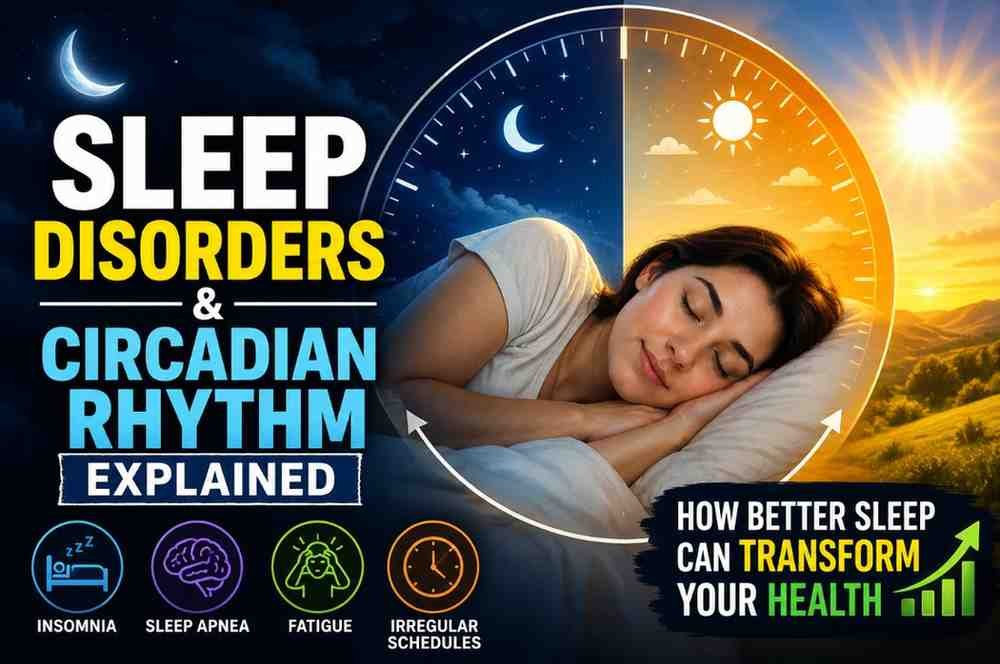
What if the most powerful health upgrade didn’t come from a new diet or workout but from how well you sleep? Sleep disorders and circadian rhythm disruptions are now at the center of modern medical research. Who is driving this conversation? Leading researchers and real patients living with sleep conditions. What is happening? A growing body of research is uncovering how sleep influences heart health, metabolism, and even lung function. When did this shift begin? Over the past decade, with major breakthroughs highlighted in recent workshops. Where is this research taking place? At top institutions like the National Heart, Lung, and Blood Institute. Why does it matter? Because poor sleep is linked to some of the world’s biggest health risks. How does it all connect? Through the body’s internal clock—your circadian rhythm.
The Hidden Epidemic: Understanding Sleep Disorders
Sleep disorders are no longer rare or misunderstood conditions—they are a global health concern. From insomnia to sleep apnea, millions of people experience disrupted sleep that silently affects their daily lives.
What makes sleep disorders particularly dangerous is their invisibility. Unlike a visible injury, poor sleep builds its impact slowly affecting energy levels, concentration, mood, and long-term health.
- Difficulty falling or staying asleep
- Interrupted breathing during sleep
- Daytime fatigue and reduced productivity
- Increased risk of chronic diseases
Patient stories bring this reality to life. Many individuals report years of undiagnosed symptoms before receiving proper treatment, highlighting the need for awareness and early intervention.
Circadian Rhythm: Your Body’s Internal Timekeeper
At the core of sleep science lies the circadian rhythm a natural, internal process that regulates the sleep-wake cycle over a 24-hour period. Think of it as your body’s built in clock, controlling not just sleep, but also hormone release, digestion, and body temperature.
When this rhythm is disrupted due to irregular sleep schedules, late-night screen use, or shift work it can lead to serious health consequences.
Key Functions of Circadian Rhythm
| Function | Impact on Health |
|---|---|
| Sleep-Wake Cycle | Determines when you feel alert or sleepy |
| Hormone Regulation | Affects stress, hunger, and metabolism |
| Body Temperature | Influences physical performance and rest |
| Metabolism | Controls how your body processes food |
New Research: Meal Timing and Cardiometabolic Health
Recent scientific discussions have revealed a fascinating connection between meal timing and circadian biology. It’s not just what you eat—but when you eat that matters.
Researchers are exploring how eating late at night or skipping meals can disrupt metabolic processes, potentially increasing the risk of:
- Heart disease
- Type 2 diabetes
- Obesity
This emerging field suggests that aligning meals with your biological clock could become a powerful tool in preventing chronic diseases.
The Lung Connection: A New Frontier in Sleep Science
One of the most exciting developments in recent research is the link between circadian rhythms and lung health. Scientists are now investigating how the timing of biological processes affects respiratory function.
This could lead to more effective treatments for lung diseases by aligning therapies with the body’s natural rhythms—a concept known as “chronotherapy.”
Why Sleep Matters More for Women
Sleep research is also uncovering important gender differences. Hormonal changes, pregnancy, and menopause can significantly affect sleep patterns in women.
Understanding these differences is crucial for developing targeted treatments and improving overall health outcomes.
Why This Matters: The Real-World Impact
The implications of sleep research go far beyond the bedroom. Poor sleep is now linked to reduced workplace productivity, increased healthcare costs, and lower quality of life.
On the other hand, improving sleep habits can lead to:
- Better mental clarity and focus
- Improved emotional well being
- Stronger immune function
- Lower risk of chronic diseases
Insight: Sleep vs Diet and Exercise
For years, diet and exercise dominated health conversations. But sleep is now emerging as the “third pillar” of health and arguably the most overlooked.
Unlike diet or workouts, sleep directly influences both. Poor sleep can lead to unhealthy food choices and reduced motivation to exercise, creating a cycle that’s hard to break.
Prediction: The Future of Sleep Health
Looking ahead, sleep science is likely to become more personalized. Wearable technology, AI driven health tracking, and targeted therapies could revolutionize how we understand and improve sleep.
In the near future, your sleep schedule might be as carefully managed as your diet or fitness plan.
Conclusion: Sleep Is the Foundation of Health
Sleep is no longer just a passive activity it’s a powerful driver of health and well being. From understanding sleep disorders to exploring circadian rhythms, modern research is reshaping how we think about rest.
The message is clear: improving sleep isn’t optional—it’s essential. And as science continues to uncover new insights, one thing becomes certain better sleep could be the simplest, most effective way to transform your health.
For breaking news and live news updates, like us on Facebook or follow us on Twitter and Instagram. Read more on Latest Health on thefoxdaily.com.





COMMENTS 0