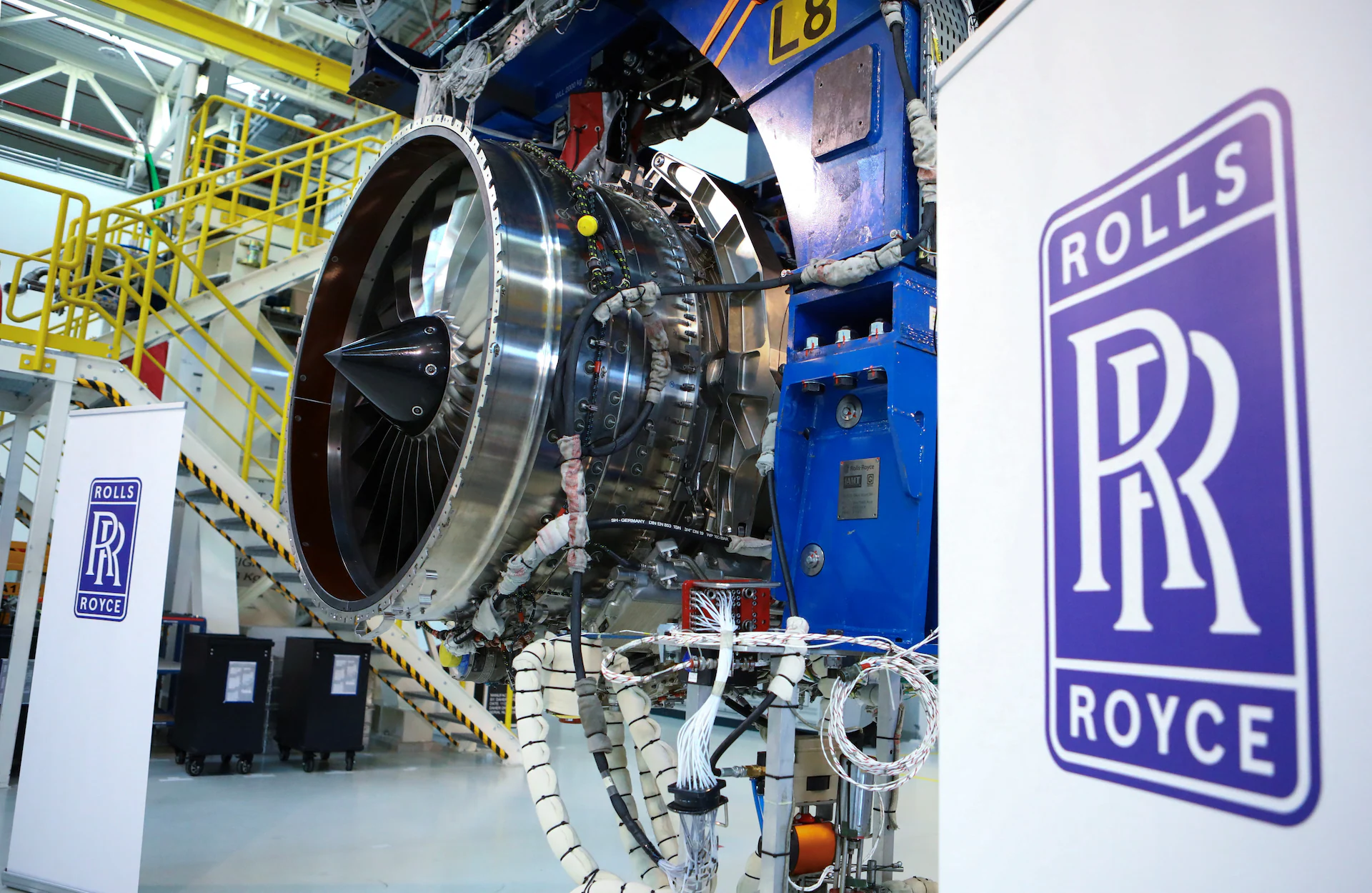
Rolls-Royce is reportedly close to securing up to £200 million ($267.9 million) in British government subsidies to support the development of a new engine for short-haul aircraft, according to a Financial Times report published on Friday, October 23. An announcement could come as early as next week, potentially advancing the company’s efforts to return to the highly competitive narrowbody aircraft engine market.
The proposed funding, estimated at between £100 million and £200 million, would help Rolls-Royce develop and test a demonstrator version of its next-generation UltraFan 30 engine, the report said, citing people familiar with the matter.
Reuters said it could not immediately verify the report. Rolls-Royce did not respond to a request for comment outside regular business hours, and the reported agreement has not been officially confirmed.
Proposed Funding to Support UltraFan 30 Development
The potential government support would help finance the development and testing of the UltraFan 30 demonstrator, an important step in Rolls-Royce’s efforts to develop next-generation aircraft engine technology for short-haul routes.
Demonstrator programmes allow manufacturers to test new technologies and assess whether an engine design can meet technical and performance requirements before moving towards broader commercial development. Government funding could help share some of the financial burden associated with this work.
Rolls-Royce had hoped to secure an initial government commitment for the project during the first half of the year. The reported progress towards an agreement could therefore represent a significant development for the company, although the timing, amount and final terms of any funding remain unconfirmed.
The proposed subsidy would support the engine development programme, but it would not by itself guarantee that the engine would eventually be selected for a commercial aircraft.
Rolls-Royce Targets Return to the Narrowbody Market
Rolls-Royce has been absent from the narrowbody aircraft engine market for approximately 15 years. The company currently focuses on widebody aircraft engines, while the narrowbody segment serves a much larger market and is central to many short- and medium-haul commercial routes.
Returning to the segment would give Rolls-Royce an opportunity to broaden its commercial aviation business and compete for a wider range of aircraft programmes. Its next-generation UltraFan technology is part of that strategy.
However, entering the narrowbody market requires substantial development work and the successful integration of an engine into an aircraft programme. Any potential commercial opportunity would depend on technical performance, manufacturing readiness and an agreement with an aircraft manufacturer.
Securing public funding could help Rolls-Royce advance the technology needed to pursue such opportunities. The company would still need to demonstrate that its engine meets the requirements of prospective aircraft customers.
Rolls-Royce CEO Highlights Potential for 40,000 UK Jobs
Rolls-Royce Chief Executive Tufan Erginbilgic said in July that government backing for the project, combined with the engine securing a position on a narrowbody aircraft, could create 40,000 jobs in Britain.
The figure reflects the potential economic impact Erginbilgic associated with the programme if the project receives government support and achieves a successful commercial outcome. It is not a confirmed job creation commitment, and the potential employment impact would depend on the engine’s eventual development and adoption.
A programme of this scale could support activity across the aerospace supply chain, including engineering, manufacturing, testing and related industrial services. However, the reported subsidy discussions alone do not establish how many jobs would be created or when any employment effects might materialise.
For the British government, support for the engine programme could offer an opportunity to back domestic aerospace technology and industrial capabilities. The potential economic benefits would need to be considered alongside the cost of public funding and the uncertainties involved in developing a new commercial aircraft engine.
Rolls-Royce Has Also Discussed Support With Germany and the US
Erginbilgic confirmed in July that Rolls-Royce had held discussions with other governments, including Germany and the United States, about possible support for the programme.
The talks indicate that the company has explored multiple avenues for securing assistance for its next-generation engine development efforts. The latest report suggests that negotiations with the British government may be approaching a decision, although no final agreement has been confirmed.
Government support can play an important role in major aerospace development programmes because they require significant investment before commercial returns are realised. Funding arrangements can also influence where companies conduct research, testing and other industrial activities.
Any final agreement with the British government would need to be assessed in the context of the programme’s overall financing requirements, development milestones and potential commercial applications.
UltraFan Development Could Shape Rolls-Royce’s Future Growth
The UltraFan programme represents part of Rolls-Royce’s effort to develop next-generation engine technology and expand its opportunities in commercial aviation. The proposed UltraFan 30 demonstrator would allow the company to test its design as it considers a return to the narrowbody market.
Progress on the project could strengthen the company’s ability to compete for future aircraft programmes, but the path from engine demonstration to commercial adoption is complex. Technical testing, certification requirements, manufacturing considerations and aircraft-maker decisions would all influence the project’s eventual prospects.
The reported subsidy discussions also highlight the role governments can play in supporting strategic industrial research. For Britain, a successful programme could offer potential benefits for aerospace expertise and employment, although those outcomes remain dependent on the project’s progress.
What Happens Next?
Attention is now focused on whether Rolls-Royce and the British government reach a funding agreement in the coming days. The Financial Times reported that an announcement could come as early as next week, but the timing has not been officially confirmed.
If an agreement is reached, the next important steps would include developing and testing the UltraFan 30 demonstrator and evaluating the engine’s prospects for a future narrowbody aircraft programme.
For now, the reported £100 million to £200 million subsidy remains unconfirmed. While a deal could mark an important milestone in Rolls-Royce’s ambitions to re-enter the narrowbody market, the project’s long-term commercial and employment benefits will depend on whether the technology progresses successfully and secures an aircraft application.
For breaking news and live news updates, like us on Facebook or follow us on Twitter and Instagram. Read more on Latest Business on thefoxdaily.com.


COMMENTS 0