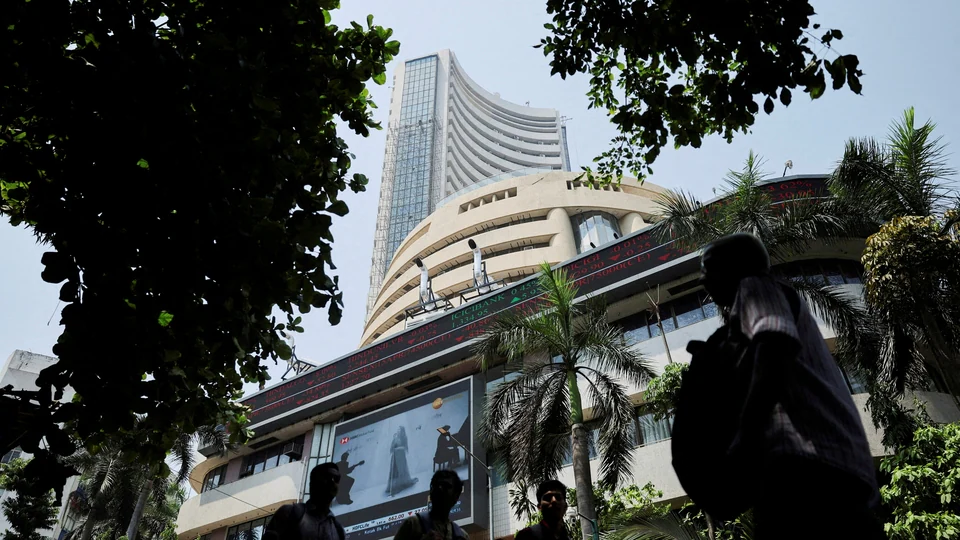
Indian equity markets opened lower on Friday as the Sensex and Nifty ended their six-session winning streak amid a sharp sell-off in global technology stocks. Concerns about slowing investment in artificial intelligence infrastructure triggered a decline across international markets, weighing on investor sentiment in India.
The BSE Sensex fell 227 points in early trade, while the NSE Nifty opened around 104 points lower. The decline came just a day after both benchmark indices recorded their biggest single-day gains in seven months.
Thursday’s rally had been supported by falling crude oil prices, strong foreign fund inflows and positive sentiment following gains in US markets. However, the sharp reversal on Wall Street and weakness across Asian markets changed the mood at the start of Friday’s trading session.
Key Highlights
- Sensex fell 227 points and Nifty opened around 104 points lower on Friday.
- Both Indian benchmarks ended their six-session winning streak.
- Sensex surged 2,008.61 points on Thursday, while Nifty gained 576 points.
- Japan’s Nikkei 225 and South Korea’s Kospi declined sharply amid the global technology sell-off.
- The S&P 500 fell 4.4%, while the Nasdaq Composite dropped 5.5% on Thursday.
Why Did Sensex and Nifty Open Lower on Friday?
The primary trigger behind Friday’s weak opening was the sharp decline in global technology stocks. Investors became concerned about the sustainability of large investments in artificial intelligence infrastructure, leading to selling pressure across major international markets.
The weakness on Wall Street spread to Asian markets, where major stock indices recorded significant losses. This international sell-off affected investor confidence in India, pushing the Sensex and Nifty into negative territory at the opening.
The decline followed six consecutive sessions of gains in the domestic market. After a strong rally, the benchmarks faced a fresh challenge as investors reacted to global uncertainty and developments in the technology sector.
Sensex and Nifty Record Strongest Single-Day Gains in Seven Months
Thursday’s trading session had delivered a powerful rally in Indian equities. The 30-share BSE Sensex surged 2,008.61 points, or 2.60%, to close at 79,310.01. During the session, it had opened nearly 1,300 points higher.
The NSE Nifty also recorded a strong performance, rising 576 points, or 2.40%, to settle at 24,536.60. The index reached a three-month high as buying interest spread across sectors.
The Nifty had last traded above the 24,550 level on August 7, when it stood at 24,570.65. Strong foreign fund inflows and a rally in US markets had supported the positive momentum in Indian equities.
Six-Day Rally Adds More Than 6,000 Points to Sensex
Before Friday’s decline, Indian benchmark indices had delivered substantial gains over six consecutive trading sessions. The Sensex advanced 6,063.98 points, or 8.27%, during this period.
The Nifty also recorded a strong upward movement, gaining 1,837.75 points, or 8%. The rally reflected improved investor confidence, supported by falling crude oil prices and continued foreign fund inflows.
Thursday’s sharp gains marked the strongest single-day performance for both indices in seven months. Friday’s lower opening indicated that global market weakness had interrupted the positive momentum.
Asian Markets Tumble After Wall Street Technology Sell-Off
Asian stock markets declined sharply on Friday after a major sell-off in US technology shares. Japan’s benchmark Nikkei 225 initially dropped more than 6% after trading began, reflecting widespread concerns among investors.
The index recovered some of its early losses but was still trading 5.7% lower at 57,576.63 by midday in Tokyo.
South Korea’s Kospi suffered an even sharper decline, falling 7.4% to 4,985.99. Hong Kong’s Hang Seng also moved lower, dropping 0.7% to 24,630.03.
The declines highlighted the extent to which concerns about technology valuations and artificial intelligence investment were affecting markets across the region.
Wall Street Suffers Its Worst Session Since April 2025
The global market weakness followed a steep decline on Wall Street on Thursday. The S&P 500 dropped 4.4%, recording its worst trading day since US President Donald Trump’s announcement of so-called Liberation Day tariffs in April 2025.
The Dow Jones Industrial Average fell 1,833 points, or 3.4%, while the technology-heavy Nasdaq Composite declined 5.5%.
The sharp fall in the Nasdaq reflected the pressure on technology stocks as investors reassessed expectations surrounding artificial intelligence infrastructure spending. The sell-off also affected broader market sentiment, contributing to declines in other international markets.
What Triggered Concerns Over AI Infrastructure Investment?
Artificial intelligence has been a major driver of investment and optimism across global technology markets. Companies have committed substantial resources to data centres and computing infrastructure to support the development and operation of AI systems.
However, growing concerns about the pace and sustainability of these investments have increased uncertainty among investors. When technology shares decline sharply, the impact can spread beyond the companies directly involved in AI, affecting broader Stock Market sentiment.
The latest global sell-off demonstrated how sensitive international markets have become to developments in the technology sector. Indian equities also faced pressure as investors responded to the weakness in overseas markets.
What Should Investors Watch Next?
Friday’s lower opening comes after a strong six-session rally in Indian equities. Market participants will be watching global technology stocks, foreign fund flows and crude oil price movements to assess whether the domestic market can regain its upward momentum.
The sharp declines across Japan, South Korea and the United States also underline the importance of international market trends for Indian equities. Continued weakness in Global Markets could keep investor sentiment cautious, while a recovery in technology stocks may help improve confidence.
For now, the contrast between Thursday’s 2,000-point Sensex rally and Friday’s negative opening highlights the volatility facing investors. The direction of global markets and concerns over AI infrastructure spending are likely to remain important factors influencing trading sentiment.
For breaking news and live news updates, like us on Facebook or follow us on Twitter and Instagram. Read more on Latest Business on thefoxdaily.com.





COMMENTS 0