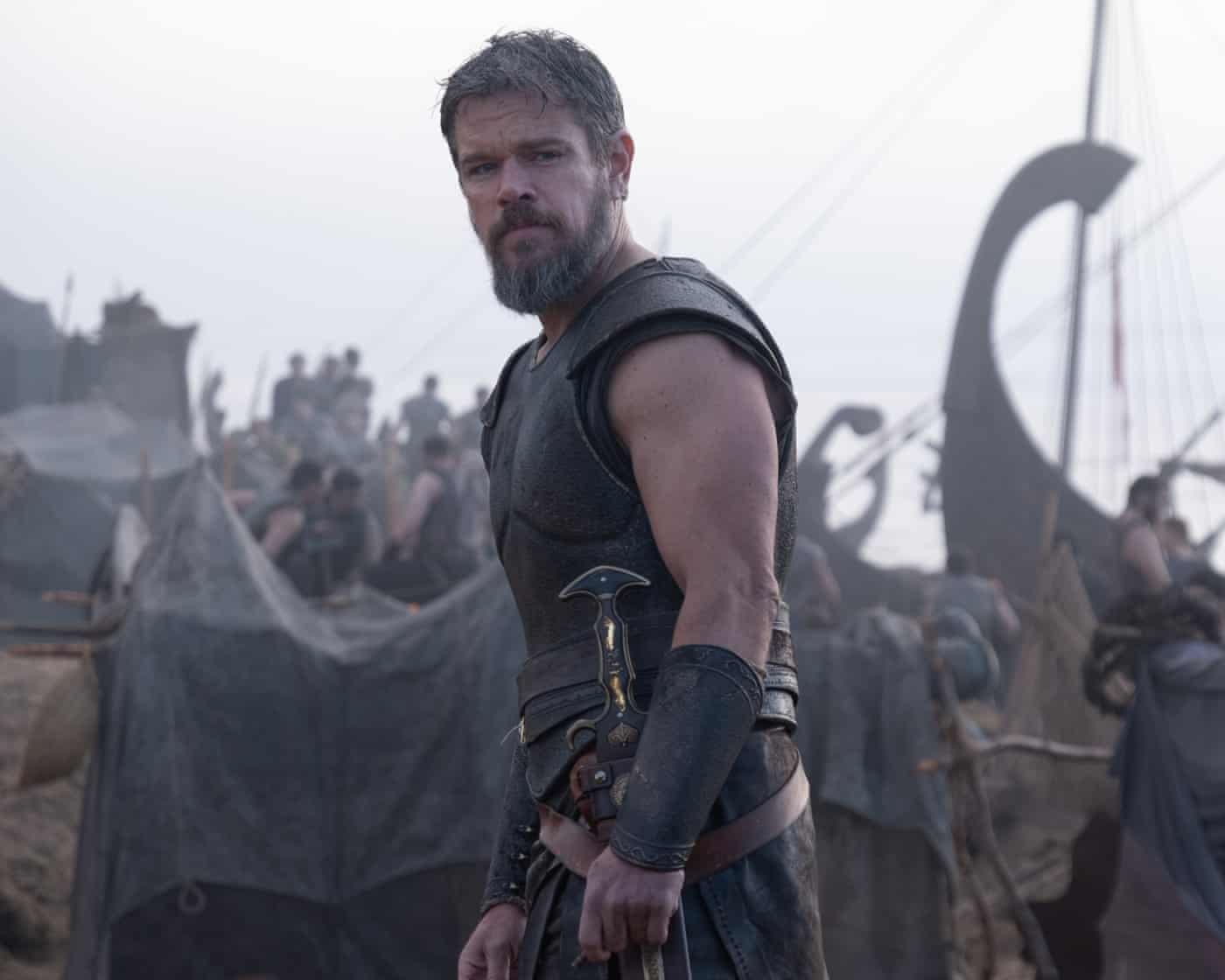
Few stories have influenced world literature as profoundly as Homer’s The Odyssey. For nearly three thousand years, the tale of Odysseus’ long journey home has inspired writers, historians, filmmakers, and audiences across generations. Now, acclaimed filmmaker Christopher Nolan brings the legendary epic to the big screen with a fresh cinematic vision that blends mythology, psychological drama, large-scale action, and emotional storytelling.
Rather than treating the ancient poem as a simple fantasy adventure, Nolan approaches The Odyssey as a deeply human story about survival after war, the burden of leadership, family, identity, and resilience. With an ensemble cast led by Matt Damon, the film aims to introduce one of history’s greatest literary works to modern audiences while remaining emotionally relevant in today’s world.
The excitement surrounding the film extends beyond its star power. It represents another ambitious chapter in Nolan’s career, continuing his reputation for creating visually spectacular films that challenge audiences intellectually while delivering unforgettable cinematic experiences.
Why The Odyssey Still Matters Thousands of Years Later
Originally composed around the 8th century BCE, The Odyssey follows the Greek hero Odysseus as he struggles to return home after the Trojan War. Although its setting belongs to ancient Greece, its themes remain remarkably universal.
- The consequences of war
- The meaning of courage
- The importance of family
- The search for identity
- The temptation of power
- The endurance of hope
These ideas continue to resonate because they reflect challenges people still experience today. Whether someone is returning from military service, rebuilding after personal hardship, or navigating life’s uncertainties, Odysseus’ journey remains surprisingly relatable.
Modern adaptations often succeed when they preserve these timeless emotions while presenting them through contemporary storytelling techniques. That appears to be one of the defining goals of Nolan’s interpretation.
Christopher Nolan’s Approach to Epic Storytelling
Christopher Nolan has built his career by combining blockbuster entertainment with philosophical questions. His films rarely rely only on spectacle. Instead, they encourage audiences to think deeply about memory, sacrifice, morality, time, and human nature.
Those qualities naturally complement The Odyssey, which has never been simply a tale about monsters and gods. At its heart, it is a story about choices and consequences.
Nolan’s filmmaking style often emphasizes realism even when dealing with extraordinary situations. Practical effects, immersive sound design, expansive landscapes, and carefully choreographed action sequences help audiences feel emotionally connected to fantastical events.
This philosophy makes ancient mythology feel surprisingly believable rather than distant or exaggerated.
The Journey Is More Important Than the Destination
One reason The Odyssey continues to inspire artists is its unique structure. Instead of focusing solely on reaching home, the narrative explores how every obstacle transforms the hero.
Odysseus encounters:
- Deadly monsters
- Powerful rulers
- Enchantresses
- Dangerous temptations
- Natural disasters
- Moral dilemmas
Each challenge teaches a different lesson about leadership, wisdom, humility, patience, or sacrifice.
Unlike many action heroes, Odysseus rarely succeeds through physical strength alone. Intelligence, adaptability, negotiation, and strategic thinking repeatedly become his greatest weapons.
That distinction separates The Odyssey from conventional adventure stories and makes it especially appealing for modern audiences seeking character-driven storytelling.
Matt Damon Steps Into One of Literature’s Greatest Roles
Portraying Odysseus requires balancing several contrasting qualities. The character is brave yet vulnerable, confident yet haunted, determined yet emotionally exhausted.
Matt Damon brings decades of experience portraying layered protagonists who carry emotional burdens beneath calm exteriors. His previous performances have often explored themes of responsibility, survival, and moral conflict—qualities that align naturally with Odysseus.
Rather than presenting an invincible warrior, the role offers opportunities to depict a leader gradually changed by years of conflict, loss, and isolation.
This emotional complexity may become one of the film’s greatest strengths, allowing audiences to connect with Odysseus as a human being rather than simply a mythical hero.
A Supporting Cast That Expands the Story’s Emotional Depth
The Odyssey features numerous memorable characters whose decisions influence the hero’s journey.
| Character | Role in the Story | Symbolic Meaning |
|---|---|---|
| Odysseus | The returning king | Leadership, perseverance and wisdom |
| Penelope | His loyal wife | Patience, faith and resilience |
| Telemachus | Their son | Growth, responsibility and legacy |
| Athena | Divine protector | Wisdom and guidance |
| The Suitors | Occupy Odysseus’ home | Greed, disorder and abuse of power |
Together, these characters transform the narrative from an adventure into a broader examination of family, loyalty, justice, and political leadership.
More Than Mythology: A Story About Life After War
One of the most compelling ways to understand The Odyssey is not as a fantasy, but as a reflection on what happens after conflict ends.
Winning a war does not automatically restore peace.
Soldiers return carrying invisible emotional scars. Families struggle to reconnect after years apart. Communities attempt to rebuild normal life while processing grief and uncertainty.
These realities make the story remarkably relevant in today’s world, where conversations around mental health, trauma, resilience, and recovery have become increasingly important.
Instead of glorifying battle, the narrative often asks whether victory truly compensates for everything that has been lost.
The Visual Potential of Ancient Mythology
The Odyssey offers extraordinary opportunities for cinematic world-building.
Ancient islands, mysterious seas, towering fortresses, enchanted forests, mythical creatures, divine interventions, and forgotten civilizations provide an expansive visual playground for filmmakers.
However, visual spectacle alone cannot sustain such a story.
The emotional stakes behind every encounter ultimately determine whether audiences remain invested. A giant monster is memorable only when it reflects the fears or struggles already haunting the protagonist.
This balance between intimate emotion and breathtaking scale has become a defining characteristic of Nolan’s filmmaking style and is particularly well suited to Homer’s legendary epic.
The Psychological Meaning Behind the Monsters
Modern audiences often interpret the creatures of Greek mythology as symbolic representations of internal struggles.
Viewed through this perspective, each obstacle becomes more than a physical threat.
- The Cyclops represents arrogance and unchecked power.
- The Sirens symbolize temptation and distraction.
- Circe reflects transformation and identity.
- The Underworld forces confrontation with guilt, memory, and mortality.
- The endless sea represents uncertainty and the unpredictability of life.
This symbolic reading adds another layer of richness to the story, allowing viewers to appreciate both its mythological spectacle and its psychological depth.
How Nolan’s Interpretation Differs from Traditional Mythological Epics
Many historical epics focus primarily on grand battles, heroic speeches, and large-scale action. While those elements certainly have a place in The Odyssey, Christopher Nolan’s filmmaking philosophy often places equal emphasis on character psychology and moral complexity.
Instead of presenting heroes as flawless legends, Nolan frequently explores how extraordinary circumstances reshape ordinary human emotions. That storytelling style is especially effective for Odysseus, whose greatest battles are often internal rather than physical.
This approach transforms the story into something larger than mythology—it becomes an exploration of how people rebuild themselves after prolonged hardship.
The Enduring Relevance of Penelope and Telemachus
Although Odysseus is the central figure, the emotional foundation of The Odyssey rests equally on Penelope and Telemachus. Their experiences remind audiences that waiting can require just as much courage as fighting.
Penelope represents patience, intelligence, and resilience. She protects her family and kingdom while facing relentless uncertainty, making her one of classical literature’s strongest female characters.
Telemachus, meanwhile, grows from an uncertain young man into someone capable of carrying his father’s legacy. His journey reflects the challenges of finding identity in the absence of a parent and learning to lead under pressure.
Together, their stories broaden the narrative beyond adventure, highlighting themes of loyalty, family responsibility, and emotional endurance.
Technology Meets Ancient Storytelling
Modern filmmaking allows legendary worlds to be recreated with extraordinary realism. Advances in large-format cinematography, visual effects, sound engineering, and production design make it possible to immerse audiences in environments that once existed only in poetry and imagination.
Yet technology serves the story best when it supports emotional engagement rather than overwhelming it. Spectacular visuals are most effective when they deepen the audience’s connection to the characters and reinforce the themes of sacrifice, survival, and hope.
This balance between innovation and storytelling has become a hallmark of contemporary epic cinema.
Comparing Ancient Heroism with Modern Leadership
| Traditional Hero | Modern Interpretation |
|---|---|
| Wins through physical strength | Leads through intelligence and resilience |
| Seeks glory | Seeks redemption and purpose |
| Conquers enemies | Overcomes personal trauma |
| Follows destiny | Makes difficult moral choices |
| Returns victorious | Returns forever changed |
This shift reflects how audiences increasingly value emotionally layered protagonists over invincible heroes. Modern viewers often connect more deeply with characters who struggle, adapt, and grow through adversity.
What Makes This Adaptation Stand Out
Every generation revisits classic stories through its own cultural lens. Rather than simply recreating ancient events, contemporary adaptations often ask new questions about familiar characters.
- What does victory truly cost?
- Can someone ever fully return to the life they left behind?
- How does leadership affect personal identity?
- What responsibilities accompany power?
- How do families survive years of separation?
By emphasizing these universal questions, the story speaks not only to fans of mythology but also to audiences interested in history, psychology, leadership, and human resilience.
The Cultural Impact of Bringing Homer to a New Generation
Film adaptations of literary classics often inspire renewed interest in the original works. Students, educators, and casual readers frequently revisit ancient texts after experiencing them through cinema.
As one of the foundational works of Western literature, The Odyssey continues to influence novels, films, television, video games, and even leadership studies. A successful adaptation has the potential to introduce millions of new viewers to Homer’s enduring masterpiece.
Beyond entertainment, the film may encourage conversations about mythology, history, classical literature, and the timeless nature of storytelling across cultures.
Why Audiences Continue to Love Epic Adventures
Epic stories endure because they combine personal emotion with extraordinary stakes. Viewers witness characters confronting impossible odds while wrestling with deeply human fears and aspirations.
Whether the setting is ancient Greece or the modern world, audiences recognize the universal desire to protect loved ones, overcome adversity, and find meaning after hardship.
The Odyssey succeeds because it reminds us that every journey changes the traveler. Home is never exactly the same, and neither is the person who finally returns.
Future Outlook
The renewed interest in mythological storytelling suggests audiences are eager for films that offer more than visual spectacle. As filmmakers increasingly revisit ancient literature with modern cinematic techniques, classic stories may continue finding fresh relevance for new generations.
If Christopher Nolan’s adaptation resonates with audiences, it could encourage studios to invest in thoughtful interpretations of other literary epics, proving that centuries-old narratives still have the power to captivate contemporary viewers.
Conclusion
Christopher Nolan’s The Odyssey represents far more than another historical adventure. It revisits one of humanity’s greatest stories through the lens of modern filmmaking while preserving the timeless themes that have fascinated readers for nearly three millennia.
Its exploration of leadership, survival, identity, trauma, family, and redemption demonstrates why Homer’s masterpiece remains one of the most influential works ever written. By combining emotional storytelling with breathtaking cinematic scale, the film has the potential to introduce a legendary tale to an entirely new generation.
Ultimately, The Odyssey reminds audiences that every great adventure is also an inner journey. The monsters we face may change with time, but the search for hope, belonging, wisdom, and home remains universal—making this ancient epic as meaningful today as it was thousands of years ago.
For breaking news and live news updates, like us on Facebook or follow us on Twitter and Instagram. Read more on Latest Entertainment on thefoxdaily.com.



COMMENTS 0