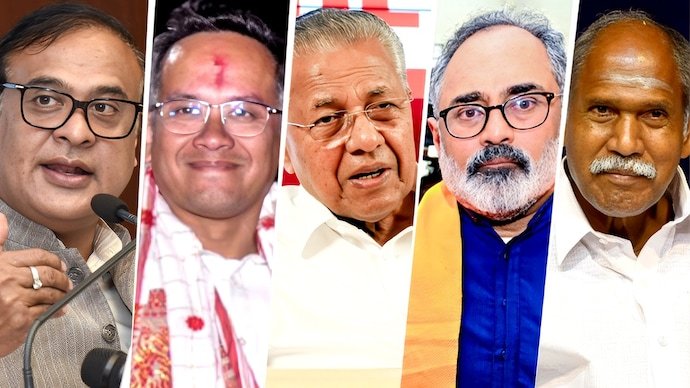
- Election Overview: Scale, Stakes, and Structure
- Assam Elections: NDA Targets Hat-Trick Amid Fierce Contest
- Kerala Elections: Left vs Congress in a Classic Bipolar Battle
- Puducherry Elections: NDA vs INDIA Bloc with New Entrants
- Voter Participation and Election Management
- National Significance: More Than Regional Elections
- Conclusion: A Crucial Political Moment
Polling for the Assembly Elections in Assam, Kerala, and Puducherry began at 7 am under tight Security and extensive monitoring arrangements. These elections are crucial for multiple reasons: the BJP-led NDA is aiming for a third consecutive term in Assam and to retain power in Puducherry, while the Left Democratic Front is seeking a historic hat-trick in Kerala. Meanwhile, the Congress-led alliances are attempting a comeback across all three regions. With over three crore voters participating and results scheduled for May 4, the elections are being closely watched for both regional and national political implications.
Election Overview: Scale, Stakes, and Structure
The elections span three politically diverse regions, each presenting a unique electoral battle. Authorities have deployed security personnel, enabled webcasting at polling booths, and introduced voter-friendly facilities to ensure smooth and transparent voting.
| Region | Total Seats | Voters | Main Contest |
|---|---|---|---|
| Assam | 126 | 2.5+ crore | NDA vs Congress-led alliance |
| Kerala | 140 | 2.71 crore | LDF vs UDF |
| Puducherry | 30 | 9.5 lakh | NDA vs INDIA bloc |
In addition, by-elections are being held in five Assembly constituencies across Goa, Karnataka, Nagaland, and Tripura due to vacancies caused by the demise of sitting MLAs.
Assam Elections: NDA Targets Hat-Trick Amid Fierce Contest
In Assam, the election is largely a direct contest between the BJP-led National Democratic Alliance (NDA) and the Congress-led opposition alliance. The NDA includes regional partners like the Asom Gana Parishad (AGP), while the opposition features a mix of parties including AIUDF and Raijor Dal.
Key Political Players and Contest
- Himanta Biswa Sarma: Seeking another term and a BJP hat-trick
- Gaurav Gogoi: Leading Congress campaign and contesting Assembly debut
A total of 722 candidates are contesting, with over 31,000 polling stations set up across the state.
Main Issues in Assam
- Identity politics and voter roll revisions
- Illegal infiltration and border security
- Governance and development performance
- Political controversies and allegations
Key constituencies include Jalukbari, where Sarma is aiming for a sixth consecutive win, and Jorhat, where Gaurav Gogoi is making a significant political move from national to state politics.
In the previous election, the NDA secured 76 seats, with the BJP emerging as the largest party. The Congress-led alliance will be aiming to reverse that outcome.
Kerala Elections: Left vs Congress in a Classic Bipolar Battle
Kerala continues its long-standing tradition of a bipolar political contest between the ruling Left Democratic Front (LDF) and the Congress-led United Democratic Front (UDF). The BJP remains a smaller player but is attempting to expand its presence.
What Makes This Election Unique
The LDF is aiming for a third consecutive term—something historically rare in Kerala, where voters have typically alternated between alliances.
Key Leaders and Constituencies
- Pinarayi Vijayan: Contesting from Dharmadam, seeking continued leadership
- V D Satheesan: Aiming to retain Paravur seat
- Rajeev Chandrasekhar: Contesting from Nemom, a key BJP focus seat
- KK Shailaja: Contesting from Peravoor, a high-profile Left candidate
- Chandy Oommen: Representing Puthuppally
Main Campaign Themes
- LDF: Welfare schemes, governance record, social security
- UDF: Unemployment, inflation, financial management concerns
In 2021, the LDF broke Kerala’s trend by winning back-to-back elections, securing 97 seats. Replicating that success would mark a significant political milestone.
Puducherry Elections: NDA vs INDIA Bloc with New Entrants
Puducherry presents a closely fought contest between the NDA alliance and the India bloc. The NDA, led by Chief Minister N Rangasamy, is aiming to retain power by highlighting its governance model and alignment with the central government.
Key Political Developments
- N Rangasamy: Contesting from two constituencies
- INDIA Bloc: Congress, DMK, and VCK aiming for comeback
- New Factor: Entry of Tamilaga Vettri Kazhagam (TVK)
The presence of a new political party adds an interesting dimension, potentially splitting votes and influencing the final outcome.
Security and Monitoring Measures
- 200+ polling stations marked as vulnerable
- Drone surveillance to prevent malpractice
- Special booths for women and accessible voting facilities
In the last election, the NDA secured a majority with 16 seats, while the opposition alliance managed 8 seats.
Voter Participation and Election Management
Authorities have made extensive arrangements to ensure smooth polling across all regions. This includes:
- Deployment of thousands of security personnel
- Webcasting and live monitoring of polling stations
- Facilities like water, fans, and assistance for elderly voters
- Special initiatives to encourage higher voter turnout
Such measures are crucial, especially given the scale of participation and the high stakes involved.
National Significance: More Than Regional Elections
While these are state-level elections, their impact extends far beyond regional politics. The results will serve as a key indicator of national political trends.
Why These Elections Matter
- Test of NDA’s strength in key regions
- Opportunity for opposition alliances to regain momentum
- Indicator of voter sentiment ahead of future national elections
- Assessment of governance models across different states
For political parties, these elections are not just about winning seats—they are about shaping narratives and strategies for the future.
Conclusion: A Crucial Political Moment
The Assembly Elections in Assam, Kerala, and Puducherry represent a significant moment in India’s political landscape. With the BJP and Left aiming for hat-tricks and the Congress-led alliances seeking a comeback, the stakes are exceptionally high.
Each region presents a unique contest, influenced by local issues, leadership, and historical voting patterns. At the same time, the broader implications make these elections a key milestone in understanding the direction of Indian Politics.
As voters cast their ballots, the outcomes will not only determine state governments but also offer insights into shifting political dynamics. With results set to be announced on May 4, all eyes remain on whether incumbents will retain power or if voters will signal a change.
For breaking news and live news updates, like us on Facebook or follow us on Twitter and Instagram. Read more on Latest India on thefoxdaily.com.






COMMENTS 0