- Who, What, When, Where, Why, and How
- Understanding the Legal Framework Behind the Motion
- Seven Charges Raised by the Opposition
- The Bihar Electoral Roll Controversy
- Political Context and Allegations of Bias
- Analysis: Why Was the Motion Rejected?
- Insight: Independence vs Accountability
- A Broader Perspective
- A Light Note on Parliamentary Reality
- Conclusion: What Happens Next?
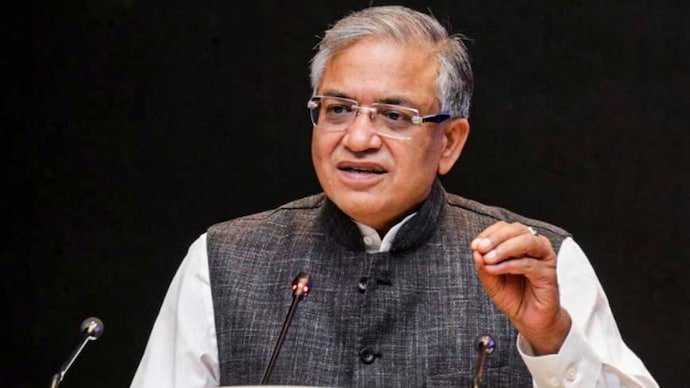
An impeachment motion seeking the removal of Chief Election Commissioner Gyanesh Kumar has been formally rejected by both Houses of Parliament, bringing the matter to a halt at the initial stage. The decision was taken separately by the Chairman of the Rajya Sabha and the Speaker of the lok Sabha after reviewing the notice submitted by opposition members. The development marks a significant moment in India’s constitutional and electoral framework, raising questions about accountability, procedure, and political intent.
The motion, dated March 12, 2026, was signed by 63 members of the Rajya Sabha and invoked provisions under Article 324(5) and Article 124(4) of the Constitution of India, along with the Judges (Inquiry) Act, 1968 and the Chief Election Commissioner and Other Election Commissioners Act, 2023. However, after what was described as a careful and objective assessment, both presiding officers declined to admit the motion, effectively stopping any further inquiry or debate on the matter.
Who, What, When, Where, Why, and How
Who: Chief Election Commissioner Gyanesh Kumar and members of the Indian Parliament.
What: An impeachment motion seeking Kumar’s removal from office.
When: Notice submitted on March 12, 2026; rejected shortly thereafter.
Where: Parliament of India, including both the Rajya Sabha and Lok Sabha.
Why: Allegations of misconduct, bias, and electoral irregularities.
How: The motion was dismissed at the admission stage by the presiding officers using powers under the Judges (Inquiry) Act, 1968.
Understanding the Legal Framework Behind the Motion
The process to remove a Chief Election Commissioner is deliberately stringent, reflecting the importance of maintaining independence in electoral oversight. The Constitution provides safeguards to ensure that such positions are not influenced by political pressure.
Under Article 324(5), the Chief Election Commissioner can only be removed in a manner similar to that of a Supreme Court judge. This involves a detailed inquiry process, beginning with the admission of a motion by the Speaker or Chairman.
| Provision | Purpose |
|---|---|
| Article 324(5) | Ensures independence of Election Commission |
| Article 124(4) | Defines removal process similar to judges |
| Judges (Inquiry) Act, 1968 | Outlines procedure for investigation |
| CEC Act, 2023 | Specifies service conditions and removal rules |
In this case, both the Rajya Sabha Chairman and Lok Sabha Speaker exercised their authority to reject the motion at the preliminary stage, meaning no investigative committee will be formed.
Seven Charges Raised by the Opposition
The opposition’s notice outlined seven major allegations against Gyanesh Kumar, focusing primarily on his conduct and decisions while in office. These included:
- Partial and discriminatory conduct
- Proven misbehaviour in official duties
- Obstruction of electoral fraud investigations
- Mass disenfranchisement of voters
- Partisan actions favouring specific political parties
- Irregularities in electoral roll revisions
- Violation of constitutional responsibilities
These allegations, if proven, could have serious implications. However, since the motion was not admitted, they will not be formally examined through a parliamentary inquiry process.
The Bihar Electoral Roll Controversy
One of the central issues highlighted by the opposition was the Special Intensive Revision (SIR) of Electoral Rolls in Bihar. Critics argue that the process may have led to the exclusion of eligible voters, raising concerns about disenfranchisement.
Electoral roll revisions are routine exercises aimed at updating voter lists. However, their execution must be transparent and inclusive to maintain public trust. Any perception of bias or irregularity can quickly become a political flashpoint.
In this case, opposition parties alleged that the revision process disproportionately affected certain voter groups. Supporters of the Election Commission, on the other hand, argue that such exercises are necessary to ensure accuracy and eliminate duplicate or ineligible entries.
Political Context and Allegations of Bias
The impeachment motion also reflects broader political tensions. Opposition parties accused the Chief Election Commissioner of acting in a manner that benefits the ruling government, particularly the Bharatiya Janata Party (BJP).
Such आरोप are not uncommon in highly competitive political environments. Election management bodies often find themselves at the center of disputes, especially during major electoral cycles.
However, it is important to note that allegations alone do not constitute proof. The rejection of the motion means that these claims remain untested in a formal legal or parliamentary setting.
Analysis: Why Was the Motion Rejected?
The decision to reject the motion at the admission stage suggests that the presiding officers did not find sufficient grounds to proceed with an inquiry. This could be due to several reasons:
- Lack of concrete evidence supporting the allegations
- Procedural or technical shortcomings in the notice
- Interpretation of legal standards required for admission
The threshold for admitting such motions is intentionally high to prevent misuse for political purposes. If every allegation led to an inquiry, it could undermine the stability and independence of constitutional offices.
Insight: Independence vs Accountability
This episode highlights a fundamental tension in democratic systems the balance between independence and accountability. On one hand, institutions like the Election Commission must be protected from political interference. On the other hand, they must remain accountable for their actions.
The current framework leans heavily toward protecting independence, which explains the strict requirements for removal. While this ensures stability, it also raises questions about how grievances against such officials can be effectively addressed.
A Broader Perspective
If constitutional positions were easy to challenge, governance could become unstable. At the same time, if they are too difficult to question, public confidence may erode. Striking the right balance is a continuous challenge for democratic systems.
In this case, the rejection of the motion may be seen by some as a safeguard against political misuse, while others may view it as a missed opportunity for accountability. Both perspectives reflect legitimate concerns.
A Light Note on Parliamentary Reality
Parliamentary procedures can sometimes feel like a complex maze of rules, clauses, and counter-clauses. By the time a motion reaches the stage of discussion, it has already passed through multiple layers of scrutiny. In this instance, the process ended before it could even begin in earnest a reminder that in Politics, not every battle makes it to the main stage.
Conclusion: What Happens Next?
With the rejection of the impeachment motion by both the Rajya Sabha Chairman and the Lok Sabha Speaker, the matter is effectively closed for now. No investigation committee will be formed, and no further parliamentary proceedings will take place on this issue.
However, the political debate surrounding the Election Commission and its functioning is unlikely to end here. Questions about electoral integrity, transparency, and institutional trust will continue to shape public discourse.
Ultimately, the strength of a democracy lies not just in its institutions, but in the confidence people have in them. Ensuring that confidence remains intact is a responsibility shared by all stakeholders government, opposition, and independent bodies alike.
For breaking news and live news updates, like us on Facebook or follow us on Twitter and Instagram. Read more on Latest India on thefoxdaily.com.





COMMENTS 0