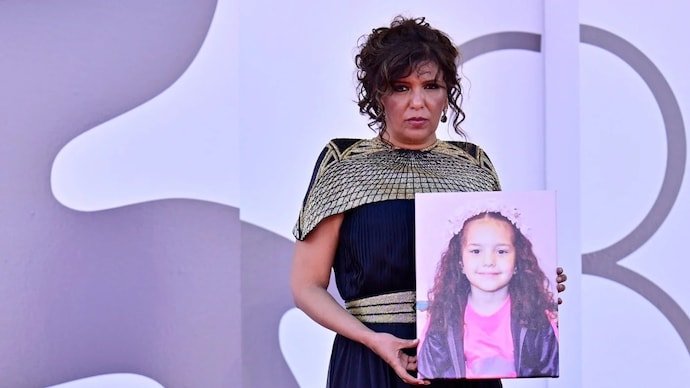
India’s soft power landscape has found itself at the center of a geopolitical storm. The Oscar-nominated film The Voice of Hind Rajab, which was scheduled for release this week, has reportedly been blocked by India’s Central Board of Film Certification (CBFC). The reason, according to reports, is concern that the film could strain India’s diplomatic ties with Israel during the ongoing Israel-Iran conflict.
This move has sparked widespread debate—not only about censorship and artistic freedom, but also about how global conflicts can influence cultural expression within a country.
Why Was ‘The Voice of Hind Rajab’ Stopped in India?
According to reports, the CBFC halted the film’s release due to its sensitive subject matter and the potential diplomatic implications. The film’s distributor, Manoj Nandwana, revealed that the movie was screened for CBFC members on February 27, shortly after Prime Minister Narendra Modi’s visit to Israel.
He was later informed that allowing the film’s theatrical release could “impact India-Israel relations,” especially at a time when tensions in the Middle East are running high.
India has maintained a carefully balanced diplomatic stance—strengthening ties with Israel in defense and technology, while avoiding direct condemnation of either Israel or Iran during the ongoing conflict. This neutrality has allowed New Delhi to engage with multiple sides, but it also makes decisions like this highly sensitive.
Global Release vs India’s Ban
What makes the controversy even more striking is that the film has already been released or screened in several countries with strong ties to Israel, including the United States, the United Kingdom, France, and Italy.
Interestingly, even in Israel, legal debates around the film have emerged, with reports suggesting that a Tel Aviv court intervened to allow its screening after initial resistance.
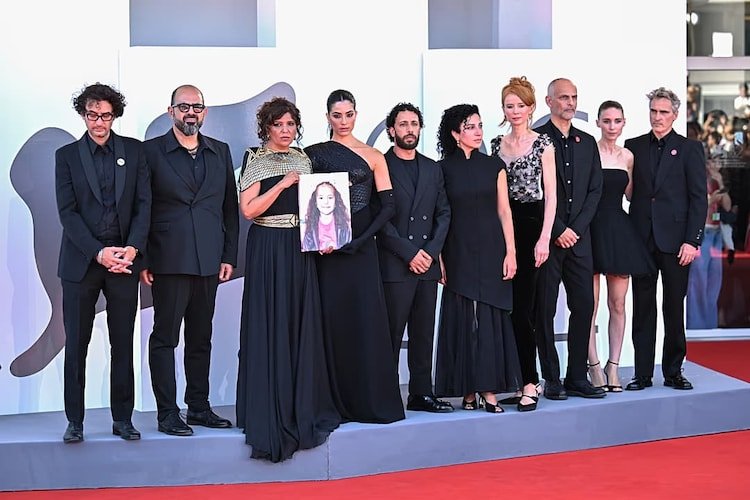
The film had its world premiere at the Venice International Film Festival, where it received a 20-minute standing ovation and won multiple awards, including the Grand Jury Prize.
About the Film: A Story That Sparked Global Outrage
Directed by Tunisian filmmaker Kaouther Ben Hania, the film tells the heartbreaking story of Hind Rajab, a five-year-old Palestinian girl whose death during Israel’s 2024 Gaza offensive shocked the world.
The film blends documentary and dramatic storytelling to recreate the final hours of Rajab and her family, while also highlighting the desperate rescue efforts by the Palestinian Red Crescent Society.
At its core, the film is built around real audio recordings—distressing emergency calls made by the child as she remained trapped in a vehicle surrounded by violence.
| Film Detail | Information |
|---|---|
| Film Name | The Voice of Hind Rajab |
| Director | Kaouther Ben Hania |
| Genre | Docudrama |
| Based On | Real घटना of Hind Rajab (Gaza, 2024) |
| Recognition | Oscar-nominated, Venice Film Festival awards |
| Status in India | Release blocked by CBFC |
The Real Incident Behind the Film
The events portrayed in the film trace back to January 29, 2024, during intense Israeli military operations in Gaza’s Tel al-Hawa neighborhood.
Hind Rajab and her family attempted to flee the area by car as bombardments intensified. However, their vehicle came under heavy fire. Reports indicate that multiple family members—including her aunt, uncle, and cousins—were killed in the attack.
Only Hind and her teenage cousin initially survived. Trapped inside the car with the bodies of her relatives, Hind made a desperate call to emergency services, pleading for help as violence escalated around her.
The Palestinian Red Crescent coordinated efforts to rescue her, negotiating for safe passage to send an ambulance. However, contact was eventually lost with both the child and the rescue team.
Weeks later, the bodies of Hind, her family members, and the medics were discovered. The vehicle reportedly bore hundreds of bullet marks, and images of the aftermath circulated widely, triggering international outrage.
Conflicting Narratives
The incident has been the subject of global scrutiny and conflicting accounts. While international media reports and humanitarian organizations highlighted the scale of the tragedy, Israeli authorities stated that their forces were not in proximity to the vehicle at the time of the attack.
This divergence in narratives has made the incident highly sensitive and politically charged—one of the key reasons the film itself has become controversial.
Political Reactions in India
The decision to block the film has drawn sharp criticism from opposition leaders and public figures in India.
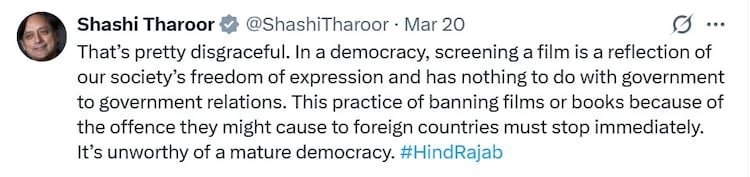
Senior Congress leader Shashi Tharoor described the move as “disgraceful” and argued that artistic expression should not be restricted due to potential diplomatic discomfort.
Other political voices echoed similar concerns, stating that censorship of films based on foreign policy considerations undermines democratic values and freedom of expression.
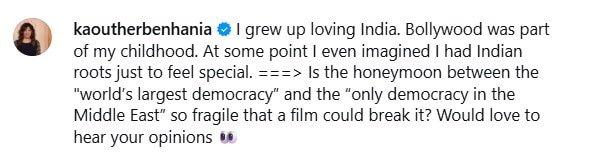
Meanwhile, the film’s director Kaouther Ben Hania also expressed disappointment, questioning whether cultural ties between nations are so fragile that a single film could disrupt them.
Art, Diplomacy, and Censorship
The controversy highlights a deeper issue—the intersection of art, geopolitics, and state policy. In an increasingly interconnected world, films are no longer just cultural products; they can become instruments of narrative, perception, and influence.
For governments, especially those balancing complex international relationships, such content can pose difficult choices. For artists and audiences, however, these decisions often raise concerns about censorship and the limits of free expression.
Conclusion
The blocking of The Voice of Hind Rajab in India is more than just a film controversy—it reflects the broader tensions between diplomacy, narrative control, and artistic freedom in a time of global conflict.
At the heart of the debate lies a deeply tragic story—that of a five-year-old girl whose final moments have now become the subject of international attention and political debate. While the film may not be screened in India for now, the questions it raises are unlikely to fade anytime soon.
For breaking news and live news updates, like us on Facebook or follow us on Twitter and Instagram. Read more on Latest India on thefoxdaily.com.





COMMENTS 0