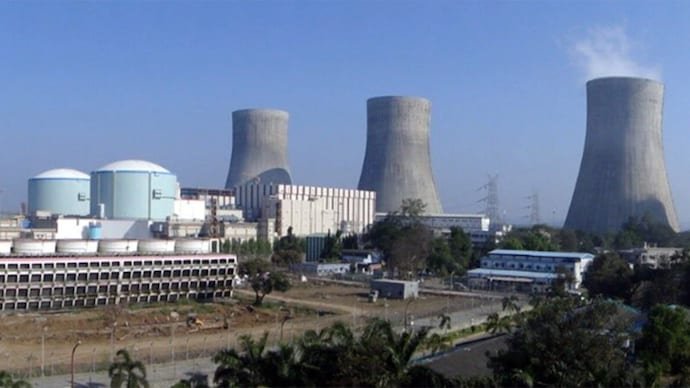
- What Happened at Kalpakkam?
- Why This Achievement Is a Big Deal
- India’s Three-Stage Nuclear Program Explained
- Thorium Advantage: India’s Hidden Energy Wealth
- Why the US, France, and Japan Failed
- Energy Security: A Strategic Game-Changer
- Global Impact: A New Nuclear Leader Emerges
- Conclusion: A Defining Moment in India’s Nuclear Journey
India achieved a major scientific and strategic milestone on April 6 when its 500 MWe Prototype Fast Breeder Reactor (PFBR) at Kalpakkam, Tamil Nadu, reached first criticality. This means the reactor successfully initiated a self-sustaining nuclear chain reaction for the first time. The achievement is significant not just for India, but globally—because countries like the United States and France, despite investing billions, failed to sustain similar fast breeder reactor programs. The development marks a key step in India’s long-term nuclear energy strategy, aimed at reducing dependence on imported fuels and harnessing its vast thorium reserves.
What Happened at Kalpakkam?
The PFBR at Kalpakkam reaching first criticality marks the transition from construction to active nuclear operation. It signifies that the reactor core has begun a controlled fission process capable of sustaining itself without external intervention.
The reactor uses mixed oxide (MOX) fuel and liquid sodium as a coolant—an advanced but technically demanding combination. Following this milestone, the reactor will undergo low-power testing phases before reaching full commercial operation.
Key Features of the Kalpakkam PFBR
| Feature | Details |
|---|---|
| Capacity | 500 MWe |
| Type | Fast Breeder Reactor (FBR) |
| Fuel | Mixed Oxide (MOX) |
| Coolant | Liquid Sodium |
| Milestone Achieved | First Criticality |
This milestone places India among a very small group of nations capable of developing and operating such advanced nuclear technology.
Why This Achievement Is a Big Deal
The Kalpakkam success is not just another reactor milestone—it represents a breakthrough in nuclear technology that has challenged even the most advanced economies.
Fast breeder reactors are unique because they produce more nuclear fuel than they consume. This makes them highly efficient and strategically valuable, especially for countries like India that have limited uranium reserves.
What Makes Fast Breeder Reactors Special
- They generate more fissile material than they use
- They enable a closed nuclear fuel cycle
- They reduce dependence on imported uranium
- They pave the way for long-term energy sustainability
Only Russia currently operates fast breeder reactors at a commercial scale, making India’s progress even more notable.
India’s Three-Stage Nuclear Program Explained
The PFBR is a crucial part of India’s long-term nuclear vision, first proposed by Dr. Homi Jehangir Bhabha. The program is designed to maximize the use of India’s natural resources.
Stage 1: Uranium-Based Reactors
India uses natural uranium to generate electricity, producing plutonium as a byproduct.
Stage 2: Fast Breeder Reactors
Reactors like the PFBR use plutonium as fuel and generate more fissile material than they consume.
Stage 3: Thorium-Based Reactors
India plans to use thorium to produce uranium-233, enabling long-term, sustainable nuclear energy.
This three-stage approach is uniquely suited to India’s resource profile—limited uranium but abundant thorium reserves.
Thorium Advantage: India’s Hidden Energy Wealth
India possesses one of the largest thorium reserves in the world, particularly along the coastal regions of Kerala, Odisha, Andhra Pradesh, and Tamil Nadu.
The Kalpakkam reactor plays a critical role in unlocking this potential. While it initially uses uranium-based fuel, it sets the stage for transitioning to thorium-based systems in the future.
Why Thorium Matters
- More abundant in India than uranium
- Safer and more stable as nuclear fuel
- Capable of powering the country for centuries
- Reduces dependence on global fuel markets
In simple terms, thorium could become India’s long-term energy backbone—and the PFBR is the bridge to that future.
Why the US, France, and Japan Failed
Despite early Leadership in nuclear technology, several advanced countries struggled to sustain fast breeder reactor programs.
United States
The US built early breeder reactors, including the Fermi 1 project. However, technical failures, including a partial meltdown caused by coolant blockage, undermined confidence. Later projects were abandoned due to high costs and safety concerns.
France
France invested heavily in the Superphenix reactor, once considered a flagship project. However, it faced repeated technical issues such as sodium leaks and corrosion, along with strong political opposition. It was eventually shut down in 1998.
Japan
japan’s Monju reactor also suffered from sodium leaks and operational setbacks. Despite multiple attempts to revive it, the project was permanently closed after limited operation.
Common Challenges
- High operational and construction costs
- Technical complexities of sodium coolant
- Safety concerns and accidents
- Availability of cheap uranium reducing urgency
In contrast, India persisted with the technology, driven by necessity and long-term planning.
Energy Security: A Strategic Game-Changer
India’s success at Kalpakkam has significant implications for its energy future. The country currently generates a relatively small portion of its electricity from nuclear power but aims to expand this capacity significantly.
Benefits of the PFBR for India
- Reduces dependence on imported uranium
- Provides stable and clean baseload power
- Enhances Energy Security
- Supports long-term sustainability goals
Once fully operational, the reactor is expected to generate enough electricity to power millions of homes while also producing fuel for future reactors.
Global Impact: A New Nuclear Leader Emerges
India’s achievement positions it as a leader in advanced nuclear technology. While many countries have stepped back from breeder reactor programs, India has moved forward with determination.
The success also strengthens India’s strategic autonomy, allowing it to reduce reliance on external energy sources and navigate Global energy challenges more effectively.
In a world increasingly focused on Clean Energy and sustainability, this development enhances India’s role in shaping the future of nuclear power.
Conclusion: A Defining Moment in India’s Nuclear Journey
The successful criticality of the Kalpakkam Fast Breeder Reactor marks a defining moment in India’s scientific and energy journey. It demonstrates the country’s ability to overcome complex technological challenges that even advanced nations could not sustain.
Beyond the technical achievement, the reactor represents a strategic shift toward energy independence, sustainability, and long-term resource utilization. By unlocking the potential of thorium, India is laying the foundation for a future where clean and reliable energy is both abundant and domestically sourced.
As the reactor moves toward full operation, its impact will extend far beyond electricity generation—it will shape India’s energy security, economic resilience, and global standing for decades to come.
For breaking news and live news updates, like us on Facebook or follow us on Twitter and Instagram. Read more on Latest India on thefoxdaily.com.






COMMENTS 0