- A Mother’s Loss That Echoes Across Communities
- Local Allegations: Drugs Sold in Plain Sight
- More Than One Family: A Pattern of Loss
- The Social and Economic Impact
- Voices from the Ground: Anger and Appeal
- Police Response and Ground Reality
- Understanding the Bigger Picture
- Analysis: Why the Crisis Persists
- What Needs to Change
- A Human Story Behind the Headlines
- Conclusion
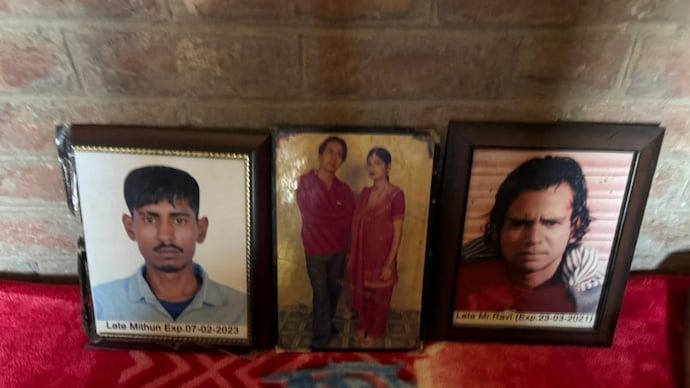
A deeply emotional incident from Kapurthala district in Punjab has once again brought the state’s ongoing drug crisis into sharp focus. In Pandori Mohalla near Sultanpur Lodhi, an elderly mother has claimed that she has lost four of her five sons to drug addiction, while her only surviving son is now bedridden with severe liver damage, allegedly caused by substance abuse.
The woman made a public appeal to Punjab Chief Minister Bhagwant Mann, urging urgent intervention to save her last son. Her plea has not only captured attention but also sparked wider outrage in the community, where several families say they are facing similar tragedies.
The situation raises urgent questions: How widespread is the drug problem in Punjab today? Why do locals claim drugs are still easily available? And what more needs to be done to address a crisis that continues to devastate families?
A Mother’s Loss That Echoes Across Communities
The grieving mother’s words reflect unimaginable loss and helplessness. She described how addiction claimed the lives of four of her sons, leaving her last child fighting for survival. According to her, even medical intervention has reached its limits.
“I am the mother of five sons. Drugs snatched four from me, and the fifth is lying on the bed… even doctors have given up.”
Her appeal is not just personal—it has become symbolic of a much larger crisis affecting many households across the region. In her voice, many residents hear their own stories of loss, struggle, and frustration.
Local Allegations: Drugs Sold in Plain Sight
Residents of the area, particularly women, have raised serious allegations about the availability of drugs in their locality. They claim that “chitta,” a synthetic drug commonly associated with opioid addiction, is being sold openly—even near the Sultanpur Lodhi police station.
According to locals, traffickers reportedly arrive on motorcycles, deliver packets quickly, and leave without fear. These claims, if accurate, suggest not only a supply issue but also a perceived lack of deterrence.
Such accounts paint a troubling picture: one where the fight against drugs is being waged publicly, yet access remains alarmingly easy at the ground level.
More Than One Family: A Pattern of Loss
What makes this incident particularly alarming is that it is not isolated. Several women in the neighborhood have shared similar experiences—losing multiple sons or watching family members fall into addiction.
In many cases, those affected are primary earners, which compounds the crisis by pushing families into financial instability. The ripple effects extend beyond individuals, impacting entire households and, ultimately, the community.
- Families losing their main sources of income
- Children growing up without parental support
- Households forced to sell belongings to sustain addiction
- Increasing emotional and psychological distress
This pattern suggests that the issue is deeply rooted and systemic, rather than a series of isolated incidents.
The Social and Economic Impact
Drug addiction does not operate in isolation—it affects every aspect of life. In areas like Pandori Mohalla, residents say the crisis has eroded both the social fabric and economic stability of the community.
Young individuals, once seen as the backbone of their families, are now caught in cycles of dependency. As addiction deepens, basic household items are often sold to sustain the habit, leading to further impoverishment.
The long-term impact is equally concerning. Children growing up in such environments face increased vulnerability, limited access to Education, and a higher risk of repeating the same patterns.
Voices from the Ground: Anger and Appeal
The incident has triggered visible anger among local residents, especially women. Many have openly questioned the effectiveness of the government’s anti-drug campaign, often described as a “war against drugs.”
For them, the gap between policy and reality is stark.
“Our sons are gone, at least save these innocent children,” one grandmother pleaded, pointing toward young children playing nearby.
Such statements reflect not just grief, but also a demand for accountability and immediate action.
Police Response and Ground Reality
Following the public outcry, police officials visited the area and acknowledged the seriousness of the situation. Authorities stated that the incidents have been taken into account and that patrolling in the area has been increased.
While this response indicates awareness, residents remain skeptical. For many, the key concern is not just enforcement after incidents occur, but prevention—ensuring that drugs do not reach communities in the first place.
This highlights a common challenge in addressing drug-related issues: enforcement alone is not enough without consistent monitoring, community engagement, and systemic intervention.
Understanding the Bigger Picture
Punjab’s struggle with drug abuse is not new. Over the years, the issue has been linked to a combination of factors, including trafficking routes, economic challenges, and social vulnerabilities.
Efforts have been made at various levels to combat the problem, including awareness campaigns, stricter enforcement, and rehabilitation programs. However, incidents like this suggest that gaps remain in implementation and reach.
To understand the complexity, consider this:
| Factor | Impact |
|---|---|
| Easy Availability | Increases risk of addiction among youth |
| Economic Stress | Makes individuals more vulnerable to substance abuse |
| Lack of Awareness | Delays early intervention and treatment |
| Weak Enforcement Perception | Reduces fear among traffickers |
Addressing the crisis requires tackling all these aspects simultaneously—not just focusing on one.
Analysis: Why the Crisis Persists
At its core, the persistence of drug abuse in regions like Kapurthala points to a disconnect between policy intent and on-ground execution. While large-scale campaigns create visibility, their effectiveness depends on consistent, localized action.
Another key issue is stigma. Families often hesitate to seek help due to social pressure, allowing addiction to worsen before intervention begins. By the time action is taken, the damage is often severe.
There is also the challenge of rehabilitation. Recovery requires long-term support, counseling, and community acceptance—factors that are not always readily available.
And here’s a hard truth, with a touch of reality: fighting drugs is not just about catching suppliers—it’s about breaking a cycle. And cycles, unfortunately, don’t break overnight.
What Needs to Change
Experts and community voices often point toward a multi-layered approach to effectively tackle drug abuse:
- Stronger local enforcement: Regular monitoring and quick action against traffickers
- Community involvement: Encouraging residents to report and resist drug activities
- Rehabilitation support: Accessible and affordable treatment centers
- Youth engagement: Education, employment, and skill development programs
These steps, when implemented together, can create a more sustainable response to the crisis.
A Human Story Behind the Headlines
Beyond statistics and policy discussions, this is ultimately a human story. A mother’s plea to save her last son is not just news—it is a reflection of pain that many families continue to endure silently.
It also serves as a reminder that behind every headline about drug abuse, there are real lives, real losses, and real consequences.
If anything, this incident forces a pause—a moment to look beyond numbers and understand the depth of the crisis.
Conclusion
The tragedy in Kapurthala has once again brought attention to Punjab’s ongoing battle with drug abuse. While authorities have acknowledged the issue and taken initial steps, the voices from the ground indicate that much more needs to be done.
The road ahead requires not just enforcement, but empathy, awareness, and sustained effort. It demands a collective response—from governments, communities, and individuals alike.
For now, one mother’s cry continues to echo: a plea not just for her son, but for an entire generation at risk.
For breaking news and live news updates, like us on Facebook or follow us on Twitter and Instagram. Read more on Latest India on thefoxdaily.com.






COMMENTS 0