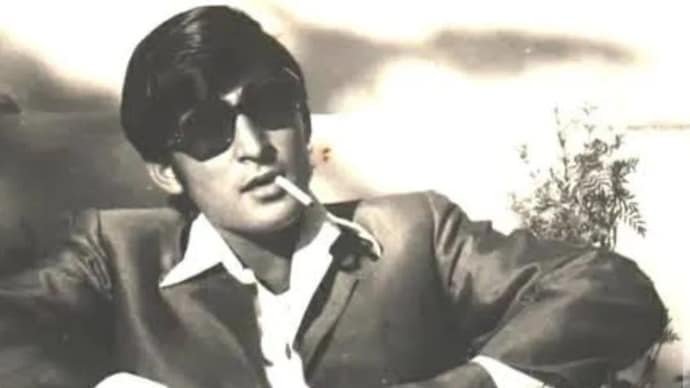
As espionage thrillers like Dhurandhar capture public imagination with tales of undercover missions and patriotism, many are reminded of a real-life figure whose story surpasses fiction in both bravery and tragedy — Ravindra Kaushik, famously known as India’s “Black Tiger.”
A deep-cover operative of India’s Research and Analysis Wing (RAW), Kaushik infiltrated Pakistan at an extraordinary level, serving within its military while secretly providing crucial intelligence to India. His life, however, ended in isolation and suffering, highlighting the often unseen cost of espionage.
Early Life and Recruitment into Intelligence
Ravindra Kaushik was born on April 11, 1952, in Sri Ganganagar, Rajasthan, a region close to the India-Pakistan border. Growing up in a linguistically diverse environment, he became fluent in Punjabi and local dialects — a skill that would later prove invaluable.
While pursuing a commerce degree at SD Bihani College, Kaushik developed a passion for theatre. His acting talent became the turning point of his life. During a national drama competition in Lucknow in 1973, where he performed a mono-act as an Indian soldier under interrogation, he caught the attention of intelligence officials.
Soon after, he was recruited by RAW and underwent nearly two years of intensive training in Delhi. This included mastering Urdu, understanding Islamic Culture, and studying Pakistan’s geography and social systems. He was also given a new identity — Nabi Ahmed Shakir — which he would fully assume in the years ahead.
Deep-Cover Infiltration into Pakistan
At just 23 years old, Kaushik crossed into Pakistan in 1975, beginning one of the most daring intelligence missions in Indian history. His assignment was deep-cover infiltration — the most dangerous form of espionage.
To establish his cover, he enrolled at Karachi University, where he completed a law degree. Over time, he successfully integrated into Pakistani society and achieved what seemed almost impossible — he joined the Pakistan Army.
Rising through the ranks, Kaushik eventually became a commissioned officer and served as a Major in the Military Accounts Department. This position gave him access to highly sensitive information, which he secretly relayed back to India.
| Key Aspect | Details |
|---|---|
| Name | Ravindra Kaushik |
| Alias | Nabi Ahmed Shakir |
| Birth | April 11, 1952 |
| Mission Start | 1975 (entered Pakistan) |
| Position in Pakistan | Major, Military Accounts Department |
| Active Intelligence Years | 1979–1983 |
| Arrest | 1983 |
| Death | November 21, 2001 (Mianwali Jail) |
Critical Intelligence Contributions
Between 1979 and 1983, Kaushik provided India with high-value intelligence on Pakistani military operations, particularly in the punjab region. He also reportedly shared crucial insights into Pakistan’s nuclear program, including developments at the Kahuta facility.
His intelligence inputs are believed to have given India a significant strategic advantage during a sensitive period. In recognition of his exceptional service, then Prime Minister Indira Gandhi is said to have awarded him the codename “Black Tiger.”
Despite living under an assumed identity, Kaushik fully integrated into Pakistani life. He married a local woman named Amanat and started a family, all while continuing his covert mission for India.
Betrayal and Arrest
Kaushik’s cover was not broken due to his own mistake, but rather because of a failure in the intelligence chain. In 1983, RAW sent a low-level operative, Inayat Masih, to establish contact with him. Unfortunately, Masih was captured by Pakistani intelligence agencies.
Under intense interrogation, Masih revealed details that led authorities to Kaushik. He was arrested in September 1983 in Multan, marking the end of his covert operations and the beginning of a long period of suffering.
Years of Imprisonment and Torture
Following his arrest, Kaushik endured years of brutal torture and isolation. He was held in multiple high-security facilities, including Kot Lakhpat and Mianwali jails, as well as interrogation centers in Sialkot.
Initially, he maintained his false identity, refusing to reveal his Indian origins despite severe physical and psychological torture. Eventually, he was tried by a Pakistani military court and sentenced to death in 1985. The sentence was later commuted to life imprisonment.
During his incarceration, Kaushik managed to send letters to his family in India. In one emotional message, he questioned whether such suffering was the fate of those who sacrificed everything for their country.
Death in Captivity
After nearly two decades in prison, Ravindra Kaushik died on November 21, 2001, in Mianwali Central Jail. He suffered from heart disease and pulmonary tuberculosis, conditions worsened by years of neglect and harsh treatment.
He was buried behind the prison walls in an unmarked grave, far from his homeland, without recognition or ceremony.
Legacy of an Unsung Hero
Ravindra Kaushik’s story stands as one of the most remarkable yet tragic chapters in India’s intelligence history. Unlike cinematic portrayals of spies, his life reflects the harsh reality of espionage — where success often remains unrecognized, and sacrifice goes unseen.
Even today, he is remembered as one of India’s greatest undercover agents, a man who gave everything for his country without ever receiving public acknowledgment during his lifetime.
His legacy continues to raise important questions about how nations honor and support those who serve in secrecy, ensuring that heroes like the “Black Tiger” are never forgotten.
For breaking news and live news updates, like us on Facebook or follow us on Twitter and Instagram. Read more on Latest India on thefoxdaily.com.






COMMENTS 0