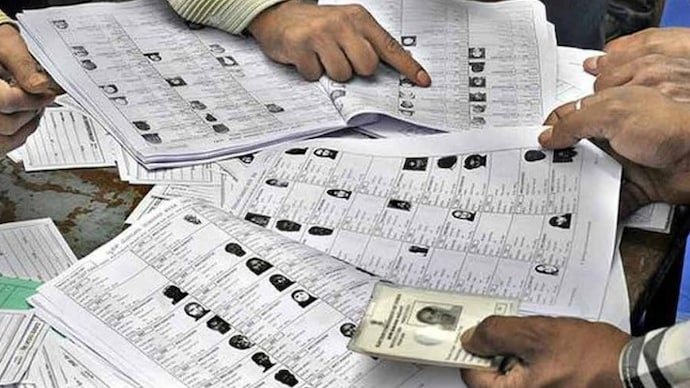
- Massive Cleanup Reshapes India’s Electoral Rolls
- Deletions vs Additions: A Net Decline
- Why Were So Many Names Deleted?
- State-Wise Impact: Uttar Pradesh Leads the List
- Uttar Pradesh Also Leads in New Additions
- West Bengal Sees Controversy Amid Cleanup
- Eliminating ‘Ghost Voters’ and Strengthening Democracy
- Conclusion: Cleaner Rolls, Bigger Responsibility
India’s largest-ever Voter List verification exercise, the second phase of the Special Intensive Revision (SIR), has resulted in the deletion of more than 7.2 crore names across 12 states and one Union Territory. Conducted under the supervision of the Election Commission, the drive aimed to improve the accuracy of Electoral Rolls by removing duplicate, shifted, deceased, or inactive voters. The exercise, which began in October 2025, has significantly reshaped the voter base, with Uttar Pradesh recording the highest number of deletions.
Massive Cleanup Reshapes India’s Electoral Rolls
The SIR exercise initially covered Bihar before expanding to other states and a Union Territory. At the start of the revision process, the combined electorate across these regions stood at approximately 51 crore voters. Following the second phase, the total electorate has been reduced to around 45.8 crore.
This means that nearly 10.2% of the total voter base has been removed a figure that highlights both the scale of the operation and the extent of discrepancies identified in the rolls.
Officials have described the process as a necessary step toward ensuring electoral integrity. After all, an accurate voter list is the backbone of any democratic system without it, even the fairest election can raise questions.
Deletions vs Additions: A Net Decline
While the headline number is the deletion of 7.2 crore names, the process also saw fresh additions. Approximately 2 crore new voters were registered or updated their details through Form 6 (new registration) and Form 8 (corrections and address changes).
Despite these additions, the overall number of voters declined significantly, indicating that deletions far outpaced new registrations.
| Category | Numbers (Approx.) |
|---|---|
| Total Electorate Before SIR | 51 crore |
| Names Deleted (Phase 2) | 7.2 crore |
| New Additions/Updates | 2 crore |
| Final Electorate | 45.8 crore |
The numbers reflect a clear outcome: a leaner but more verified voter database.
Why Were So Many Names Deleted?
The Election Commission identified several categories of voters whose names were removed during the verification process. These were not random deletions but part of a structured effort to eliminate inaccuracies.
- Absent at registered addresses: Around 13 crore cases flagged during verification
- Permanently shifted voters: Approximately 3.1 crore
- Deceased, duplicate, or other discrepancies: Over 1.2 crore
Officials emphasized that many of these names belonged to individuals who had either moved away, passed on, or were duplicated across constituencies.
In simpler terms, the system was finally cleaning up what had been quietly accumulating for years like clearing out old files from a cluttered cabinet.
State-Wise Impact: Uttar Pradesh Leads the List
The scale of deletions varied significantly across states, reflecting differences in population mobility, urbanization, and data accuracy.
Uttar Pradesh recorded the highest number of deletions, with nearly 2.89 crore names removed. Other major states also saw substantial reductions.
| State/UT | Deletion Percentage |
|---|---|
| Andaman and Nicobar Islands | 16.6% |
| Uttar Pradesh | 13.2% |
| Gujarat | 13.1% |
| Chhattisgarh | 11.3% |
| West Bengal | 10.9% |
| Tamil Nadu | 10.6% |
| Goa | 10.2% |
On the other hand, some states reported relatively lower deletion rates:
- Madhya Pradesh: 5.7%
- Rajasthan: 5.4%
- Kerala: 2.5%
- Lakshadweep: 0.3%
Puducherry recorded a moderate decline of around 7%, placing it somewhere in the middle of the spectrum.
Uttar Pradesh Also Leads in New Additions
Interestingly, Uttar Pradesh was not only at the top in terms of deletions but also in fresh additions. The state added approximately 92.4 lakh new voters during the revision process.
Other states also saw notable additions:
- Tamil Nadu: 35 lakh
- Kerala: 20.4 lakh
- Rajasthan: 15.4 lakh
- Madhya Pradesh: 12.9 lakh
- Gujarat: Over 12 lakh
This dual trend high deletions and high additions suggests that while outdated entries were removed, efforts were also made to include eligible new voters, particularly first-time registrants and those who had relocated.
West Bengal Sees Controversy Amid Cleanup
The SIR process in West Bengal attracted significant attention due to disputes over voter verification. Over 60 lakh names were subjected to detailed scrutiny.
Out of these, authorities removed more than 27 lakh names after verification, along with an additional 6 lakh deletions based on objections.
As a result, the total electorate in the state dropped from 7.66 crore to 6.75 crore a substantial reduction ahead of upcoming Elections.
The Controversy highlights the delicate balance between ensuring accuracy and maintaining public trust in the electoral process.
Eliminating ‘Ghost Voters’ and Strengthening Democracy
One of the key objectives of the SIR exercise was to eliminate so-called “ghost voters” entries that exist on paper but do not correspond to active, eligible individuals.
Officials noted that more than 6.5 crore voters had not participated in elections despite being listed, raising concerns about the reliability of the rolls.
By removing such entries, the Election Commission aims to:
- Improve transparency in elections
- Reduce the risk of bogus voting
- Ensure fair representation
- Enhance public confidence in the electoral system
It’s a bit like updating your contact list removing numbers that no longer exist so that the ones that remain actually matter.
Conclusion: Cleaner Rolls, Bigger Responsibility
The completion of Phase 2 of the Special Intensive Revision marks a significant milestone in India’s electoral management. With over 7.2 crore deletions and millions of new registrations, the voter database is now more streamlined and, in theory, more accurate.
However, the exercise also brings responsibility. Ensuring that no eligible voter is wrongly excluded will be just as important as removing invalid entries.
As India prepares for upcoming elections, the success of this massive cleanup will ultimately be judged not just by numbers, but by the credibility and fairness of the democratic process it supports.
Because in a democracy, every vote counts but only if every voter truly exists.
For breaking news and live news updates, like us on Facebook or follow us on Twitter and Instagram. Read more on Latest India on thefoxdaily.com.






COMMENTS 0