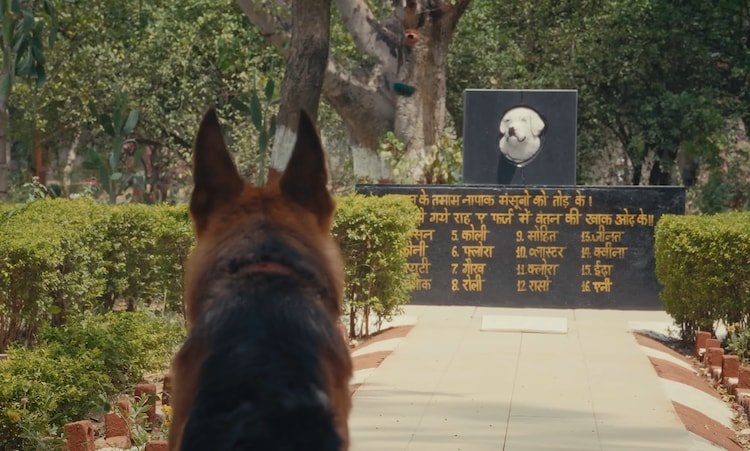
- Indian Army K9 Dogs: The Unsung Heroes of Counterterrorism Operations in Jammu and Kashmir
- Tyson: The Assault Dog Who Took the First Bullet
- Why Military Dogs Are Critical in Counterterrorism Operations
- Sometimes the Price of Glory Is Supreme Sacrifice
- The Ethical Debate Around Military Dogs
- The Empty Leash After the Guns Fall Silent
Indian Army K9 Dogs: The Unsung Heroes of Counterterrorism Operations in Jammu and Kashmir
The canines of the Indian Army and paramilitary forces have consistently taken the lead in counterterrorism operations in Jammu and Kashmir and other high-risk security missions across India. Trained to detect explosives, track infiltrators, and lead assaults on terrorist hideouts, these military working dogs often step into danger before any soldier does. Many of them have paid the ultimate price while protecting the very troops they serve beside.
This is not just a tribute. It is a reminder of the courage, sacrifice, and loyalty displayed by India’s K9 soldiers on the frontlines.
Heavy gunfire once rained down from all directions during an encounter. Standing between the terrorists and his handler was a force that did not understand fear in human terms — only duty. AS Shekhawat, a soldier and dog handler in the Indian Army, later recalled the moment in a Doordarshan documentary.
“The terrorists started shooting heavily. In the middle of bullets flying everywhere, my dog charged from left to right and then back again. He distracted them. He never allowed the enemy to come close. Sometimes he went dangerously near them. When bullets struck around him, he flinched slightly but never retreated. He was always ahead of US. How can I forget him? He may have gone anywhere, but he lives in my heart forever.”
Today, Shekhawat serves with a new dog partner. Yet, inside his room hangs a leash — silent, empty, but full of memory.
Tyson: The Assault Dog Who Took the First Bullet
A recent example of such bravery was seen in the case of Tyson, a German Shepherd attached to the elite 2 Para Special Forces unit. During Operation Trashi-I in the Chhatroo belt of Kishtwar district in Jammu & Kashmir, Tyson led the advance into a suspected terrorist hideout.
As the operation commenced, Tyson crawled toward a mud house where terrorists were believed to be hiding. Suddenly, gunfire erupted. A bullet struck Tyson in the leg. Despite the injury, he continued moving forward, drawing more fire toward himself. His movement exposed the exact position of the terrorists, including top JeM commander Saifullah.
That confirmation enabled Special Forces to close in and neutralize the terrorists after a 326-day pursuit. According to the CRPF trainers who prepared him, the “2 Para SF K9 stared danger in the face.”
Tyson’s story represents countless unnamed K9 heroes who step forward first — knowing only the voice of their handler.
Names We Must Not Forget
Manu. Max. Bindu. Galaxy. Rocket. Zanjeer. Laika. Roli. Roshni. Nawab. Phantom. Tom. Kent. Bobby. Garima. Raaso. Blaster. Magic. Alex. Root. Flora. Zoom. Axel. Gaurav. Ronnie. Mohit. Ida. Aman. Rocky. Cutie. Tiger. Veer. Stella. Jaguar. Gamble. Zeenat. Chadwik. Samrat. Mansi. Suresh. Cracker. Panther. Bravo.
Each name carries a story. Leaving out even one feels like erasing a chapter of courage.
Why Military Dogs Are Critical in Counterterrorism Operations
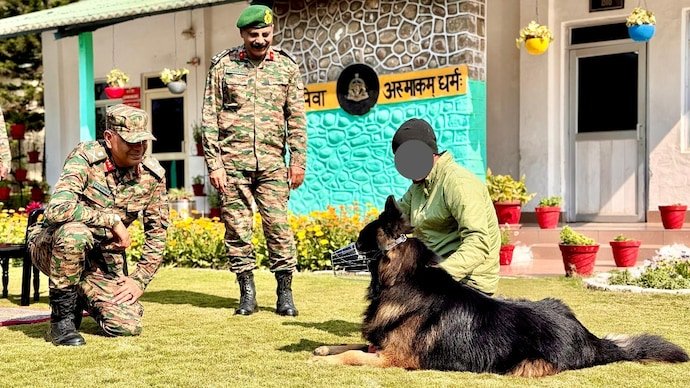
Military working dogs play a decisive role in cordon-and-search operations in Jammu and Kashmir. Their speed allows them to flush out hidden militants. Their noses can detect explosives buried underground or concealed inside vehicles. Their agility helps them navigate dense forests, mountains, and narrow alleys where technology struggles.
These dogs are trained at the CRPF Dog Breeding and Training School (DBTS) in Taralu, Karnataka, and under the Remount Veterinary Corps (RVC) in Meerut, Uttar Pradesh. Training begins as early as eight weeks of age. From the first day, handlers and dogs form bonds that last a lifetime.
In forward bases, they share tents, food, and daily routines. For a dog, the presence of the handler is everything. They do not understand Politics or conflict. They understand companionship.
| Role of Military Dog | Primary Function | Operational Importance |
|---|---|---|
| Tracker Dogs | Track infiltrators and suspects | Prevent cross-border infiltration and ambushes |
| Explosive Detection Dogs | Identify IEDs and hidden explosives | Save civilian and military lives |
| Assault Dogs | Lead entry into terrorist hideouts | Draw enemy fire and expose positions |
| Patrol Dogs | Border and perimeter security | Enhance surveillance in difficult terrain |
Sometimes the Price of Glory Is Supreme Sacrifice
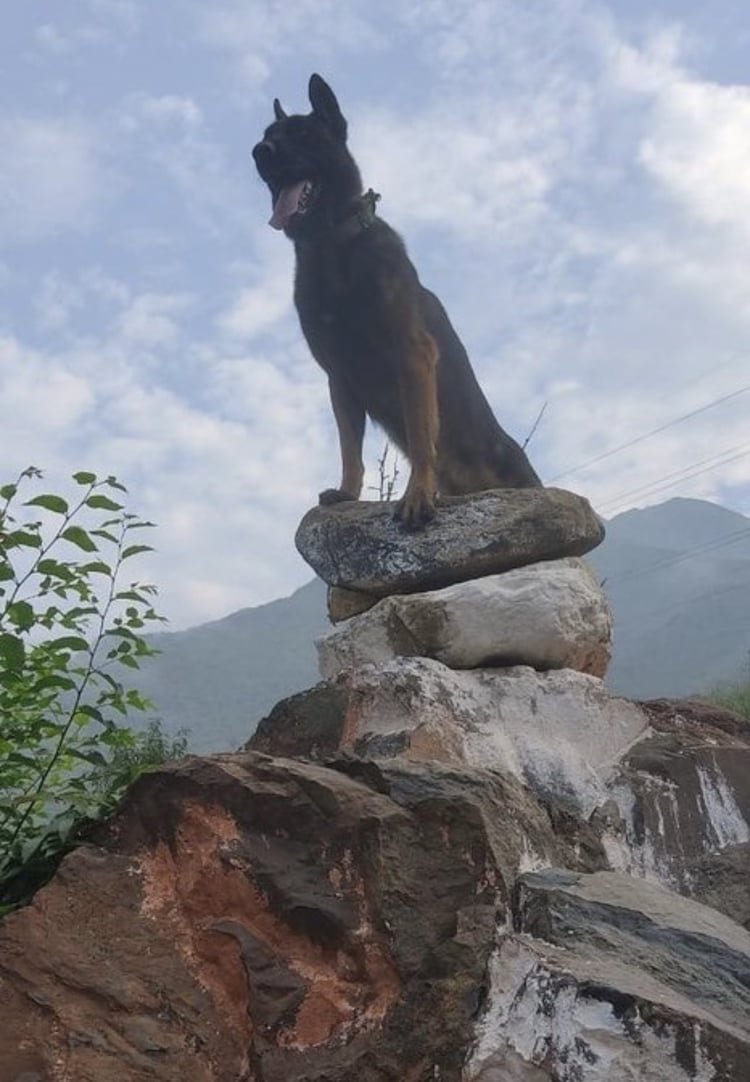
Zoom, a two-year-old Belgian Malinois from the 28 Army Dog Unit, was deployed during Operation Tangpawa in Anantnag district in October 2022. As troops approached a terrorist hideout in dense woodland, militants opened fire.
Zoom charged forward and sustained two bullet injuries — one to the chest and another to his hind leg. Even while wounded, he pinned down a terrorist, enabling soldiers to eliminate both militants. Airlifted to the Advanced Field Veterinary Hospital in Srinagar, Zoom fought for days before succumbing to his injuries. On Republic Day 2023, he was posthumously awarded a Mention-in-Despatches.
His handler described him simply as a “brother in arms.”
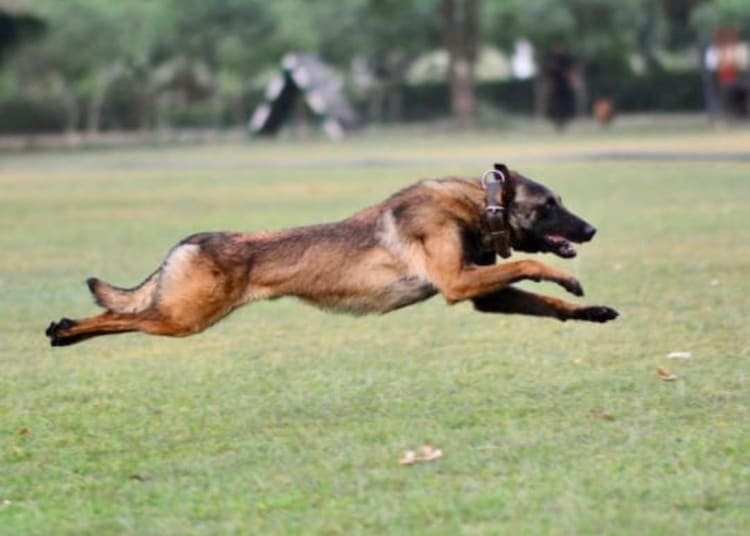
Phantom, another Belgian Malinois born on May 25, 2020, was posted to the White Knight Corps in Jammu after completing assault dog training. On October 28, 2024, terrorists attacked an Army convoy in the Sunderbani area of Akhnoor. During the eight-hour gun battle, Phantom advanced under fire to protect his unit. He was killed by bullets, but his intervention gave soldiers critical time to neutralize the terrorists. In 2025, he received a posthumous Mention-in-Despatches for valor.
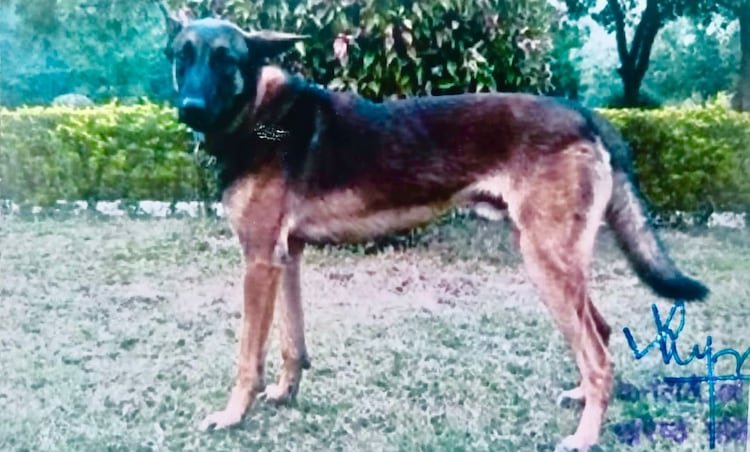
Axel, from the 26 Army Dog Unit, lost his life during Operation Rakshak in Baramulla in July 2022. While searching a house in Wanigam Bala, terrorists fired from concealment. Axel was hit but not before alerting soldiers to the ambush, preventing further casualties. He was laid to rest in Pattan, Jammu and Kashmir, with full military honors.
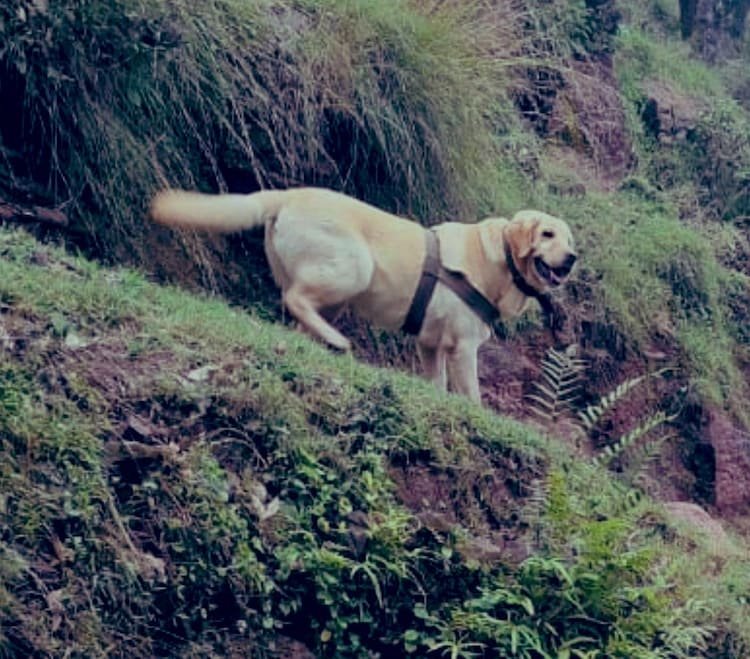
Kent, a female Labrador Retriever, sacrificed her life in September 2023 in Rajouri’s Narla village while shielding her handler during a fierce exchange of fire.
Years earlier, in 2015, Mansi, a Labrador Retriever tracker dog with the 160 Territorial Army Battalion, detected infiltrators in Tangdhar, Kupwara. As she barked and alerted her handler, she was shot. Her handler, Sepoy Ahmed Bashir, retaliated but was also killed before reinforcements arrived.
The Ethical Debate Around Military Dogs
Animal rights activists often question the morality of using dogs in warfare. Dogs do not start conflicts. Humans do. Yet armed forces worldwide continue to rely on military dogs because of their unmatched sensitivity, trainability, and instinct — qualities that machines still cannot fully replicate.
Even under machine-gun fire, their loyalty does not waver. However, society often measures a dog’s life differently from that of a human soldier, despite the risks these animals willingly face.
The Empty Leash After the Guns Fall Silent
This article is not meant to romanticize war or exaggerate heroism. Dogs stand beyond our rhetoric. They do not seek medals, ranks, or recognition.
But when operations end and the firing stops, what remains is an empty leash.
There is a quote often attributed to Charles Bukowski: “If there are junkyards in hell, love is the dog that guards its gates.” In the wreckage created by human conflict, these dogs continue to stand guard.
Not for fame. Not for awards. But for love — and for the handler whose voice they trust more than anything else.
For breaking news and live news updates, like us on Facebook or follow us on Twitter and Instagram. Read more on Latest India on thefoxdaily.com.




COMMENTS 0