NBA Contracts can change the financial future of a player in a matter of minutes. While some of the league’s biggest stars earn more than $50 million per season, others have turned down enormous offers only to receive significantly smaller deals later. Betting on yourself can sometimes deliver a bigger payday, but it can also become an expensive mistake when the market does not respond as expected.
In the 2026-27 NBA season, several of the league’s leading players are set to earn more than $50 million annually. Golden State Warriors superstar Stephen Curry tops the salary list with a reported $62.5 million salary, making him the only player expected to cross the $60 million mark during the campaign. The average NBA contract is also worth millions, highlighting just how much financial security a long-term deal can provide.
However, not every player has managed to turn a strong position into a major contract. From James Harden’s decision to reject a lucrative extension to Dennis Schröder’s unsuccessful bet on free agency, several NBA players have missed out on significant guaranteed money. Some lost their opportunity because of declining performances, while others faced injuries, changing team priorities or an unexpectedly weak market.
Here are 10 NBA players who turned down major contract offers and ultimately left millions of dollars on the table.
1. James Harden Turned Down a $161 Million Brooklyn Nets Offer
James Harden has earned hundreds of millions of dollars throughout his NBA career, but one contract decision involving the Brooklyn Nets remains a notable example of a player potentially missing out on a massive payday.
During the 2021 offseason, Harden reportedly declined a three-year contract extension worth approximately $161 million from Brooklyn. The offer represented a significant financial opportunity, particularly because Harden was already an established superstar and one of the league’s most productive offensive players.
He was also eligible to sign a four-year extension worth approximately $227 million the following offseason. However, his situation with the Nets changed before that opportunity materialised. Brooklyn eventually traded him to the Philadelphia 76ers, where he signed a two-year extension worth approximately $68.6 million, including a player option for the second season.
Harden’s contract situation became increasingly complicated during the following years. By the summer of 2023, he was unable to secure the enormous long-term agreement he had once been positioned to receive. He eventually exercised his player option and requested a trade.
According to the reported figures, Harden earned approximately $100 million during the period in which he could have secured the $161 million Brooklyn offer. Although he remained one of the NBA’s highest-paid players, the difference illustrates how quickly a major contract opportunity can disappear.
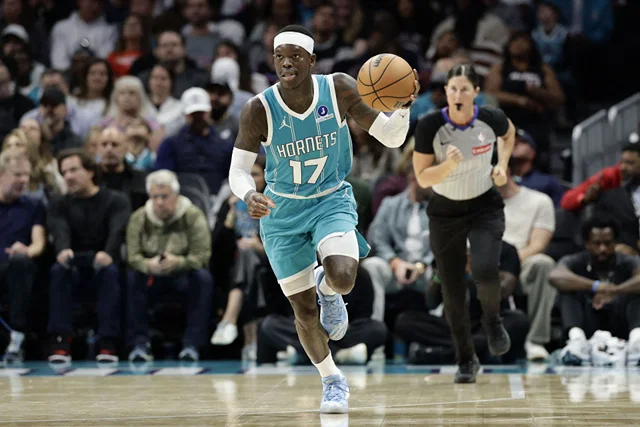
2. Dennis Schröder Rejected an $84 Million Lakers Extension
Dennis Schröder’s decision during his time with the Los Angeles Lakers is one of the most frequently discussed examples of a player misjudging the free-agent market.
In 2021, the Lakers reportedly offered the German guard a four-year contract extension worth $84 million. Instead of accepting the agreement, Schröder decided to wait until the offseason and test his value in free agency. He believed he could secure a more attractive deal after completing the season.
ESPN’s Dave McMenamin reported that a source familiar with the negotiations said Schröder’s representatives preferred to postpone discussions until he reached free agency rather than agree to an extension in February 2021.
Unfortunately, his postseason performances did not help his negotiating position. During the Lakers’ six-game playoff run, Schröder averaged 14.3 points, 3.0 rebounds and 2.8 assists per game. The team’s disappointing postseason exit also affected the circumstances surrounding his next contract.
When free agency arrived, the market was considerably less favourable than he had expected. Schröder eventually signed a one-year contract worth approximately $5.9 million with the Boston Celtics, according to ESPN.
The difference between the Lakers’ reported $84 million offer and his eventual one-year agreement was enormous. Although Schröder continued his NBA career and remained a valuable guard, his decision to wait cost him the chance to secure substantial long-term financial protection.
3. Nerlens Noel Rejected a $70 Million Dallas Mavericks Contract
Former NBA centre Nerlens Noel had an opportunity to secure one of the biggest contracts of his career when he became a restricted free agent with the Dallas Mavericks in 2017.
After appearing in 22 games for Dallas, Noel reportedly received a four-year contract offer worth approximately $70 million. However, the former Kentucky standout declined the proposal, believing he could eventually secure a more valuable agreement.
The decision did not work out as planned. The Mavericks did not return with another comparable offer, leaving Noel in a difficult negotiating position. He ultimately accepted the one-year qualifying offer worth approximately $4.2 million, according to NBA.com.
That agreement gave him another opportunity to prove his value, but it did not lead to the long-term financial security he had initially rejected. Noel never received another contract approaching the reported $70 million proposal.
The situation later became part of a legal dispute. In 2021, ESPN’s Brian Windhorst reported that Noel sued his former agent Rich Paul and his agency, Klutch Sports. The former lottery pick alleged that he had lost approximately $58 million in potential salary during their professional relationship between 2017 and 2020.
Noel’s case highlighted the importance of contract negotiations and representation in professional Basketball. His decision to reject Dallas’ offer remains one of the most striking examples of a player missing out on a major guaranteed contract.
4. Montrezl Harrell Chose the Lakers Over a Reported $80 Million Hornets Offer
Montrezl Harrell entered the 2020 offseason in a strong position after winning the NBA Sixth Man of the Year award with the Los Angeles Clippers. His performances had established him as an energetic frontcourt player capable of providing scoring and rebounding off the bench.
However, his next contract decision became a major talking point. Harrell signed a two-year agreement worth approximately $19 million with the Los Angeles Lakers, moving across the city to join the Clippers’ long-time rivals.
ESPN analyst Kendrick Perkins reported that the Charlotte Hornets had offered Harrell a four-year contract worth approximately $80 million. If accurate, the proposal represented a significantly more lucrative long-term opportunity than the agreement he ultimately accepted with the Lakers.
Harrell’s decision was influenced by his preference to join the Lakers rather than commit to Charlotte. However, his career trajectory changed after leaving the Clippers. He did not consistently reproduce the same level of impact that had helped him win the Sixth Man of the Year award.
The Washington Wizards later traded him to the Hornets in February 2022, bringing him to the franchise that had reportedly been interested in signing him two years earlier.
His situation demonstrates how choosing a particular team or role can sometimes come at the expense of a more secure financial opportunity. A reported $80 million offer would have represented a major long-term commitment, but Harrell instead chose a shorter agreement with Los Angeles.
5. Jonathan Kuminga’s Warriors Contract Standoff Cost Him Security
Jonathan Kuminga’s contract situation with the Golden State Warriors became one of the most closely followed negotiations involving a young NBA forward in 2025.
As a restricted free agent, Kuminga wanted a bigger contract, a more prominent role and greater long-term security. The Warriors reportedly offered him a three-year agreement worth approximately $75 million, but he declined the proposal as negotiations reached a deadlock.
The disagreement reflected the different priorities of the player and the franchise. Kuminga wanted a deal that recognised his potential and provided a clearer path forward, while Golden State had to consider its roster plans and financial flexibility.
Eventually, Kuminga agreed to a two-year contract worth approximately $48.5 million, with a team option for the second season, according to ESPN. The agreement allowed him to remain with the Warriors temporarily, but it did not provide the long-term security he had originally sought.
His situation changed again in February 2026, when he was traded to the Atlanta Hawks. The Hawks subsequently declined to exercise his option, and Kuminga signed a new contract with the Minnesota Timberwolves during the offseason.
Although his negotiations were different from those involving established veterans, Kuminga’s experience shows how complicated restricted free agency can become. A player may believe a particular contract better reflects his value, but team decisions and the structure of an agreement can determine the final outcome.
6. Latrell Sprewell Rejected a $21 Million Timberwolves Contract
Latrell Sprewell’s contract dispute with the Minnesota Timberwolves became memorable not only because of the money involved but also because of his famous response to the team’s reported offer.
Following the 2003-04 NBA season, Minnesota reportedly offered the four-time All-Star a three-year contract worth approximately $21 million. However, Sprewell viewed the proposal as a significant pay cut and decided not to accept it.
His reaction became one of the most widely remembered quotes in NBA contract history. When discussing the offer, Sprewell famously said: “I have a family to feed.”
The comment attracted considerable attention because the proposed contract still represented a substantial amount of money. However, Sprewell was an established NBA player who believed the offer did not reflect his value or financial expectations.
Minnesota did not present another contract proposal, leaving Sprewell without the agreement he had rejected. His 2004-05 campaign ultimately became his final season in the NBA.
During that season, he averaged career-low figures of 12.8 points, 3.2 rebounds and 2.2 assists per game. With his production declining and no new major agreement secured, the opportunity to extend his playing career at a lucrative salary disappeared.
Sprewell’s situation remains a reminder that rejecting a contract without a stronger alternative can carry significant consequences, particularly for veteran players approaching the later stages of their careers.
7. Lance Stephenson Rejected a Bigger Pacers Contract
Lance Stephenson was coming off an impressive period with the Indiana Pacers when he entered free agency in 2014. His energetic playing style, defensive intensity and ability to contribute in multiple areas had made him an important part of the team’s rotation.
Before moving to the Charlotte Hornets, Stephenson reportedly received a five-year contract offer worth approximately $44 million from Indiana, according to ESPN. However, he chose a different path and signed a three-year deal worth approximately $27 million with Charlotte.
At the time, Stephenson’s decision represented a bet on his ability to continue improving and increase his value. However, his performance with the Hornets did not match the expectations created by his previous season.
During the 2013-14 campaign with Indiana, he averaged 13.8 points per game. His production declined significantly after joining Charlotte, where he averaged just 8.2 points per game in his first season.
The Hornets eventually traded Stephenson to the Los Angeles Clippers in June 2015, according to NBA.com. The move marked an early end to his time in Charlotte and further complicated his effort to establish long-term stability in the league.
Stephenson’s experience shows how quickly a player’s market value can change. A strong season can create an opportunity for a major contract, but maintaining that level of performance after changing teams is not always straightforward.
8. Caleb Martin Turned Down a $65 Million Miami Heat Deal
Caleb Martin’s contract decision was particularly surprising because he had played an important role in the Miami Heat’s run to the 2023 NBA Finals.
Martin delivered some of his best basketball during the Eastern Conference Finals against the Boston Celtics. Across seven games, he averaged 19.3 points and 6.4 rebounds, helping Miami overcome a difficult series and reach the championship round.
His performances increased his value ahead of free agency, and the Heat reportedly offered him a five-year contract worth approximately $65 million in 2024. However, Martin declined the proposal and instead signed a four-year agreement with the Philadelphia 76ers that guaranteed him more than $32 million, according to ESPN.
The decision meant he potentially left approximately $30 million to $33 million on the table compared with Miami’s reported offer. While the Philadelphia agreement still provided significant guaranteed money, it was considerably smaller than the long-term contract he could have received from the Heat.
Martin later reflected on the decision and acknowledged that taking risks is part of professional sports and life. Speaking in 2024, he said: “It’s part of the game, it’s part of life. You live and learn. You take risks. Sometimes it works, sometimes it doesn’t.”
Martin now plays for the Dallas Mavericks. His experience illustrates that even players who perform exceptionally well in the playoffs can face difficult decisions when weighing contract security against a different career opportunity.
9. Bonzi Wells Rejected a $36 Million Sacramento Kings Offer
Bonzi Wells had one of the strongest stretches of his NBA career with the Sacramento Kings during the 2005-06 season. His performances in both the regular season and playoffs helped him establish himself as an important contributor.
Wells appeared in 52 regular-season games, averaging 13.6 points, 7.7 rebounds and 2.8 assists. His postseason performances were even more impressive, as he recorded averages of 23.2 points and 12.0 rebounds across six playoff games.
Those performances helped strengthen his negotiating position ahead of the 2006 offseason. Sacramento reportedly offered Wells a five-year contract worth approximately $36 million, giving him an opportunity to secure a substantial long-term agreement.
However, Wells rejected the offer and parted ways with his agent, William Phillips, according to ESPN. By that point, the Kings had already signed John Salmons, making the team’s roster situation more complicated.
Wells eventually signed a two-year contract worth approximately $5 million with the Houston Rockets. The agreement was significantly smaller than the five-year proposal he had declined from Sacramento.
His situation demonstrates how quickly a player’s negotiating position can change during free agency. Even a strong playoff performance does not guarantee that another franchise will provide an equally attractive contract once the original opportunity disappears.
10. Victor Oladipo Rejected a $45.2 Million Rockets Extension
Victor Oladipo’s contract decision with the Houston Rockets was another example of a player choosing to bet on himself despite dealing with injury concerns.
During the 2020-21 NBA season, Oladipo appeared in 20 games for Houston, averaging 21.2 points, 4.8 rebounds and 5.0 assists per contest. His production showed that he could still contribute at a high level, but his injury history remained an important consideration in contract negotiations.
The Rockets reportedly offered him a two-year contract extension worth approximately $45.2 million. Oladipo declined the proposal because he wanted a longer-term agreement and believed he could secure a more attractive contract during the offseason.
ESPN’s Adrian Wojnarowski reported that Oladipo was pursuing a longer-term deal, explaining that the collective bargaining agreement prevented Houston from offering the type of agreement he wanted at that stage.
His situation changed when the Rockets traded him to the Miami Heat in March 2021. Rather than immediately securing a major long-term contract, Oladipo re-signed with Miami on a one-year veteran-minimum agreement.
He received a two-year contract worth approximately $18 million the following summer, according to NBC Sports. However, that agreement was still considerably smaller than the $45.2 million extension he had previously declined.
Injuries played a major role in Oladipo’s career, making his situation different from some of the other players on this list. Nevertheless, his decision highlights the financial uncertainty that can come with turning down guaranteed money while hoping for a better offer later.
Why NBA Players Sometimes Lose Millions in Contract Negotiations
These 10 examples show that NBA contract negotiations involve much more than comparing the biggest numbers. A player’s performance, injury record, age, team needs and the overall free-agent market can all influence how much money a franchise is willing to guarantee.
Several players on this list believed they could increase their value by waiting for free agency or choosing a different team. In some cases, that strategy resulted in a smaller contract because their performances declined or competing teams did not offer the expected money.
Others faced circumstances outside their control. Injuries affected Victor Oladipo’s earning potential, while Nerlens Noel’s situation eventually involved a legal dispute with his former representative. Montrezl Harrell and Caleb Martin, meanwhile, faced decisions involving team preference and long-term financial security.
There is also an important difference between rejecting a contract and actually losing money. Players may receive different offers because of salary-cap restrictions, contract eligibility rules, changing roster priorities and the availability of other teams. A reported offer is not always a guarantee that the same agreement would remain available later.
Final Thoughts
From James Harden’s reported $161 million opportunity to Dennis Schröder’s decision to turn down an $84 million Lakers extension, NBA history contains several examples of players missing out on enormous contracts.
Some of these decisions were driven by confidence, while others reflected a desire for a better role, a preferred destination or a longer agreement. However, the experiences of Nerlens Noel, Montrezl Harrell, Caleb Martin and Victor Oladipo show that turning down a major offer can create financial risks that are difficult to reverse.
Ultimately, securing an NBA contract is not just about predicting how much a player might earn in the future. It is also about recognising the value of guaranteed money when the opportunity is available. For these 10 players, decisions made during contract negotiations became defining moments in their financial careers.
For breaking news and live news updates, like us on Facebook or follow us on Twitter and Instagram. Read more on Latest Basketball on thefoxdaily.com.





COMMENTS 0