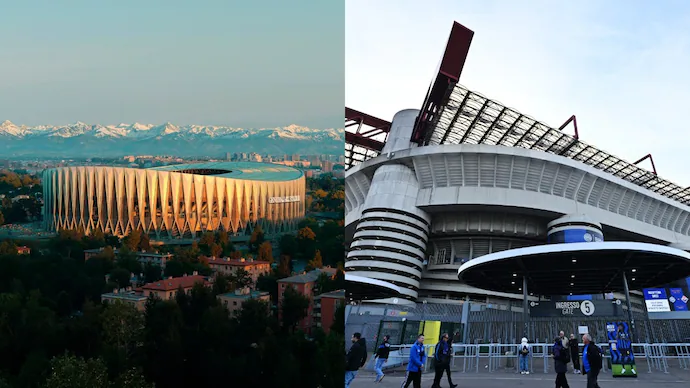
AC Milan and Inter Milan have officially unveiled plans for a new shared stadium, confirming that the iconic San Siro will eventually make way for a modern football and entertainment venue. The proposed 71,500-seat Generali Stadium is expected to become the new home of both Serie A clubs, with construction targeted to begin in 2028 and an opening planned for the 2031-32 season.
The announcement marks a major moment in Milanese football history. San Siro, one of Europe’s most recognisable stadiums, has hosted generations of supporters and some of the biggest matches in Italian football. However, ageing infrastructure and outdated facilities have increasingly made redevelopment a priority for the two clubs.
The new project aims to preserve the atmosphere associated with the existing ground while introducing modern facilities, improved spectator experiences and a wider entertainment district. With a reported investment of around €1.2 billion, the development represents an ambitious attempt to give both clubs a stadium capable of competing with Europe’s leading football venues.
AC Milan and Inter Unveil 71,500-Seat Generali Stadium
The two Milan clubs presented the proposed stadium design on Thursday, October 29, at Castello Sforzesco in Milan. Alongside the architectural plans, they announced a 20-year naming rights agreement with Italian insurance company Generali.
The agreement is reportedly worth €650 million and was described by the clubs as one of the largest stadium naming rights deals in global sport. The venue will be known as Generali Stadium, giving the project a major commercial partner as the clubs prepare for the next stage of development.
The proposed stadium will have a capacity of 71,500, slightly below the approximately 75,000 seats available at the existing San Siro. However, the new design places significant emphasis on spectator proximity, modern infrastructure and the ability to host events beyond football.
The development will be undertaken by the clubs’ respective owners, RedBird Capital Partners and Oaktree. International architecture firms Foster + Partners and MANICA will lead the design process.
Lord Norman Foster and David Manica have drawn inspiration from Milan’s architectural identity, particularly the city’s famous Duomo. The aim is to create a stadium that reflects the character of Milan while meeting the requirements of a modern multi-purpose sports venue.
Manica explained that the design team wanted to carry the emotional connection associated with San Siro into the new building.
“The most important thing that we realised when we designed this project is that the San Siro is a feeling. It’s more than a building, it’s a feeling, and everything that we needed to do here was to carry it into the new building,” Manica said.
The statement reflects one of the project’s biggest challenges: replacing a historic stadium without losing the atmosphere that has made it special to generations of Milan and Inter supporters.
San Siro’s Historic Legacy Faces Its Final Chapter
San Siro first opened in 1926 and underwent a major renovation ahead of the 1990 FIFA World Cup. Also known as the Giuseppe Meazza Stadium, the venue has served as the shared home of AC Milan and Inter Milan for more than eight decades.
Its distinctive architecture has made it one of the most recognisable football grounds in the world. The towering spiral staircases, red structural girders and passionate Curva sections have become defining features of the stadium.
For supporters of both clubs, San Siro represents far more than a place to watch football. It has witnessed historic victories, major European nights, domestic title celebrations and countless memorable moments involving some of the game’s biggest players.
The stadium’s atmosphere has also played an important role in establishing Milan as one of Europe’s major football cities. The shared home arrangement has given the city a distinctive football identity, with two historic rivals using the same ground while maintaining separate traditions and supporter cultures.
However, the stadium’s age has increasingly become a challenge. Although its architecture remains iconic, its infrastructure and facilities have struggled to match the standards of newer European venues.
Modern stadiums increasingly offer improved hospitality areas, commercial facilities, accessibility and technology. The clubs believe a new venue will help them improve the matchday experience while creating additional opportunities to generate revenue.
The planned demolition therefore represents a major transition. For Milan and Inter, it is an opportunity to modernise their home, but for supporters, it will eventually mean saying goodbye to a landmark that has shaped generations of football memories.
What Will Change at the New Generali Stadium?
The proposed Generali Stadium will introduce a redesigned seating configuration intended to bring spectators closer to the pitch. Its two seating tiers will form a continuous 360-degree bowl, replacing the existing stadium arrangement.
The design also focuses on steep stands behind the goals, helping create a more enclosed atmosphere. Seating inclinations of up to 37 degrees are planned to improve the connection between supporters and the action on the field.
Manica described proximity to the pitch as one of the most important considerations during the design process.
“We started with proximity. We brought all the seats as close as possible to the field. They could not be any closer, it’ll actually feel as though you’re sitting on the grass,” Manica said.
Beyond the seating arrangement, the project includes several changes intended to make the stadium more versatile and improve the overall experience for visitors.
1. Closer Views of the Pitch
The new stadium’s steep seating design will bring supporters closer to the playing surface. With inclinations reaching up to 37 degrees, the stands are intended to provide better views and create a stronger connection between fans and players.
This approach is also designed to help recreate the intense atmosphere associated with San Siro, particularly in the areas behind the goals.
2. A Continuous 360-Degree Seating Bowl
The stadium will feature two seating tiers arranged in a continuous 360-degree bowl. This configuration is expected to create a more unified spectator environment while giving the venue a modern architectural identity.
The redesigned layout will be one of the most visible differences between the existing San Siro and the proposed Generali Stadium.
3. A Multi-Purpose Sports and Entertainment Venue
The new ground will not be limited to football matches. Its design will allow it to host rugby, American football and concerts, making it a multi-purpose venue for major sporting and entertainment events.
This flexibility could help AC Milan and Inter expand the stadium’s use beyond their regular home fixtures and create additional opportunities throughout the year.
4. Improved Public Spaces and Facilities
The wider redevelopment will include green areas, retail outlets, leisure facilities and public spaces. These additions are intended to make the surrounding area more attractive and useful even when matches are not taking place.
The project therefore extends beyond the construction of a football stadium, with the clubs planning a broader redevelopment around the new venue.
5. A More Modern Matchday Experience
Improved facilities and a redesigned seating arrangement are central to the clubs’ plans. The objective is to provide supporters with a more comfortable and modern experience while retaining the atmosphere that has traditionally defined matches at San Siro.
The new stadium is also expected to provide the infrastructure required for major international sporting and entertainment events.
Generali Stadium Construction Targeted for 2028
The proposed stadium will have a capacity of 71,500, compared with approximately 75,000 at the existing San Siro. Despite the slightly smaller capacity, the clubs expect the new venue to offer improved facilities and greater commercial opportunities.
The project gained an important step forward when AC Milan and Inter acquired the land from the city of Milan for €197 million in November 2025. That purchase helped establish the basis for the planned redevelopment.
The overall project is estimated to cost approximately €1.2 billion. Construction is expected to begin in 2028, although the timeline remains subject to the necessary planning approvals.
If the schedule proceeds as planned, the new stadium will open during the 2031-32 season. That would give both clubs a modern shared home for the next chapter of their histories.
San Siro will be largely demolished as the new stadium project approaches completion. The transition will therefore involve a significant change to one of Italian football’s most familiar landmarks.
The clubs will need to manage the redevelopment carefully, particularly because the existing stadium has such a strong connection with their supporters. The new venue must deliver on its promises of improved facilities while establishing an identity of its own.
Why AC Milan and Inter Need a New Stadium
For both clubs, the new stadium is about more than replacing an ageing football ground. It is also part of a broader effort to strengthen their financial position and remain competitive with leading European teams.
Modern stadiums can generate revenue through hospitality services, commercial partnerships, retail operations and non-football events. A venue capable of hosting concerts and multiple sports can also remain active throughout the year rather than depending primarily on football fixtures.
The reported €650 million naming rights agreement with Generali demonstrates the commercial scale of the project. The 20-year deal gives the stadium a major corporate partner and adds another significant financial element to the redevelopment.
For AC Milan and Inter, improving matchday revenues and creating additional commercial opportunities could help support their long-term ambitions. The clubs are seeking to build a venue that reflects their status in European football while providing the infrastructure needed for future growth.
There is also a competitive element. European football has increasingly placed importance on modern stadium facilities, and clubs with newer venues can benefit from improved hospitality, accessibility and entertainment options.
Replacing San Siro is therefore a strategic decision intended to keep Milan’s two major clubs aligned with the changing demands of the sport.
What the San Siro Demolition Means for Milan Supporters
Despite the commercial and architectural ambitions behind the project, the announcement is likely to bring mixed emotions among supporters. San Siro has been part of AC Milan and Inter’s identity for generations, and its distinctive design cannot simply be reproduced in a new building.
Both clubs share a stadium that has witnessed some of the most important moments in Italian football. Its atmosphere, architecture and history have made it a destination for supporters and visiting fans from around the world.
The new Generali Stadium is being designed with the intention of preserving that emotional connection. Manica’s comments about treating San Siro as a feeling rather than simply a building underline the importance of atmosphere in the project’s design.
However, supporters will ultimately judge the new venue on its own merits. The seating arrangement, facilities, atmosphere and overall matchday experience will determine whether it can develop the same emotional significance as the stadium it replaces.
The planned public spaces and entertainment facilities could also change the surrounding area, creating a destination that remains active beyond matchdays.
Final Thoughts
AC Milan and Inter Milan’s confirmation of plans for the 71,500-seat Generali Stadium marks the beginning of a new era for football in the Italian city. The project will replace the historic San Siro with a modern venue designed to host football, other sporting events and major entertainment performances.
With Foster + Partners and MANICA leading the design, the clubs are aiming to combine modern stadium architecture with the atmosphere associated with their historic home. The planned 360-degree seating bowl, steep stands and improved facilities are central to that ambition.
Construction is targeted to begin in 2028, subject to planning approvals, with the new stadium expected to open in the 2031-32 season. The estimated €1.2 billion development and reported €650 million naming rights agreement underline the scale of the project.
For AC Milan and Inter, the new stadium represents an investment in their future and an opportunity to strengthen their commercial position. For supporters, however, the demolition of San Siro will mean the end of an extraordinary chapter in the history of Milanese football.
The biggest challenge will be creating a new home that offers modern facilities without losing the passion, identity and atmosphere that made San Siro special.
For breaking news and live news updates, like us on Facebook or follow us on Twitter and Instagram. Read more on Latest Football on thefoxdaily.com.


COMMENTS 0