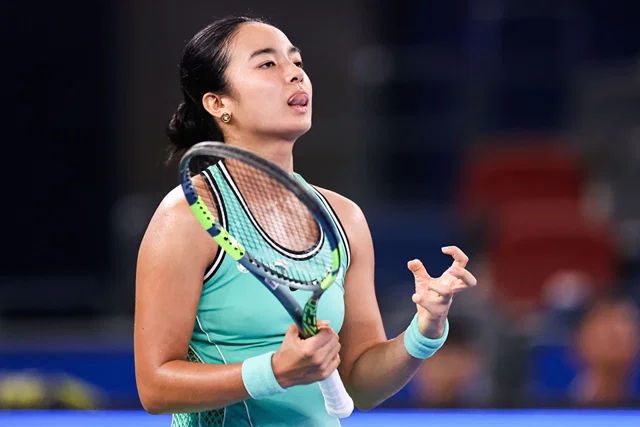
Alex Eala’s growing popularity has sparked a debate about whether tennis’s biggest year-end tournaments should reward star power alongside on-court performance. The Filipino tennis star has attracted significant attention from fans who want to see her compete at the WTA Finals, but her current ranking and points total leave her well outside the qualifying positions described in the discussion.
The debate drew a strong response from Rennae Stubbs, the former world No. 1 doubles player and coach associated with Serena Williams. Speaking on The Rennae Stubbs Tennis Podcast, Stubbs defended journalist Jon Wertheim after he pushed back against the online campaign supporting Eala’s inclusion. Her central argument was straightforward: the WTA Finals are a competitive championship, not a popularity contest.
Stubbs also revisited her controversial assessment of Eala’s serve, which had previously drawn criticism from the young player’s supporters. However, she made clear that her concerns about Eala’s game do not mean she wants the Filipina to fail. In fact, she believes a major championship victory by Eala could have a significant positive effect on tennis across Asia.
The disagreement highlights a wider question for professional tennis: how can the sport capitalize on the popularity of emerging players without compromising the competitive principles that determine who qualifies for its most prestigious events?
Why Alex Eala’s WTA Finals qualification has become a talking point
According to the figures cited in the original report, Eala is ranked No. 20 with 2,241 points. She is more than 2,000 points behind eighth-placed Linda Noskova, the reigning Wimbledon champion identified in the report.
That gap is central to the qualification debate. The WTA Finals traditionally feature an eight-player singles field, with qualification based on players’ performance across the season. A place is therefore earned through results rather than through fan votes, online campaigns or the size of a player’s following.
Eala’s supporters may believe her popularity and potential commercial appeal justify special consideration. However, granting a place on those grounds would raise questions about the treatment of other players who have accumulated the results needed to qualify.
Noskova and the other players competing near the qualification positions have their own competitive ambitions. An exception for a popular player could come at the expense of someone whose season has earned them a place under the established system.
There is also an important distinction between wanting Eala to participate and arguing that she has already met the qualification requirements. The first is a statement of support for a rising star. The second is a claim about competitive eligibility, which must be assessed against the tournament’s rules and standings.
Rennae Stubbs backs Jon Wertheim against online criticism
Journalist Jon Wertheim became a target of criticism from some Eala supporters after dismissing calls for the Filipina to receive a place at the WTA Finals. Stubbs subsequently defended his position, describing the dispute as an example of how online fan culture can intensify disagreements about professional sport.
On her podcast, Stubbs explained that Wertheim had become involved in an online controversy after people argued that Eala deserved to compete at the season-ending championship. She connected the reaction to her own earlier comments about Eala’s serve, which had also attracted scrutiny from the player’s supporters.
“That is not how it works”.
That phrase captures the distinction Stubbs wanted to emphasize. A player’s popularity can influence public interest, attract sponsors and introduce new audiences to tennis. It does not, by itself, establish eligibility for a tournament whose field is determined by competitive achievement.
Stubbs also challenged the idea that Eala should receive treatment unavailable to other players. She pointed to Iga Swiatek, noting that supporters in Poland would also want to see their country’s leading tennis star compete at the WTA Finals.
Her comparison was intended to show that national support and fan enthusiasm are not unique to Eala. Many players have large, passionate audiences, but a consistent qualification system cannot award places according to which fan base makes the strongest online argument.
The controversy also illustrates the difficulties journalists and former players can face when discussing popular athletes on social media. Technical criticism that might ordinarily form part of tennis analysis can become a wider dispute when supporters interpret it as hostility toward a player they admire.
Why popularity cannot determine WTA Finals qualification
The WTA Finals occupy a distinctive place in professional women’s tennis because they bring together a limited group of the season’s leading performers. With only eight singles places available, the qualification process creates a direct link between a player’s results and the opportunity to compete for the year-end title.
Allowing popularity to determine entry would change the purpose of that competition. A player with a huge international following could potentially receive a place ahead of someone who had delivered a stronger season on court. That would create a difficult question about fairness: should qualification reflect competitive performance or commercial appeal?
Stubbs made her position clear by comparing Eala’s situation with the popularity of other leading players. She argued that Polish supporters would also want Swiatek in the field, demonstrating that the demand for a favourite’s participation is not exclusive to the Philippines.
The same principle applies to players from countries with large tennis audiences. Their supporters may generate enormous interest, but the competitive criteria must remain consistent if the championship is to preserve its sporting credibility.
The difference between earning a place and attracting an audience
Popularity and competitive success can reinforce each other, but they are not interchangeable. A player may attract substantial attention without having accumulated enough points to qualify for a particular tournament. Another player may receive less attention while producing the results required to earn a place.
That distinction matters because the WTA Finals are not simply an exhibition designed to showcase the most marketable names. Their value comes partly from bringing together players who have demonstrated sustained excellence throughout the season.
There are legitimate ways for tennis to capitalize on a rising star’s popularity without changing the qualification rules. Organizers can promote players through marketing campaigns, interviews, promotional events and other opportunities that do not displace qualified competitors.
For Eala, such opportunities could help turn her growing following into a broader audience for women’s tennis. The key is to distinguish between expanding the sport’s reach and changing the requirements for entry into a championship.
Stubbs compares the debate with Roger Federer and Rafael Nadal
To illustrate the potential consequences of popularity-based selection, Stubbs turned to the men’s game. She argued that if fame alone determined who competed in the ATP Finals, tennis legends Roger Federer and Rafael Nadal would remain obvious choices for the event.
She also mentioned Novak Djokovic, another player whose achievements and international recognition have made him one of the most prominent figures in the sport.
“Guys, popularity is not what gets you in”.
Stubbs’s comparison makes a broader point about the difference between a player’s legacy and their current-season performance. Federer, Nadal and Djokovic have attracted enormous global attention, but the ATP Finals are designed around qualification for the relevant season rather than reputation accumulated over an entire career.
A player can remain famous long after their competitive circumstances change. Conversely, a less-established player can earn a place through a particularly strong season. If tournament entry depended primarily on historical popularity, emerging players could find it harder to gain access to the biggest stages.
The comparison is especially relevant to Eala because her supporters are advocating for an emerging player rather than a retired legend. Her appeal may reflect excitement about her future, the importance of representation and the prospect of bringing new audiences to tennis. Those are meaningful considerations for the sport, but they do not automatically establish a case for changing the WTA Finals field.
There is also a practical issue. If organizers created an exception for one player because of popularity, they would need a clear standard for deciding which other players deserved similar treatment. Without transparent criteria, the decision could become subjective and difficult to defend.
Could Alex Eala’s popularity benefit tennis in Asia?
Despite defending the qualification system, Stubbs expressed genuine enthusiasm about Eala’s potential impact on tennis. She said she would love to see the Filipina win a Grand Slam, arguing that such an achievement could significantly increase the sport’s popularity across Asia.
“I actually would love to see her win a major because if she does, oh my God, will it help tennis.”
Stubbs compared the potential impact with the attention generated when China’s Li Na won a Grand Slam title. Her point was that a major championship victory by a player with a strong connection to an underserved or developing audience can create interest that extends beyond the individual athlete.
A Grand Slam title would represent a major sporting achievement for Eala, but the potential effects could extend further. Young fans might become more interested in following professional tennis, while existing supporters could gain a stronger connection to the international tour.
For the Philippines, Eala’s success could also provide a prominent example of a homegrown player competing at the highest level of the sport. Her visibility may help introduce tennis to people who do not regularly follow the WTA Tour.
These are possibilities rather than guaranteed outcomes. A player’s success alone cannot establish how many people will take up the sport or whether increased interest will continue over time. Sustained participation also depends on access to courts, coaching, equipment, competitions and opportunities for young players to develop.
Nevertheless, Stubbs’s argument identifies an important distinction: tennis can benefit commercially and culturally from Eala’s popularity without giving her preferential treatment in qualification decisions.
What Li Na’s Grand Slam success represents in Stubbs’s argument
Li Na’s example provides historical context for Stubbs’s optimism. Her Grand Slam success demonstrated that a player from Asia could become a major figure in the sport’s most prestigious competitions and attract attention well beyond her home country.
Stubbs believes an equivalent breakthrough by Eala could create a powerful moment for tennis in the Philippines and across Asia. The comparison is not a claim that the two players have identical careers or that Eala will necessarily achieve the same results. Rather, it illustrates how an individual sporting accomplishment can become a source of wider interest in a sport.
For tennis administrators, this creates a strategic opportunity. The attention surrounding an emerging player can be used to promote grassroots participation, improve the visibility of women’s competitions and strengthen connections with new audiences.
However, a Grand Slam victory and a place in the WTA Finals are different milestones. The former would be a major championship achievement, while the latter depends on meeting the relevant season’s qualification requirements. Eala does not need to be given an exception to benefit from the attention she is generating.
In this sense, Stubbs’s comments are not simply a rejection of fan enthusiasm. They also acknowledge the potential value of that enthusiasm while maintaining that sporting merit must determine entry into elite competitions.
Rennae Stubbs maintains her criticism of Eala’s serve
The qualification controversy has also brought renewed attention to Stubbs’s previous criticism of Eala’s game. Stubbs had questioned whether the Filipina’s serve could prevent her from winning a Grand Slam title, an assessment that drew a strong reaction from some supporters.
During the podcast discussion, Stubbs reiterated that she still had concerns about Eala’s serve. Her assessment was a technical opinion about a part of the player’s game, not a statement that Eala should be excluded from competitions because of her popularity or nationality.
The serve is an important component of professional tennis because it begins every service point and can influence how much control a player has over a rally. A strong serve can create easier points, put opponents under immediate pressure and reduce the opportunities available to returners. Weaknesses in serving can give opponents a chance to attack.
However, evaluating a player’s long-term prospects requires more than examining one shot. Grand Slam success depends on a range of factors, including movement, return quality, groundstrokes, tactical decisions, physical conditioning and performance under pressure.
The supplied material does not provide detailed serve statistics or technical analysis sufficient to establish how much Eala’s serve affects her results. Stubbs’s prediction should therefore be understood as her assessment, not a proven conclusion about the Filipina’s future.
Young players can also develop their games over time. A technical weakness identified at one stage of a career does not necessarily remain unchanged, and no single prediction can establish what an athlete will ultimately achieve.
Why criticism of a rising player becomes a social media controversy
Eala’s popularity adds another dimension to the discussion. When supporters become emotionally invested in an athlete, criticism of that player’s performance can be interpreted as an attack on the athlete or the community that supports them.
This dynamic can make it difficult to separate technical analysis from personal allegiance. A coach or commentator may question a player’s serve, ranking or tournament prospects, while fans may view those comments through the lens of their admiration for the athlete.
Stubbs’s response suggests that she sees the online reaction as an example of intense fan culture influencing sports discussions. Her defence of Wertheim rests on the idea that journalists and former players should be able to discuss tournament rules and technical weaknesses without being expected to endorse every popular campaign.
At the same time, strong fan engagement is not inherently negative. Supporters can increase visibility, encourage broadcasters to cover a player and help introduce the sport to new audiences. The challenge is ensuring that enthusiasm does not obscure the distinction between a desirable outcome and a result that the competition’s rules permit.
For Eala, the debate may ultimately bring more attention to her career. But attention alone will not determine whether she qualifies for the WTA Finals. Her results across the season remain the relevant competitive measure.
Alex Eala’s Ningbo Open campaign offers a more immediate focus
While the online debate continues, Eala is competing at the Ningbo Open, where the supplied report says she began her campaign with a convincing victory over Diane Parry. The report also identifies Diana Shnaider as her next opponent, with the match scheduled for Thursday.
Her performance in Ningbo offers a more direct way to assess her current progress than arguments about whether popularity should influence tournament selection. Match results, the quality of her opposition and her ability to sustain strong performances are all relevant to understanding her development.
The report also notes that Eala’s profile rose after she won the Mubadala DC Open title. That achievement forms part of the context for the excitement surrounding her career, although a single tournament victory does not automatically determine qualification for a separate season-ending championship.
For Eala and her supporters, the practical focus is therefore on continued improvement and results. Strong performances can strengthen her competitive standing while helping her build on the attention she has already attracted.
For readers following the qualification debate, it is equally important to distinguish the ranking and points figures cited in the report from the final qualification picture. Tournament standings can change as players compete, and the exact qualification position depends on the applicable rules and the results recorded during the relevant season.
What happens next in the Alex Eala WTA Finals debate?
The immediate disagreement is unlikely to be resolved by social media arguments alone. The central issue is whether the WTA Finals should retain a qualification system based on season performance or introduce an exception that considers popularity.
Stubbs has made her position clear: a player’s following cannot substitute for the competitive results required to earn a place. Her comparisons with Swiatek, Federer, Nadal and Djokovic underline the importance of applying the same principle regardless of a player’s fame or national support.
There is a separate question about how tennis can make better use of Eala’s growing audience. Promoting her matches, supporting participation in the sport and building interest in women’s tennis are potential ways to benefit from her popularity without altering the competitive field.
The next meaningful development for Eala will come through her performances and the progress of her season. If she accumulates the results required under the qualification rules, she can strengthen her case for competing at the highest level on merit. If she falls short, public enthusiasm alone will not change the competitive requirements.
Stubbs’s comments ultimately draw a line between two ideas that can coexist: Eala can be an important figure for the growth of tennis in Asia, and the WTA Finals can remain a championship reserved for players who qualify through their performances. Supporting the first does not require abandoning the second.
Frequently asked questions
Why did Rennae Stubbs criticise calls for Alex Eala to enter the WTA Finals?
Stubbs argued that popularity is not a qualification criterion for the WTA Finals. She defended journalist Jon Wertheim after he rejected online demands for Eala to receive a place despite the ranking and points gap described in the report.
What is Alex Eala’s ranking in the supplied report?
The report lists Eala at world No. 20 with 2,241 points. These figures reflect the information provided in the source material and should not be treated as independently verified live standings.
Who is Jon Wertheim, and why was he involved in the controversy?
Wertheim is a tennis journalist who dismissed calls for Eala to receive a WTA Finals place on the basis of her popularity. Some Eala supporters criticised his position online, prompting Stubbs to defend his argument.
What did Rennae Stubbs say about Alex Eala’s serve?
Stubbs reiterated her concern that Eala’s serve could limit her chances of winning a Grand Slam title. This is Stubbs’s assessment rather than an established prediction of Eala’s eventual career achievements.
Does Rennae Stubbs want Alex Eala to fail?
No such conclusion follows from her comments. Stubbs said she would love to see Eala win a major championship because she believes that achievement could significantly increase tennis’s popularity in Asia.
Why did Stubbs mention Roger Federer, Rafael Nadal and Novak Djokovic?
She used the three men’s tennis legends to illustrate why fame should not determine entry into the ATP Finals. Her argument was that tournament places should reflect the applicable qualification criteria rather than a player’s historical popularity.
How could an Alex Eala Grand Slam victory benefit tennis in Asia?
Stubbs believes a major title for Eala could attract new audiences and encourage greater interest in tennis, drawing a comparison with the attention generated by Li Na’s Grand Slam success in China. The scale of any lasting impact would depend on factors beyond one player’s results.
What is Alex Eala doing while the WTA Finals debate continues?
According to the supplied report, Eala is competing at the Ningbo Open, where she began with a convincing win over Diane Parry. The report identifies Diana Shnaider as her next opponent, scheduled for Thursday.
For breaking news and live news updates, like us on Facebook or follow us on Twitter and Instagram. Read more on Latest Sports on thefoxdaily.com.






COMMENTS 0