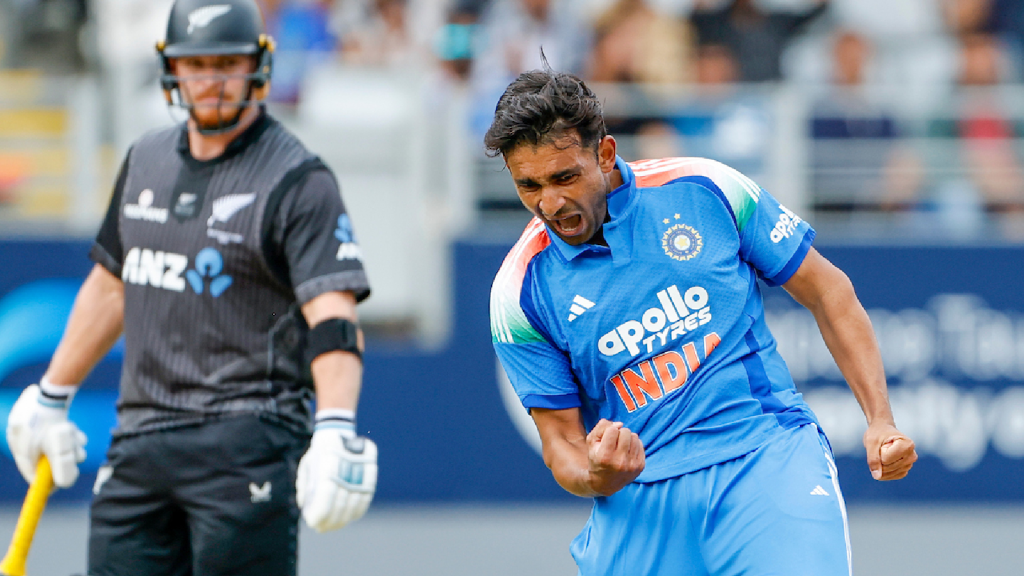
India fast bowler Anshul Kamboj produced a record-equalling performance in the first ODI against New Zealand at Eden Park in Auckland on November 4, 2026. The 25-year-old finished with figures of 10 overs, two maidens, 22 runs and two wickets, recording an economy rate of 2.20. His disciplined spell helped India restrict New Zealand to 185 in 40.2 overs after the visitors elected to bowl first.
The performance marked a significant turnaround for Kamboj, who had endured a difficult start to his international ODI career. On his debut against the West Indies last month in New Chandigarh, the Haryana pacer conceded 82 runs in 10 overs without taking a wicket as the opposition successfully chased a target of 352 runs, winning by five wickets.
However, in just his second ODI, Kamboj responded with an impressive display of control and consistency. Bowling as India’s first-change option, he used the conditions at Eden Park effectively and restricted the New Zealand batters during the middle overs. His accuracy and ability to extract extra bounce made him one of India’s most economical bowlers in the series opener.
Kamboj’s figures also stood out in an Indian attack featuring four fast bowlers. Arshdeep Singh and Gurnoor Brar combined to take seven wickets, while Kamboj contributed two important breakthroughs, dismissing New Zealand captain Mitchell Santner and Nathan Smith.
Anshul Kamboj joins an elite list of Indian pacers
Kamboj’s spell placed him alongside some of India’s most economical fast-bowling performances in ODI Cricket over the past 21 years. His economy rate of 2.20 is the joint-best by an Indian pacer in an ODI innings in which the bowler completed all 10 overs since 2005.
The achievement puts him in the company of former India fast bowlers Ashish Nehra and Ajit Agarkar, as well as Jasprit Bumrah. All four bowlers conceded just 22 runs while completing their full quota of 10 overs, although their wicket tallies and maiden-over figures differed.
Bumrah had recorded the same economy rate against Zimbabwe in Harare on June 15, 2016. He finished with figures of 10 overs, one maiden, 22 runs and four wickets. Nehra achieved the mark against Sri Lanka in Dambulla on August 3, 2005, while Agarkar recorded it against the West Indies in Kuala Lumpur on September 20, 2006.
Kamboj’s performance against New Zealand on November 4, 2026, therefore adds his name to a distinguished list of Indian pacers who have maintained an economy rate of 2.20 across a complete 10-over spell.
Best economy by an Indian pacer in a full ODI spell since 2005
| Bowler | Figures | Economy | Opposition | Venue | Date |
| Ashish Nehra | 10-1-22-2 | 2.20 | Sri Lanka | Dambulla | August 3, 2005 |
| Ajit Agarkar | 10-1-22-2 | 2.20 | West Indies | Kuala Lumpur | September 20, 2006 |
| Jasprit Bumrah | 10-1-22-4 | 2.20 | Zimbabwe | Harare | June 15, 2016 |
| Anshul Kamboj | 10-2-22-2 | 2.20 | New Zealand | Auckland | November 4, 2026 |
Kamboj responds after difficult ODI debut
The Auckland performance was particularly important for Kamboj following his expensive debut against the West Indies. Conceding 82 runs without taking a wicket in 10 overs had made his first appearance a challenging experience. His second outing, however, showed a different side of his bowling, with greater control over line, length and scoring opportunities.
Rather than allowing New Zealand to build momentum, Kamboj maintained pressure through his economical spell. His use of the surface and extra bounce helped him keep the batters in check, while his two wickets added to India’s progress towards restricting the hosts to a manageable total.
For a young fast bowler still building his international record, the performance offered an encouraging response to an unsuccessful debut. It also highlighted the value of consistency in ODI Cricket, where controlling runs over a full 10-over spell can be as significant as taking wickets.
India take control after restricting New Zealand
India’s decision to bowl first at Eden Park was supported by a strong collective effort from the pace attack. Arshdeep Singh and Gurnoor Brar shared seven wickets, while Kamboj’s two dismissals helped ensure that New Zealand were bowled out for 185 in 40.2 overs.
Kamboj’s figures of 10-2-22-2 were among the standout performances of the innings, particularly because he completed his full quota while conceding only 22 runs. The two maiden overs further underlined his ability to restrict the opposition’s scoring.
With the five-match ODI series beginning on a positive note for India, Kamboj’s record-equalling spell provided an additional talking point from the Auckland contest. His performance against New Zealand was a sharp contrast to his debut and placed him alongside Nehra, Agarkar and Bumrah in India’s recent ODI bowling records.
For breaking news and live news updates, like us on Facebook or follow us on Twitter and Instagram. Read more on Latest Cricket on thefoxdaily.com.






COMMENTS 0