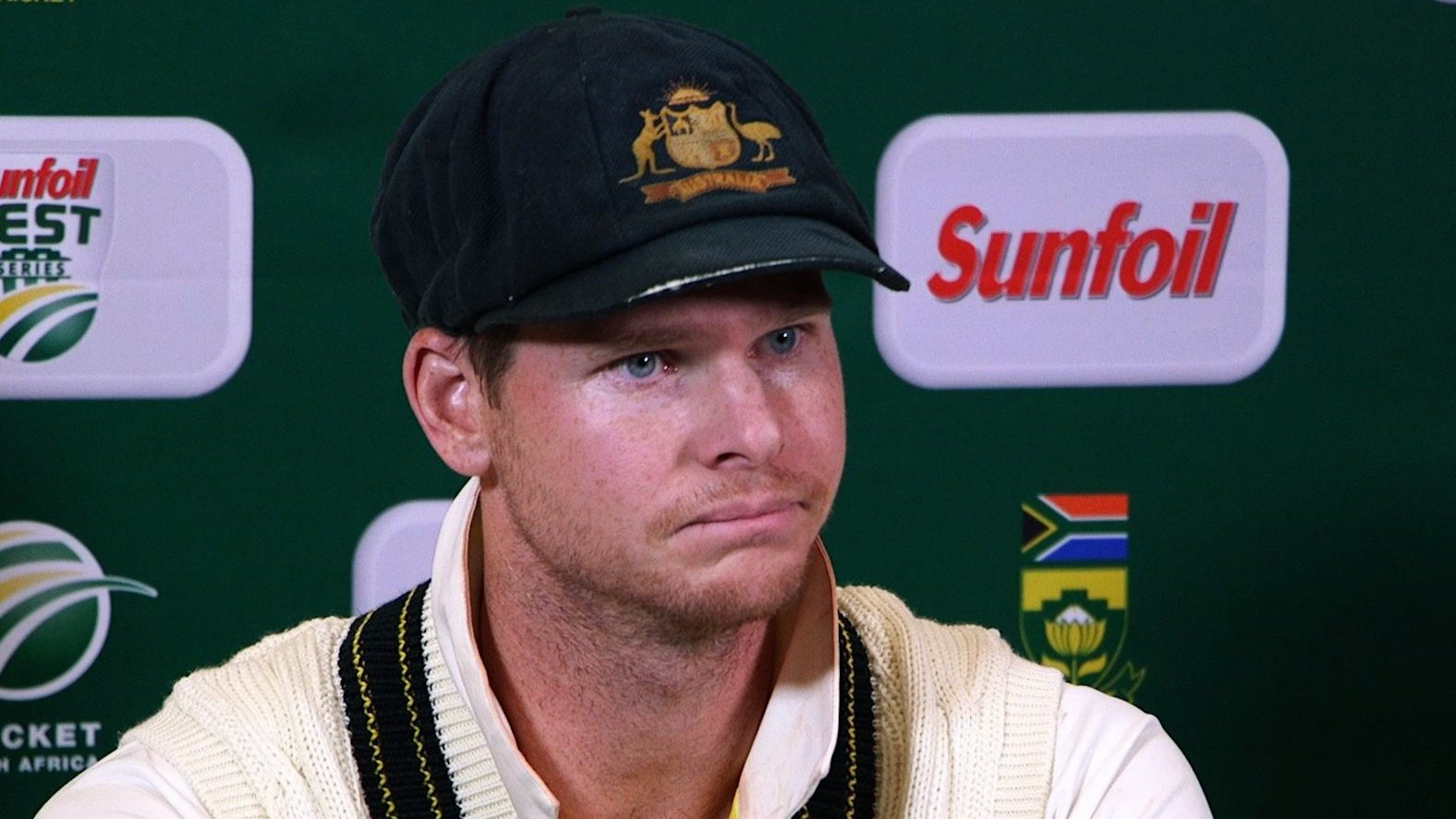
Eight years after the infamous ball-tampering scandal shook Australian Cricket, Sandpapergate is once again attracting attention. What initially appeared to be a controversy involving three senior players has returned to the spotlight following fresh claims that knowledge of the plan may have extended further into the Australian dressing room.
The renewed debate has been fuelled by former Australia batter Usman Khawaja’s recently released autobiography, Sabr. In the book, Khawaja suggests that awareness of the ball-tampering incident during the 2018 Test series against South Africa was not limited to Cameron Bancroft, Steve Smith and David Warner. According to his account, knowledge of the plan extended to other players and members of the team’s support staff.
His claims have reportedly received support from Warner, Bancroft and former Australia fast bowler Chadd Sayers, who was part of the squad during the controversial South African tour. However, current Australia Test captain Pat Cummins has strongly rejected the allegations, describing them as “complete and utter nonsense” during a lengthy press conference.
Cricket Australia’s decision to organise a voluntary forum involving former and current players and staff has added another dimension to the controversy. The proposed forum is intended to provide an opportunity for people connected to the incident to share their recollections. However, without a formal new investigation, additional sanctions or guaranteed public findings, questions remain about how much new information will emerge.
For anyone trying to understand the controversy, simply following the latest statements may not provide the complete picture. Sandpapergate involved more than an attempt to alter the condition of a cricket ball. It exposed questions about leadership, team culture, sporting integrity and the pressure surrounding international cricket.
Three documentaries offer different perspectives on the scandal, its background and its long-term consequences. From the original controversy in South Africa to Australia’s efforts to rebuild its reputation, these films provide useful context before forming an opinion about the latest allegations.
What Was Sandpapergate? A Brief Explanation of the 2018 Cricket Scandal
Sandpapergate refers to the ball-tampering controversy involving the Australian men’s cricket team during the third Test against South Africa at Newlands in Cape Town in March 2018.
During the match, television cameras captured Cameron Bancroft using a small piece of yellow sandpaper to tamper with the cricket ball. When confronted by match officials, Bancroft initially attempted to conceal the object, but the incident was subsequently acknowledged as an attempt to alter the ball’s condition.
The controversy quickly escalated because the players involved held important positions within the Australian team. Steve Smith was captain, David Warner was vice-captain and Bancroft was the player caught carrying out the act.
Following an investigation by Cricket Australia, Smith and Warner received 12-month suspensions, while Bancroft was suspended for nine months. Smith was also removed from the captaincy, while Warner received a leadership ban under the sanctions imposed at the time.
The incident became one of the most damaging episodes in modern Australian Cricket history. It attracted international criticism, raised questions about the team’s culture and forced Cricket Australia to examine how its players approached competition and sporting conduct.
Although the immediate punishments were served years ago, the controversy has never completely disappeared. The latest claims have reopened the question of whether the original account fully explained how the plan developed and who knew about it.
1. Crossing The Line (2018): The Documentary That Examines the Original Controversy
Where to watch: SuperSport’s YouTube channel
Runtime: Approximately 56 minutes
Best for: Understanding the South Africa-Australia rivalry and the events surrounding the original scandal.
Produced by South African sports broadcaster SuperSport, Crossing The Line is one of the most useful documentaries for anyone looking to understand Sandpapergate from the perspective of the 2018 controversy itself.
Rather than treating ball tampering as an isolated incident, the documentary examines the wider Test series between Australia and South Africa. That context is important because the relationship between the two teams had become increasingly hostile, with several confrontations and controversies contributing to the tension surrounding the matches.
The film includes perspectives from prominent cricket figures, including Shaun Pollock, Graeme Smith, Shane Warne, Allan Border, Michael Holding and Michael Haysman. Their contributions provide different viewpoints on the incident, the behaviour of the teams and the wider consequences for the sport.
One of the documentary’s strengths is its broader examination of the rivalry. The Australia-South Africa relationship had a long history of competitive intensity, and the 2018 series featured several heated exchanges. Understanding that atmosphere helps explain why the ball-tampering revelation became such a significant international story.
Why Crossing The Line Is Worth Watching
The documentary is particularly useful for viewers who want to revisit the original events rather than focus exclusively on the latest allegations. It places the controversy within the context of the series and explores how the incident affected the players, supporters and wider cricket community.
At approximately 56 minutes, it is also the shortest of the three recommendations, making it a practical starting point for anyone who wants a relatively quick introduction to the scandal.
For viewers unfamiliar with the 2018 South African tour, Crossing The Line provides important background before moving on to the documentaries examining Australia’s response.
2. The Test (2020): How Australian Cricket Tried to Rebuild Its Reputation
Where to watch: Amazon Prime Video
Best for: Understanding the impact of Sandpapergate on Australian cricket culture and leadership.
If Crossing The Line explains the controversy itself, The Test offers a different perspective by examining what happened to Australian cricket afterwards.
Released in 2020, the documentary series follows the Australian men’s cricket team through a period of major change. Its opening episode revisits the ball-tampering scandal and explores the difficult environment facing the team as it attempted to restore its reputation.
The series focuses on the challenges confronting coach Justin Langer and captain Tim Paine as they tried to rebuild the team’s identity following the suspensions of Smith, Warner and Bancroft.
For Australian cricket, the challenge extended beyond replacing players or preparing for the next international series. The team needed to regain public confidence, establish clearer standards of behaviour and demonstrate that its approach to the game had changed.
The documentary provides insight into the pressure surrounding those efforts. It follows the players and coaching staff as they navigate the expectations of supporters, the media and the wider cricketing community.
Why The Test Is Important to the Sandpapergate Debate
Unlike a documentary dedicated exclusively to ball tampering, The Test examines the consequences of the scandal over a longer period. It helps viewers understand how a major controversy can influence team relationships, leadership decisions and the public image of a national sporting organisation.
Its focus on Justin Langer and Tim Paine is particularly relevant because both were central figures in Australia’s attempt to move forward after the incident. Their leadership responsibilities involved more than results on the field; they also had to address concerns about the team’s culture.
The series is therefore valuable for viewers interested in the organisational consequences of Sandpapergate. It shows why the incident remained important long after the original match had ended and the disciplinary decisions had been announced.
For anyone following the latest disagreement between Khawaja and Cummins, this broader perspective can help explain why questions about team culture and accountability remain sensitive within Australian cricket.
3. The Cause, The Crime, The Impacts (2023): A Three-Part Look at Sandpapergate
Where to watch: SB Media’s YouTube channel
Format: Independent three-part documentary series
Best for: A structured overview of the causes, events and lasting consequences of the scandal.
The third recommendation takes a more direct approach to the controversy. The Cause, The Crime, The Impacts is an independent three-part documentary series available through SB Media’s YouTube channel.
As its title suggests, the series is organised around three central questions: what contributed to the scandal, what happened during the ball-tampering incident and what consequences followed for Australian cricket.
This structure makes it useful for viewers who want a comprehensive explanation without having to piece together information from separate programmes and interviews.
Episode One: The Cause
The first part explores the background surrounding Sandpapergate and the circumstances that contributed to the controversy. Understanding the environment in which the incident occurred is important because the scandal was connected to broader questions about competitiveness, team behaviour and the pressures of international cricket.
Rather than beginning and ending with the footage of Bancroft using sandpaper, this section provides context for the events that led to the incident.
Episode Two: The Crime
The second part focuses on the ball-tampering incident itself. It examines the events that brought the scandal into public view and the involvement of the Australian players who became central to the controversy.
This section is particularly relevant for viewers who want to revisit the sequence of events that led to the investigation and subsequent suspensions.
Episode Three: The Impacts
The final instalment looks at the consequences of Sandpapergate and its effect on Australian cricket. The scandal damaged the team’s reputation and raised questions about the standards expected from players representing their country.
Its consequences extended beyond the immediate disciplinary action, influencing discussions about leadership, accountability and the culture of elite cricket.
Why The Three-Part Series Is Worth Watching
Although the series does not necessarily uncover new evidence, its three-part structure makes it a useful resource for understanding the controversy from beginning to end.
For viewers who have only followed the latest headlines, the series offers an opportunity to revisit the background, the incident and its aftermath in a more organised format.
How the Three Sandpapergate Documentaries Compare
Each documentary approaches the controversy from a different angle. Choosing where to start depends on whether you want to understand the original incident, the impact on Australian cricket or the complete sequence of events.
| Documentary | Release Year | Where to Watch | Main Focus |
|---|---|---|---|
| Crossing The Line | 2018 | SuperSport YouTube | The original scandal and Australia-South Africa rivalry |
| The Test | 2020 | Amazon Prime Video | Australian cricket’s response and rebuilding efforts |
| The Cause, The Crime, The Impacts | 2023 | SB Media YouTube | Causes, events and long-term consequences |
For a quick introduction, Crossing The Line is a useful starting point. Those interested in the wider organisational impact should consider The Test, while the three-part SB Media series offers a more structured account of the scandal.
Why Sandpapergate Is Back in the Headlines in 2026
The latest controversy centres on the question of how widely the ball-tampering plan was known within the Australian team during the 2018 South African tour.
In his autobiography Sabr, Usman Khawaja reportedly claims that awareness of the incident extended beyond the three players who became the main focus of the original disciplinary action. His account has brought renewed attention to the possibility that other members of the squad and support staff knew more about the plan than was publicly acknowledged at the time.
David Warner, Cameron Bancroft and former Australia bowler Chadd Sayers have reportedly supported aspects of Khawaja’s account. Their comments have added weight to the debate, although the precise extent of any wider knowledge remains contested.
Pat Cummins, meanwhile, has rejected Khawaja’s claims in strong terms. His description of the allegations as “complete and utter nonsense” demonstrates how sharply opinions differ over what happened inside the Australian dressing room.
That disagreement is significant because the original investigation and disciplinary decisions established responsibility for the incident but did not necessarily settle every question about who knew what before the ball was tampered with.
Will Cricket Australia’s Voluntary Forum Reveal New Information?
Cricket Australia’s proposed voluntary forum represents another attempt to address the questions surrounding Sandpapergate. It will give former and current players and staff an opportunity to share their recollections of the events.
However, the voluntary nature of the process raises questions about how much information it can realistically produce. Participation does not necessarily mean that every individual involved will provide an account, and recollections of events from eight years earlier may differ.
There is also an important distinction between a forum for sharing experiences and a formal investigation. Without a new investigative process, additional sanctions or guaranteed public findings, the forum may not produce definitive answers to every allegation.
That does not mean the exercise cannot be useful. First-hand accounts could provide additional context, clarify disagreements and help Cricket Australia understand how different people remember the events surrounding the scandal.
However, any new claims should be assessed carefully, with a distinction made between personal recollections, independently established facts and allegations that remain disputed.
Which Sandpapergate Documentary Should You Watch First?
If you have limited time, start with Crossing The Line. Its examination of the 2018 Test series provides the background needed to understand why the controversy became such a major story.
Next, watch The Test to understand the challenges Australian cricket faced after the scandal. It provides a broader look at leadership, team culture and the effort to rebuild public trust.
Finally, the three-part The Cause, The Crime, The Impacts series can help bring the different elements together, from the circumstances surrounding the incident to its longer-term consequences.
Together, the three documentaries offer a more complete picture than following individual statements and headlines. They also provide an opportunity to separate the established events of 2018 from the fresh allegations and disagreements emerging in 2026.
How to Watch Sandpapergate Documentaries While Travelling
Streaming availability can vary depending on the country, licensing arrangements and the platform carrying a particular documentary. A programme available in one region may not appear in another, even when viewers have an active subscription.
If you are travelling and find that a documentary is unavailable in your location, check the streaming service’s regional availability and its terms of use. A virtual private network (VPN) can provide an encrypted connection and help protect your internet traffic when using public Wi-Fi, but it does not guarantee access to geographically restricted streaming content.
TechRadar has reviewed several VPN providers, including NordVPN, which it has recommended as its leading choice in its VPN coverage. Before subscribing, check the provider’s current features, pricing, supported devices and streaming-service policies.
Final Verdict: Understand the History Before Judging the Latest Claims
Sandpapergate remains one of the most controversial episodes in Australian cricket because its consequences went far beyond the immediate ball-tampering incident. It affected the careers of senior players, damaged the national team’s reputation and triggered a wider debate about leadership and sporting integrity.
The latest claims from Usman Khawaja, the responses from other former players and Pat Cummins’ strong rejection have reopened questions about what happened behind the scenes in 2018. Cricket Australia’s voluntary forum may provide further perspectives, although it remains unclear whether it will establish anything that was not already known.
Watching Crossing The Line, The Test and The Cause, The Crime, The Impacts will not automatically resolve the latest disagreement. However, they offer valuable context about the original scandal, its impact on Australian cricket and the challenges of rebuilding trust.
Before deciding whose account to believe, it is worth understanding the events that started the controversy, the consequences that followed and why the questions surrounding Sandpapergate have remained relevant eight years later.
For breaking news and live news updates, like us on Facebook or follow us on Twitter and Instagram. Read more on Latest Technology on thefoxdaily.com.






COMMENTS 0