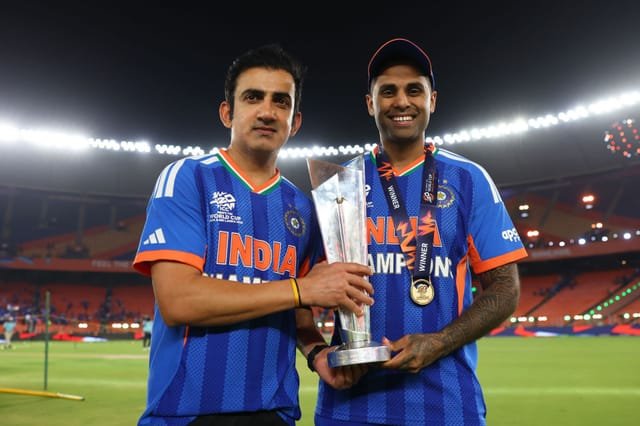
When a Former Player Calls It as He Sees It
The commentary around Suryakumar Yadav‘s exclusion from India’s T20I squad has been building since the BCCI announcement on Saturday, and it has now found its most pointed and definitive voice. Subramaniam Badrinath, the former India batter who represented the national team across formats during a career that gave him specific knowledge of how selection decisions feel from the inside, did not soften his assessment for the sake of diplomatic balance. He called it clearly: the career is over, the selectors acted with ruthlessness, and the comparison to how Rohit Sharma was treated after his own title-winning campaign is impossible to avoid.
Speaking on his YouTube channel, Cric with Badri, Badrinath delivered a commentary that was notable for its willingness to say what others were implying. He agreed with the appointment of Shreyas Iyer as captain. He acknowledged the reality of Suryakumar Yadav’s poor batting form. But he refused to pretend that the manner of the exit, from World Cup-winning captain to dropped player within weeks of lifting the trophy, was anything other than a stark expression of the current management’s approach to personnel transitions.
Who is making this argument? Subramaniam Badrinath, former India Test and ODI batter, now a Cricket analyst with the specific perspective of someone who has been through the Indian selection system’s less comfortable mechanisms. What is the central claim? That Suryakumar Yadav has effectively been told his international career is over without the courtesy of a formal goodbye, and that this reflects a pattern in the current management’s approach. When does this matter? Now, as the cricket world processes the squad announcement and begins the conversation about how one of India’s most successful T20I captains exits the setup. Where does SKY stand? Outside the squad, his IPL form also concerning, and the question of his Mumbai Indians future now being publicly asked.
Badrinath’s Verdict: “Definitely the End of the Road”
Badrinath began his assessment with the kind of directness that the situation warranted:
“It’s definitely the end of the road for Suryakumar Yadav. We won’t see him in international cricket anymore. His winning percentage as a T20I captain is extremely high. Yet, these selectors have easily thrown him out. The same thing happened to Rohit Sharma after winning the Champions Trophy. There is a certain ruthlessness in the current team management.”
— Subramaniam Badrinath
Three elements of this statement demand individual attention.
First, the finality: “We won’t see him in international cricket anymore.” This is not a qualified observation about the current squad cycle or a suggestion that a return might be possible with improved form. It is a career-ending declaration, delivered by someone who has watched Indian cricket long enough to know when a door has closed rather than merely swung temporarily shut. Badrinath is not predicting the future with certainty. He is reading the patterns of how the current management makes its decisions and projecting them forward.
Second, the comparison to Rohit Sharma. The reference to the Champions Trophy is a pointed one. Rohit Sharma led India to the Champions Trophy title and was subsequently moved on from his position in the setup without the kind of ceremonial farewell that a career of his scale and achievement might have generated. The parallel with Suryakumar is structural: World Cup-winning captain, immediate post-title removal, no formal acknowledgment of the end. Badrinath is identifying a pattern, not an isolated incident.
Third, the characterization of “ruthlessness.” This word is carefully chosen. Ruthlessness is not quite the same as cruelty or unfairness. It implies an efficiency of decision-making that prioritizes outcomes over sentiment, that moves quickly from achievement to next chapter without dwelling on the human cost of the transition. Whether ruthlessness is the right quality in a national team management is a genuine debate, but Badrinath frames it as a distinguishing feature of the current regime rather than a general virtue of cricket administration.
The Numbers Behind the Decline: Form That Made the Decision Defensible
Badrinath’s criticism of the manner of Suryakumar’s exit does not extend to a defense of the batter’s recent form. The statistics tell a story that the selectors were right to respond to, even if the response’s execution is being questioned.
| Period / Context | Matches | Runs | Average | Strike Rate |
|---|---|---|---|---|
| Overall T20I Career | 113 | 3,272 | 36.35 | 162.94 |
| 2026 T20 World Cup Campaign | 9 | — | 30.25 | 136.72 |
| IPL 2026 (Mumbai Indians) | 13 | 270 | Under 21 | — |
| T20I Captaincy Record | 52 | 40 wins | 8 losses | Win % over 75 |
The contrast between the career numbers and the recent form numbers is the clearest possible illustration of why the selection decision, whatever its shortcomings in execution, has a legitimate cricketing foundation. A career T20I average of 36.35 and a strike rate of 162.94 represent one of the most productive batting records in the format’s history for an Indian player. The 2026 World Cup campaign, by contrast, produced a batting average of 30.25 at a strike rate of 136.72 across nine matches. Both numbers are below his career benchmarks, and the strike rate in particular is a significant drop for a player whose value was always built around the pace of his run-scoring as much as its volume.
The IPL 2026 numbers are the most damaging of the recent data points. Two hundred and seventy runs at an average of under 21 in 13 matches represents a serious decline in output by any standard. For a player whose IPL performances had historically been among his most reliable and whose franchise, Mumbai Indians, needed substantial contributions from their most recognizable batter, the numbers were simply not good enough. MI finished second-from-bottom in IPL 2026 with only four wins from 14 games, a result in which SKY’s form played a notable contributing role.
These are the numbers the selectors were looking at. The case for the decision exists and is defensible. What Badrinath is questioning is not whether the decision was right but whether it was executed with the dignity that a career of SKY’s scale deserved.
The Ruthlessness Pattern: Rohit Sharma and the Champions Trophy Comparison
Badrinath’s reference to Rohit Sharma’s post-Champions Trophy treatment invites a comparison that illuminates something specific about how the current management transitions between eras. Rohit led India to Champions Trophy glory, establishing himself once more as the central figure of a successful white-ball campaign. The exit that followed was not ceremonial. It was efficient. The new era began without extensive backward-looking acknowledgment of what the old one had produced.
Suryakumar Yadav’s situation follows the same structural template. A major title won, an immediate exit from the setup, no publicly announced farewell series or transitional period. The pattern does not require malice to be significant. It can be the product of a management culture that prioritizes forward momentum over retrospective acknowledgment, that believes the quickest path to the next era is the most direct one, and that treats sentiment as an obstacle to the competitive clarity that sustained success requires.
Whether that management philosophy is the right one is a question that Indian cricket will continue to debate. Results, ultimately, provide the most persuasive argument. If Shreyas Iyer and the new T20I setup perform well in Ireland and England and build toward future tournament success, the criticism of the transition’s manner will fade into the background. If the new era struggles to find its footing, the questions about whether better management of the transition might have served the team will become louder.
The Shreyas Iyer Appointment: Where Badrinath Agrees
Badrinath was careful to separate his criticism of the exit’s manner from the question of whether Shreyas Iyer’s appointment is the right decision. He was clear that it is:
“I agree with the decision to appoint Shreyas Iyer as captain, as he has been a superb leader in the IPL. But I was surprised as a World Cup-winning captain, who hasn’t announced any retirement, has been immediately dropped because his batting performance has been poor.”
— Subramaniam Badrinath
The qualifier “who hasn’t announced any retirement” is the key phrase. Retirements provide the natural, dignified endpoint that players, fans, and institutions can collectively process. When a player retires, the farewell tour becomes possible, the tribute montages are assembled, and the career is bookended in a way that acknowledges what came before the ending. When a player is dropped without having retired, the ending arrives without the framing that makes it legible as an ending. The last match was just a match, not a farewell. The World Cup trophy was just a trophy, not a valedictory moment.
Badrinath’s surprise is the surprise of watching someone leave a room without a goodbye, when a goodbye was both possible and earned.
The Mumbai Indians Question: A Second Potential Exit
Badrinath extended his analysis beyond the international picture to raise a question about Suryakumar’s franchise future:
“Out of the blue, this makes me wonder: Will we see Suryakumar Yadav released from the Mumbai Indians? Because in T20 cricket, his career is on a dip. His performance, even for MI, has dipped quite a bit and has been very poor this season.”
— Subramaniam Badrinath
The question is not idle speculation. IPL franchises make their retention and release decisions based on exactly the kind of performance analysis that SKY’s 2026 numbers do not support. An average of under 21 from 13 matches, in the context of a team that finished near the bottom of the table, creates a specific risk calculation for the franchise. Does the brand value of Suryakumar Yadav the Mumbai icon outweigh the competitive opportunity cost of retaining a batter delivering sub-average returns at a significant salary? These are the calculations that IPL teams make with as little sentiment as national selection committees.
If Mumbai Indians do move on from Suryakumar at the next auction, the twin exits from international cricket and franchise cricket within the same short period would represent one of the more rapid career conclusions in recent T20 cricket history. The pace of the decline, from T20 World Cup captain to potential double exit within months, is exactly the kind of sporting story that Badrinath’s phrase captures: “Your career will finish in the blink of an eye.”
Badrinath’s Conclusion: The Reality of a Cricketer’s Life
Badrinath closed his assessment with a perspective that acknowledged both the sympathy for Suryakumar and the inevitability of what has happened:
“This is the reality of a cricketer’s life, though. Your career will finish in the blink of an eye. Surya was the World Cup-winning captain before the IPL, and now, after the IPL, he’s dropped. His Indian cricketing career is over.”
— Subramaniam Badrinath
The phrase “in the blink of an eye” is precise about cricket’s specifically unforgiving temporality. Between the World Cup final victory and the next squad announcement, a career that took more than three decades to build was effectively closed. The intervening period, measured in the IPL 2026 campaign that produced 270 runs at under 21 in 13 matches, provided the data that the selectors needed and used.
Badrinath is not arguing that the career should have lasted longer than the form supported. He is noting, with the empathy of someone who has been through cricket’s machinery, that the blink is very fast. That the man who held the World Cup trophy in his hands was the same man whose name was absent from the next squad announcement. That the gap between those two moments contains everything that professional sport offers as both gift and warning: that what you have built can be yours completely right up until the moment it is not, and that the transition between those states happens faster than any career preparation can fully accommodate.
Conclusion: Three Views, One Uncomfortable Picture
The commentary around Suryakumar Yadav’s T20I exit has now accumulated three distinct but compatible voices. Aakash Chopra asked whether it could have been done better and offered the “off-ramp” model as an alternative. Badrinath went further, calling it the end of SKY’s international career and comparing the treatment to Rohit Sharma’s post-Champions Trophy exit. Both agree on the cricketing justification for the change. Both question the human management of the transition.
Suryakumar Yadav has not spoken publicly about his omission. He may do so at some point. He may not. Either way, the record he leaves behind in Indian T20I cricket speaks without needing his commentary: more than 3,000 runs, a win rate of over 75 percent as captain, a T20 World Cup title lifted in the nation’s colors.
Whether that record deserved a better goodbye is the question that Badrinath has placed on the table. It is a question without a clean answer, because the selection decision and the manner of its execution are separate things. The decision was defensible. The manner was, as Badrinath puts it, characteristically ruthless.
“His Indian cricketing career is over.” Badrinath said it plainly. The squad announcement confirmed it efficiently. And somewhere in the space between those two facts is the story of a World Cup-winning captain who got no farewell because the new era had already begun.</p
For breaking news and live news updates, like us on Facebook or follow us on Twitter and Instagram. Read more on Latest Sports on thefoxdaily.com.






COMMENTS 0