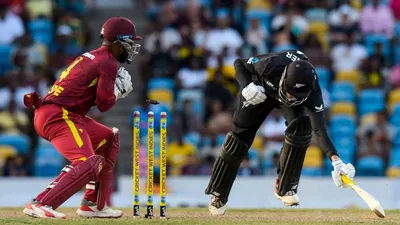
The future of ODI Cricket is entering a crucial phase as the 50-over format attempts to maintain its relevance in an era dominated by T20 cricket. With the next ODI World Cup approaching, the International Cricket Council is increasingly focused on how the format can remain meaningful for players, broadcasters and fans.
ICC CEO Sanjog Gupta believes the answer is not to abandon one-day cricket but to rethink how it is organised and presented. In an interview with PTI, Gupta argued that the era of “randomly” scheduled bilateral ODI series needs to end, with greater emphasis on context, culture, competition and competitiveness.
His comments arrive at an important moment. T20 cricket has transformed the commercial landscape of the sport, while Test cricket retains its traditional prestige. ODI cricket sits between the two, offering neither the rapid entertainment of T20 nor the historic depth of a five-day Test.
That middle position has created a challenge. The 50-over format needs a stronger reason for fans to invest their time, particularly when international calendars are already crowded with franchise leagues, Tests, T20 internationals and major ICC events.
Gupta’s argument is that the solution lies in giving ODI cricket more meaning rather than simply scheduling more matches.
Why is the future of ODI cricket under discussion?
ODI cricket remains an important part of the international game, but its position has become increasingly complicated.
The rise of T20 cricket has changed how audiences consume cricket. A T20 match can be completed in a few hours and is naturally suited to modern broadcast schedules. Franchise leagues have also created year-round opportunities for players and have strengthened the commercial appeal of the shortest format.
ODIs require a significantly larger time commitment while still competing for the attention of the same audience.
That does not mean the format has lost its value. The Cricket World Cup remains one of the most important events in the sport, and ODI cricket provides a unique balance between strategy, aggression, bowling changes, fielding restrictions and long-term innings construction.
The challenge is making bilateral ODIs feel as important as the major tournaments.
Sanjog Gupta says the era of random bilateral ODIs must end
Gupta’s strongest criticism is directed towards the way some bilateral ODI series have traditionally been scheduled.
“The era of randomly scheduled bilateral series has to come to an end.”
The ICC CEO argued that international cricket cannot sustainably operate without context, culture, competition and competitiveness.
His point goes beyond simply reducing the number of matches. The bigger question is whether each ODI series gives fans a reason to care about the outcome.
If two teams play a bilateral series with little connection to a qualification pathway, tournament preparation or a broader narrative, it can become difficult to generate the same interest associated with a World Cup match.
Gupta therefore appears to favour a system in which ODI cricket has a clearer identity and a more logical place within the international calendar.
The four pillars Gupta believes can revive ODI cricket
Gupta identified four factors that he believes are central to attracting attention and building stronger connections between fans and the sport.
| Pillar | What it means for ODI cricket |
|---|---|
| Context | Matches should have a meaningful purpose within the wider international calendar. |
| Culture | The format needs a distinct identity that fans can connect with. |
| Competition | High-quality matchups and meaningful contests can strengthen interest. |
| Competitiveness | Teams should have genuine incentives and stakes when playing ODIs. |
These four ideas are important because they address the central weakness facing bilateral ODI cricket: relevance.
A format does not necessarily need to be shorter to remain popular. It needs a compelling reason for audiences to watch.
Context could become the biggest weapon for ODI cricket
Among Gupta’s four pillars, context may be the most important.
Fans are more likely to follow matches when they understand what is at stake. The World Cup naturally provides that context because every game contributes to a larger tournament story.
Bilateral cricket can struggle when the same clarity is absent.
A stronger ODI calendar could connect individual series to qualification pathways, rankings, tournament preparation or other meaningful objectives. This would allow fans to understand why a particular match matters beyond the result of that day.
The underlying principle is simple: importance creates attention.
If the result of an ODI has consequences later, supporters have a stronger reason to follow it.
Why the ODI World Cup remains central to the format
Gupta made it clear that the future of ODI cricket remains closely connected to the men’s and women’s ICC Cricket World Cups.
This is arguably the format’s greatest advantage.
The World Cup gives ODI cricket something that franchise T20 competitions cannot fully replicate: a global international tournament built around national teams competing for the sport’s premier 50-over title.
For players, winning a World Cup remains a defining career achievement. For supporters, the tournament creates national rivalries, iconic moments and long-running sporting memories.
That connection gives the format a foundation from which it can rebuild.
The challenge is ensuring that the importance of the World Cup does not make ODI cricket valuable only every four years.
The biggest problem: the gap between World Cups
The World Cup can generate enormous interest, but the format needs meaningful competitions between editions.
This is where ODI cricket’s calendar becomes critical.
If bilateral series are scheduled without a clear narrative, fans may naturally prioritise T20 cricket, particularly when franchise competitions offer star players, shorter matches and high entertainment value.
However, if ODI series are connected to a larger competitive structure, they can become part of an ongoing story.
That could create a healthier relationship between bilateral cricket and major ICC tournaments.
Instead of viewing the World Cup as an isolated event, the entire ODI calendar could gradually build towards it.
ODI cricket does not need to become T20 cricket
A key mistake in discussions about the future of ODIs would be trying to make the format behave like T20 cricket.
The two formats offer different experiences.
T20 cricket is built around urgency. Every over carries enormous weight, batters attack from the beginning and tactical decisions often have immediate consequences.
ODI cricket provides more room for strategy. Teams can build an innings, change tempo, rotate bowlers, preserve wickets and plan around phases of the game.
That difference should be treated as an advantage rather than a weakness.
ODI cricket does not need to copy T20 cricket to survive. It needs to explain why its own characteristics remain valuable.
The unique opportunity: make ODI cricket the bridge between Tests and T20s
One potential way forward is to position ODI cricket as the format that combines elements of both extremes.
It has the international identity and strategic depth associated with Test cricket while retaining a defined timeframe and greater scoring intensity.
That makes it particularly suitable for World Cup competition, where teams can showcase tactical depth without requiring five days for every match.
Instead of treating this middle position as a disadvantage, cricket administrators could present it as the format’s unique selling point.
The challenge is making sure that message is reflected in the calendar and tournament design.
Why competitiveness matters more than simply adding matches
Increasing the number of ODI matches would not automatically solve the format’s problems.
In fact, more matches without greater meaning could make the problem worse.
If players and fans perceive a series as low stakes, additional fixtures may simply increase fatigue and calendar congestion.
Gupta’s comments suggest that the priority should instead be meaningful competition.
That could mean fewer but more strategically important bilateral series, with stronger links to the World Cup and the broader international structure.
For players, this could also improve preparation. Instead of playing ODIs because they happen to be on the calendar, teams could enter series with clear competitive objectives.
Culture is another missing piece in ODI cricket
Gupta’s reference to culture is particularly interesting because it goes beyond scheduling.
Every successful sporting format develops its own traditions, personalities and emotional identity.
Test cricket has its history, rivalries and rituals. T20 cricket has developed a culture built around franchise identities, entertainment and short-format specialists.
ODI cricket has its own history, including World Cup triumphs, legendary innings and famous rivalries. But modern cricket needs to ensure that younger audiences understand why the format remains special.
That requires storytelling around players, rivalries, teams and tournaments rather than treating each series as another collection of fixtures.
Senior stars could play an important role in ODI cricket’s future
The next ODI World Cup could also be significant because several established players are approaching the later stages of their careers.
Virat Kohli is among the senior names whose potential departure from the World Cup stage would represent a major change for Indian cricket and the global ODI landscape.
Players of that stature create emotional connections with audiences. Their performances help turn individual matches into events.
However, the long-term future of ODI cricket cannot depend entirely on the presence of individual superstars.
The format needs to remain attractive when the current generation eventually moves on.
That means creating new stars and new rivalries while maintaining the significance of international ODI competition.
Men’s and women’s ODI cricket can benefit from the same approach
Gupta’s comments also have relevance beyond men’s cricket.
The ICC CEO specifically referred to the men’s and women’s Cricket World Cups when discussing the place of the ODI format in the international game.
Women’s ODI cricket has its own major tournaments, players and growing global audience. A meaningful calendar can help both versions of the format build stronger identities.
For women’s cricket especially, giving bilateral ODIs clear context could help create more consistent interest between major tournaments.
A stronger connection between bilateral fixtures and World Cup pathways could therefore support the wider growth of international cricket.
What could a better ODI calendar look like?
Gupta did not present a complete new calendar in the comments provided, but his four-pillar framework points towards several possible principles.
- More context: Every major ODI series should have a clearly understood purpose.
- Stronger competition: High-quality matchups should be prioritised where possible.
- World Cup connection: The bilateral calendar should build towards ICC tournaments rather than operate independently.
- Less randomness: Scheduling should be based on strategic objectives rather than simply filling available dates.
- Better balance: ODI commitments must coexist with Test cricket and T20 cricket without overwhelming players.
- Greater participation: The format can potentially involve more teams as the global game expands.
Why player workload must be part of the solution
Any discussion about ODI cricket’s future must also account for player workload.
Modern international cricketers often move between formats, domestic competitions and franchise leagues. A packed calendar can make it difficult for players to participate in every competition.
If ODI cricket wants its best players involved, administrators need to ensure that the format has enough value to justify its place in increasingly crowded schedules.
This is another reason why meaningful matches matter.
A player may be more willing to prioritise a strategically important ODI series than a low-context fixture squeezed between other major commitments.
Could fewer ODIs actually make the format stronger?
This is one of the most interesting implications of Gupta’s comments.
If the problem is a lack of context rather than a lack of matches, reducing the number of low-value fixtures could potentially strengthen the format.
A more carefully planned ODI calendar could make individual matches feel more important. The same principle is visible across sport: scarcity can increase attention when the event itself carries significance.
That does not mean ODI cricket needs to disappear from bilateral schedules. It means every series should have a reason to exist.
In that sense, the future of ODI cricket may depend less on quantity and more on quality.
What the ICC needs to get right
The ICC faces a delicate balancing act.
It must protect Test cricket, support the continued growth of T20 cricket and ensure that ODI cricket does not become squeezed into an increasingly crowded international calendar.
At the same time, national boards need enough financial incentive to organise meaningful international cricket.
Gupta acknowledged that sustaining cricket requires significant financial and non-financial investment. That means reforming the ODI calendar cannot be done through sporting logic alone.
Broadcast value, player availability, travel, national board priorities and tournament scheduling will all influence what is realistically possible.
What this means for fans
For supporters, the ideal outcome is straightforward: matches that matter.
Fans do not necessarily need every ODI to be a World Cup final. But they should be able to understand why a particular series matters and what its consequences are.
That could make bilateral ODI cricket easier to follow and create stronger narratives throughout the international season.
If administrators can connect the calendar with meaningful objectives, the format may be able to rebuild some of the attention it has lost to T20 cricket.
ODI cricket’s future: survive or thrive?
Gupta’s language is notably more ambitious than simply keeping the format alive. He believes ODI cricket can “survive” and “thrive” if the right elements remain at the centre of its development.
That distinction matters.
Survival would mean maintaining ODI cricket as an international format. Thriving would mean creating competitions that fans actively want to watch, players value and boards consider commercially worthwhile.
The latter requires more than a new rule or a change in the number of overs.
It requires a coherent vision for what ODI cricket represents.
Conclusion
The future of ODI cricket may depend on a simple but difficult question: why should fans care about the next 50-over match?
ICC CEO Sanjog Gupta believes the answer must come through context, culture, competition and competitiveness. His warning against “randomly” scheduled bilateral series highlights a growing concern that international cricket cannot continue adding fixtures without considering their purpose.
The ODI World Cup remains the format’s strongest asset, giving 50-over cricket a global stage and a clear identity. The challenge is to carry some of that relevance into the years between World Cups.
That could require a smarter calendar, stronger competitive incentives, better storytelling and a clearer connection between bilateral cricket and major ICC tournaments.
ODI cricket does not need to defeat T20 cricket to have a future. It needs to offer something T20 cannot: a distinct international format built around strategy, national rivalries and a globally recognised World Cup tradition.
If the ICC and national boards can make individual matches feel meaningful again, the 50-over format may not merely survive the T20 era. It could find a new reason to thrive within it.
For breaking news and live news updates, like us on Facebook or follow us on Twitter and Instagram. Read more on Latest Cricket on thefoxdaily.com.






COMMENTS 0