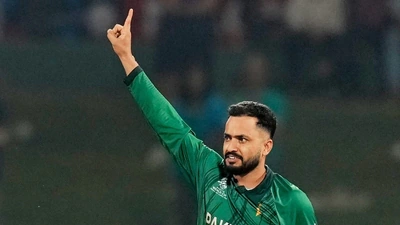
The International Cricket Council’s decision to sanction Pakistan spinner Mohammad Nawaz has become one of the most significant cricketing disciplinary stories of 2026. While anti-doping cases are not uncommon in global sports, this particular case stands out because it involves a substance classified under the ICC‘s “Substance of Abuse” category rather than a traditional performance-enhancing drug.
The distinction is important.
Unlike cases involving steroids, stimulants, or substances intended to improve athletic performance, the Nawaz case highlights a different challenge facing modern sports administrators: balancing strict anti-doping enforcement with rehabilitation and player welfare.
For Pakistan cricket, the incident arrives at a sensitive time as the national team continues rebuilding after a disappointing ICC Men’s T20 World Cup 2026 campaign. For the ICC, the case demonstrates how anti-doping policies are evolving to address both integrity concerns and athlete health issues.
Beyond the headlines, the story raises broader questions about how cricket governs substance abuse violations, protects the sport’s credibility, and supports players facing off-field challenges.
What Happened in the Mohammad Nawaz Doping Case?
The case stems from a doping test conducted following Pakistan’s ICC Men’s T20 World Cup 2026 match against the Netherlands in Colombo, Sri Lanka.
The sample returned an adverse analytical finding for Carboxy-THC, a metabolite associated with cannabis use and classified under the ICC Anti-Doping Code as a “Substance of Abuse.”
After the investigation process, Nawaz accepted responsibility for the violation and acknowledged the presence of the prohibited substance.
Importantly, authorities accepted that the substance was consumed outside competition and was not intended to improve sporting performance.
This finding significantly influenced the final sanction imposed by the ICC.
Understanding the ICC’s Substance of Abuse Rules
Many fans automatically associate doping cases with cheating. However, anti-doping frameworks often distinguish between performance-enhancing substances and recreational or abuse-related substances.
The ICC follows the World Anti-Doping Agency (WADA) framework, which includes special provisions for substances considered unrelated to sporting performance.
Under these regulations, athletes may receive reduced sanctions if they can demonstrate:
- The substance was used outside competition.
- The substance was not intended to enhance performance.
- The athlete accepts responsibility.
- The athlete completes an approved treatment programme.
This approach reflects a growing international recognition that some anti-doping violations are better addressed through rehabilitation rather than purely punitive measures.
Why Nawaz Received a Reduced Suspension
One of the most discussed aspects of the case is the relatively short suspension period.
At first glance, some observers may view a reduced ban as lenient. However, the decision follows established anti-doping guidelines rather than discretionary favoritism.
Because the violation involved a Substance of Abuse rather than a performance-enhancing substance, the ICC’s regulations allow for a reduced sanction if specific conditions are met.
| Factor | Impact on Sanction |
|---|---|
| Substance classified as Substance of Abuse | Eligible for reduced suspension |
| Consumed outside competition | Reduced severity of violation |
| No intent to enhance performance | Considered mitigating factor |
| Acceptance of responsibility | Helped expedite resolution |
| Treatment programme participation | Further reduction available |
The ICC’s decision therefore reflects the application of existing regulations rather than a special exemption.
Why This Case Is Different From Traditional Doping Scandals
Historically, major doping controversies in sports have involved athletes attempting to gain a competitive advantage through banned substances.
Such cases directly challenge the integrity of competition because they potentially alter results and create unfair advantages.
The Nawaz case differs in several key ways.
Authorities accepted that the prohibited substance was not consumed for performance enhancement. Instead, the violation falls into a category increasingly viewed through both disciplinary and health-related lenses.
This distinction does not eliminate responsibility.
Athletes remain fully accountable for substances found in their systems.
However, it does influence how governing bodies determine appropriate sanctions.
The Growing Focus on Athlete Welfare in Cricket
One notable trend in modern sports governance is the increasing emphasis on athlete welfare.
Professional cricketers today face unprecedented demands.
International schedules, franchise leagues, extensive travel, media obligations, and public scrutiny create pressures that previous generations rarely experienced.
As a result, sports organizations have begun integrating rehabilitation, education, and mental health support into disciplinary frameworks.
The ICC’s treatment-based approach in cases involving substances of abuse reflects this broader evolution.
The objective is not simply to punish violations but also to reduce the likelihood of recurrence.
Impact on Pakistan Cricket
Although Nawaz is not currently one of Pakistan’s most prominent stars, his absence still affects team planning.
As an experienced spin-bowling all-rounder, he has provided balance across formats and has frequently served as a valuable squad option.
Pakistan’s selectors must now evaluate how his absence and eventual return fit into their long-term strategy.
The timing is particularly challenging given Pakistan’s ongoing efforts to rebuild following an underwhelming T20 World Cup campaign.
Team management will likely seek stability while ensuring disciplinary issues do not distract from cricketing objectives.
What Happens to Nawaz’s Match Results?
One consequence of anti-doping violations that often receives less attention is the disqualification of results.
Under anti-doping regulations, performances achieved during the relevant period may be invalidated.
This principle exists to protect the integrity of competition and ensure consistency across all cases.
As a result, Nawaz’s results from the affected period have been subject to disqualification under the applicable rules.
Such measures reinforce the message that compliance with anti-doping regulations remains a fundamental responsibility for all athletes.
How Cricket’s Anti-Doping System Has Evolved
Cricket’s anti-doping framework has become significantly more sophisticated over the past two decades.
Earlier eras often lacked the comprehensive testing and investigative procedures seen today.
Modern anti-doping systems include:
- In-competition testing
- Out-of-competition testing
- Biological monitoring
- Education programmes
- Therapeutic use exemption processes
- Independent disciplinary procedures
These measures help align cricket with broader international sporting standards.
The objective is to protect fairness while maintaining confidence in the sport’s integrity.
The Unique Insight Most Coverage Is Missing
Many discussions surrounding the Nawaz case have focused exclusively on the suspension itself.
However, the more significant development may be what the case reveals about modern sports governance.
There has been a noticeable shift away from viewing every anti-doping violation through a single lens.
Regulators increasingly differentiate between deliberate attempts to cheat and cases involving substances associated with personal behavior or health concerns.
This does not mean standards have become weaker.
Rather, enforcement has become more nuanced.
The goal is to preserve competitive integrity while recognizing that different types of violations require different responses.
Lessons for Professional Cricketers
The Nawaz case serves as a reminder that athletes remain responsible for everything that enters their bodies.
Regardless of intent, prohibited substances can trigger significant consequences.
Professional players must maintain awareness of anti-doping regulations, seek guidance when necessary, and understand that personal choices can have professional ramifications.
Education remains one of the most effective tools for preventing future violations.
Sports organizations around the world continue investing heavily in awareness programmes for precisely this reason.
What Comes Next for Mohammad Nawaz?
The immediate priority for Nawaz will be completing the required treatment programme and fully satisfying the conditions outlined by the ICC.
Assuming successful completion, he will become eligible to resume his cricketing career without serving additional suspension time.
The bigger challenge will be rebuilding momentum and re-establishing himself within Pakistan’s cricket structure.
Professional sport often moves quickly, and periods away from competition can create new selection challenges.
How effectively Nawaz responds to this setback may ultimately define the next phase of his career.
Conclusion: A Case About Accountability, Rehabilitation, and Modern Sports Governance
The Mohammad Nawaz anti-doping case is more complex than a typical doping headline might suggest. While the violation resulted in disciplinary action, the circumstances surrounding the case highlight the increasingly sophisticated approach taken by modern anti-doping authorities.
The ICC’s decision reflects an effort to balance accountability with rehabilitation, ensuring that regulations remain strict while recognizing important distinctions between different types of violations.
For Pakistan cricket, the incident serves as a reminder of the importance of education, player welfare, and professional responsibility. For the wider cricket community, it illustrates how anti-doping policies continue to evolve in response to changing realities within international sport.
Ultimately, the case reinforces a simple principle: maintaining the integrity of cricket requires both strong enforcement and effective support systems. The challenge for governing bodies is achieving both at the same time—and the Nawaz decision offers a glimpse into how that balance is increasingly being pursued.
For breaking news and live news updates, like us on Facebook or follow us on Twitter and Instagram. Read more on Latest Sports on thefoxdaily.com.






COMMENTS 0