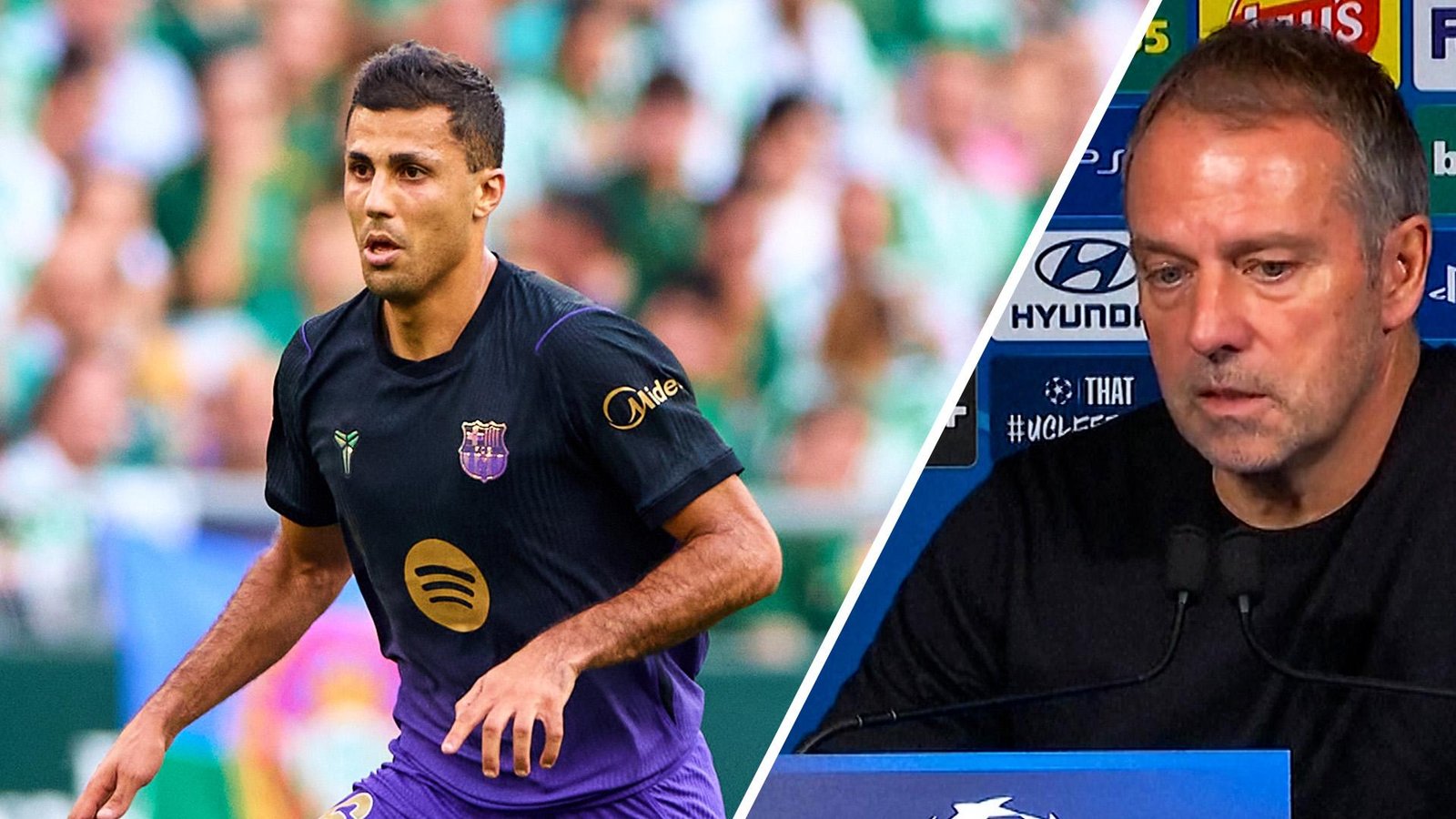
Anthony Gordon is preparing for one of the biggest occasions in European club football after making a surprise move from Newcastle United to Barcelona during the summer. The England international has made an encouraging start to life at the Nou Camp, recording two goals and five assists in his first 11 appearances across all competitions. However, his next challenge could prove a defining moment in his early Barcelona career: making his El Clásico debut against Real Madrid.
Few fixtures in world football carry the history, intensity and global attention of El Clásico. The rivalry between Barcelona and Real Madrid extends beyond the pitch, combining sporting ambition, regional identity and decades of memorable encounters. For a new signing, performing well in this contest can quickly establish a connection with supporters and provide a lasting place in the club’s history.
Gordon will not be the first British footballer to experience the pressure of this famous rivalry. From Laurie Cunningham’s pioneering spell at Real Madrid to Gary Lineker’s goals for Barcelona, David Beckham’s Galáctico years and Jude Bellingham’s spectacular start in Spain, several British players have already tested themselves in the fixture.
Some have delivered defining moments, others have contributed quietly to successful teams, while a few have struggled to make a lasting impact. Marcus Rashford also enjoyed a memorable moment during his loan spell at Barcelona, demonstrating how even a small number of appearances can leave a significant impression.
As Gordon prepares to join this group, looking back at the records of previous British players offers an insight into the different ways they have handled the demands of El Clásico.
Laurie Cunningham: The British Pioneer at Real Madrid
Club: Real Madrid (1979–1984)
El Clásico record: Three appearances, one goal
Laurie Cunningham holds a special place in the history of British footballers in Spain. After impressing with West Bromwich Albion, the winger joined Real Madrid in 1979 and became the first British player to feature in El Clásico.
Cunningham wasted little time making an impression. In his first appearance against Barcelona, he scored Real Madrid’s third goal in a 3-2 victory, immediately demonstrating that he could contribute on one of the biggest stages in Spanish football.
His speed, technical ability and direct approach made him a distinctive attacking presence. Moving to Real Madrid represented a significant step for a British player at the time, when relatively few footballers from the United Kingdom had established themselves in continental European leagues.
Cunningham went on to play in two more Clásicos, winning one and losing one without scoring again. His time at Real Madrid was interrupted by injury, including a broken foot that affected his spell at the club.
His life was tragically cut short in 1989 when he died in a car accident in Madrid while playing for Rayo Vallecano. Nevertheless, Cunningham remains an important figure in the story of British footballers in Spain, having opened a path that others would follow in subsequent decades.
Steve Archibald: A Scottish Connection at Barcelona
Club: Barcelona (1984–1988)
El Clásico record: Six appearances, one goal
Steve Archibald became the only Scottish player featured in the supplied list of British footballers to have played in El Clásico. He joined Barcelona from Tottenham Hotspur after winning two FA Cups and the UEFA Cup in English football.
Archibald made his mark in Spain by contributing to Barcelona’s attacking play during a period when the club was competing for domestic honours. His El Clásico record includes one goal, scored in a 3-0 victory over Real Madrid.
That result became particularly memorable because Barcelona went on to win La Liga. Scoring in a convincing victory over their greatest rivals gave Archibald a notable moment in a successful campaign.
He subsequently played in five more matches against Real Madrid but did not score again, although he registered an assist. After his Barcelona spell, Archibald moved to Hibernian.
His record illustrates how a player can contribute to a club’s success without consistently scoring in its most famous fixture. While his numbers were more modest than those of some later British stars, his place in Barcelona’s history remains significant.
Gary Lineker: England’s Goal-Scoring Star in El Clásico
Club: Barcelona (1986–1989)
El Clásico record: Eight appearances, five goals
Gary Lineker was one of the first British players to make a substantial scoring impact in El Clásico. The England striker joined Barcelona after an outstanding spell at Everton, bringing a reputation as one of the most reliable finishers in English football.
Lineker’s record against Real Madrid was impressive. He scored five goals in eight appearances, establishing himself as a genuine threat in a fixture where chances can be limited and the pressure on forwards is intense.
His early experiences were not entirely positive, as Barcelona lost his first two Clásicos. However, Lineker responded strongly, scoring five goals across his next five appearances against Madrid.
One of his most memorable performances came in January 1987, when he scored a hat-trick in a 3-2 Barcelona victory at the Nou Camp. Scoring three times against Real Madrid in a single match remains an outstanding achievement for any forward, and the performance helped cement Lineker’s reputation in the rivalry.
Lineker’s success offers an encouraging example for Gordon. Although the two players occupy different attacking roles, Lineker demonstrated that a British footballer could adapt to Spanish football and produce decisive performances against the country’s biggest rival.
Mark Hughes: A Difficult Spell at Barcelona
Club: Barcelona (1986–1988)
El Clásico record: Three appearances, no goals
Mark Hughes joined Barcelona during the same summer transfer window as Lineker after making an impression at Manchester United. Expectations were high, but his spell in Catalonia did not match the achievements he enjoyed before and after his time in Spain.
Hughes played in three El Clásico matches without scoring. Although he managed an assist against Real Madrid in European competition, he did not produce a defining contribution in the domestic rivalry.
His experience highlights the difficulties British players could face when moving to a different football culture. Success in England did not automatically translate into the same level of influence in Spain, where tactical expectations, competition for places and playing styles could present different challenges.
For Gordon, Hughes’s experience serves as a reminder that a high-profile transfer and an encouraging reputation are not guarantees of success. Establishing a role within Barcelona’s system and adapting to the demands of Spanish football will be essential if he hopes to create his own legacy.
Steve McManaman: An Unbeaten Record With Real Madrid
Club: Real Madrid (1999–2003)
El Clásico record: Seven appearances, one goal
Steve McManaman joined Real Madrid in 1999 after making more than 350 appearances for Liverpool. His move represented a significant step in his career, taking him from English football to one of Europe’s most successful clubs.
McManaman became only the second British player to represent Real Madrid in El Clásico after Cunningham. His time in the Spanish capital was highly successful, as he won two La Liga titles and two Champions League trophies.
His record in the rivalry was particularly notable because he never lost any of his seven appearances against Barcelona, according to the supplied figures. Although he scored only once, that goal came in a 2-0 Champions League victory over Madrid’s rivals during the campaign in which he secured his second European title with the club.
McManaman’s experience demonstrates that success in El Clásico is not measured exclusively by goals. Midfielders and wide players can influence matches through their movement, passing, work rate and ability to support a team’s overall structure.
His trophy-winning spell also showed that British players could adapt to Real Madrid and become part of successful teams without necessarily being the main attacking stars.
David Beckham: The Galáctico Who Created Chances
Club: Real Madrid (2003–2007)
El Clásico record: Seven appearances, no goals
David Beckham arrived at Real Madrid in 2003 after winning six Premier League titles with Manchester United. His transfer made him one of the most recognisable members of the club’s Galácticos era, when Madrid assembled a squad featuring several of the world’s biggest footballing names.
Beckham did not score in his seven El Clásico appearances, but he still produced important attacking contributions. One of his most notable performances came during a 4-2 victory over Barcelona in the 2004–05 season, when he registered two assists.
His crossing ability, delivery from set pieces and range of passing made him a valuable creative option. Although goals often dominate the headlines after major matches, Beckham’s record demonstrates how a player can influence the result by creating opportunities for teammates.
His spell at Real Madrid also reinforced the global profile of El Clásico, with the fixture attracting attention from supporters well beyond Spain. Beckham’s presence helped make the rivalry an even bigger international spectacle during his time at the club.
Michael Owen: A Short Spell With a Memorable Goal
Club: Real Madrid (2004–2005)
El Clásico record: Two appearances, one goal
Michael Owen joined Real Madrid in 2004 after already winning the Ballon d’Or, one of football’s most prestigious individual awards. His time in Spain was relatively brief, but he still managed to score in one of the biggest fixtures on the calendar.
Owen came off the bench during a 3-0 defeat at Barcelona, experiencing the difficulty of playing at the Nou Camp against a team capable of controlling a major contest.
However, he responded in the return fixture, scoring after receiving an assist from Beckham in a 4-2 victory for Real Madrid. The goal gave Owen a tangible contribution to a memorable result despite his limited number of appearances in the rivalry.
His record illustrates how quickly a player can make an impression in El Clásico. A long spell at either club is not essential for a footballer to produce a moment that supporters remember, although sustaining that influence over several seasons is a much greater challenge.
Gareth Bale: A Copa del Rey Moment for the Ages
Club: Real Madrid (2013–2022)
El Clásico record: 15 appearances, two goals
Gareth Bale moved from Tottenham Hotspur to Real Madrid in 2013 for a then-record transfer fee. Having developed from a left-back into one of Europe’s most dangerous attacking players, the Welshman arrived with enormous expectations.
Bale’s time in Madrid brought major success, including five Champions League titles. However, his relationship with sections of the club’s supporters was not always straightforward, and his El Clásico record was more complicated than his trophy collection might suggest.
He made 15 appearances in the fixture, winning three times and scoring two goals, according to the supplied figures. His most memorable contribution came in the Copa del Rey final against Barcelona in 2014.
Bale produced an extraordinary run down the left side, going around Barcelona defender Marc Bartra and briefly running beyond the touchline before regaining his position and finishing past goalkeeper José Manuel Pinto. The goal secured the trophy for Real Madrid and became one of the defining moments of Bale’s career in Spain.
Although the final was a cup match rather than a league encounter, it remains one of the most iconic moments in the wider rivalry between the two clubs.
Bale’s experience demonstrates how a single outstanding performance can become more memorable than a player’s overall win-loss record. Gordon will hope to produce his own defining moment, although his first task will be to establish himself in the fixture.
Jude Bellingham: England’s Modern El Clásico Star
Club: Real Madrid (2023–present)
El Clásico record: 10 appearances, four goals
Jude Bellingham became the sixth Englishman to join Real Madrid when he moved from Borussia Dortmund in 2023. The transfer came with a substantial fee and significant expectations, but the midfielder quickly established himself as one of the team’s most influential players.
By the age of 23, Bellingham had already played in 10 El Clásico matches, winning four and losing six, according to the supplied statistics. His record shows that individual performances and team results do not always align, even when a player contributes important goals.
During his first season, Real Madrid won both La Liga and the Champions League. Bellingham scored in both league meetings with Barcelona, including a brace in a 2-1 away victory.
His performances made him a central figure in Madrid’s campaign and reinforced his reputation as a midfielder capable of delivering in decisive moments. He was also involved in both goals during a 2-1 victory in the following season, scoring once and creating the other goal.
Bellingham’s record provides one of the clearest modern examples of an English player quickly becoming influential in El Clásico. His ability to arrive in attacking positions and contribute goals has made him particularly dangerous in the fixture.
For Gordon, Bellingham’s success offers a useful comparison in terms of handling expectations. Both players arrived at major Spanish clubs with considerable attention surrounding their transfers, but their positions and responsibilities differ. Gordon will need to make his own impact from the wing rather than follow the same path as a goalscoring midfielder.
Marcus Rashford: A Memorable Moment in Barcelona Colours
Club: Barcelona, on loan (2025–2026)
El Clásico record: Three appearances, one goal
Marcus Rashford joined Barcelona on loan from Manchester United in the summer of 2025. His spell was shorter than those enjoyed by Bale, Beckham or Bellingham, but he still managed to leave a notable mark on the rivalry.
Rashford scored a free-kick in May 2026 during the match in which Barcelona secured the La Liga title against Real Madrid, according to the supplied report. Scoring in such a high-stakes encounter gave his contribution particular significance.
His record of one goal in three appearances underlines how a limited number of opportunities can still produce a memorable moment. In a fixture followed by millions of supporters, a decisive goal can become part of a player’s association with the club, even if that player does not spend many years there.
Rashford’s experience also offers an encouraging example for Gordon. A new Barcelona signing does not necessarily need multiple seasons to make an impression on supporters. A strong performance in a major rivalry can accelerate that process, although consistently delivering over time remains the greater test.
Trent Alexander-Arnold: A Difficult First Clásico
Club: Real Madrid (2025–present)
El Clásico record: One appearance, no goals
Trent Alexander-Arnold joined Real Madrid from Liverpool in the summer of 2025 after winning two Premier League titles and the Champions League with his boyhood club. His move brought another high-profile English player into the modern El Clásico rivalry.
Alexander-Arnold missed the opportunity to make his debut in the fixture in October 2025, remaining on the bench as Real Madrid defeated Barcelona 2-1. His first appearance eventually came in May 2026, when he played the full 90 minutes in a 2-0 defeat at the Nou Camp.
The result was a painful introduction, with Barcelona securing the La Liga title at the expense of their greatest rivals. Alexander-Arnold had to experience one of the most demanding environments in European football while playing for a team that could not prevent its opponent from celebrating a major achievement.
His first Clásico illustrates the unpredictable nature of the fixture. A player’s quality and previous achievements do not guarantee a positive outcome, particularly in a rivalry where the pressure and emotional stakes can be exceptionally high.
For Gordon, Alexander-Arnold’s experience is a reminder that even elite players may need time to adjust to the demands of the contest. A debut can be difficult, and the most important measure of success is often how a player responds in subsequent appearances.
Anthony Gordon’s Opportunity to Join the El Clásico Story
Gordon now has the chance to add his name to the history of British players who have featured in Barcelona-Real Madrid encounters. His reported return of two goals and five assists in his first 11 appearances for Barcelona suggests he has made a promising start following his move from Newcastle United.
However, El Clásico presents a different challenge from an ordinary league match. The speed of the contest, the quality of the opposition and the pressure surrounding every major incident can make it difficult for new arrivals to perform at their usual level.
Gordon’s most immediate opportunity will be to use his pace, direct running and attacking movement to create problems for Real Madrid’s defence. As a winger, he can influence the match by beating defenders, delivering dangerous balls into the penalty area, creating chances for teammates or arriving in scoring positions himself.
His assist record could be especially relevant. A player does not need to score to make a decisive contribution in El Clásico, as Beckham and other British stars have demonstrated. Creating the opening for a winning goal can be just as valuable as finishing the move.
Barcelona will also expect Gordon to contribute to the team’s overall structure. Attacking players must balance their desire to take risks with the need to support teammates and respond when possession is lost. Against Real Madrid, mistakes can be punished quickly, making decision-making as important as individual skill.
The examples of Lineker, Bale, Bellingham and Rashford show that British players have enjoyed very different experiences in the rivalry. Some have scored multiple goals, others have created defining moments, and a few have endured difficult introductions.
Gordon’s first Clásico will therefore be an opportunity rather than a guarantee of immediate success. A strong display could help establish his reputation among Barcelona supporters, while even a quiet debut would not necessarily determine the course of his career.
Conclusion
Anthony Gordon approaches his potential El Clásico debut with the opportunity to follow an illustrious group of British footballers who have played for Barcelona and Real Madrid. Laurie Cunningham broke new ground at Madrid, Gary Lineker delivered a memorable hat-trick for Barcelona, Steve McManaman enjoyed an unbeaten record in the fixture, and David Beckham contributed important assists during his time with the Galácticos.
Later generations added their own moments. Gareth Bale produced an unforgettable Copa del Rey winner, Jude Bellingham scored crucial goals in his first season, Marcus Rashford found the net during Barcelona’s title-clinching victory, and Trent Alexander-Arnold experienced the disappointment of a defeat in his first appearance.
These contrasting records demonstrate that there is no single formula for succeeding in El Clásico. Goals, assists, tactical discipline and the ability to handle pressure can all shape a player’s legacy in the fixture.
With two goals and five assists in his first 11 appearances for Barcelona, Gordon has made an encouraging start. His next challenge is to translate that form onto one of football’s biggest stages and begin writing his own chapter in the history of El Clásico.
For breaking news and live news updates, like us on Facebook or follow us on Twitter and Instagram. Read more on Latest Football on thefoxdaily.com.





COMMENTS 0