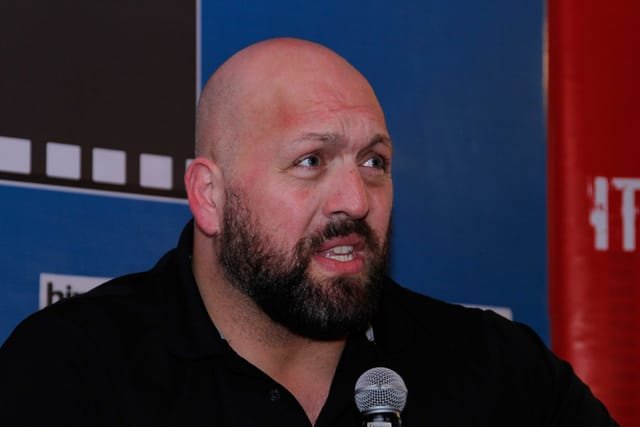
Big Show, whose real name is Paul Wight, has opened up about the subtle moment when he realized that his long WWE career was approaching its end. After spending roughly two decades as one of WWE’s most recognizable giants, Wight said a simple change in the way Vince McMahon addressed him during the COVID-19 era made him understand that the company’s perception of him had changed.
For years, McMahon had referred to Wight by his WWE identity, usually calling him “Show” or “Big Show.” According to Wight, that changed during the pandemic when McMahon suddenly called him “Paul.”
To an outsider, the difference might appear insignificant. For Wight, however, it carried much greater meaning. He interpreted the change as a sign that McMahon no longer primarily viewed him as an active WWE performer and was instead beginning to see him as someone who could transition into ambassadorial or corporate responsibilities.
That realization was particularly difficult because Wight was not ready to stop competing.
The moment Vince McMahon called him “Paul”
Big Show explained the story during an interview with TMZ Sports, describing the moment as the point when he understood that his career trajectory inside WWE had changed.
“Vince called me Paul one day during the COVID era. In all the years that I knew Vince McMahon, he never called me Paul. He always called me Show or Big Show.”
That distinction had developed over many years of working together.
Big Show was not simply another wrestler on WWE’s roster. His character had become one of the company’s defining attractions, and his enormous physical presence made him immediately recognizable to audiences around the world.
Consequently, McMahon addressing him by his real name represented a psychological shift for Wight.
He explained that hearing references to “Paul” in connection with non-wrestling responsibilities made him feel that his identity as an active performer was being replaced by a different role.
“In my brain, I d*ed a little bit in my soul because I knew my opportunities to compete in the ring were pretty much done.”
For an athlete who had spent decades building his identity around professional wrestling, that realization was understandably emotional.
Why the change meant so much to Big Show
The significance was not really the name itself.
The deeper issue was what the name represented.
Professional wrestling performers often spend years developing characters that become inseparable from their public identities. For Big Show, the name represented an enormous part of his professional life.
Being called “Show” or “Big Show” reinforced his position as an active WWE character. Hearing “Paul” in a professional context suggested to him that the person behind the character was becoming more important than the performer.
That is why a seemingly ordinary interaction could have such a powerful effect.
Wight understood that McMahon was potentially beginning to think about his long-term value beyond matches, particularly as his age and years of physical punishment made a permanent in-ring role less sustainable.
Big Show spent around 22 years in WWE
Big Show’s WWE run was one of the longest and most recognizable careers of his generation.
He joined WWE in the late 1990s after establishing himself in WCW as The Giant. Over the following decades, he became a major presence across multiple eras of WWE programming.
His career included championship victories, WrestleMania appearances, major rivalries and memorable alliances with some of the biggest names in wrestling.
He also worked alongside several generations of WWE talent, allowing him to remain relevant through enormous changes in the company’s presentation and wrestling style.
That longevity made the eventual transition away from full-time competition especially significant.
A career that survived multiple WWE eras
One reason Big Show’s WWE career stands out is the number of different eras he experienced.
He arrived during the highly competitive late-1990s wrestling environment and remained active through the Attitude Era, Ruthless Aggression Era and later periods of WWE programming.
He shared the ring with legends and future Hall of Fame-level stars, including The Rock, Stone Cold Steve Austin, The Undertaker, Triple H, John Cena and many others.
Few performers from his generation remained such a recognizable part of WWE programming for such a long period.
Why Big Show was not ready for an ambassador role
Although WWE was apparently considering other responsibilities for him, Wight said he did not want to immediately transition into an ambassador-type position.
That reaction is understandable when viewed from the perspective of an athlete who still believed he had something left to contribute inside the ring.
For many professional wrestlers, retirement is not simply a career decision. Wrestling becomes a major part of their identity, routine and social environment.
Moving from performing in front of thousands of fans to representing a company at corporate or promotional events can therefore feel like a dramatic change in purpose.
Big Show’s comments suggest that he wanted the opportunity to determine when his in-ring career was over rather than feeling that the decision had already been made for him.
The COVID-19 era changed WWE’s operating environment
The timing of the incident is also important.
The COVID-19 pandemic dramatically changed professional wrestling. WWE was forced to operate under restrictions, with events taking place without the normal live audience environment for an extended period.
The company had to rethink production, travel, staffing and talent usage while navigating an unprecedented period for the entertainment industry.
For veteran performers, that period could also provide a natural point of reflection about the future.
Big Show’s comments indicate that the pandemic era became the period when he personally recognized that his role within WWE was changing.
Big Show’s departure from WWE followed in 2021
Wight eventually left WWE in 2021, bringing an end to a remarkable period with the company.
His departure did not mean the end of his professional wrestling career.
Instead, he moved to All Elite Wrestling, where he became known as Paul Wight and took on a combination of wrestling and commentary responsibilities.
The move also demonstrated that Wight still had the desire to remain connected to active professional wrestling rather than immediately stepping away from the industry altogether.
That makes his earlier reaction to WWE’s proposed ambassadorial direction even more understandable. He was not necessarily ready to leave wrestling; he was trying to find a way to continue participating on his own terms.
The psychology behind a wrestler losing his character identity
There is a deeper psychological element to Wight’s story that can easily be missed.
For an ordinary employee, being addressed by a first name rather than a professional title would rarely carry such significance. For a professional wrestler, however, the distinction between performer and person can be complicated.
Wrestling characters are carefully constructed identities. Names, costumes, entrances, catchphrases and physical presentation all contribute to the audience’s perception of the performer.
Big Show had spent decades being identified with his wrestling persona.
Therefore, McMahon switching from “Show” to “Paul” could symbolize something much larger: the end of the character’s usefulness as an active performer.
That is why the moment stayed with Wight.
Big Show also discussed Vince McMahon’s relationship with WWE talent
In the same interview, Wight discussed another aspect of working with Vince McMahon: the professional distance McMahon maintained with WWE wrestlers.
According to Wight, McMahon had to learn how to manage a locker room that could sometimes be unpredictable and full of practical jokes.
Wight suggested that McMahon’s relationship with talent was shaped by the need to maintain authority and protect the company’s interests.
“Vince had to learn to navigate those kind of guys and develop a distance with his talent because he couldn’t afford to become friends with the talent.”
The reasoning, according to Wight, was that becoming too personally close to wrestlers could make it harder for McMahon to make decisions based purely on what he believed was best for WWE.
Why maintaining distance can matter in wrestling management
Professional wrestling presents an unusual management challenge.
Executives are dealing with performers who are simultaneously employees, athletes, entertainers and public personalities. Their careers can depend heavily on creative decisions made by management.
If a company executive becomes extremely close to a performer, difficult decisions can become more complicated.
Wight’s comments suggest that McMahon understood this dynamic and deliberately maintained a professional boundary with much of the roster.
That approach may have helped McMahon make decisions without allowing personal friendships to dominate business considerations.
At the same time, such distance can also make the relationship between management and talent feel less personal.
Big Show’s story reveals how WWE decides what comes next for veterans
The most interesting part of Big Show’s story is how quickly the perception of a veteran wrestler can change.
A performer can spend years being treated as an important in-ring attraction before eventually reaching the stage where management begins considering alternative roles.
That transition can happen for many reasons, including age, injuries, changing creative priorities and the emergence of younger performers.
For the wrestler involved, however, the transition can feel much more abrupt than it appears from outside.
Big Show’s experience demonstrates that the hardest part may not be physically leaving the ring. It can be accepting that management no longer sees you primarily as an active competitor.
Why Big Show’s WWE legacy remains important
Regardless of how his WWE tenure ended, Big Show left behind an enormous legacy.
His physical stature made him one of the most instantly recognizable wrestlers in WWE history, but his longevity was arguably just as important.
He remained relevant while WWE’s product, audience and roster changed dramatically.
His ability to work as a monster heel, comedy character, serious babyface and veteran attraction allowed him to fit into numerous storylines over the years.
That versatility helped extend his career far beyond the period when his size alone would have been enough to keep him at the center of WWE programming.
The bigger lesson from Big Show’s final WWE years
Big Show’s comments provide an interesting look at the difference between being valuable to a wrestling company and being valued specifically as an active wrestler.
WWE may still have believed that Wight had considerable value. The proposed ambassadorial responsibilities suggest that the company saw ways to use his experience, reputation and public profile.
But from Wight’s perspective, that was not necessarily the same as being viewed as a top-level wrestling talent.
That distinction explains why the conversation affected him so deeply.
He was not being told that he had no value. He was realizing that his value was being redefined.
Conclusion: Big Show knew his WWE in-ring chapter was closing
Big Show’s revelation about Vince McMahon calling him “Paul” offers a fascinating insight into the final stage of his WWE career.
After roughly 22 years with the company, Wight recognized during the COVID-19 era that McMahon was beginning to view him less as an active WWE performer and more as a veteran who could contribute in ambassadorial and corporate roles.
For Wight, the change in terminology carried enormous emotional significance because McMahon had spent years calling him “Show” or “Big Show.”
The moment convinced him that his full-time WWE in-ring opportunities were coming to an end, even though he was not personally ready to stop competing.
His eventual departure in 2021 and continued involvement in professional wrestling demonstrated that the end of his WWE career was not necessarily the end of his life as a performer.
Ultimately, Big Show’s story highlights one of the most difficult transitions in professional wrestling: recognizing when the industry has begun to see a legendary performer differently, even when that performer still feels there are chapters left to write.
For breaking news and live news updates, like us on Facebook or follow us on Twitter and Instagram. Read more on Latest Sports on thefoxdaily.com.






COMMENTS 0