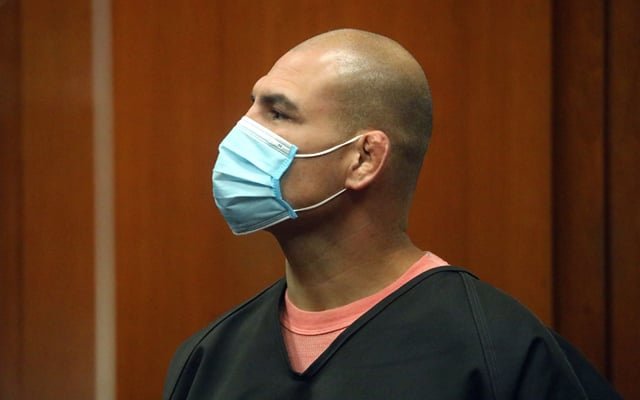
Former UFC heavyweight champion Cain Velasquez has offered a deeply personal account of the emotional turmoil that preceded his 2022 shooting incident, describing how the distress of his family and his frustration with the legal process pushed him into a state where he no longer cared about his own life.
During an appearance on the Shawn Ryan Show, Velasquez revisited the events surrounding the allegations involving Harry Goularte, who was accused of abusing his son. The former heavyweight champion explained that learning Goularte had been released from custody without an ankle monitor became a breaking point for him.
Velasquez described watching his son struggle emotionally after disclosing what had allegedly happened at daycare. He also recalled the pain of seeing his family members, including his wife Michelle, deal with the situation while he felt powerless to protect them.
His account provides further insight into the emotional circumstances he says surrounded the February 2022 incident that led to his arrest and eventual prison sentence. Velasquez admitted that he reached a point where he had lost the will to live and was no longer thinking about the consequences of his actions.
Cain Velasquez recalls the events that pushed him toward a breaking point
Velasquez said the situation began when his son spoke to him about events at his daycare. According to the former UFC champion, he put his child to bed one night before hearing details that prompted him to ask further questions.
He said his son indicated that the alleged incidents had been happening for some time. Velasquez and his family then followed the steps they believed were necessary, including making a report and contacting the authorities.
However, the subsequent release of Goularte became a major source of frustration for the family. Velasquez recalled that Goularte was released on the same week the report was made and that he was not initially wearing an ankle monitor.
The former fighter said the most painful part was witnessing the emotional impact on his children and wife. He described seeing his son cry and struggle with the trauma, while other members of the family were also visibly affected.
“Seeing my kids break down, seeing Michelle break down, that was like part of my brother, that was one of the hardest things, if not the hardest things, to watch them go through their hurt in the moment, watching it and not being able to do anything, but let them go through it.”
His recollection highlighted how helplessness became a central part of his experience. Velasquez said he had followed the expected process by reporting the allegations and contacting authorities, but he believed the situation had not been handled in a way that protected his family.
That frustration intensified when he learned that Goularte was being taken to receive an ankle monitor. Velasquez said he followed the people involved and eventually reached a point where he lost control of his emotions.
“I lost the will to live”: Velasquez describes his state of mind
During the interview, Velasquez spoke openly about the mental state he was in when the situation escalated. He said his anger and despair had become so overwhelming that he stopped caring about his own safety.
“I f*cking lost the will to live. Didn’t care about dying. Didn’t care about anything. I was in a different place at that moment.”
Velasquez explained that he was no longer operating within what he considered the boundaries of a normal life. He described feeling disconnected from the usual considerations that might otherwise have influenced his decisions.
He also expressed anger toward the legal process, questioning why the family had followed the appropriate reporting procedures if the outcome still left them feeling unprotected.
“Like, we did all this, and it’s still not going to get stopped. What the f*ck? You know, like the system sucks. It’s broken. People don’t know what the f*ck they’re doing.”
Velasquez’s comments reflected his personal interpretation of the events and the frustration he said he experienced at the time. His account does not establish that the legal process had reached a final determination about the allegations against Goularte when the shooting occurred.
The former UFC champion then described following those involved as they went to arrange an ankle monitor for Goularte. He said that was when he reached his breaking point.
His explanation offers an emotional account of the circumstances he associates with the shooting. However, the distress he described does not change the legal consequences of the incident or remove the seriousness of the actions that led to his imprisonment.
What happened in the 2022 shooting incident?
Velasquez was arrested following a shooting incident in February 2022 involving a vehicle carrying Goularte and members of his family. The former UFC champion pursued the vehicle and fired shots, with Goularte’s stepfather, Paul Bender, being struck and injured.
The incident led to a series of criminal proceedings that kept Velasquez away from his family and brought significant attention to the case. The former heavyweight champion faced charges connected to the shooting, while the allegations involving Goularte formed part of the wider circumstances discussed throughout the proceedings.
The case attracted attention beyond the MMA community because of Velasquez’s status as a former UFC champion and the serious nature of the allegations that preceded the shooting. It also generated debate about the difference between a parent’s emotional response to a child’s disclosure and the legal limits on taking action against someone accused of a crime.
Velasquez’s latest comments revisit the emotional side of a case that had already received extensive public attention. By describing his family’s distress and his own state of mind, he has provided a more personal account of the events leading up to the incident.
It is important to distinguish his recollection from the legal findings in the case. His interview explains how he says he experienced the situation, while the shooting itself remained a separate criminal matter with consequences for the former fighter.
Cain Velasquez reflects on nine months in solitary confinement
Velasquez also discussed his experience behind bars after the 2022 shooting. He said he spent nine months in solitary confinement before being transferred to another facility, a period he described as difficult but ultimately meaningful in his personal journey.
Solitary confinement meant spending an extended period separated from the general prison population. For Velasquez, the experience followed an already emotionally difficult period involving his family, the shooting incident and the criminal proceedings.
Despite the isolation, he said he did not allow the experience to destroy him psychologically. Instead, he viewed the time as part of a larger path that he believed had a purpose, even though he could not fully understand what that purpose was at the time.
“Nine months of solitary confinement… But I knew it was part of my path for whatever reason… I knew that it was for my betterment. So, I didn’t let it break me down.”
Velasquez said he believed he was protected and guided throughout the experience. He described developing a perspective in which the isolation was not simply a punishment to endure but something that could lead to personal growth.
He also suggested that the wider case had encouraged people to speak more openly about difficult experiences in their own lives. According to Velasquez, the situation brought people together and created opportunities for conversations that might otherwise have remained unspoken.
“I actually knew that the solitude was a blessing.”
His description represents how he personally interpreted the experience. It does not mean that solitary confinement is generally beneficial or that the difficulties associated with prolonged isolation should be overlooked.
How the experience changed Velasquez’s perspective
The interview shows that Velasquez now looks back on his time in custody through a different personal perspective than the one he described during the events of 2022. While he recalled reaching a point where he did not care whether he lived or died, he also spoke about finding meaning during the months that followed.
His comments about solitary confinement suggest that he has tried to understand the experience as part of a longer period of personal change. He did not claim to know exactly why everything happened, but said he believed the isolation had contributed to something bigger.
That perspective contrasts with his description of the moments before the shooting. At the time, he said he felt overwhelmed by anger, helplessness and the distress he witnessed within his family. During his time in prison, he said he began viewing the circumstances through a framework of personal purpose and spiritual guidance.
For MMA fans, the interview provides a reminder that Velasquez’s story extends beyond his achievements inside the Octagon. He became one of the most prominent heavyweight fighters of his era, but his public life was later shaped by a criminal case that carried consequences far beyond professional competition.
Why Cain Velasquez’s latest interview matters
Velasquez’s appearance on the Shawn Ryan Show brings renewed attention to a case involving child abuse allegations, a parent’s response, a shooting and the consequences of taking the law into one’s own hands.
His account is significant because it explains the emotional pressures he says influenced his decisions. The former champion described the pain of watching his son struggle and the frustration of believing that the authorities had not provided the protection his family needed.
At the same time, the case raises an important distinction between understanding someone’s emotional circumstances and excusing violence. A person’s fear, anger or sense of helplessness can help explain how a situation escalated, but those feelings do not make a shooting legally or morally acceptable.
The interview also highlights the lasting impact that allegations of abuse can have on families. Velasquez focused heavily on the distress he witnessed in his children and wife, suggesting that the emotional consequences extended beyond the immediate events that led to the criminal case.
His reflections on solitary confinement add another dimension to the story. After describing a period in which he felt he had lost the will to live, he said he later found a sense of purpose during nine months of isolation.
Velasquez did not present the experience as something he fully understood. Instead, he said he believed it had been part of a larger journey, even if he could not identify exactly what it was meant to teach him.
What Cain Velasquez said about his family and prison experience
The central themes of Velasquez’s interview were the distress he said his family experienced, his frustration with the legal process and the personal meaning he later found during imprisonment.
- His son’s disclosure: Velasquez said his son told him about alleged incidents at daycare, prompting the family to contact authorities and make a report.
- Goularte’s release: He recalled learning that Harry Goularte had been released from custody without an ankle monitor, which intensified his frustration.
- His emotional state: Velasquez said he reached a point where he no longer cared about dying or what happened to him.
- Solitary confinement: He said he spent nine months in solitary confinement before being transferred to another facility.
- Finding meaning: He later described the isolation as a blessing and said he believed the experience was part of a larger purpose.
Velasquez’s latest remarks offer a candid look at how he remembers the period surrounding the 2022 shooting and the months he spent in custody. His account does not erase the seriousness of the incident, but it adds detail to the personal circumstances he says shaped his actions and his outlook afterward.
“`
For breaking news and live news updates, like us on Facebook or follow us on Twitter and Instagram. Read more on Latest MMA on thefoxdaily.com.






COMMENTS 0