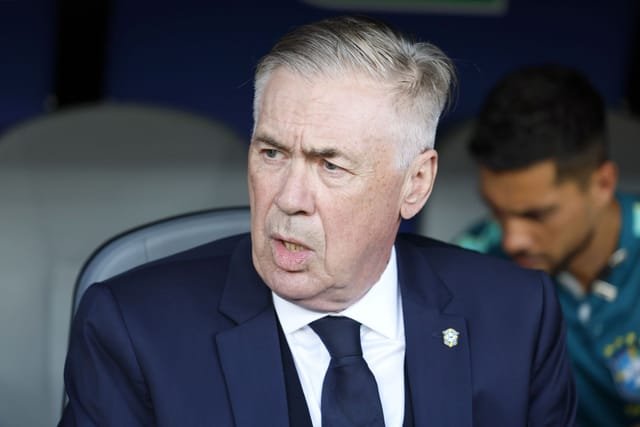
Brazil’s FIFA World Cup 2026 campaign got off to an underwhelming start after a hard-fought 1-1 draw against Morocco at MetLife Stadium. While the result extended the Selecao’s remarkable record of avoiding defeat in World Cup openers, the performance exposed several concerns that Carlo Ancelotti must address quickly.
Making history as the first foreign coach to lead Brazil at a FIFA World Cup, Ancelotti sought to reassure supporters after the match, emphasizing patience and unity despite the disappointing result.
However, behind the optimistic messaging lies a more complex reality. Brazil showed flashes of quality but struggled to control large periods of the game against a confident Moroccan side that continued to prove its credentials on football’s biggest stage.
How Morocco Frustrated Brazil in New Jersey
Morocco entered the tournament carrying momentum from recent international success and approached the contest without fear.
The African champions disrupted Brazil’s rhythm with aggressive pressing, disciplined defending, and quick transitions through midfield.
Their approach paid off in the 21st minute when Ismael Saibari produced a composed finish over Alisson to give Morocco a deserved lead.
Brazil’s midfield struggled to cope with Morocco’s intensity during the opening stages, frequently losing individual duels and surrendering possession in dangerous areas.
Rather than sitting deep after taking the lead, Morocco continued to attack with confidence and created several opportunities to extend their advantage.
| Match Snapshot | Brazil | Morocco |
|---|---|---|
| Final Score | 1 | 1 |
| Goalscorers | vinicius Junior (32′) | Ismael Saibari (21′) |
| Venue | MetLife Stadium, New Jersey | |
| Shots | – | 14 |
Vinicius Junior Delivers When Brazil Needed Him Most
Despite Brazil’s struggles, Vinicius Junior once again demonstrated why he is expected to lead the next generation of the Selecao.
The winger equalized in the 32nd minute with a powerful strike that left goalkeeper Yassine Bounou with little chance.
It was Vinicius’ 10th international goal and another reminder of his growing influence for the national team.
Throughout the match, he remained Brazil’s most dangerous attacking outlet, using his pace and direct running to unsettle Morocco’s defense.
As Brazil adapts to a new tactical era under Ancelotti, Vinicius appears increasingly likely to become the focal point of the team’s attack.
Ancelotti’s Public Message: Stay United
Shortly after the final whistle, Ancelotti used social media to encourage supporters to remain patient.
“Yesterday we took the first step in the World Cup. And we did it with the joy and pride of representing Brazil. It’s just the beginning. We keep working and looking ahead. Let’s go together!”
The message reflected the calm leadership style that has defined Ancelotti’s coaching career.
Having managed some of the world’s biggest clubs and most high-profile players, the Italian understands the importance of maintaining confidence during major tournaments.
World Cups are rarely won in the opening match, but negative momentum can build quickly if expectations are not managed effectively.
Behind the Optimism, Ancelotti Acknowledged Serious Concerns
While his social media message projected positivity, Ancelotti’s post-match assessment was notably more candid.
The Brazil coach admitted he was concerned by his team’s slow start and inability to control key moments of the game.
“I think we didn’t start very well. I’m a little worried. We lost a lot of duels and possession, but we improved in the second half of a difficult match because Morocco is a good team.”
The honesty was significant.
Rather than focusing solely on the result, Ancelotti highlighted the underlying performance issues that could become problematic later in the tournament.
Brazil’s Midfield Balance Remains a Work in Progress
One of the biggest talking points from the match was Brazil’s lack of control in midfield.
Morocco repeatedly found space between the lines and disrupted Brazil’s build-up play through aggressive pressing.
Veteran midfielder Casemiro struggled to influence the game and was substituted at half-time as Ancelotti searched for greater energy and control.
The adjustment improved Brazil’s performance, but it also underlined an important challenge facing the new coach.
Brazil possess enormous attacking talent, yet finding the right balance between creativity and defensive stability remains a priority.
Ancelotti’s tactical decisions over the coming matches could shape the entire trajectory of Brazil’s World Cup campaign.
Why Morocco Are No Longer Underdogs
Describing Morocco’s performance as an upset would ignore the remarkable progress they have made in recent years.
The Atlas Lions have established themselves as one of the most tactically disciplined and technically gifted teams outside traditional football powerhouses.
Their ability to compete with elite nations is no longer a surprise.
Against Brazil, they demonstrated:
- Strong defensive organization.
- Effective pressing structures.
- Quick transitions in attack.
- Physical intensity in midfield.
- Confidence in possession.
These qualities make Morocco a genuine contender to progress deep into the tournament.
What Brazil Must Improve Before Facing Haiti
Brazil now turns its attention to a crucial group-stage encounter against Haiti in Philadelphia on June 19.
With Scotland already securing a narrow victory over Haiti, the pressure is mounting on the Selecao to claim all three points.
Another slip-up could complicate their path to the knockout rounds.
Before the next match, Brazil must address several issues:
- Improve midfield cohesion.
- Reduce unnecessary turnovers.
- Win more individual duels.
- Increase attacking support for Vinicius Junior.
- Establish clearer defensive transitions.
Ancelotti’s experience in tournament football could prove invaluable as he works to solve these problems quickly.
Brazil’s World Cup Opener Record Remains Intact
Despite the disappointment of dropping points, Brazil extended a remarkable historical record.
The draw marked their 21st consecutive unbeaten FIFA World Cup opener, a streak that dates back to their defeat against Spain in 1934.
While statistics alone will offer little comfort to supporters expecting victory, the record highlights Brazil’s consistent ability to avoid early setbacks on football’s biggest stage.
However, history also shows that strong starts matter less than continuous improvement throughout the tournament.
What This Result Means for Brazil’s World Cup Ambitions
One match rarely defines a World Cup campaign, but opening fixtures often reveal important truths.
Brazil remain one of the tournament favorites due to their talent, depth, and experience.
Yet the draw against Morocco highlighted vulnerabilities that stronger opponents will seek to exploit.
The encouraging sign for Brazilian supporters is that Ancelotti recognized those issues immediately.
His willingness to make tactical adjustments and publicly acknowledge concerns suggests he is focused on long-term improvement rather than short-term narratives.
Conclusion
Carlo Ancelotti’s first FIFA World Cup match as Brazil coach delivered a mixture of optimism and concern.
While Vinicius Junior’s equalizer rescued a valuable point, Morocco exposed structural weaknesses that require urgent attention.
The Italian manager’s message to fans was clear: stay patient, stay united, and trust the process.
With crucial group-stage matches still to come, Brazil has ample time to find its rhythm. However, the margin for error at a World Cup is always slim.
If the Selecao can learn from their opening-night struggles and build on their improved second-half display, the draw against Morocco may ultimately be remembered as an important wake-up call rather than an early setback.
For breaking news and live news updates, like us on Facebook or follow us on Twitter and Instagram. Read more on Latest Sports on thefoxdaily.com.





COMMENTS 0