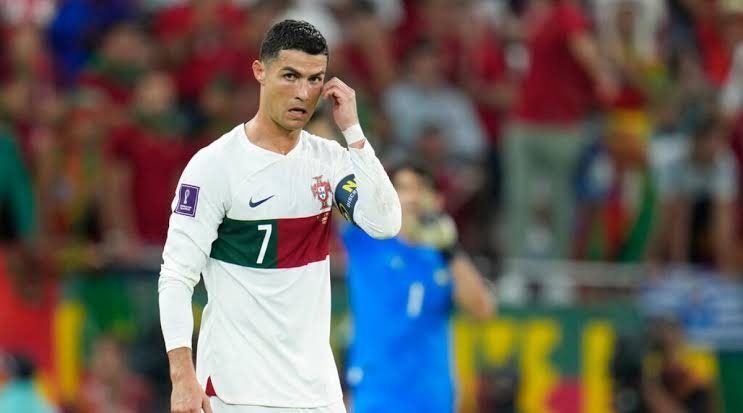
Cristiano Ronaldo is preparing for yet another chapter in football history as he heads into the 2026 FIFA World Cup, a tournament that could define the final stage of his legendary international career. However, former Portugal striker Hugo Almeida believes supporters must balance their excitement with realistic expectations.
The five-time Ballon d’Or winner is expected to lead Portugal at the World Cup in the United States, Canada, and Mexico, becoming the first player ever to feature in six FIFA World Cup tournaments. While his presence remains invaluable, Almeida has stressed that fans should not expect the same explosive version of Ronaldo that dominated world football during his twenties and early thirties.
Instead, Portugal’s hopes may depend on a different version of Ronaldo—one driven by experience, leadership, positioning, and an unmatched understanding of football’s biggest moments.
The One Trophy Missing From Ronaldo’s Legacy
Few players in football history possess a résumé as complete as Cristiano Ronaldo’s.
Across more than two decades, he has won league titles in multiple countries, UEFA Champions League trophies, domestic cups, individual awards, and international honors with Portugal. Yet one achievement remains absent from his collection: the FIFA World Cup.
For many football fans, the World Cup represents the ultimate measure of international greatness. While Ronaldo has conquered nearly every other challenge in the sport, lifting the World Cup trophy remains the final mountain left to climb.
That reality adds enormous significance to Portugal’s 2026 campaign and explains why expectations surrounding Ronaldo remain exceptionally high.
Why Age Is No Longer the Main Concern
At 41 years old, Ronaldo continues to compete at an elite level, challenging traditional assumptions about athletic longevity.
Modern sports science, nutrition, recovery methods, and personalized training programs have extended the careers of elite athletes across multiple sports. Ronaldo is widely regarded as one of the most disciplined professionals in football history, making him a unique case compared to previous generations.
Almeida’s comments reflect this reality. Rather than focusing on age as a limitation, he emphasized that physical preparation allows experienced players to remain competitive well into their late thirties and early forties.
However, remaining competitive does not necessarily mean performing exactly as before.
The Evolution of Cristiano Ronaldo’s Playing Style
One of the biggest misconceptions about aging football stars is the expectation that they should continue playing the same way throughout their careers.
Early in his career, Ronaldo relied heavily on acceleration, dribbling, and explosive movement from wide areas. He regularly attacked defenders one-on-one and covered large distances during matches.
Today, his game has evolved significantly.
Rather than depending on pace, Ronaldo focuses more on movement inside the penalty area, intelligent positioning, aerial dominance, and clinical finishing. His ability to anticipate opportunities remains among the best in world football.
This transformation has allowed him to remain effective even as physical attributes naturally change with age.
Why Experience Matters More in Tournament Football
World Cups are often decided by moments rather than sustained dominance.
A single goal, defensive intervention, or leadership decision can change the course of an entire tournament.
This is where Ronaldo’s experience becomes particularly valuable. Few players in football history understand the pressure of major international tournaments better than he does.
Having competed at multiple European Championships, Nations League campaigns, and World Cups, Ronaldo brings a level of composure that younger players cannot easily replicate.
For Portugal, this experience could prove just as important as goals.
Portugal’s Squad Is No Longer Built Around One Player
One major difference between previous Portuguese teams and the current squad is the depth of talent surrounding Ronaldo.
Portugal now possess elite players across nearly every position, reducing the need for the captain to carry the team alone.
Creative midfielders such as Bruno Fernandes and Vitinha provide chance creation, while younger stars continue to emerge throughout the squad. Defensively, Portugal also appear stronger and more balanced than many of their previous World Cup teams.
This allows Ronaldo to focus on maximizing his strengths rather than shouldering every attacking responsibility.
Comparison: Ronaldo Then vs Ronaldo Now
| Attribute | Prime Ronaldo (2008-2018) | Ronaldo in 2026 |
|---|---|---|
| Playing position | Wide forward / winger | Central striker |
| Main strength | Speed and dribbling | Positioning and finishing |
| Defensive work rate | Higher mobility | Energy conservation |
| Leadership role | Star performer | Captain and mentor |
| Impact style | Constant involvement | Decisive moments |
The Debate Over Ronaldo’s Place in the Squad
As with every major tournament involving veteran players, debate continues over whether Portugal should prioritize youth or experience.
Some critics argue that younger forwards deserve larger roles, while supporters point to Ronaldo’s goal-scoring record and ability to influence important matches.
The reality is likely somewhere in the middle.
Portugal no longer need Ronaldo to play every minute or dominate every attack. Instead, they need him to deliver in critical situations where experience, confidence, and finishing ability can make the difference.
Roberto Martinez’s Selection Philosophy
Portugal manager Roberto Martinez has consistently emphasized balance when building his squad.
Rather than selecting players based solely on reputation, Martinez has focused on tactical fit, versatility, and reliability.
The continued inclusion of Ronaldo suggests that the coaching staff still believe he provides value both on and off the field.
His leadership influence inside the dressing room and ability to mentor younger players are often overlooked factors that contribute to squad cohesion during major tournaments.
Can Portugal Finally Win the World Cup?
Portugal enter the 2026 FIFA World Cup as one of the strongest squads in the competition.
Unlike previous generations, they possess quality throughout the pitch rather than relying on individual brilliance. Their blend of youth, experience, tactical flexibility, and tournament pedigree makes them genuine contenders.
Whether they can go all the way will depend on maintaining consistency throughout the knockout rounds and handling pressure against other elite nations.
If they succeed, it would not only deliver Portugal’s first World Cup title but also complete one of the greatest careers football has ever seen.
Conclusion: Expect Influence, Not Prime Ronaldo
Hugo Almeida’s message ahead of FIFA World Cup 2026 is not a criticism of Cristiano Ronaldo—it is a reminder of how football careers evolve.
Supporters should not expect the relentless winger who terrorized defenses throughout the 2010s. That version of Ronaldo belongs to another era.
What Portugal have today is a vastly experienced leader, an elite finisher, and a player capable of deciding important matches with a single moment of brilliance.
If Portugal are to lift the FIFA World Cup for the first time in their history, Ronaldo may not need to be the most dynamic player on the pitch. He may simply need to be the most decisive when it matters most.
For breaking news and live news updates, like us on Facebook or follow us on Twitter and Instagram. Read more on Latest Sports on thefoxdaily.com.






COMMENTS 0