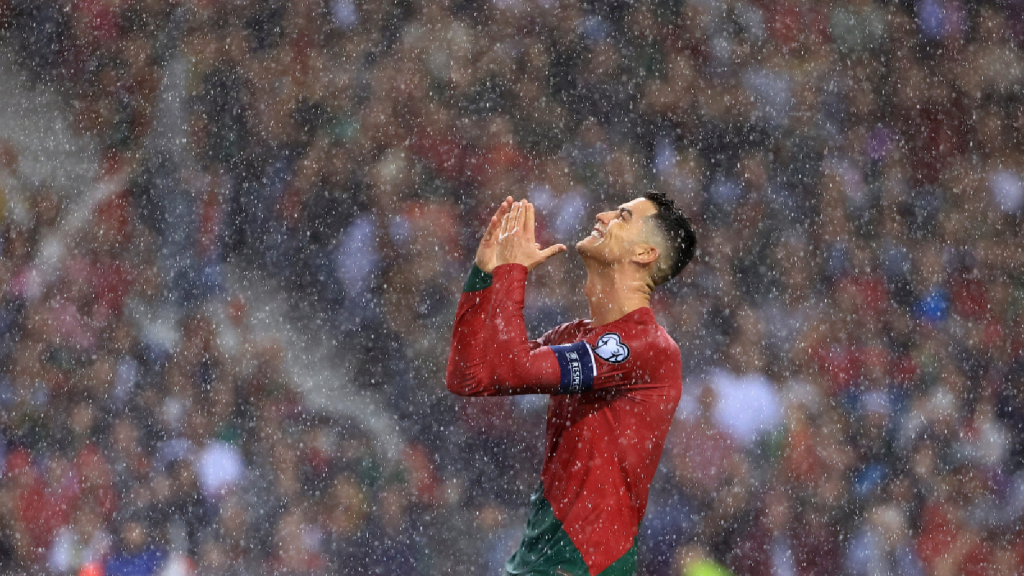
Cristiano Ronaldo‘s international career has come to an end, closing a remarkable chapter that began with a teenager bursting onto the European stage at Euro 2004 and developed into one of the most celebrated careers in football history. Portugal’s all-time leading scorer leaves the national team with 146 goals, more than any other player in International Football, and a legacy defined by ambition, records, trophies, heartbreak and controversy.
His journey with Portugal was never short of emotion. From his first international goal at 19 to lifting the European Championship trophy in 2016, Ronaldo experienced some of the sport’s most memorable highs and painful disappointments. His retirement video offered a personal reflection on what the national team meant to him, placing the people he encountered above the statistics and achievements.
From a Young Talent to Portugal’s Rising Star at Euro 2004
Ronaldo arrived at Portugal’s Euro 2004 training camp as a teenager whose energy and determination immediately caught the attention of his senior teammates. Former Portugal captain Fernando Couto remembered the youngster’s intensity during training sessions and repeatedly encouraged him to slow down and catch his breath.
The young forward stood out for his speed, athleticism and distinctive appearance, but his greatest characteristic was his hunger to improve. He approached training with such intensity that Couto worried he might exhaust himself. That relentless attitude would become a defining feature of Ronaldo’s career.
His first major international moment arrived during Portugal’s opening match against Greece. Trailing 2-0 in the 93rd minute, Portugal were heading towards a disappointing start to the tournament. Ronaldo, however, continued to push forward. He attacked a corner, rose above the defenders and scored his first international goal at 19 years and 128 days.
At that stage, Ronaldo was still developing his identity within a team featuring established stars such as Luis Figo, Rui Costa, Deco and Couto. Figo, a national icon who had played for Barcelona and Real Madrid, and Rui Costa, a Champions League winner with AC Milan, attracted much of the attention.
Carlos Godinho, Portugal’s team director at the time, recalled that Ronaldo was initially somewhat overlooked among those experienced names. However, his performances gradually changed the picture. His display against the Netherlands became a defining moment, revealing the talent that would eventually make him the central figure of Portuguese football.
Portugal reached the Euro 2004 final but lost 1-0 to Greece. Ronaldo was left devastated by the defeat, having come close to winning a major international trophy at just 19 years old. He made no attempt to hide his disappointment, explaining that his ambition had been to become European champion.
“We don’t deserve to lose like this. I am an ambitious person. I wanted to become a European champion at 19,” Ronaldo said.
Despite the heartbreak, he also made it clear that the defeat would not define the end of his international journey. His promise that the story was not over would eventually be followed by another opportunity to win a major trophy.
The 2014 World Cup: Ambition Despite Injury Concerns
By the time the 2014 World Cup approached, Ronaldo had become one of the world’s leading footballers. His youthful appearance and unpredictable style had developed into a more controlled and physically powerful approach. His performances for Real Madrid during the 2013-14 season had further strengthened his reputation.
Ronaldo scored 51 goals for Real Madrid that season, including 17 in the Champions League, setting a competition record that still stands according to the supplied account. He also won the Ballon d’Or. Yet, behind those achievements, a persistent knee problem was becoming a concern.
On the eve of the tournament, his doctor, José Carlos Noronha, warned him that he needed to rest his knee to protect his long-term future. The advice was serious, but Ronaldo remained determined to represent Portugal and compete at the highest level.
“Let your knee rest, or your future is in danger,” Noronha warned.
Ronaldo insisted that he was fully fit and wanted to make a strong impact at the World Cup. However, Portugal’s campaign quickly turned into a disappointment. The team suffered a 4-0 defeat against Germany, drew with the United States and were eliminated in the group stage.
After the exit, Ronaldo questioned the overall quality of the squad rather than placing the blame on one individual. He admitted that he had not expected Portugal to win the tournament and described the team as limited compared with the leading international sides.
His comments surprised supporters and observers, particularly given his own status as one of the world’s best players. The tournament exposed the gap between Ronaldo’s individual ambitions and the team’s ability to compete consistently against the strongest opponents.
Euro 2016: Ronaldo Leads Portugal to Historic Glory
Two years later, Portugal returned to a major tournament with a different opportunity. Before Euro 2016, coach Fernando Santos spoke openly about the team’s ambition to win the competition while acknowledging that Portugal were not among the favourites.
“Portugal does not enter as the favourite, we have never claimed to be, but we have the ambition to fight for that goal,” Santos said.
The tournament became the defining achievement of Ronaldo’s international career. Portugal did not dominate every match, but the team found ways to progress and eventually reached the final. Ronaldo contributed five goal involvements during the competition and remained one of the team’s central figures.
His involvement in the final against France, however, was cut short by injury. Ronaldo was forced to leave the pitch after only 25 minutes, a devastating moment for the captain, who had the chance to lead his country to its first major international title.
Even after leaving the field, he remained involved from the touchline, encouraging his teammates as the match continued. Portugal eventually won 1-0 through Éder’s goal, securing the first European Championship title in the country’s history.
Defender Pepe later recalled how the players responded to losing their captain, saying they had promised to win the trophy for him. Éder also credited Ronaldo with giving him confidence before the decisive moment.
“Cristiano told me I would score the winning goal. He gave us all his courage and his strength,” Éder said.
For Ronaldo, the victory represented a remarkable answer to the disappointment of Euro 2004. The teenager who had cried after losing the final at home had now helped Portugal reach the summit of European football. His team had not entered the tournament as favourites, but it finished as champions.
After the triumph, Ronaldo reflected on the lack of belief surrounding Portugal before the competition. The victory changed the way the team was viewed and gave the country its first major international football trophy.
The Final Chapter: A World Cup Exit and a Change of Coach
Ronaldo’s final international chapter, according to the supplied account, ended with Portugal’s 1-0 defeat against Spain in the Round of 16 at the 2026 World Cup. The forward touched the ball just 19 times during the match, fewer than Portugal’s goalkeeper, as the team failed to progress.
After the defeat, Ronaldo said he had given everything he could and was leaving with a clear conscience. The result also brought an end to Roberto Martínez’s time as Portugal coach, with Jorge Jesus subsequently taking charge.
Jesus had previously worked with Ronaldo at club level in Saudi Arabia, where the forward won his first Saudi Pro League title. His appointment was viewed as an opportunity to bring fresh energy to the national team and continue working with the experienced captain.
The new coach initially expressed confidence that Ronaldo would not become a problem for the team. However, in only his second match in charge, Jesus left the forward on the bench. A public disagreement followed, creating uncertainty around Ronaldo’s relationship with the national team setup.
According to the account, Ronaldo’s final action for Portugal was running down the tunnel without applauding the travelling supporters. It was an uncomfortable ending to a career that had brought the country its greatest international football success.
Ronaldo’s International Legacy in Numbers
The figures left behind by Ronaldo reflect the extraordinary scale of his international career. He scored 146 goals for Portugal, the highest total in men’s international football, and became the first Portuguese player to lead the nation to a major trophy.
He also became the first man to appear in six World Cups. His international career included three trophies, although the World Cup remained the major prize that eluded him.
Those achievements sit alongside the controversies and difficult moments that accompanied his time with Portugal. His outspoken comments, intense competitive nature and emotional reactions often attracted attention beyond the football itself. Yet his influence on the national team extended far beyond individual records.
Ronaldo’s retirement video offered a glimpse into how he wants his international career to be remembered. Rather than focusing only on goals, matches, records and trophies, he spoke about the people who shared the journey with him.
“When I look back and remember everything I lived through with the national team, I do not see only matches, goals, records and trophies, but I see people,” Ronaldo said.
A Legacy That Reached Beyond the Football Pitch
Ronaldo’s popularity has extended far beyond Portugal and the football stadiums where he built his reputation. The supplied account highlights his influence in Peru, where 31,583 newborns were named after him in 2022, more than any other individual.
The figure illustrates the reach of his name and the connection supporters have developed with him across different countries. His influence has been shaped not only by his performances but also by the extraordinary consistency of his career and his ability to remain a central figure in world football for many years.
For Portugal, Ronaldo leaves behind a record-breaking international career and the memory of a first major trophy. For supporters, his journey includes the teenager who announced himself at Euro 2004, the captain who lifted the European Championship in 2016 and the veteran who continued chasing international success despite the challenges of age and expectation.
His final chapter did not end with a World Cup triumph. Instead, it closed with a defeat, a coaching change and a public disagreement. But those events do not erase what came before. Ronaldo’s 146 international goals, historic achievements and role in Portugal’s European Championship victory remain central to his legacy.
As he steps away from the national team, his own reflection offers a fitting way to understand what the journey meant to him: beyond the statistics and silverware, it was ultimately about the people who shared it.
For breaking news and live news updates, like us on Facebook or follow us on Twitter and Instagram. Read more on Latest Football on thefoxdaily.com.




COMMENTS 0