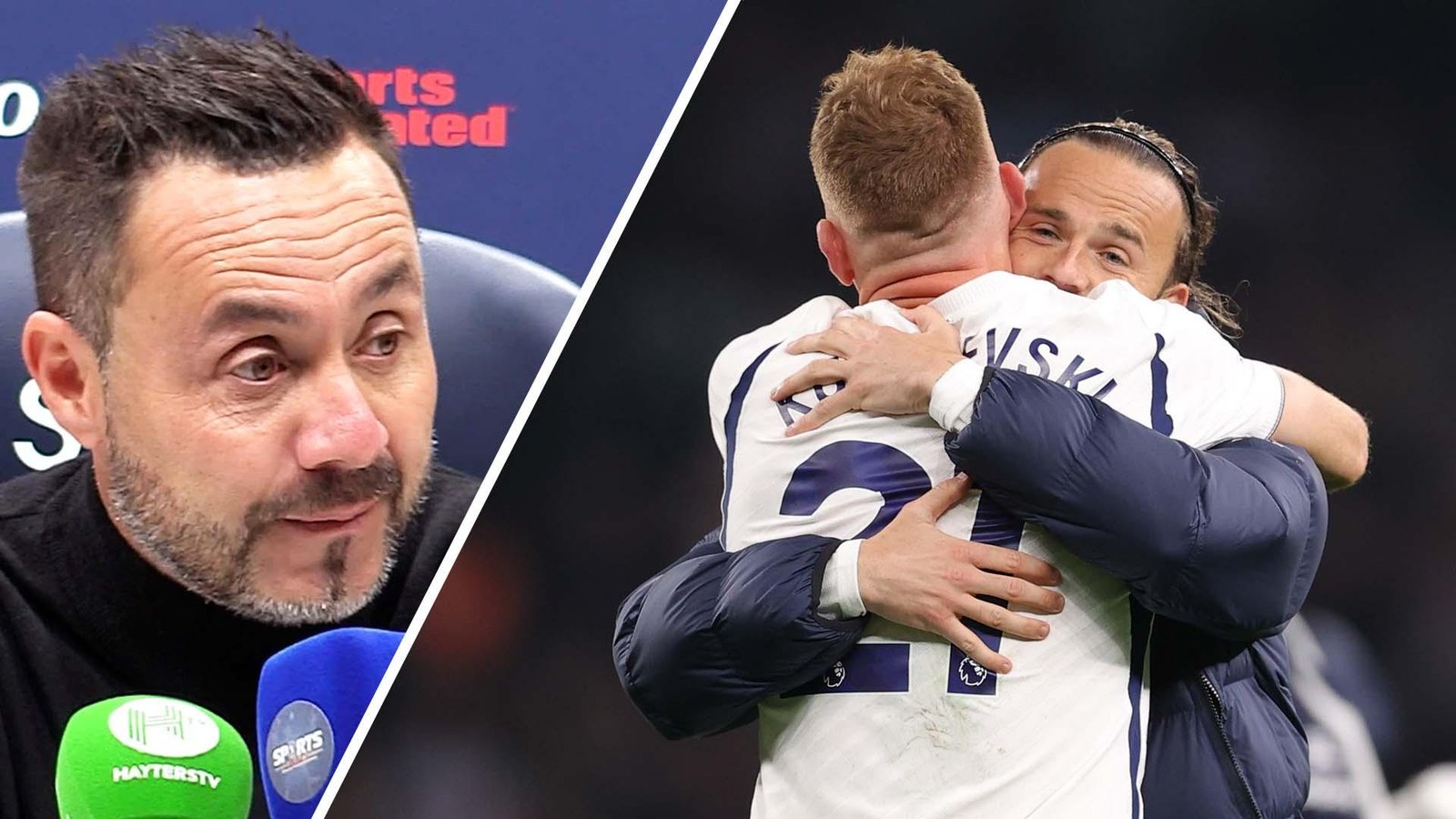
Tottenham Hotspur winger Dejan Kulusevski has opened up about the difficult physical and emotional journey behind his return to football after spending 526 days on the sidelines with a serious knee injury. The Sweden international revealed that his condition became so severe that he struggled to walk up and down stairs normally, raising fears that his professional career could be over.
Kulusevski has now made an encouraging return to action, ending his 17-month absence with a substitute appearance in Tottenham’s 3-1 victory over Coventry. He followed that comeback with another appearance from the bench during Saturday’s win against Chelsea, offering fresh hope that he can become an important part of the team’s plans again.
The 26-year-old also explained how a physiotherapist in Sweden helped him discover a different approach to rehabilitation. After months of pain and setbacks, a series of exercises gave him a sense of control over his injured leg and convinced him that a full comeback was possible.
Dejan Kulusevski Reveals Struggle During 526-Day Injury Absence
Kulusevski’s injury problems began during Tottenham’s 2-0 home defeat to Crystal Palace towards the end of the 2024-25 campaign. The winger suffered a patella injury in his right knee, which eventually kept him out of action for the entirety of the following season.
What initially became an injury rehabilitation programme turned into a prolonged battle involving repeated setbacks. The former Juventus player struggled with everyday movements, including walking up and down stairs.
Speaking to SpursPlay ahead of Tottenham’s latest meeting with Crystal Palace, Kulusevski described how difficult life had become during the recovery process.
“It had been like one year and a couple of months and I still can’t walk on the stairs. I can’t walk on the stairs like a normal guy,” he explained.
The situation was particularly challenging because football remained his biggest motivation, but the possibility of never returning to the sport had become a genuine concern.
“I have to play football so in my head I’m not going to give up, but I have to think that if this doesn’t work out, what do I do?” Kulusevski added.
His comments highlight the uncertainty he experienced during a period when even basic physical activities remained difficult. For a professional footballer, whose career depends on movement, balance and physical performance, such limitations can make an extended injury particularly difficult to overcome.
Swedish Physiotherapist Helped Change Kulusevski’s Recovery
A major turning point in Kulusevski’s rehabilitation came when he travelled to Sweden and visited a physiotherapist. The specialist introduced a different approach that, according to the Tottenham attacker, changed how his body responded to the exercises.
Kulusevski explained that the physiotherapist helped him work on his nervous system, after which he began noticing a difference in the pain he experienced during rehabilitation.
He recalled completing exercises that had previously caused discomfort but suddenly felt much easier.
“When I did the exercises, I said, ‘I don’t have pain, like this hurt yesterday. Why is this not hurting today?’” he said.
He then moved on to another exercise and experienced a similar improvement. The difference was significant enough for him to immediately share the moment with his wife.
“Then I did the next exercise and said, ‘this is not hurting,’ and I went into the room to my wife. And I told her, ‘it’s over, we’re going to do this.’ From the minute I went into the room, it was better,” Kulusevski revealed.
Although the pain did not disappear completely, the change gave him a renewed sense of confidence. More importantly, he felt that he had regained some control over his injured leg.
“There was still pain but it was different. Now I had control of my leg and then that is when the grind started that summer,” he explained.
Tottenham Were Impressed by Kulusevski’s Progress
Following the breakthrough in Sweden, Kulusevski began working consistently towards returning to football. The process was not immediate, and he continued to experience difficulties with his movement, including limping during the early stages of his comeback preparation.
However, he noticed gradual improvement as he continued his exercises and physical work. Each day brought another opportunity to build strength and improve the condition of his knee.
When Kulusevski eventually returned to Tottenham for pre-season preparations, the club’s staff were reportedly impressed by the progress he had made.
“I came here to Tottenham to do the pre-season and they were also impressed with the progress I made. I got a lot of help from them,” the winger said.
He added that he became significantly stronger in a relatively short period. His recovery had moved from a situation where people questioned whether he would play football again to one where he was producing encouraging performances during his return to training.
“I went from, ‘this guy will not play football any more,’ to playing really good football in just a couple of weeks,” Kulusevski explained.
The support from Tottenham’s medical and coaching staff became another important part of his comeback. The club helped him continue the rehabilitation work and gradually prepare for the physical demands of competitive football.
Watching Tottenham’s Europa League Celebrations Was the Hardest Moment
One of the most emotional parts of Kulusevski’s injury journey came when Tottenham celebrated their Europa League triumph. While his teammates enjoyed the success and participated in an open-top bus parade, the Swedish attacker was still struggling with basic physical activities.
Kulusevski described watching those celebrations from the sidelines as one of the most difficult experiences of his recovery.
The contrast between his teammates celebrating a major achievement and his own inability to move normally made the period particularly painful. He revealed that, at that stage, he could not even walk to the bathroom without difficulty.
“Watching Spurs celebrate Europa League glory with an open-top bus parade was probably the most difficult part of the journey,” he indicated during the interview.
For a footballer who wants to contribute to his team’s success, missing such an important moment can be emotionally challenging. Kulusevski had to watch from a distance while his teammates enjoyed a trophy-winning occasion that he would have wanted to experience on the pitch.
His comments also underline how much progress he has made since that period. After struggling with everyday movement, he has now returned to the Tottenham matchday squad and started getting minutes in competitive fixtures.
Zlatan Ibrahimovic Also Helped Kulusevski Find Rehabilitation Support
Kulusevski also revealed that former Sweden international Zlatan Ibrahimovic played a part in his search for rehabilitation support. The Tottenham attacker initially began working with a physiotherapist recommended by his former national team colleague.
Ibrahimovic’s recommendation gave Kulusevski access to another source of specialist guidance during a difficult period. Although the winger did not attribute his entire recovery to one person, he acknowledged the importance of finding the right support and approach.
For athletes dealing with long-term injuries, rehabilitation often involves several stages and different specialists. Kulusevski’s experience illustrates how medical guidance, physical preparation and personal determination can all contribute to the recovery process.
His eventual breakthrough in Sweden gave him the confidence to continue working towards a return, while Tottenham’s staff helped him strengthen his knee and prepare for the next stage.
Dejan Kulusevski Returns After 17 Months Out
After 526 days away from competitive football, Kulusevski finally made his return as a substitute in Tottenham’s 3-1 win over Coventry.
The appearance marked the end of an absence that had lasted approximately 17 months. It was an important personal milestone after a recovery process that had at times left him questioning whether he would ever play again.
He then made another substitute appearance in Tottenham’s victory over Chelsea. Consecutive appearances offered a positive indication of his progress, although the club will need to manage his workload carefully as he builds match fitness.
Returning to the pitch after such a lengthy absence is only one stage of the process. Kulusevski must continue improving his fitness, movement and confidence while adapting to the speed and physical intensity of Premier League football.
His ability to contribute regularly will depend on how his knee responds to increased training loads and competitive minutes. Nevertheless, getting back onto the pitch represents a significant achievement after the difficulties he described.
Kulusevski Learning to Manage His Knee Injury
Although he has returned to action, Kulusevski explained that managing his knee remains an important part of his daily routine. He is gradually learning how to live with the injury, understand his body’s requirements and maintain the physical condition needed to compete.
One of the most important parts of his routine is stretching. The winger revealed that he now spends approximately one hour every evening completing his stretching exercises before going to sleep.
“Yeah, it’s an incredible story. I am starting to understand how to live with it, how to treat it, how to do my stretching one hour every evening before sleep and I start to understand how I can help this,” he said.
His comments suggest that recovery is not simply about returning to the pitch. Maintaining strength, flexibility and appropriate movement patterns will remain important as he continues his football career.
Kulusevski also expressed confidence in his ability to compete again because of the amount of work he has invested in rehabilitation.
“I know I can compete and I know that because I put in the work. I am not afraid because I put in the work for one year so I know I will be ready to play and the knee is strong,” he added.
His confidence is an encouraging sign, although his progress will ultimately be measured by how consistently he can train and perform at the highest level.
Dejan Kulusevski Praises Tottenham Manager Roberto De Zerbi
Kulusevski also spoke positively about Tottenham manager Roberto De Zerbi, describing the Italian as a special manager. The winger already knew about De Zerbi before his arrival at the club and expressed happiness about working with him and his coaching staff.
“Roberto, I know from before because he is a very special manager so when he came here, it feels also like it is special,” Kulusevski said.
He also praised the staff around the manager and explained that he enjoys working with people who bring different ideas and approaches.
“I am so happy to have him and the staff because they are different and I like to work with different people,” he added.
For Kulusevski, returning under a coaching team he appreciates could provide an additional source of motivation. The manager’s approach and the support of the staff may also help him gradually rebuild his place in the Tottenham team.
What Kulusevski’s Return Means for Tottenham
Kulusevski’s comeback provides Tottenham with another attacking option after an extended period without one of their important players. His ability to operate in wide attacking areas and contribute creatively could become valuable as the club continues its campaign.
However, Tottenham will need to be careful with his recovery. After more than a year away from competitive football, immediately expecting him to handle a full match workload would be unrealistic.
Gradually increasing his playing time could allow the club to assess his fitness while reducing unnecessary pressure during the early stages of his return. His recent substitute appearances against Coventry and Chelsea represent the beginning of that process.
The manager will also have to consider how Kulusevski fits into the team’s attacking combinations once he becomes available for more minutes. His technical ability, experience and understanding of the Premier League could strengthen Tottenham’s options.
For now, the biggest achievement is that the Swedish international has returned to competitive football after a period when he feared his career might be over.
Dejan Kulusevski’s Injury Comeback: Key Takeaways
Dejan Kulusevski has described the difficult reality of his 526-day absence from football, revealing that his knee injury affected even his ability to walk up and down stairs normally. A visit to a physiotherapist in Sweden proved to be a turning point, helping him experience a different response to rehabilitation exercises and regain control of his leg.
After working through an extended recovery programme and receiving support from Tottenham, the winger returned against Coventry before making another substitute appearance against Chelsea.
His recovery is still an ongoing process, with daily stretching and careful management of his knee remaining important. However, Kulusevski is confident that the work he has completed will allow him to compete again.
From fearing that he might never play football again to returning after 17 months, his journey represents a significant personal comeback. Tottenham will now hope he can continue building fitness and make a sustained contribution under Roberto De Zerbi.
For breaking news and live news updates, like us on Facebook or follow us on Twitter and Instagram. Read more on Latest Football on thefoxdaily.com.


COMMENTS 0