India’s 2-1 ODI series victory over the West Indies exposed a significant concern ahead of the 2027 ODI World Cup: the pace-bowling department remains unsettled without Jasprit Bumrah. Despite winning the series, India struggled to contain the West Indies across all three matches, with the final ODI highlighting the problem in dramatic fashion.
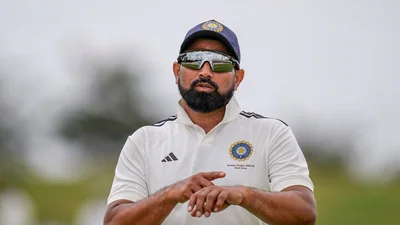
The West Indies chased down a target of 352 with 10 balls remaining, powered by Shai Hope’s unbeaten century. With several Indian pacers failing to establish themselves during the series, calls have grown for the experienced Mohammed Shami to return to the ODI setup.
However, former India wicketkeeper-batter Dinesh Karthik has taken a different view. He believes the Indian management has already moved beyond Shami and should continue developing other pace options rather than turning back to the veteran.
Dinesh Karthik does not want Mohammed Shami recalled
Karthik was asked about the possibility of Shami returning to India’s plans during a recent Cricbuzz discussion. His response was clear: he does not believe India should look at Shami for the 2027 World Cup.
The former India batter acknowledged that Shami has continued to bowl well but argued that India now has other pacers who should be given priority as the team prepares for the next World Cup cycle.
This viewpoint creates an interesting selection debate because India’s recent bowling performances have exposed precisely the area where Shami has historically provided experience, control and wicket-taking ability.
The question, therefore, is not simply whether Shami remains capable of performing at international level. It is whether India’s management should prioritize proven experience or continue investing in the newer group of fast bowlers.
India’s pace attack struggles against West Indies
The three-match ODI series against the West Indies highlighted India’s dependence on Jasprit Bumrah in the bowling department. With Bumrah unavailable, India experimented with several pace options but struggled to find a consistent combination.
Gurnoor Brar, Prasidh Krishna, Mohammed Siraj, Auqib Nabi and Anshul Kamboj were among the pacers tried during the series.
However, none was able to establish the same level of control that India would ideally want from its frontline attack. Kuldeep Yadav was one of the few bowlers to consistently provide a threat with the ball.
The biggest warning sign came in the final ODI. India posted a formidable 352, but the West Indies successfully chased the target with 10 balls remaining.
Shai Hope’s unbeaten century was central to the chase, but the broader concern for India was how difficult it became for the bowling unit to defend such a large total.
Why Shami’s name has returned to the discussion
Shami’s omission has naturally become a talking point after India’s recent bowling struggles. The experienced fast bowler last represented India in the 2025 Champions Trophy and has not featured for the national team since then.
During this period, Shami has continued to play domestic cricket and has produced performances that have kept his name in the selection conversation.
His experience is particularly relevant because India are preparing for a major global tournament in 2027. A World Cup campaign can place enormous pressure on a bowling unit, especially when matches are played across different conditions.
For supporters of Shami’s return, his familiarity with international cricket and experience in major tournaments make him an obvious candidate whenever India’s pace attack struggles.
The Shami selection debate goes beyond recent performances
Shami’s absence from India’s plans has also been surrounded by questions about his fitness and communication with the selection setup.
Previously, former chief selector Ajit Agarkar had cited fitness concerns when explaining Shami’s exclusion from a series against the West Indies.
Shami later responded publicly, pointing to his participation in domestic cricket and arguing that his availability and fitness should be evident from his ability to play competitive matches.
Since then, there has been no definitive public explanation that has fully resolved why Shami continued to remain outside India’s plans despite producing strong performances in domestic cricket.
That uncertainty has added another layer to the debate surrounding his potential comeback.
Shami recently reached another domestic milestone
The veteran fast bowler recently played his 100th first-class match while representing East Zone against South Zone in the Duleep Trophy final.
Reaching the milestone underlines the longevity of Shami’s career and his continued involvement in competitive cricket.
For India, however, domestic performances are only one part of the selection equation. The management must also consider fitness, workload, future planning and whether a player fits into the team’s tactical approach for the 2027 World Cup.
India have several pacers competing for World Cup places
The recent West Indies series demonstrated that India are willing to test different fast-bowling options. That experimentation could be part of a broader attempt to identify the attack that will support Bumrah during the World Cup.
Mohammed Siraj remains an experienced international option, while Prasidh Krishna has also been part of India’s plans. Younger names such as Gurnoor Brar, Auqib Nabi and Anshul Kamboj provide additional possibilities.
The challenge is turning potential into consistent international performances.
A World Cup squad cannot rely solely on untested options, but the team also cannot afford to enter the tournament without developing sufficient depth behind its leading bowlers.
Why moving beyond Shami could make sense
Karthik’s argument is essentially based on long-term planning. If the Indian management believes the next generation of pacers can develop into reliable international performers, repeatedly returning to an experienced veteran could reduce opportunities for those players.
Giving younger bowlers regular exposure before the World Cup can help India understand which combinations work under pressure.
It also allows the management to build a clearer hierarchy rather than making selection decisions based solely on short-term results.
From this perspective, the West Indies series can be viewed as part of India’s experimentation process rather than simply a failed bowling performance.
But India’s recent results make the decision complicated
There is another side to the argument. India’s bowling problems against the West Indies demonstrate why experience remains valuable.
When a team concedes heavily despite having a large total to defend, selectors naturally begin considering proven alternatives. Shami’s experience in international tournaments could therefore remain attractive if the newer pacers fail to establish themselves.
The key issue will be consistency. If India’s current pace options improve over the next several months, the argument for moving on from Shami becomes stronger. If the problems continue, the management may have to reconsider every available experienced option.
New Zealand series could be important for India’s planning
India’s next major assignment is a multi-format series against New Zealand, featuring five T20Is, five ODIs and two Tests.
The ODI matches will provide another opportunity for India’s management to assess its pace-bowling options in competitive conditions.
With a new chief selector also in place following Agarkar’s tenure, selection decisions surrounding Shami could receive renewed attention.
Whether Shami returns or not, the New Zealand series should give India valuable information about which bowlers are capable of handling sustained international workloads ahead of the World Cup.
What India need from their pace attack before 2027
- Consistency: India’s fast bowlers need to reduce expensive spells and maintain pressure throughout an innings.
- Wicket-taking ability: The attack needs bowlers capable of breaking partnerships when opposition batters settle in.
- Depth: India require reliable alternatives in case of injury or workload management.
- Death-over execution: Controlling the final 10 overs will be particularly important in high-scoring ODI matches.
- Support for Bumrah: India’s leading pacer will need dependable partners rather than carrying the entire attack.
Final thoughts
Dinesh Karthik’s comments have added another perspective to India’s Mohammed Shami debate. While recent bowling struggles against the West Indies have increased calls for the veteran’s return, Karthik believes India should continue with the pacers already being developed by the management.
The decision will ultimately depend on how India’s bowling options perform over the next year. Shami’s domestic performances and experience make him an obvious name whenever India’s pace attack struggles, but the selectors must also consider the team’s long-term plans.
With the 2027 ODI World Cup approaching and a major multi-format series against New Zealand next on India’s calendar, the coming months could be crucial in determining whether Shami gets another opportunity or whether India fully commits to its next generation of fast bowlers.
For breaking news and live news updates, like us on Facebook or follow us on Twitter and Instagram. Read more on Latest Cricket on thefoxdaily.com.






COMMENTS 0