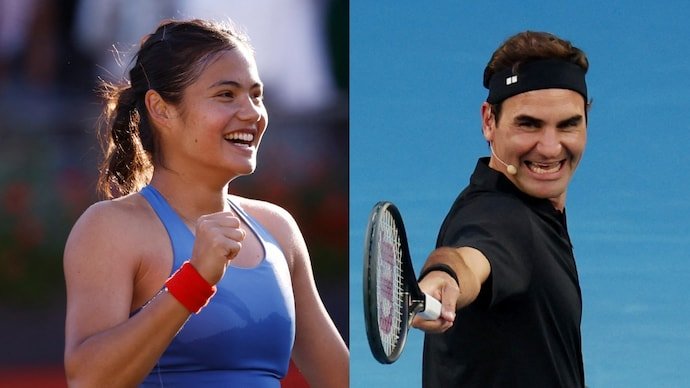
Few athletes have experienced a rise as dramatic as Emma Raducanu.
In 2021, she stunned the sporting world by becoming the first qualifier in tennis history to win a Grand Slam singles title. Her remarkable US Open victory transformed her overnight from a promising teenager into one of the most recognizable names in global sport.
Yet five years later, the conversation surrounding Raducanu is no longer focused on what she achieved but rather on what comes next.
Recurring injuries, interrupted seasons, coaching changes, and inconsistent availability have prevented the British star from building on one of the most extraordinary breakthroughs tennis has ever witnessed.
Now, former British No.1 Greg Rusedski has suggested that Raducanu can learn valuable lessons from Roger Federer, one of the most successful and durable players in tennis history.
His comments have sparked a broader discussion about athlete development, injury management, and whether Raducanu can still fulfill the immense promise she displayed as a teenager.
Why Emma Raducanu’s Career Remains One of Tennis’s Most Fascinating Stories
Emma Raducanu’s journey is unique even by tennis standards.
Many future champions spend years gradually climbing the rankings before winning major titles. Raducanu bypassed that traditional path.
Her US Open victory instantly elevated expectations to extraordinary levels.
Winning a Grand Slam at such a young age often creates challenges that extend beyond the court. Athletes suddenly face increased media attention, sponsorship obligations, public scrutiny, and the pressure of constantly meeting expectations.
For Raducanu, managing those demands while adapting to the physical realities of the professional tour has proven difficult.
The Injury Problem That Refuses to Go Away
The biggest obstacle in Raducanu’s career has not been talent, technique, or mindset.
It has been availability.
Professional tennis places immense strain on the body. Players compete across multiple continents, switch surfaces throughout the season, and often play long matches under physically demanding conditions.
To succeed consistently, athletes must not only perform at an elite level but also remain healthy enough to compete regularly.
Raducanu’s recurring injury setbacks have disrupted that process.
Every time momentum begins to build, another physical issue has often forced her to pause, reset, and start again.
That cycle can be especially damaging in tennis, where confidence and rhythm often develop through consecutive weeks of competition.
What Greg Rusedski Meant by the Roger Federer Comparison
Rusedski’s comments were not suggesting that Raducanu should copy Federer’s playing style.
Instead, he was highlighting the habits and discipline that helped Federer remain competitive for more than two decades.
One of Federer’s greatest strengths was consistency.
Even during off-seasons and family holidays, the Swiss legend maintained structured training routines, ensuring his body remained prepared for the demands of professional competition.
For elite athletes, success is often determined by what happens away from tournaments as much as what happens during them.
Training loads, recovery programs, conditioning schedules, nutrition plans, and support systems all contribute to long-term durability.
That is the aspect of Federer’s career many experts believe younger players should emulate.
Why Consistency Matters More Than Talent
Tennis history is filled with incredibly talented players who never achieved their full potential because injuries prevented them from competing consistently.
Talent may determine a player’s ceiling, but availability often determines actual success.
Players improve through repetition.
They refine skills through match experience.
They develop mental toughness by repeatedly facing pressure situations.
Without consistent competition, even the most gifted athletes struggle to maintain progress.
For Raducanu, the challenge is not proving she possesses world-class ability. Her US Open triumph already accomplished that.
The challenge is creating a physical foundation that allows her talent to be expressed over an entire season.
How Roger Federer Built One of Tennis’s Most Durable Careers
Federer’s longevity was not accidental.
It resulted from years of careful planning and professional discipline.
Several factors contributed to his sustained success:
- Year-round fitness management.
- Carefully monitored workloads.
- Long-term coaching stability.
- Strong recovery protocols.
- Strategic tournament scheduling.
- Continuous technical refinement.
While every athlete is different, these principles remain relevant across generations.
Modern sports science increasingly emphasizes prevention rather than simply treating injuries after they occur.
The Coaching Stability Question
Another issue frequently discussed in relation to Raducanu’s career is coaching continuity.
Elite athletes often benefit from long-term relationships with trusted coaches who understand their strengths, weaknesses, and physical requirements.
Frequent changes can make it difficult to establish consistent training philosophies and long-term development plans.
This does not mean changing coaches is always negative. Sometimes new perspectives can accelerate growth.
However, sustained stability often helps athletes build stronger foundations over time.
Many of tennis’s greatest champions spent years working with largely consistent support teams.
Can Sports Science Help Solve the Problem?
One of the most intriguing aspects of Rusedski’s comments concerns sports science.
Modern tennis relies heavily on data-driven approaches to training and recovery.
Teams monitor:
- Training volume.
- Physical workload.
- Recovery rates.
- Injury risk indicators.
- Movement efficiency.
- Performance metrics.
When injuries become recurring rather than isolated, experts often examine whether underlying training processes require adjustment.
This is not unique to Raducanu.
Many elite athletes periodically reassess preparation methods to reduce injury risk and maximize performance.
Comparing Raducanu’s Current Situation to Other Grand Slam Champions
Several Grand Slam winners have faced difficult periods after achieving early success.
| Challenge | Impact on Young Champions |
|---|---|
| Increased Expectations | Greater pressure and scrutiny |
| Physical Demands | Higher injury risk |
| Tour Adjustments | Opponents adapt their tactics |
| Media Attention | Additional off-court demands |
| Ranking Pressure | Need for consistent results |
The difference between one-time champions and long-term greats often comes down to how effectively they navigate these challenges.
Raducanu still has ample time to write the next chapter of her career.
Why the Queen’s Club Run Was Both Encouraging and Concerning
One of the most revealing moments of Raducanu’s recent season came during her impressive run to the Queen’s Club final.
The performance demonstrated that her ability remains intact.
She competed effectively, showed confidence, and reminded fans why she was once considered one of the brightest young talents in tennis.
At the same time, the physical toll of consecutive matches raised questions about whether her body was fully prepared for the demands of deep tournament runs.
This is a common challenge for players returning from injury interruptions.
The body must gradually adapt to sustained competitive intensity.
The Mental Side of Constant Injury Setbacks
Physical injuries often dominate headlines, but their psychological impact can be equally significant.
Athletes recovering from repeated setbacks frequently face challenges such as:
- Frustration.
- Loss of momentum.
- Reduced confidence.
- Fear of reinjury.
- Pressure to return quickly.
Managing these factors requires resilience and patience.
Many successful comebacks occur not because athletes avoid adversity but because they learn how to navigate it effectively.
A Key Insight Many Analysts Are Missing
Much of the discussion surrounding Raducanu focuses on rankings, titles, and tournament results.
However, the more important measure of progress may be something simpler: consecutive healthy months.
Before Raducanu can consistently challenge for major trophies, she first needs uninterrupted opportunities to compete.
Ranking gains, titles, and deep Grand Slam runs often follow naturally when players remain healthy long enough to develop rhythm.
This makes physical durability arguably the most important statistic in her career right now.
What Success Would Look Like Over the Next 12 Months
Many fans view success purely through trophies.
For Raducanu, a successful next phase may involve broader objectives.
- Completing a healthy season.
- Building ranking consistency.
- Reducing injury interruptions.
- Establishing coaching stability.
- Competing regularly at major tournaments.
If those goals are achieved, significant results could naturally follow.
Patience often plays a critical role in long-term sporting success.
Can Emma Raducanu Still Reach the Top Again?
The simple answer is yes.
At 23 years old, Raducanu remains younger than many players who are only beginning to establish themselves on the WTA Tour.
Her Grand Slam victory proved she possesses the talent and temperament required to compete at the highest level.
The uncertainty lies not in her ability but in her availability.
If she can solve the recurring fitness issues and build sustained continuity, there is every reason to believe she can once again become a major force in women’s tennis.
Conclusion
Greg Rusedski’s advice for Emma Raducanu to learn from Roger Federer goes beyond training harder or spending more time on court. It reflects a broader philosophy built around consistency, preparation, and long-term planning.
Five years after her unforgettable US Open triumph, Raducanu remains one of the most intriguing figures in tennis. Her journey serves as a reminder that early success does not guarantee a smooth path and that sustaining excellence often proves harder than achieving it.
For now, the priority is clear: stay healthy, build continuity, and create the foundation necessary for long-term success. If she can accomplish that, the conversation may soon shift away from injuries and back toward the talent that once captivated the tennis world.
For breaking news and live news updates, like us on Facebook or follow us on Twitter and Instagram. Read more on Latest Sports on thefoxdaily.com.


COMMENTS 0