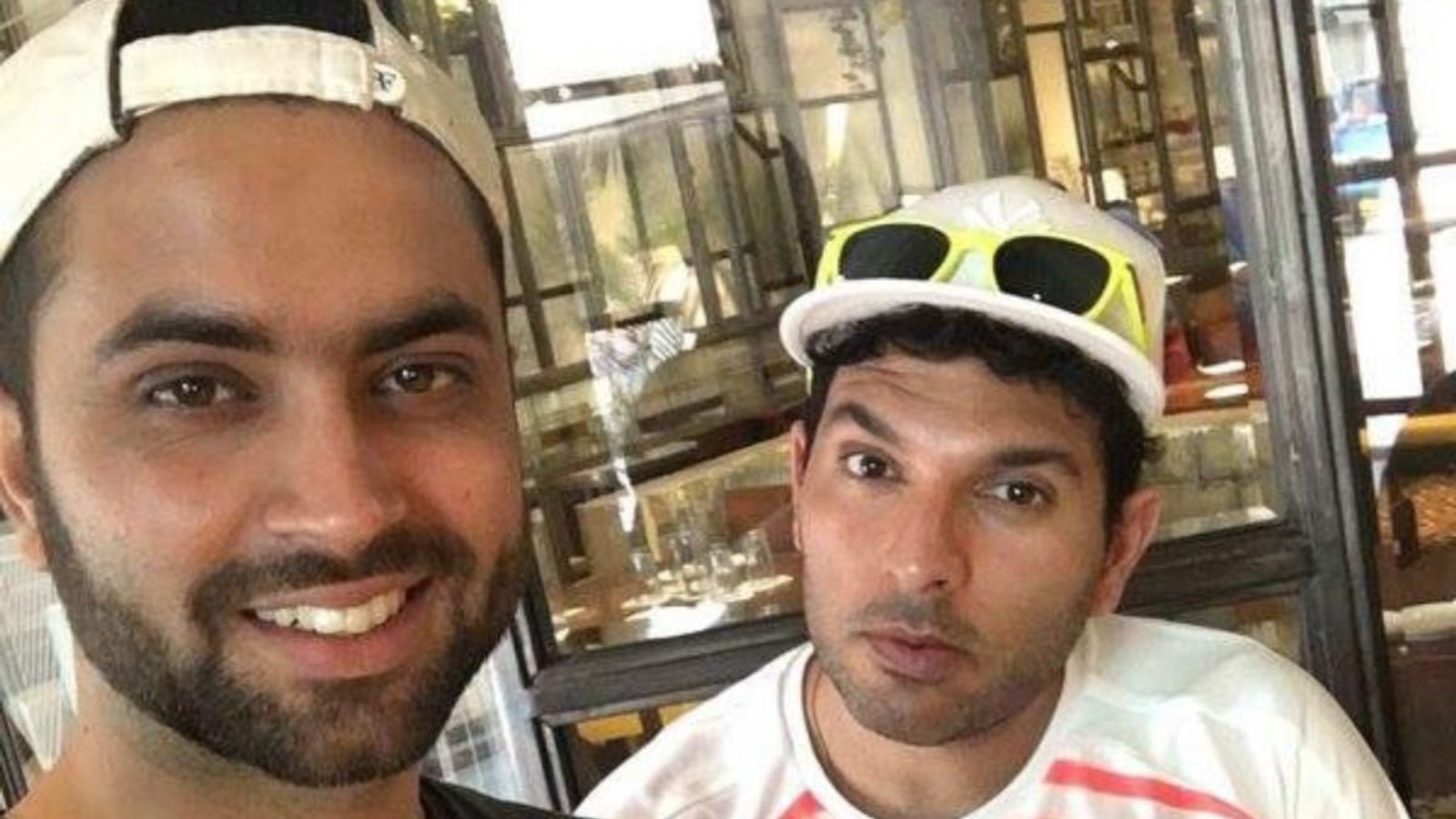
Khera, 35, announced his decision through social media, signing off his career with the words “Over and out.” His retirement brings attention to a less-discussed side of Indian cricket: the long careers of domestic players who spend years competing at a high level but never quite make the final step to international cricket.
Gitansh Khera Announces Retirement After 16 Years
Khera made his first-class debut for Punjab in 2010 and remained associated with the state’s domestic setup for more than a decade. During that period, he witnessed several generations of Punjab cricket and shared the dressing room with players who went on to achieve international success.
Among the notable names he played alongside were Yuvraj Singh, Harbhajan Singh and Shubman Gill. Khera also acknowledged the emergence of younger Punjab talents such as Abhishek Sharma while reflecting on the evolution of the team.
His career eventually came to an end in 2026, after years of contributing to Punjab cricket across multiple formats.
A Career That Never Reached the India Stage
The biggest unanswered chapter in Khera’s career is the absence of an India call-up.
Despite spending 16 years in domestic cricket and playing 56 first-class matches, he never represented India in Test, ODI or T20I cricket. He also did not receive an IPL opportunity during his professional career.
For a cricketer who remained involved in competitive domestic cricket for such a long period, the lack of an international appearance is undoubtedly one of the most striking aspects of his career.
However, an India career is extremely difficult to secure. The country has an enormous pool of professional cricketers, particularly in positions such as wicketkeeper-batter, where players compete against established international names and highly rated domestic performers.
Gitansh Khera’s Domestic Career in Numbers
| Format | Matches | Runs | Average |
|---|---|---|---|
| First-class | 56 | 2,515 | 33 |
| List A | 40 | 1,017 | 44 |
| T20 | 11 | 96 | — |
The numbers provide a useful picture of Khera’s career. His List A record was particularly productive, with 1,017 runs at an average of 44 from 40 matches. His first-class career also produced more than 2,500 runs across 56 matches.
Those figures demonstrate that his career was not simply about being part of the Punjab setup. He accumulated a substantial body of domestic cricket and remained competitive over many seasons.
Sharing the Dressing Room With Yuvraj and Harbhajan
One of the most memorable aspects of Khera’s career was his opportunity to play alongside some of India’s most recognisable cricketers.
Yuvraj Singh was one of the defining figures of Indian limited-overs cricket, while Harbhajan Singh enjoyed a long international career as one of India’s leading spinners.
For Khera, sharing a dressing room with such players offered an experience that went beyond statistics. It meant being part of a Punjab cricket environment that included established international performers and learning from players who had already experienced the pressure of the biggest stage.
Later in his career, he also witnessed the rise of Shubman Gill from Punjab cricket to the India setup. Gill’s development represents a very different trajectory, moving from domestic cricket into international leadership.
From One Generation of Punjab Cricket to Another
Khera’s career effectively spans multiple generations of Punjab cricket.
When he made his first-class debut in 2010, Yuvraj Singh and Harbhajan Singh were already established international cricketers. Years later, Gill emerged as one of the most important young batters in Indian cricket.
This makes Khera’s career an interesting window into how quickly domestic cricket can change. Players enter the system with ambitions of reaching India, while younger talents emerge and eventually move ahead.
Khera’s retirement therefore marks not only the end of an individual career but also the closing of a chapter in Punjab’s domestic cricket landscape.
The Difficult Reality Behind an India Call-Up
Khera’s story highlights the enormous competition involved in Indian domestic cricket.
India has a deep talent pool, and performing well domestically does not automatically guarantee international selection. A player can spend many years producing useful performances while competing against several other cricketers for the same position.
The wicketkeeper-batter role is particularly competitive because selection involves balancing batting performance, wicketkeeping ability, age profile, team requirements and long-term planning.
For Khera, the challenge was therefore bigger than simply scoring runs. He had to stand out in an exceptionally crowded cricketing environment.
Why His List A Record Stands Out
Among Khera’s domestic statistics, his List A record deserves particular attention.
He scored 1,017 runs in 40 matches at an average of 44, a figure that reflects consistency in one-day cricket. List A cricket requires a batter to adapt between accumulation and acceleration, making sustained success in the format valuable.
His first-class record was also significant. Across 56 matches, he scored 2,515 runs at an average of 33.
While those numbers did not ultimately lead to an India selection, they demonstrate that Khera made a meaningful contribution to Punjab’s domestic cricket over a long period.
No IPL Opportunity Added Another Layer to His Career
Khera also never played in the IPL, another major platform through which Indian domestic cricketers can gain national attention.
The IPL has become an important pathway for players hoping to attract selectors, particularly in limited-overs cricket. Strong performances in the tournament can rapidly increase a player’s profile and expose them to elite coaching, international players and high-pressure matches.
Without that opportunity, Khera’s career remained largely rooted in the domestic circuit.
That does not diminish his achievements, but it does explain why his career received less national visibility than some contemporaries who were able to use the IPL as a launchpad.
Khera Admits Missing India Chance Will Remain a Disappointment
After spending 16 years in domestic cricket, Khera acknowledged that never getting the opportunity to represent India at the highest level will remain a disappointment.
That feeling is understandable. For most Indian cricketers, playing for the national team represents the ultimate ambition, and Khera spent more than a decade working within the domestic system without reaching that final stage.
At the same time, his career demonstrates that a player’s value cannot be measured only by whether they receive an India cap.
Thousands of domestic cricketers contribute to the strength of India’s cricket system, even if their names never appear on an international scorecard.
The Emotional Side of Domestic Cricket Retirement
Retirement can be especially emotional for domestic players because their careers are often deeply connected to one state association and its cricket community.
For Khera, Punjab was not simply a team. It was the environment in which he spent 16 years of his professional life.
His retirement message thanked the Punjab Cricket Association for its support and reflected on the players he shared the dressing room with throughout his career.
The phrase “Over and out” provided a short but fitting conclusion to a long journey.
What Khera’s Story Says About Indian Domestic Cricket
Khera’s career offers a broader lesson about the depth of Indian cricket.
A player can make a first-class debut, spend years representing a major domestic side, accumulate thousands of runs and still finish without an international appearance.
That is not necessarily evidence of failure. In many cases, it demonstrates just how difficult the final step can be.
Indian cricket’s strength comes partly from this enormous competitive base. The players who remain outside the international spotlight still push each other to higher standards in domestic competitions.
From Sharing a Dressing Room to Watching New Stars Rise
Khera’s career also provides a unique perspective on the development of players such as Shubman Gill and Abhishek Sharma.
He was part of the Punjab system while younger players developed around him. Some of those players eventually moved into the India setup, while Khera remained a dependable domestic cricketer.
That contrast shows that cricket careers rarely follow one predictable route. Age, opportunity, competition, timing and selection can all influence how far a player travels.
A Career Worth Remembering Despite the Missing India Cap
There is a natural temptation to define Khera’s career by what he did not achieve. The absence of an India call-up is certainly a notable part of his story, but it should not overshadow what he actually accomplished.
He spent 16 years in professional domestic cricket, played 56 first-class matches and scored more than 2,500 runs in the format. He also produced a strong List A record and remained part of Punjab cricket through major changes in the team’s personnel.
Very few cricketers maintain a domestic career for such a long period. Longevity itself requires discipline, fitness, adaptability and the ability to remain competitive as younger players enter the system.
Conclusion
Gitansh Khera’s retirement marks the end of a 16-year domestic cricket journey that never reached the international stage but still included plenty of memorable experiences.
The Punjab wicketkeeper-batter played 56 first-class matches and scored 2,515 runs, while his List A career produced 1,017 runs at an average of 44. He also shared dressing rooms with Yuvraj Singh, Harbhajan Singh and Shubman Gill during different stages of his career.
His story is a reminder that Indian cricket is filled with players who spend years competing at a high level without receiving an India call-up. For Khera, the missing international opportunity will remain a disappointment, but it does not erase a substantial domestic career.
After 16 years of professional cricket, Khera has now chosen to walk away. His final message, “Over and out,” closes the book on a career that may not have reached the destination he once wanted, but still left its mark on Punjab cricket.
For breaking news and live news updates, like us on Facebook or follow us on Twitter and Instagram. Read more on Latest Cricket on thefoxdaily.com.

COMMENTS 0