The Selection Debate That IPL Was Always Going to Produce
Every IPL season ends the same way for Indian Cricket fans: a tournament concludes, performances are tallied, and the inevitable selection debate begins. Who did enough to force their way into the national team? Who was overlooked despite compelling evidence? Where are the selectors looking, and why does their view seem to differ so dramatically from the public’s reading of the same numbers?
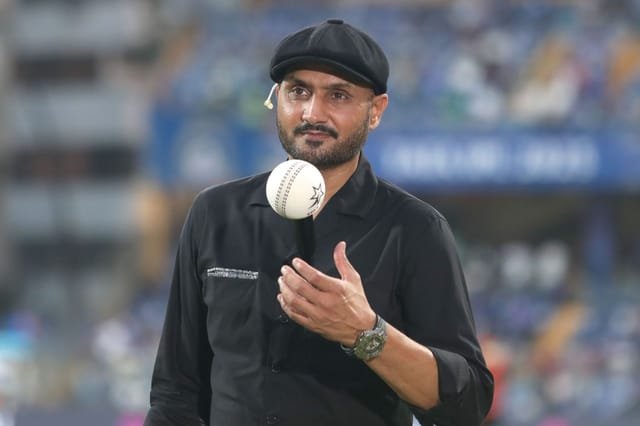
In 2026, one name is at the center of that debate more forcefully than any other: Rajat Patidar, the Royal Challengers Bengaluru captain who scored 501 runs at a strike rate of 192.69 in the recently concluded IPL campaign, led his franchise to a second consecutive title, and then watched the India T20I squad for the upcoming series against Ireland and England announced without his name in it. The reaction from former players was swift. The loudest came from a man who has never been shy about his opinions on Indian cricket selection matters Harbhajan Singh.
Who is at the center of this? Rajat Patidar 33-year-old RCB skipper, IPL champion, and one of the most effective T20 middle-order batters currently operating in Indian cricket. What happened? He was omitted from India’s T20I squad despite a career-best IPL campaign. When was this announced? Following IPL 2026‘s conclusion and ahead of the series against Ireland and England. Where does Patidar currently stand? Captaining the Gwalior Cheetahs in the Madhya Pradesh Premier League, waiting for a door that IPL 2026 seemed to have pried wide open. Why does this matter? Because the conversation around his omission cuts to the heart of how Indian selection decisions are made when the talent pool is this deep and whose interests those decisions ultimately serve.
What Patidar Did in IPL 2026: The Case That Harbhajan Is Making
To understand the strength of Harbhajan’s argument and the frustration behind it the IPL 2026 numbers need to be placed in full context rather than presented as isolated statistics.
Patidar accumulated 501 runs across 14 innings in IPL 2026 at a strike rate of 192.69. In T20 cricket, a strike rate approaching 200 over a sample of 14 innings — not one good game, not a blistering cameo against a weak attack, but across an entire campaign covering the full range of opposition, conditions, and match situations is a genuinely elite return. It places him among the most impactful batters of the entire tournament, not just among Indian players.
But the context extends beyond individual statistics. Patidar did this while captaining RCB — which means he carried both the tactical responsibilities of leadership and the performance expectations of a middle-order batter simultaneously. Managing a bowling attack, handling substitutions, setting fields, managing personalities, and making decisions that affect twenty-three other people’s livelihoods is a weight that batting averages do not reflect. Doing all of that while personally delivering one of the tournament’s standout batting campaigns is what made his IPL 2026 exceptional.
Then there is the championship dimension. Patidar became only the third captain in IPL history to win back-to-back titles joining MS Dhoni and Rohit Sharma in that exclusive company. To frame the significance of that achievement: Dhoni built the most successful franchise dynasty in the tournament’s history. Rohit led Mumbai Indians to five titles across his tenure. Joining their names in the back-to-back category is not an entry-level milestone. It is a statement about leadership quality, squad management, and the ability to maintain a winning culture across the full arc of two demanding seasons.
Harbhajan Singh Speaks: “Unfair” and the Statistics Back Him Up
Harbhajan Singh did not choose diplomatic ambiguity when the India T20I squad was announced. His reaction on X was direct, unequivocal, and framed in the language of genuine grievance rather than casual commentary:
“Sad no Rajat Patidar in the indian squad. What else he needs to do ? Scored 501 runs strike rate almost 200. Unfair. Easily the best middle order in India. Proper striker with good technique.”
Harbhajan Singh, on X
The phrase “what else he needs to do?” is the rhetorical engine of Harbhajan’s argument. It frames Patidar’s situation not as a borderline case where reasonable people could disagree but as one in which the standard evidence for selection has been clearly met and still found insufficient. The implied question if not this, then what? is one that the selectors have not yet provided a fully satisfying answer to.
Harbhajan’s characterization of Patidar as “easily the best middle order in India” and a “proper striker with good technique” addresses the specific profile that T20I teams require at positions four, five, or six. The “technique” element is particularly interesting it signals that Harbhajan is not simply arguing for a power hitter who can clear the rope. He is arguing for a batter whose technical foundations are solid enough to play across all phases of a T20 innings and against the full range of international bowling. That is a more complete argument than raw strike rate alone would support.
| Metric | IPL 2026 | Overall T20 Career |
|---|---|---|
| Runs | 501 | 3,389 from 106 innings |
| Strike Rate | 192.69 | 160.08 |
| Batting Average | — | 35.30 |
| Innings Played | 14 | 106 |
| IPL Captaincy Achievement | Back-to-back titles — only 3rd captain in IPL history (after Dhoni and Rohit Sharma) | |
| Current Franchise | RCB (Skipper) + Gwalior Cheetahs in MP Premier League 2026 | |
The overall T20 numbers support Harbhajan’s position independently of the IPL 2026 campaign. A T20 average of 35.30 from 106 innings is not the record of a batter whose IPL form is an anomaly it is sustained evidence of consistent quality over a large sample. A career strike rate of 160.08 places him comfortably within the range of genuinely dangerous T20 batters. The IPL 2026 campaign, at a strike rate nearly 33 points higher than his career rate, suggests a batter operating at the peak of his powers rather than simply having a hot streak on an easy pitch.
What the Squad Got Instead: Iyer Returns, New Faces Debut
Understanding what the selectors chose in the absence of Patidar provides context for the debate. The most significant headline in the squad announcement was the return of Shreyas Iyer, who had been absent from T20I cricket for over two years. Iyer not only returned to the squad but was handed the captaincy, with Suryakumar Yadav stepping back from the leadership role he had occupied.
Two maiden T20I call-ups further shaped the narrative of the squad: Vaibhav Suryavanshi, the hard-hitting opener who has been one of Indian domestic cricket’s most talked-about young talents, and Prince Yadav, a fast bowler earning his first national recognition. Both call-ups are entirely defensibleSuryavanshi’s profile as a dynamic top-order option represents a specific type of investment in a young player the selectors clearly see as part of India’s T20 future, while Prince Yadav’s pace bowling addresses a roster need.
The tension these selections create with Patidar’s omission is not that the included players are undeserving. It is that Patidar has done more, more recently, and in a more visible context, to merit selection than the interpretation of the squad seems to reflect. Iyer returning to the T20I setup after two years’ absence, immediately picking up the captaincy, is an unusual sequence one that suggests a pre-existing organizational decision rather than pure form-based selection.
Ajit Agarkar Responds: The Chief Selector’s Defense
India’s chief selector Ajit Agarkar addressed the inevitable questions about omissions with a response that was measured, transparent about its limitations, and entirely honest about the fundamental constraint that shapes every selection decision:
“We discuss a host of players. You don’t just sit there and put down 15 names. There are a lot of good players in India. If you’ve watched the IPL or followed domestic cricket, there are plenty of players who look good enough to walk into the team. But the players already in the team are doing well too. We won a World Cup not too long ago. We think we’ve picked a really good squad. There will always be players who miss out, but you can only pick 15 and we’re very happy with this group.”
Ajit Agarkar, Chief Selector
Agarkar’s position is logically coherent and factually accurate on its own terms. India do have an extraordinary talent pool. The players currently in the T20I setup are, by definition, international cricketers who have earned their places through their own performances. The World Cup reference while it can read as somewhat deflecting when applied to a specific selection decision is a legitimate point about not breaking up a successful combination without compelling reason.
But the “you can only pick 15” argument, while true, is also the precise point Harbhajan is making from a different angle. Yes, you can only pick 15. The question is not about the mathematics of squad sizes. It is about which 15 and whether the 15 chosen best reflect current form and current merit or whether they reflect pre-existing hierarchies that IPL performances of Patidar’s quality should have disrupted.
The Deeper Issue: How India’s Selection Culture Handles Outstanding Domestic Form
Patidar’s omission exists within a broader pattern in Indian cricket selection that has been a source of recurring debate: the phenomenon of IPL form being simultaneously used as the primary evidence for new talent and treated as insufficient to displace established names at the international level. Young players earn maiden call-ups on the strength of IPL performances as Suryavanshi and Prince Yadav have done in this very announcement. But experienced players seeking to reclaim or first establish a T20I berth find that the same evidence is evaluated differently.
At 33, Patidar sits in a demographic that selection committees globally find uncomfortable: old enough that his T20I window is finite, young enough that he remains physically capable of performing at the highest level for several more years. Selectors making multi-year plans for a squad are sometimes reluctant to invest selection capital in a player whose run might be measured in two or three years rather than five or six. Whether that calculation if it is being made — is justified in Patidar’s specific case is a debate worth having.
The argument against it is simply the one Harbhajan is making: if a batter is the best available at their position right now, their age and the planning horizon of the selection committee should be secondary considerations. Teams win series with the players who are performing, not with the players who will peak in 2028.
Patidar Continues Playing: Gwalior Cheetahs and the Wait
While the India T20I squad heads to Ireland and England, Rajat Patidar is captaining the Gwalior Cheetahs in the Madhya Pradesh Premier League 2026 continuing to play, continuing to lead, and presumably continuing to produce the kind of performances that brought him to the threshold of national selection without quite pushing him through it.
That image an IPL-winning captain running in another domestic league, accumulating more evidence in a file that already has more than enough in it captures the particular frustration that surrounds selection debates of this kind. Cricket’s episodic nature means that every IPL, every domestic tournament, every representative series provides a new window for a player’s case to be made and remade. The door is never permanently closed. But windows close, ages increase, and the sense that form is being ignored in favor of pre-existing decisions is a difficult thing to sustain motivation through.
Conclusion: “What Else Does He Need to Do?” Is Still Waiting for Its Answer
Harbhajan Singh’s question “what else he needs to do?” is the kind of question that becomes more powerful the longer it goes unanswered. In the immediate term, India’s T20I squad for Ireland and England has been chosen, the decision is made, and Ajit Agarkar has provided the selectors’ rationale. The series will be played, results will be recorded, and the evaluation will continue.
But Rajat Patidar’s case will not go away. The numbers he produced in IPL 2026 are part of the permanent record. The back-to-back title captaincy is not a context that fades. A career T20 average of 35 and a strike rate of 160 from over a hundred innings is not a statistical mirage that the next tournament can erase.
At 33, Patidar may have limited opportunities remaining to make his case at the national level. The irony is that he has spent IPL 2026 making it as compellingly as anyone could reasonably ask and found the selectors looking in a different direction. Harbhajan called it unfair. The numbers, honestly assessed, make it difficult to argue otherwise.
India goes to Ireland and England without their IPL’s standout middle-order batter. The series will proceed, the performances will be analyzed, and somewhere in Gwalior, Rajat Patidar will keep playing cricket and waiting for the answer to a question that deserved a better response than silence.
For breaking news and live news updates, like us on Facebook or follow us on Twitter and Instagram. Read more on Latest Sports on thefoxdaily.com.





COMMENTS 0