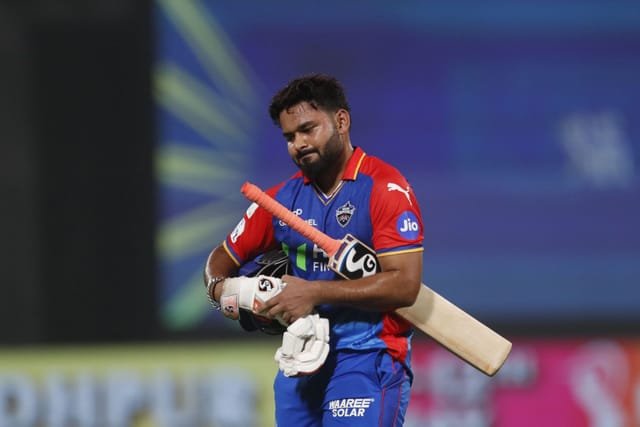
The Indian Premier League (IPL) has always been a stage where fortunes change overnight. From record-breaking auctions to unexpected releases, the league is as much about financial valuation as it is about cricketing performance. The latest example is the high-profile Rishabh Pant-Kuldeep Yadav trade, which once again highlights how dramatically player values can shift in modern franchise cricket.
Pant, once a ₹27 crore marquee signing, has returned to Delhi Capitals for ₹15 crore after a significant pay cut. While that move has dominated headlines, he is far from alone. Over the years, several elite players — including international superstars and Indian icons — have also seen their IPL salaries reduced by massive margins due to form, strategy shifts, injuries, or auction dynamics.
This article breaks down the larger story behind IPL pay cuts and highlights five major examples that reveal how ruthless and performance-driven the league has become.
Primary Keyword: IPL pay cuts and player valuation drops explained
The phrase “IPL pay cuts” reflects a growing trend in franchise cricket where player salaries are no longer guaranteed based on reputation alone. Instead, teams evaluate players based on recent form, role flexibility, fitness, and auction strategy.
In a league where budgets are fixed and squad balance is critical, even proven match-winners can find themselves earning significantly less than previous seasons.
Why IPL Pay Cuts Are Becoming More Common
Before looking at individual cases, it’s important to understand why salary drops happen so frequently in the IPL ecosystem.
- Performance fluctuations: One poor season can drastically reduce auction value
- Injury concerns: Fitness issues heavily impact franchise confidence
- Team strategy changes: Franchises often shift towards younger or more versatile players
- Budget constraints: Salary caps force teams to redistribute funds
- Market dynamics: New talent inflow increases competition for slots
This combination ensures that IPL contracts remain highly volatile compared to traditional cricket contracts.
#1 Venkatesh Iyer – From ₹23.75 crore to ₹7 crore
One of the most striking examples of IPL valuation correction is Venkatesh Iyer’s dramatic salary drop. Purchased by Kolkata Knight Riders (KKR) for a staggering ₹23.75 crore, expectations were extremely high for the batting all-rounder.
However, after an inconsistent season with the bat, where he managed 142 runs in seven innings, his value took a major hit in the following auction.
Royal Challengers Bengaluru (RCB) picked him up for ₹7 crore — a massive ₹16.75 crore reduction.
Interestingly, Iyer later found form in a different setup, contributing crucial runs in a successful campaign. This highlights a key IPL reality: sometimes environment matters as much as ability.
#2 Sam Curran – Big-money signing to budget return
England all-rounder Sam Curran’s IPL journey reflects how rapidly franchise valuations can swing.
After being signed for ₹18.5 crore by Punjab Kings, Curran delivered a mixed but useful season with both bat and ball. Despite that, he was released and later bought back by Chennai Super Kings for just ₹2.4 crore.
This ₹16 crore drop was not purely performance-based but also strategic. CSK’s balanced squad construction allowed them to acquire a proven international all-rounder at a significantly lower cost.
However, limited opportunities in the following season meant his impact was restricted, proving that price doesn’t always equal playing time or role clarity.
#3 Mitchell Starc – Even elite fast bowlers are not immune
Mitchell Starc’s case shows that even world-class performers can face valuation corrections in franchise cricket.
Initially bought by KKR for ₹24.75 crore, Starc played a key role in their title-winning campaign. Despite that success, he was released and later picked by Delhi Capitals for ₹11.75 crore.
While still a premium price, the reduction of over ₹13 crore highlights how franchises continuously reassess value even after strong performances.
In his case, workload management, availability concerns, and team composition likely influenced the decision more than form.
#4 Kyle Jamieson – Injury and availability impact value
New Zealand pacer Kyle Jamieson’s IPL trajectory is a clear example of how injuries can derail auction value.
After being signed for ₹15 crore by RCB, Jamieson’s limited appearances and injury setbacks significantly reduced his market demand. Eventually, he was picked up for just ₹1 crore by Chennai Super Kings.
That represents a ₹14 crore drop — one of the steepest in IPL Auction history.
His case underscores a harsh reality of franchise cricket: availability is often valued as highly as ability.
#5 Yuvraj Singh – A legend still affected by auction dynamics
Even established legends are not exempt from IPL valuation shifts. Yuvraj Singh, one of India’s most celebrated white-ball cricketers, was once signed for ₹16 crore by Delhi Daredevils.
After a mixed season, he was released and later picked up by Sunrisers Hyderabad for ₹7 crore — a significant reduction.
Although Yuvraj remained a high-impact player in flashes, his reduced strike consistency influenced franchise decisions in a league increasingly driven by metrics and matchups.
IPL Pay Cuts: A Comparative Overview
| Player | Previous Price | New Price | Approx. Drop |
|---|---|---|---|
| Venkatesh Iyer | ₹23.75 crore | ₹7 crore | ₹16.75 crore |
| Sam Curran | ₹18.5 crore | ₹2.4 crore | ₹16.1 crore |
| Mitchell Starc | ₹24.75 crore | ₹11.75 crore | ₹13 crore |
| Kyle Jamieson | ₹15 crore | ₹1 crore | ₹14 crore |
| Yuvraj Singh | ₹16 crore | ₹7 crore | ₹9 crore |
What IPL Pay Cuts Reveal About Modern Franchise Cricket
The recurring pattern of salary reductions in the IPL is not simply about players losing value — it reflects how data-driven the sport has become.
Franchises now rely heavily on analytics, scouting reports, and role-specific planning. A player’s value is increasingly tied to:
- Strike rate in specific phases of the game
- Bowling economy under pressure overs
- Fielding impact metrics
- Fitness availability across seasons
This shift means reputation alone is no longer enough to secure top-tier contracts.
Comparison Insight: IPL vs Traditional Cricket Contracts
Unlike international central contracts, IPL deals are highly flexible and market-driven. In many cases, players can experience:
- Rapid salary inflation after one breakout season
- Sharp corrections after one poor season
- Role-based pricing rather than fixed reputation value
This creates a unique economic ecosystem where form cycles are directly tied to financial earnings.
Why Some Players Bounce Back After Pay Cuts
A key insight often overlooked is that pay cuts are not always permanent setbacks. Players like Venkatesh Iyer have shown that a change of franchise or role clarity can lead to resurgence.
In the IPL, system fit often matters more than raw talent. A player struggling in one setup may flourish in another with better-defined responsibilities.
Conclusion: IPL Pay Cuts Reflect a Ruthless but Evolving Auction System
The case of Rishabh Pant’s trade and the examples of other high-profile players show that IPL valuation is fluid, performance-driven, and increasingly strategic.
The era of guaranteed big-money contracts based solely on reputation is fading. Instead, franchises are prioritizing adaptability, efficiency, and current form.
For players, this means constant pressure to perform — but also opportunities for redemption. In the IPL ecosystem, value is never fixed; it is always being rewritten.
For breaking news and live news updates, like us on Facebook or follow us on Twitter and Instagram. Read more on Latest Sports on thefoxdaily.com.






COMMENTS 0