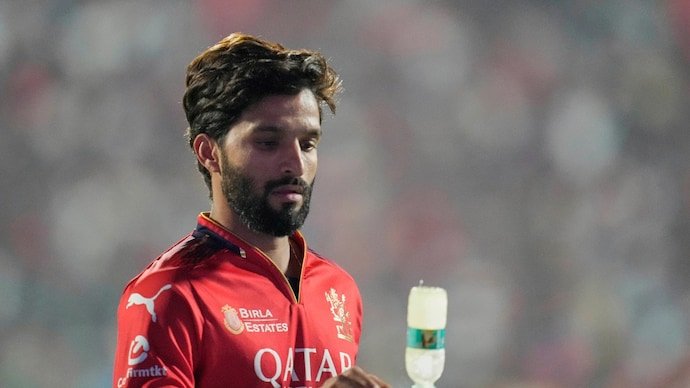
India’s announcement of a 15-member squad for the upcoming T20I series against Ireland and England has ignited a familiar debate: how much weight should Indian selectors place on Indian Premier League performances?
At the center of the discussion is Rajat Patidar, the Royal Challengers Bengaluru captain who guided his side to consecutive IPL titles while delivering one of the most impressive batting campaigns of the 2026 season.
Former India opener Sadagoppan Ramesh has openly questioned Patidar’s exclusion, arguing that the right-hander has done enough to earn at least an opportunity at the international level.
His comments have resonated with many fans who believe the selection process should more directly reward domestic excellence and IPL success.
Rajat Patidar’s IPL 2026 Numbers Demand Attention
Patidar’s omission is particularly surprising given the quality and consistency of his performances throughout the season.
Beyond his leadership credentials, he established himself as one of the tournament’s most destructive middle-order batters.
| Rajat Patidar – IPL 2026 Performance | Statistics |
|---|---|
| Matches | 15 |
| Runs | 501 |
| Batting Average | 41.75 |
| Strike Rate | 192.69 |
| IPL Titles as Captain | 2 |
A strike rate nearing 193 while maintaining an average above 40 is exceptional in modern T20 cricket. More importantly, Patidar consistently delivered in high-pressure situations, helping RCB defend their title successfully.
His achievements place him in elite company, joining only a select group of captains to lead a franchise to consecutive IPL championships.
Why Patidar’s Exclusion Feels Significant
Selection debates are common in Indian Cricket due to the depth of available talent, but Patidar’s case stands out because it touches on a larger issue: what exactly is the pathway from IPL success to international recognition?
India’s selectors have often highlighted IPL performances as an important factor in T20I selections. However, the absence of any RCB player from the squad despite the franchise’s recent dominance has prompted questions about consistency.
As Sadagoppan Ramesh pointed out, if IPL form was a major factor in appointing a new T20I captain, should exceptional performances from championship-winning players not also be rewarded?
The debate is not necessarily about replacing established stars but about creating opportunities for in-form performers.
India’s Middle-Order Competition Remains Intense
One reason for Patidar’s omission could be the sheer competition for middle-order spots.
India’s T20 setup currently boasts an abundance of batting options capable of playing aggressive cricket.
Selecting a balanced squad often means talented players miss out despite impressive numbers.
However, Patidar offers qualities that extend beyond statistics.
- Leadership experience under pressure
- Proven ability to accelerate against spin and pace
- Flexibility to bat in multiple middle-order positions
- Composure in knockout matches
- Strong domestic cricket record
These attributes could make him a valuable option, particularly as India continues to build toward future ICC tournaments.
Should India A Tours Become a Stepping Stone?
Ramesh also suggested that Patidar should be considered for India A tours if immediate senior team opportunities are unavailable.
This proposal highlights a broader concern regarding player development pathways.
India A assignments have historically served as a bridge between domestic cricket and international competition, allowing players to adapt to different conditions and stronger opposition.
For someone with Patidar’s experience and leadership credentials, captaining India A could provide valuable exposure while keeping him within the national setup.
Such an approach would ensure that strong domestic performers remain engaged and prepared for future opportunities.
The Devdutt Padikkal vs. Sai Sudharsan Debate
Ramesh also questioned India’s selection approach in the Test format, specifically regarding Devdutt Padikkal and Sai Sudharsan.
While praising Sai’s performances, he argued that Padikkal has not received a similar run of opportunities.
The discussion reflects a recurring challenge for Indian cricket: balancing immediate results with long-term player development.
Sai’s recent success at No. 3 has strengthened his case, but Ramesh believes Padikkal deserves a more extensive opportunity to prove himself, particularly given the difficult conditions he encountered during previous overseas assignments.
| Player | Recent Opportunities | Discussion Point |
|---|---|---|
| Sai Sudharsan | Extended run at No. 3 | Rewarded for strong performances |
| Devdutt Padikkal | Limited opportunities | Needs greater backing from management |
Selection decisions often involve context beyond raw numbers, but transparency and consistency remain essential for maintaining confidence in the process.
What Selectors May Be Looking For
Modern T20 cricket demands more than explosive batting.
Selectors must evaluate multiple factors when building a squad, including:
- Role clarity within the batting order
- Match-up advantages against specific opponents
- Fielding standards
- Team balance
- Long-term tournament planning
It is possible that selectors view Patidar as a player competing in an already crowded role.
However, his versatility and leadership could eventually make him difficult to ignore if his performances continue at the current level.
What Lies Ahead for Rajat Patidar?
At 33, Patidar understands that opportunities at the international level may not come easily.
That reality makes every domestic season increasingly important.
The encouraging aspect for the RCB captain is that his recent performances have significantly strengthened his case for future selection.
With several T20 assignments scheduled over the next year and preparations already underway for future global tournaments, strong domestic form could still open the door.
Continued consistency across formats will be crucial.
Conclusion
Rajat Patidar’s omission from India’s T20I squad has sparked an important conversation about how domestic performances are rewarded in Indian cricket.
His numbers, leadership record, and impact during IPL 2026 make a compelling case for inclusion.
While fierce competition for places remains a reality, the debate raised by Sadagoppan Ramesh reflects a broader desire for clearer selection pathways.
Whether through India A tours or future T20I opportunities, Patidar appears deserving of a closer look.
Because if consecutive IPL titles and a strike rate approaching 200 are not enough to enter the conversation, many fans will understandably wonder what more a player needs to do.
For breaking news and live news updates, like us on Facebook or follow us on Twitter and Instagram. Read more on Latest Sports on thefoxdaily.com.





COMMENTS 0