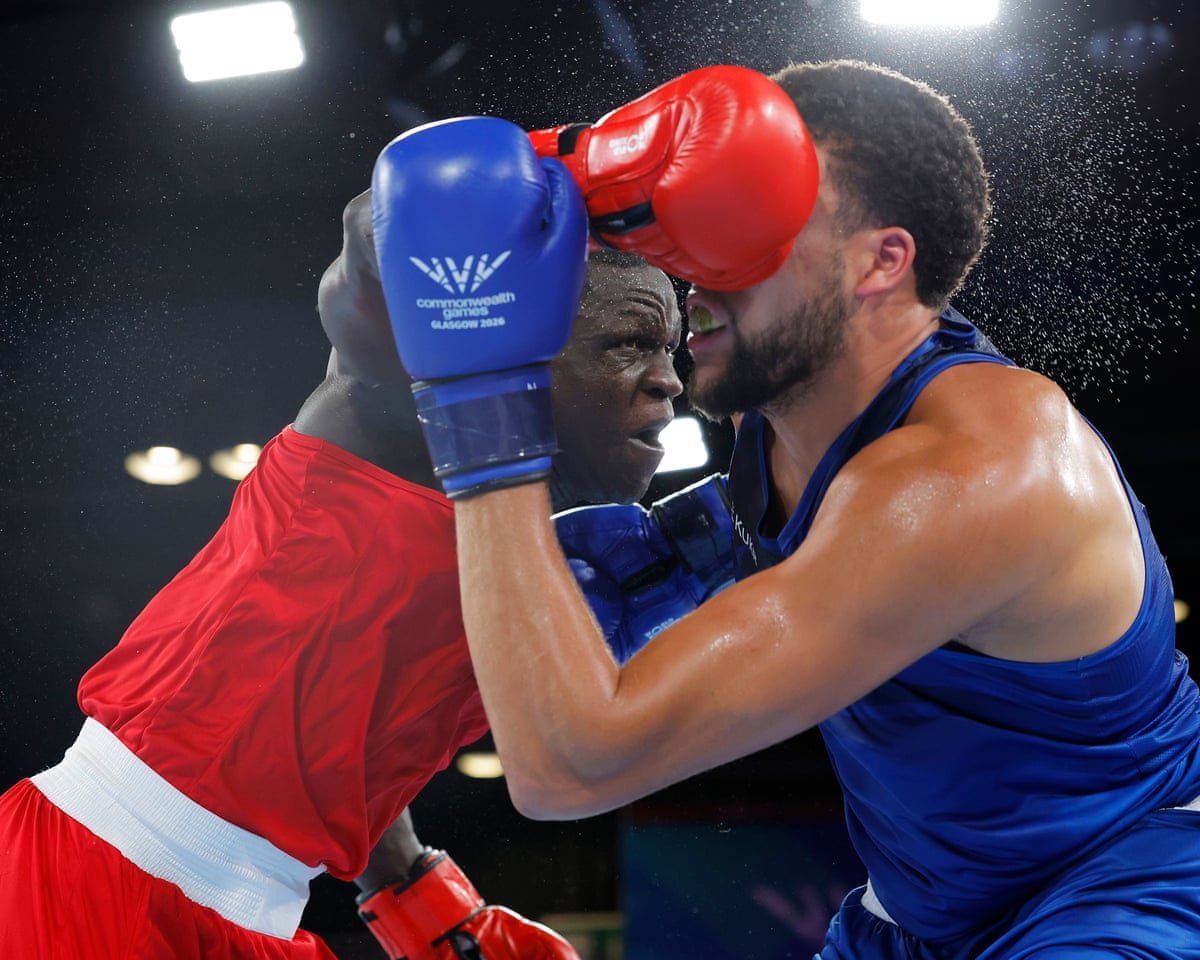
Aziz Abdul, the grandson of former Ugandan president Idi Amin, has suffered another controversial disqualification after striking Egyptian boxer Mohamed Hossen following the bell in the men’s 90kg final at the African Boxing Championships in Nairobi. The incident cost Abdul his silver medal and marked another disciplinary setback for the boxer, who had previously been disqualified at the Commonwealth Games in Glasgow.
Known by his nickname, “Ringo”, Abdul lost his composure during the championship bout and threw a punch at Hossen after the round had ended. The Egyptian boxer was turning away when Abdul landed a blow to the back of his head, prompting officials to disqualify the Ugandan immediately.
The incident overshadowed the final and sparked angry exchanges involving members of Hossen’s corner. By the time Hossen’s arm was raised in victory, Abdul had already left the ring, bringing an abrupt end to his attempt to secure the championship title.
The latest incident has renewed scrutiny of Abdul’s conduct in the ring. His disqualification in Nairobi followed a similar episode at the Commonwealth Games, where he was removed from competition after head-butting English opponent Damar Thomas during their opening bout in July.
Aziz Abdul Disqualified After Punching Mohamed Hossen After the Bell
The decisive incident in Nairobi occurred as the men’s 90kg final was reaching its conclusion. Abdul pulled away from a clinch as the bell sounded, signalling the end of the round, before throwing a punch at Hossen as the Egyptian boxer turned away.
The blow landed around the back of Hossen’s head, and officials acted immediately. Rather than allowing the contest to continue or deciding the result through the normal scoring process, they disqualified Abdul for the foul.
The decision meant Abdul lost the opportunity to claim the African championship and was stripped of the silver medal associated with his runner-up finish. Hossen was subsequently declared the winner, with the Egyptian boxer having his arm raised in the ring.
The incident provoked an angry reaction from members of Hossen’s corner. Such confrontations can quickly intensify when a bout ends in a serious foul, particularly in a championship final where the result carries significant consequences for both athletes.
Abdul’s departure from the ring before the official celebration added to the drama. The sequence of events left the Egyptian boxer to receive recognition for the victory while the Ugandan faced another disciplinary controversy in his boxing career.
In boxing, the bell is a critical boundary governing when competitors may exchange punches. Continuing to attack after the end of a round can expose an opponent to unnecessary danger, especially if the opponent has already turned away or lowered their guard. Officials are responsible for enforcing the rules and protecting the athletes when such situations arise.
Abdul’s punch therefore became the defining moment of the final, overshadowing the sporting contest itself. The disqualification also meant that his conduct, rather than the technical performance of either boxer, became the central focus of the event.
Second Disqualification After Commonwealth Games Incident
The Nairobi controversy was not the first time Abdul had been disqualified from a major international boxing competition. At the Commonwealth Games in Glasgow in July, he suffered a similar outcome during his opening bout against England’s Damar Thomas.
Abdul was disqualified after head-butting Thomas, ending his participation in the tournament before he could progress further through the competition. The incident established a troubling precedent that became difficult to ignore following the latest foul in Nairobi.
Two disqualifications at major championships represent a significant setback for a boxer seeking to establish himself internationally. Results in elite amateur boxing depend not only on technical ability, fitness and tactical judgement but also on the ability to remain disciplined under pressure and compete within the rules.
When a contest ends through disqualification, a fighter loses the opportunity to determine the result through the usual sporting criteria. Such outcomes can also prevent an athlete from advancing in a tournament, winning a medal or building momentum against higher-level opposition.
For Abdul, the two incidents occurred in different circumstances but produced similarly damaging consequences. In Glasgow, the head-butt against Thomas ended his opening contest. In Nairobi, the punch thrown after the bell cost him the silver medal and handed victory to Hossen.
The recurrence of disciplinary problems raises questions about how Abdul responds to frustration during competition. However, the available account does not establish what caused either incident beyond the actions described in the bouts.
Abdul’s Controversial Comments Before the Glasgow Games
Abdul had attracted attention before his Commonwealth Games appearance with an ambitious declaration that he intended to become “the new king of Scotland”. The remark was presented as a reference to a claim made by his grandfather, Idi Amin, the former ruler of Uganda.
The statement added a historical dimension to Abdul’s participation in Glasgow, placing his boxing ambitions alongside the controversial legacy of one of Uganda’s most notorious political figures. However, the attention surrounding the boxer ultimately shifted away from his pre-tournament declaration and towards his conduct against Thomas.
Following his disqualification in Glasgow, Abdul reportedly reacted angrily towards officials and accused the organisers of bias and anti-African racism. Those allegations reflected his dissatisfaction with the decision, although the supplied account does not provide independent evidence supporting the claims.
Disputes over officiating can become particularly heated in combat sports, where a single decision may determine whether an athlete advances or is eliminated. Nevertheless, competitors are expected to follow the rules regardless of their views about the officials or the circumstances of a contest.
Abdul’s reaction in Glasgow became part of the wider discussion surrounding his Commonwealth Games appearance. His subsequent disqualification in Nairobi has brought renewed attention to the importance of maintaining control during high-pressure bouts.
Who Was Idi Amin, Aziz Abdul’s Grandfather?
Aziz Abdul’s family background has contributed to the public interest surrounding his boxing career. His grandfather, Idi Amin, ruled Uganda from 1971 until he was deposed in 1979. Amin’s presidency became synonymous with severe political repression, widespread human rights abuses and violence against people perceived as opponents of his government.
During Amin’s eight-year rule, hundreds of thousands of people were killed, according to historical accounts of the period. His government was also responsible for the expulsion of Uganda’s entire Asian population, a policy that had profound consequences for the country’s communities, economy and international relationships.
The expulsion forced many people of Asian descent to leave Uganda, including families who had lived in the country for generations. The policy disrupted businesses and communities while contributing to a period of economic and political instability.
Amin was eventually removed from power in 1979 and went into exile. His rule remains a deeply controversial chapter in Uganda’s modern history because of the scale of the violence and repression associated with his government.
Abdul’s connection to Amin is therefore historically significant, but his own sporting career must be considered separately from his grandfather’s political record. The boxer is responsible for his actions in competition, while Amin’s legacy belongs to the history of Uganda’s former regime.
Why Disqualifications Matter in Competitive Boxing
Boxing requires competitors to combine offensive skill with discipline and awareness of the rules. Fighters must judge distance, manage fatigue, respond to pressure and make rapid decisions while remaining within the boundaries set by officials.
Fouls can alter a contest immediately. Depending on the nature and severity of an infringement, a referee may issue a warning, deduct points or disqualify a boxer. Actions that endanger an opponent or violate fundamental rules can lead to the most severe outcome, particularly when the incident occurs after the bell or involves a deliberate illegal blow.
The bell signals the end of a round, and boxers are expected to stop attacking when the period concludes. A punch thrown after that signal can leave an opponent unprepared to defend themselves, especially if they have already turned away from the action.
Similarly, a head-butt is an illegal action that can endanger an opponent and result in disciplinary action. Abdul’s disqualification against Thomas in Glasgow and his later disqualification against Hossen in Nairobi involved different fouls, but both incidents prevented him from continuing towards a conventional sporting result.
For tournament boxers, the consequences extend beyond the immediate bout. A disqualification can eliminate an athlete from a competition, deny them a medal and reduce opportunities to gain experience against international opposition. Repeated disciplinary incidents may also affect how coaches, officials and future opponents assess a fighter’s approach to competition.
Nairobi Final Ends in Controversy
The African Boxing Championships final was expected to determine the winner of the men’s 90kg contest through the action in the ring. Instead, Abdul’s post-bell punch became the decisive moment and left Hossen as the recognised winner.
The Egyptian boxer received his victory after Abdul had already exited the ring. The confrontation involving Hossen’s cornermen reflected the anger generated by the incident, although the immediate sporting outcome was clear: Abdul had been disqualified and lost his silver medal.
The result represented another missed opportunity for the Ugandan boxer to achieve success at a major international event. After the Glasgow incident had ended his Commonwealth Games campaign, the Nairobi final offered a chance to compete for a championship. The foul prevented him from completing that effort.
The two episodes underline the importance of discipline alongside physical ability in boxing. A fighter may possess the skills needed to compete at a high level, but the ability to remain composed and respect the rules is equally important to completing a contest successfully.
What the Latest Incident Means for Aziz Abdul
Abdul’s second high-profile disqualification has placed his conduct under renewed scrutiny. The incidents in Glasgow and Nairobi involved different opponents and different illegal actions, yet both ended with the boxer being removed from competition.
The Nairobi foul was particularly costly because it occurred in a championship final. Instead of securing the silver medal through the ordinary conclusion of the contest, Abdul was disqualified and stripped of the award after striking Hossen following the bell.
The available information does not establish whether further disciplinary measures will follow the latest incident. Any additional sanction would depend on the relevant competition rules and decisions by the responsible boxing authorities.
What is clear is that the incident has overshadowed Abdul’s sporting performance. His previous disqualification at the Commonwealth Games had already brought attention to his conduct, and the Nairobi final has created another prominent example of a bout ending because of a foul.
For Abdul to move forward in competitive boxing, maintaining composure during tense moments will be essential. For officials and organisers, the incident also reinforces the importance of enforcing the rules consistently and protecting competitors when contests become heated.
The African Boxing Championships final will be remembered not for a conventional finish but for the moment Abdul struck Hossen after the bell. The decision to disqualify the Ugandan and strip him of his silver medal delivered a decisive outcome, while the repeated nature of his disciplinary setbacks has made the incident more significant than an isolated mistake.
For breaking news and live news updates, like us on Facebook or follow us on Twitter and Instagram. Read more on Latest Football on thefoxdaily.com.






COMMENTS 0