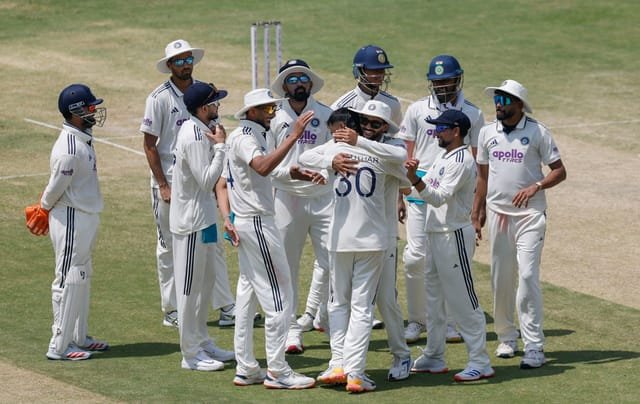
When a Cricket Match Becomes a History Lesson
Cricket has a way of producing records when you least expect them. But in the one-off Test between India and afghanistan at the Maharaja Yadavindra Singh International Cricket Stadium in Mullanpur in June 2026, the record did not sneak up quietly. It announced itself loudly, with a 564-run first innings, a forced follow-on, and a match wrapped up well before the fourth day had a chance to begin.
India won by an innings and 300 runs. That is their largest-ever winning margin in Test cricket. Full stop. Under the captaincy of Shubman Gill, the Indian side produced a performance so complete that it ticked every box: batting depth, spin variety, pace precision, sharp fielding, and an atmosphere of infectious team energy that the stump microphone was kind enough to capture for the rest of the world.
This article breaks down everything that mattered in this historic match, from the centuries and six-fors to the three viral moments that dominated fan conversations across the globe.
Match Snapshot: How India Built an Unassailable Position
India won the toss and batted first on a flat Mullanpur surface that offered little early assistance to bowlers. What followed was a batting display that combined authority at the top, aggression in the middle, and calm efficiency at the lower end of the order.
Captain Shubman Gill led from the front with a polished 126 off 177 balls. KL Rahul, a batter whose Test career has been riddled with questions about consistency, answered his critics in the most direct way possible with a composed 100 off 165 balls. Rishabh Pant added a characteristically entertaining 81 off 121 balls, and Washington Sundar finished with an unbeaten 52 off 68 before India declared at 564 for 8 after 127 overs.
Mohammad Saleem Safi was the one Afghan bowler who made India work, claiming a commendable six-wicket haul. It was the kind of individual effort that would have looked special in a winning side, but in context, it amounted to a consolation in a game already slipping away from Afghanistan before the first innings had even ended.
| Batter | Runs | Balls | Contribution |
|---|---|---|---|
| Shubman Gill (c) | 126 | 177 | Captain’s innings, set the tone |
| KL Rahul | 100 | 165 | Anchor role, second century partnership |
| Rishabh Pant | 81 | 121 | Middle-order acceleration |
| Washington Sundar | 52* | 68 | Lower-order firepower before declaration |
| India Total: 564/8 declared in 127 overs | |||
Afghanistan’s Batting Struggles: When the Mountain Is Too Steep
Chasing anything remotely competitive against a 564-run first innings total requires almost perfect batting. Afghanistan produced the opposite. In their first essay, they were bundled out for just 152, with Rahmat Shah’s courageous 60 off 135 balls standing as the lone meaningful contribution. The rest of the batting lineup crumbled against a varied Indian attack that mixed spin, pace, and sharp fielding to suffocating effect.
Debutant Manav Suthar was the standout bowler in the first innings with a six-wicket haul that earned him national attention overnight. India enforced the follow-on without hesitation, Afghanistan trailing by a monumental 412 runs.
The second innings told a similarly grim story. Afghanistan folded for 112, with opener Sediqullah Atal top-scoring on 42 off 80 balls as the only batter to cross 25 runs. Washington Sundar claimed four wickets and Kuldeep Yadav picked up three, as India completed victory with more than a day to spare.
| Innings | Score | Top Scorer | Key Bowler |
|---|---|---|---|
| Afghanistan 1st Innings | 152 all out | Rahmat Shah: 60 (135) | Manav Suthar: 6 wickets |
| Afghanistan 2nd Innings | 112 all out | Sediqullah Atal: 42 (80) | Washington Sundar: 4 wickets |
Manav Suthar: India’s Newest Test Match Hero
Every great Test win needs a hero, and in this one, the Player of the Match award went not to a century-maker or a veteran name, but to a debutant left-arm spinner who looked like he had been playing Test cricket for years.
Manav Suthar claimed seven wickets across the two Afghan innings, including six in the first. His control of length, ability to generate sharp turn, and calmness under pressure were qualities that selectors had clearly identified before handing him his debut cap. The result justified the faith completely.
What Suthar’s emergence signals for Indian cricket is particularly exciting. Ravichandran Ashwin’s retirement left a creative spin void in India’s home attack, one that required not just a replacement but a personality. Suthar showed enough in this match to suggest he can develop into exactly that kind of bowler, one who doesn’t just take wickets but creates pressure through sustained accuracy and variety.
Suthar’s debut is a reminder that India’s cricketing infrastructure continues to produce match-winning talent at a rate no other nation can currently match. Seven wickets on debut is not luck. It is preparation meeting opportunity on the grandest stage.
Three Moments That Went Viral and Why They Matter
Moment 3: Shubman Gill’s Low Slip Catch Shows Captaincy Is About More Than Tactics
There is a version of captaincy that lives entirely in tactical decisions: bowling changes, field placements, powerplay calls. And then there is the version that lives in moments of physical courage and athletic brilliance on the field. Shubman Gill delivered the second kind in Afghanistan’s second innings.
Washington Sundar, bowling from around the wicket in the 27th over, delivered a full ball on off stump. Afghan captain Hashmatullah Shahidi read the length poorly and played back. The ball gripped the surface, spun sharply, and took the outside edge. It flew low and fast toward first slip, where Gill was stationed.
What happened next was the kind of catch that divides fielders from elite fielders. Gill dived forward and plucked the ball out of thin air with both hands, barely inches off the ground. Shahidi, who had contributed just 5 off 10 balls, was on his way back to the pavilion before he had time to process what had happened.
For Gill as captain, the moment carried weight beyond the dismissal itself. Setting standards in the slip cordon is one of the most visible ways a leader can communicate his expectations to the rest of the unit. That catch said everything without a single word being spoken.
Moment 2: Prasidh Krishna’s 143 kph Nip-Backer Claims a Personal Milestone
Fast bowlers spend careers perfecting one delivery above all others: the one that moves late, hits the stumps, and leaves the batter with no answer. On Day 2 of this Test, Prasidh Krishna produced exactly that delivery to Afghan opener Sediqullah Atal, and it came with the added significance of being his first Test wicket on Indian soil.
Operating around the wicket to the left-hander, Krishna ran in and released a 143 kph pitched-up delivery aimed at off stump. The ball appeared harmless on release. Then it nipped back late, squeezed through the gap between bat and pad, and crashed into the stumps. Atal, on 12 off 27, was bowled before he could react.
The delivery was a masterclass in seam bowling on a surface not expected to offer much lateral movement. Krishna’s ability to extract that kind of response from an Indian pitch raises an interesting question for the national selectors: should India reconsider the assumption that home Tests demand a purely spin-heavy attack? Fast bowlers who can generate this kind of movement at pace are a genuine X-factor, even on subcontinental surfaces.
For Krishna personally, the milestone was a long time coming. His Test career has been interrupted by injuries and rotation, making moments like this one all the more satisfying when they arrive.
Moment 1: Rishabh Pant and Mohammed Siraj Deliver the Comedy of the Year
If you wanted to design a viral cricket moment from scratch, you would probably include Rishabh Pant, a stump microphone, and a misunderstanding. Day 3 of this Test delivered all three simultaneously, and the result was the funniest 20 seconds of cricket content the internet has seen in a long time.
The setup was simple. Pant, keeping wicket as the afternoon session wore on, called out to a fielder to shine the ball more carefully. Mohammed Siraj, who was nearby and possibly not paying full attention, assumed the instruction was directed at him. He immediately fired back, asserting firmly and with complete confidence that he was indeed shining the ball properly and had been doing so all along.
Pant’s response was calm, brief, and completely devastating: the comment was never meant for Siraj at all. It was for someone else entirely.
Siraj’s apology followed instantly, hilariously embarrassed, and the whole exchange was captured in perfect clarity by the stump microphone for the entire cricketing world to enjoy.
The clip spread across social media within hours. Cricket Twitter erupted. WhatsApp groups filled up. Reels were cut and reshared thousands of times. And Siraj, to his credit, took it all in stride with the kind of good humor that defines his relationship with Pant and the broader Indian dressing room.
What this moment actually reveals goes beyond comedy. A dressing room where players joke openly, communicate without ego, and laugh at themselves during a dominant Test win is a dressing room built on genuine trust. Pant’s energy behind the stumps is not just entertainment for fans. It is cultural glue that keeps a team mentally fresh during long, demanding Test match days.
Pant has always been more than a wicketkeeper-batter. He is the emotional heartbeat of this Indian Test side, the one player whose presence behind the stumps lifts everyone around him. In a match that was largely one-sided, his running commentary behind the wickets ensured that even the dullest session had something worth watching.
What This Result Means for Both Teams Going Forward
India: A New Captain Writes His First Chapter in Bold
Shubman Gill’s first major Test captaincy assignment ends with India’s biggest-ever victory in the format. That is a headline no amount of tactical nitpicking can diminish. But beyond the result, what should encourage Indian fans most is the collective nature of the performance.
This was not a Virat Kohli special or a Bumrah one-man show. It was a team performance in the truest sense, with contributions spread across batting, spin bowling, pace bowling, and fielding. A debutant spinner starred. A senior batter rediscovered his best form. A wicketkeeper-batter entertained and contributed with both gloves and bat. A pace bowler delivered a defining personal moment.
That kind of distributed excellence is the clearest sign of a well-structured, deeply talented squad operating with collective intent rather than individual ambition.
Afghanistan: Honest Reflection Required Alongside the Pride
Afghanistan’s cricket story is one of the most remarkable in modern sport. A nation that built its cricket program from almost nothing has produced genuine international talent and earned its place among the Test-playing nations. That achievement deserves full acknowledgment.
But a result like this one demands honest self-assessment. Outside of Rahmat Shah’s first innings resistance and Mohammad Saleem Safi’s six-wicket effort with the ball, Afghanistan struggled to compete consistently across three days against a quality Indian side. Their batting showed technical vulnerabilities against quality spin and late seam movement at pace. Those are not deficiencies that fix themselves overnight.
The encouraging signs are real. Safi’s haul showed genuine bowling talent. Individual players like Rahmat Shah demonstrated the temperament for Test cricket. But systemic batting development, particularly against high-class spin in subcontinental conditions, will be essential if Afghanistan are to close the gap in future Test encounters.
| Performance Area | India | Afghanistan |
|---|---|---|
| Batting Depth | Exceptional across all positions | Fragile beyond Rahmat Shah |
| Spin Bowling | World-class: Suthar, Sundar, Kuldeep | Outclassed in both innings |
| Pace Bowling | Sharp and impactful: Krishna’s nip-backer decisive | Safi showed individual quality |
| Fielding Standards | High: Gill’s catch set the tone | Below Test match requirements |
| Team Culture and Morale | Visibly strong: Pant’s energy contagious | Under pressure throughout |
What Comes Next: The ODI Series Awaits
Both sides do not have long to reflect on this result. India and Afghanistan are scheduled to meet in the 1st ODI in Dharamsala on Sunday, June 14, with the action getting underway at 1:30 PM IST. The ODI format will present a very different contest. Afghanistan’s white-ball pedigree, built around the brilliance of Rashid Khan and a squad packed with dangerous T20 cricketers, makes them a far more competitive proposition in shorter formats.
For India, the ODI series offers the opportunity to test squad depth and experiment with combinations ahead of future ICC events. For Afghanistan, it is a chance to reset, rebuild confidence, and remind the world of their genuine white-ball credentials after a bruising Test experience.
The 2026 Afghanistan tour of India is far from finished, and the best cricket of the series may still be ahead.
Conclusion: A Record Win, A Debut Star, and a Stump Mic for the Ages
India’s innings and 300-run victory over Afghanistan in the one-off Test at Mullanpur was historic in every measurable way. It was their biggest-ever Test win. It was completed inside three days. It featured centuries from the captain and a senior batter, a Player of the Match performance from a debutant spinner, a milestone wicket for a pace bowler, and a viral stump mic exchange that reminded everyone why Rishabh Pant is a national treasure.
Manav Suthar announced himself to the world. Shubman Gill answered the first big question of his captaincy tenure. KL Rahul reminded his critics that form is temporary but class is permanent. And Mohammed Siraj learned, the hard way and in front of a global audience, that Rishabh Pant’s instructions are not always meant for him.
Indian cricket’s new chapter under Gill has opened with the most emphatic of statements. The next page turns in Dharamsala on June 14.
For breaking news and live news updates, like us on Facebook or follow us on Twitter and Instagram. Read more on Latest Sports on thefoxdaily.com.

COMMENTS 0