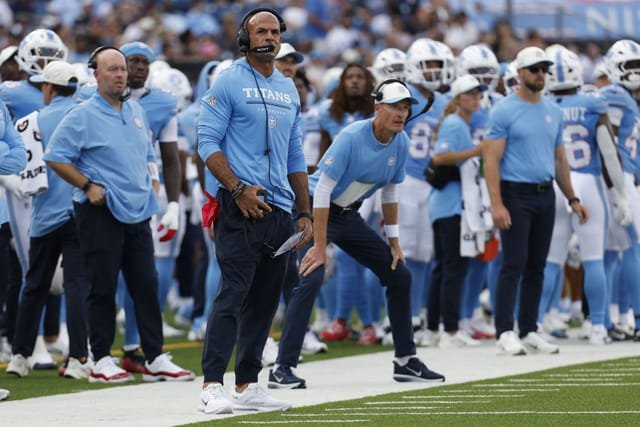
Jared Stillman Titans media ban has become a talking point around the Tennessee Titans after the franchise revoked the broadcaster and YouTuber’s credentials for practices, press conferences and media availability.
Stillman has now publicly addressed the decision, revealing that the Titans contacted him directly and explained that his role as a YouTuber no longer required regular media access. While he acknowledged the team’s reasoning, he made it clear that he disagreed with the decision.
The controversy has attracted additional attention because the credential decision came shortly after a tense exchange between Stillman and Titans quarterback Cam Ward. Stillman himself acknowledged that many people would connect the two events, although the Titans reportedly told him that the decision was not based on one particular incident.
With Tennessee preparing for the start of the 2026 NFL season, the dispute has created an unusual conversation about media access, team-controlled credentials, criticism of players and the relationship between NFL franchises and independent digital creators.
Why Did the Titans Ban Jared Stillman?
According to Stillman, the Titans informed him that his credentials were being revoked because his current work did not require media access from the organization.
The explanation focused largely on the nature of his current role. Stillman said he is not a daily beat writer and is no longer working in local radio, meaning he does not need to attend the team’s facilities every day to perform his work.
That distinction appears to have been central to the Titans’ argument.
Stillman had nevertheless maintained full credentials for years and had regularly attended events such as organized team activities and training camp. The sudden change therefore raised questions about why the organization chose this particular moment to change his access.
Stillman described the phone call as professional but uncomfortable and said the team told him that he was banned from practices, press conferences and media availability.
Stillman Says He Disagrees With the Decision
Although Stillman acknowledged that the Titans had a point regarding his current media role, he did not agree with the conclusion that he should lose access.
His position creates an interesting middle ground in the controversy. He did not claim that the Titans had no authority to determine who receives credentials. Instead, he questioned the decision itself and its broader implications.
The dispute therefore goes beyond whether Stillman attends every practice or press conference. It raises a larger question about how teams should handle journalists and independent creators who may not fit the traditional definition of an NFL reporter.
Was the Cam Ward Exchange the Reason?
The timing of the decision has made the Cam Ward interaction one of the central issues surrounding the story.
During a Titans press conference the previous Thursday, Stillman asked Ward for his assessment of his preseason performance. Ward then asked Stillman what he thought about the performance.
Stillman responded critically, saying that he did not believe Ward had played well.
Because the credential decision followed soon afterward, it was inevitable that observers would connect the two events.
Stillman acknowledged that assumption, but said the Titans specifically told him that the decision was not about a single incident.
Instead, according to Stillman’s account, the organization described it as a decision based on the totality of his coverage.
That distinction is important because it changes the controversy from a potential reaction to one critical question into a disagreement over Stillman’s broader approach to covering the franchise.
The Titans’ Explanation Leaves Room for Debate
If the Titans’ explanation is taken at face value, the organization believes Stillman’s current position does not justify continued access. That is a legitimate consideration for a professional sports franchise managing limited media-access opportunities.
However, the timing naturally creates another layer of scrutiny.
When a credential is revoked shortly after a reporter publicly criticizes a team’s quarterback, outside observers can reasonably question whether the events are connected even if the organization says otherwise.
That does not establish that the Titans acted because of Stillman’s comments. It simply explains why the timing has generated so much discussion.
The distinction between what is known and what is assumed is especially important in this case.
| Issue | What has been reported | Why it matters |
|---|---|---|
| Media credentials | Stillman says the Titans revoked his access | Limits his access to team activities |
| Team explanation | The decision was reportedly based on his overall coverage | Suggests it was not officially tied to one incident |
| Cam Ward exchange | Stillman criticized Ward’s preseason performance | The timing has fueled speculation |
| Stillman’s response | He understands the team’s position but disagrees | Shows the dispute remains unresolved |
NFL Reporter Easton Freeze Questions the Timing
NFL reporter Easton Freeze also weighed in on the controversy, offering a perspective that separated two different questions: whether the Titans had reasons to be unhappy with Stillman’s coverage and whether revoking his credentials at this moment was a wise decision.
Freeze argued that the Titans may have a strong argument for being frustrated with Stillman’s coverage but a much weaker argument when it comes to the timing of the credential decision.
That is an important distinction.
A team can dislike the way it is being covered without necessarily having a strong public-relations case for removing media access immediately after a highly visible disagreement with its quarterback.
The optics can therefore become almost as important as the underlying decision.
Why Timing Matters So Much in Sports Media
Professional sports teams operate in an environment where every decision can quickly become part of the public conversation.
Removing a media credential is not necessarily unusual. Teams control access to their facilities and must determine which media members receive opportunities to attend practices and interview players.
But timing can shape how that decision is interpreted.
If an organization removes access after a long period of disagreement, observers may view the move as the result of an accumulated relationship problem. If it happens immediately after criticism of a prominent player, people may interpret the same decision differently.
That is why the Titans’ explanation that the decision was based on Stillman’s overall coverage is particularly relevant.
The Changing Role of NFL Media
The Stillman controversy also reflects the changing nature of sports journalism.
Traditional NFL coverage was once dominated by newspaper reporters, television networks, radio broadcasters and established beat writers. Today, podcasts, YouTube channels, independent newsletters and social media personalities play a much larger role.
That creates new questions for teams.
Should media credentials depend on whether someone works for a traditional news organization? Should independent creators receive the same access if they regularly produce coverage of a franchise? And how should teams distinguish legitimate criticism from content designed primarily to generate attention?
There is no universal answer.
Each organization can establish its own credentialing policies, but disputes like this demonstrate how difficult it can be to balance access, criticism and organizational control in the digital era.
Stillman’s Relationship With the Titans Goes Back Years
The controversy is also notable because Stillman was not a newcomer attempting to gain access for the first time.
He had held full credentials for years and regularly attended Titans activities, including OTAs and training camp.
That history makes the decision more significant than a routine denial of access to a new media personality.
The relationship had already existed for a considerable period, which means the organization’s reference to the overall nature of his coverage suggests that the decision may have followed a broader disagreement rather than being an isolated response.
Stillman has also acknowledged that he is no longer working in local radio and is not a daily beat reporter. That makes his current role different from the traditional media members who are present at the team’s facility every day.
What the Dispute Means for Cam Ward
Cam Ward is at the center of the controversy largely because of the timing, rather than because he has been reported to have played a direct role in the credential decision.
The young quarterback is preparing for the 2026 season and will naturally face significant scrutiny as the Titans begin a new campaign.
Quarterbacks are routinely asked to evaluate their own performances, and journalists are equally entitled to offer critical assessments of what they see on the field.
The challenge comes when criticism becomes part of a broader relationship between players, reporters and organizations.
For Ward, the best way to move the conversation forward will likely be through his performances once meaningful games begin. The preseason exchange may remain part of the story surrounding the Titans, but regular-season results will quickly become the primary focus.
Tennessee Titans Enter the 2026 Season Under Attention
The Titans are scheduled to begin their 2026 season against the New York Jets on September 13.
That gives the organization limited time before attention shifts from training camp controversies to actual football.
The credential dispute, however, demonstrates that the Titans are already under a microscope before the regular season begins. The team’s performance, Ward’s development and the organization’s handling of media relationships could all receive additional scrutiny because of the controversy.
For the Titans, the most effective response may ultimately be straightforward: concentrate on football and allow the season to provide the larger story.
Could the Titans’ Decision Affect Other Independent Creators?
The case could also become relevant beyond Stillman himself.
Independent sports creators increasingly cover NFL teams without working for newspapers or traditional broadcasters. Their audiences can be substantial, but their role does not always fit established media-access models.
If teams increasingly evaluate credentials based on the type of coverage an individual produces, more disputes could emerge over where the line between journalism, commentary and independent content should be drawn.
At the same time, organizations have a legitimate interest in managing access to their facilities. The difficult part is establishing transparent standards that are applied consistently.
What Happens Next in the Jared Stillman Controversy?
For now, Stillman appears set to continue covering the Titans without the same level of direct access he previously enjoyed.
The most important unresolved question is whether the organization will eventually restore his credentials or maintain the current decision throughout the season.
The situation could also fade if the Titans perform well and the conversation shifts toward football. Alternatively, further developments involving Stillman, Ward or the team’s media policies could keep the issue alive.
Much will depend on whether the dispute remains an isolated credentialing decision or becomes part of a larger conversation about the Titans’ relationship with independent media.
Jared Stillman Titans Media Ban: The Bigger Picture
The Jared Stillman Titans media ban is ultimately about more than one reporter and one team. It highlights the complicated relationship between NFL organizations and a rapidly changing sports-media environment.
The Titans say the decision was based on the overall nature of Stillman’s coverage and his current role rather than one specific incident. Stillman accepts that the organization has a point about his reduced need for traditional media access but disagrees with the decision.
The Cam Ward exchange has inevitably become part of the discussion because of its timing, but the available accounts do not establish that it directly caused the credential revocation.
That distinction will remain important as the story develops.
Conclusion: A Media Dispute That Could Outlast the Headlines
Jared Stillman’s dispute with the Tennessee Titans has created an unusual storyline just days before the beginning of the 2026 NFL season. The organization has defended its position by pointing to Stillman’s current role and the broader nature of his coverage, while Stillman has acknowledged the explanation but made clear that he disagrees.
The Cam Ward interaction has intensified interest because of its timing, but it should not automatically be treated as the confirmed reason behind the decision.
The bigger issue is the evolving relationship between NFL teams and independent sports media. As podcasts, YouTube channels and digital creators become increasingly influential, franchises will continue to face difficult questions about access, criticism and credentialing.
For the Titans, the next chapter will begin on the field when they face the New York Jets on September 13. For Stillman, the challenge will be finding ways to continue covering the franchise without the access he previously had.
For breaking news and live news updates, like us on Facebook or follow us on Twitter and Instagram. Read more on Latest NFL on thefoxdaily.com.

COMMENTS 0