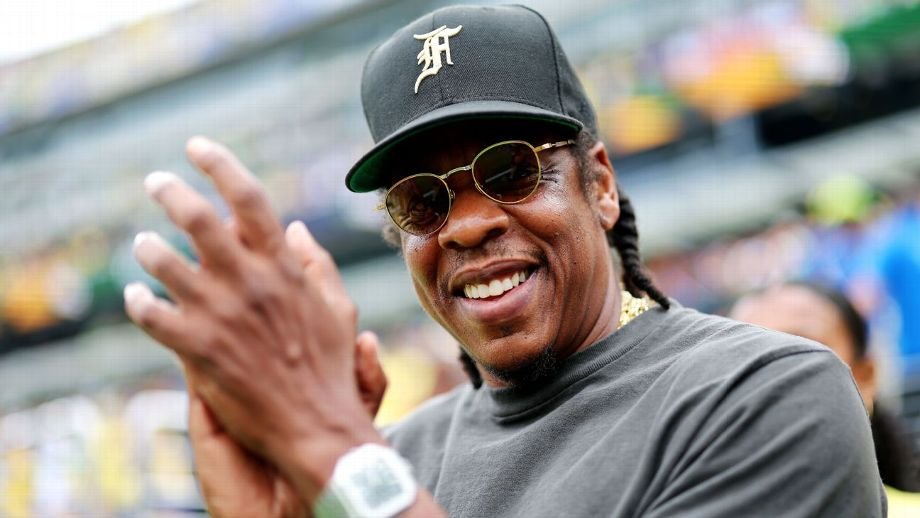
Jay-Z‘s reported journey to the Super Bowl LXI halftime show represents a striking turn in the story of an artist who once famously rapped about turning down the NFL’s biggest stage. From his earlier declarations of independence to his growing involvement in the league’s entertainment strategy, the Hip-Hop icon’s relationship with football has evolved into something far more complicated than a simple yes or no.
The headline moment places Jay-Z at the center of the Super Bowl LXI halftime show at SoFi Stadium in Inglewood, California. For an artist whose career has blended music, business, sports, and cultural influence, the reported appearance would represent another major milestone. It would also invite fans to revisit the clues that appeared throughout his recent career, from surprise stadium performances with Beyoncé to a return to solo headlining and a series of celebrations honoring his most influential albums.
Jay-Z’s connection to the NFL extends well beyond the stage. Roc Nation, the entertainment company he founded in 2008, entered a partnership with the league in August 2019 to help shape its live music entertainment strategy. Since then, the company has played a significant role in the Super Bowl halftime show, beginning with the performance by Shakira and Jennifer Lopez at Super Bowl LIV in 2020.
Now, the prospect of Jay-Z moving from the person helping shape the halftime spectacle to the artist performing at its center creates a compelling narrative. What once sounded like a firm rejection of the NFL’s biggest musical platform may have left more room for a future collaboration than fans initially realized.
Looking back at his recent appearances, headline shows, career anniversaries, and stadium visits, several moments take on a different meaning. None independently proves that a Super Bowl performance was planned, but together they provide an intriguing timeline of an artist whose relationship with stadiums and live performance has continued to evolve.
Jay-Z and the Super Bowl: From Rejection to a New Chapter
Jay-Z’s apparent change of direction is especially interesting because of his 2018 lyrics in the song “Apes—,” in which he rapped about turning down the Super Bowl. The lyrics presented an image of an artist who believed he could maintain his independence rather than depend on an invitation from the NFL.
“I said no to the Super Bowl: You need me, I don’t need you. Every night we in the end zone, tell the NFL we in stadiums too.”
The words became part of a broader conversation about the relationship between artists, major entertainment platforms, and the institutions that control access to some of the world’s biggest audiences. At the time, the lyrics could be interpreted as a declaration that Jay-Z’s career did not depend on the NFL’s approval.
His subsequent business relationship with the league, however, complicated that narrative. In August 2019, Roc Nation entered a partnership with the NFL, with Jay-Z’s company helping shape the league’s live music entertainment strategy. The arrangement gave him a role in the production and direction of one of the most visible musical events in American entertainment.
That partnership also created a distinction between refusing to perform at the Super Bowl and choosing to work with the organization behind it. An artist can criticize an institution, negotiate the terms of a relationship, and eventually decide to participate on different terms. A previous rejection does not necessarily rule out a future collaboration.
The reported Super Bowl LXI development therefore raises a natural question: Was Jay-Z always moving toward this moment, or did his priorities change as his relationship with the NFL evolved?
There is no clear evidence in the supplied timeline that every recent appearance was planned as preparation for a halftime performance. Nevertheless, the combination of his work with Roc Nation, his return to major live shows, and his appearances at prominent stadiums provides plenty of material for fans looking back at the possible clues.
Roc Nation’s NFL Partnership Put Jay-Z Behind the Scenes
To understand why Jay-Z’s reported Super Bowl appearance would carry such significance, it is important to consider the work Roc Nation has done with the NFL since 2019.
Founded by Jay-Z in 2008, Roc Nation developed into a broader entertainment company with interests spanning music, artist management, and other areas of the industry. Its partnership with the NFL expanded that influence into the planning of live music entertainment, including the league’s internationally recognized halftime show.
The arrangement put Roc Nation in a position to help influence the musical direction of the event. The Super Bowl halftime show is not simply a concert inserted into a football game. It is a large-scale production that combines music, choreography, staging, visual storytelling, and an audience that extends far beyond regular football fans.
Roc Nation’s involvement began with Super Bowl LIV in 2020, when Shakira and Jennifer Lopez delivered the halftime performance. Their show demonstrated the scale and cultural reach of the event, bringing together two major international artists for a performance designed to appeal to a broad audience.
Since then, the halftime stage has continued to feature artists with substantial cultural influence, including Kendrick Lamar and Bad Bunny. The selection of performers has helped keep the show at the center of conversations about music, celebrity, and popular culture.
If Jay-Z takes the stage himself, the move would represent a different kind of involvement. Rather than influencing the show primarily through his business and strategic role, he would become the central performer in a production his company has helped shape.
That transition would also illustrate the unusual position Jay-Z occupies in entertainment. He is simultaneously a recording artist with an extensive catalog, a businessman with significant industry influence, and a figure whose decisions can affect how music intersects with sports and popular culture.
Beyoncé’s Cowboy Carter Tour Offered Stadium Experience
One of the most intriguing possible clues came in 2025, when Jay-Z made surprise appearances during Beyoncé’s Cowboy Carter Tour. The performances took place at major stadium venues in Paris, Atlanta, and Las Vegas, bringing the rapper back into the spotlight alongside his wife.
The appearances were notable because Jay-Z does not routinely embark on extended solo touring schedules. Surprise performances with Beyoncé offered audiences a chance to see the couple share the stage while allowing Jay-Z to perform in front of large stadium crowds.
His June 22 appearance at Mercedes-Benz Stadium in Atlanta was particularly memorable. The show marked the couple’s first live performance together in seven years, according to the supplied account, and included their 2003 hit “Crazy in Love.”
The song remains one of the defining collaborations of their careers. Its combination of Beyoncé’s powerful vocals and Jay-Z’s recognizable rap verse made it an enduring part of their shared musical history.
Jay-Z also made a surprise appearance at the July 26 finale of the tour at Allegiant Stadium in Las Vegas. The performance added another major stadium setting to a series of appearances that brought him back before large live audiences.
In isolation, these guest appearances do not establish that Jay-Z was preparing for the Super Bowl halftime show. Artists frequently join collaborators onstage for special occasions, and a stadium performance does not automatically signal plans for another major event.
Still, the appearances look interesting in retrospect. They gave Jay-Z recent experience performing in large venues, reintroduced his music to audiences attending Beyoncé’s shows, and demonstrated that he remained comfortable appearing onstage before a stadium-sized crowd.
If the reported Super Bowl performance proceeds as described, those moments may be remembered as part of the wider lead-up to his return to one of the biggest stages in live entertainment.
Philadelphia Marked Jay-Z’s Return to Solo Headlining
Another significant moment arrived in Philadelphia, where Jay-Z returned to solo headlining with an appearance at the Roots Picnic. Announced on March 17, the performance included an invite-only preshow at The Foundry the night before his scheduled set.
The May 30 performance marked his first solo headlining show since at least 2019, according to the supplied material. For an artist with a catalog spanning decades, the return offered an opportunity to reconnect directly with fans and revisit songs from different stages of his career.
Philadelphia also carries considerable significance in Jay-Z’s history as a music entrepreneur. In 2012, he launched the Made in America festival in the city, transforming Labor Day weekend on the Benjamin Franklin Parkway into a major destination for live music.
Made in America brought together established stars and emerging performers across genres, reinforcing Jay-Z’s interest in creating large-scale events that combined music, culture, and a sense of occasion. Organizing a festival requires more than selecting performers; it involves coordinating production, managing schedules, and creating an experience that works for audiences on a much larger scale.
Those skills overlap with some of the challenges involved in producing a major halftime show. Although a festival and a Super Bowl performance operate under different conditions, both depend on careful planning, strong musical direction, and the ability to bring multiple elements together into a cohesive live experience.
Jay-Z’s Roots Picnic appearance also featured a reunion with longtime collaborators associated with Philadelphia’s hip-hop scene, including Beanie Sigel, Freeway, Peedi Crakk, Memphis Bleek, and Young Gunz. The appearance connected his return to solo headlining with the relationships and musical history that helped shape his career.
He also debuted a different hairstyle, replacing his freeform locs with an afro that honored his father, who often wore a similar style. The change attracted attention from fans familiar with Jay-Z’s appearance and the stories behind his personal choices.
Whether the performance was connected to any future Super Bowl plans remains unclear. What it did establish was that Jay-Z was returning to major live appearances, reconnecting with longtime collaborators, and revisiting a career that has consistently moved between artistic expression and business leadership.
Jay-Z’s Album Anniversaries Created Another Major Stage
Jay-Z’s reported path toward the Super Bowl also coincides with important anniversaries in his recording career. In 2026, his debut album, Reasonable Doubt, marks its 30th anniversary, while The Blueprint reaches its 25th anniversary.
Both albums occupy important places in hip-hop history and in Jay-Z’s artistic development. Reasonable Doubt, released in 1996, introduced listeners to the detailed storytelling, ambitious perspective, and confident delivery that would become central to his identity as a rapper.
The Blueprint, released in 2001, further established his influence, combining memorable production with a collection of songs that helped define his place among the leading artists of his generation.
To celebrate the anniversaries, Jay-Z and Roc Nation announced a three-night event at Yankee Stadium on March 18. The shows provided an opportunity to revisit the albums in a venue closely associated with New York, the city that played a central role in his rise.
By July 10, Jay-Z had taken the stage for the first of three sold-out hometown performances. The shows gave fans an opportunity to celebrate the music that established his reputation and the catalog that has sustained his influence across multiple decades.
The concerts also highlighted the continuing value of Jay-Z’s older material. While artists often use anniversaries to revisit their most celebrated releases, Jay-Z’s catalog has particular relevance because many of its songs remain recognizable beyond their original release periods.
That recognition would be valuable at a major sporting event such as the Super Bowl. A halftime show must work for longtime fans as well as viewers who may know only a handful of songs. An artist with a deep catalog can build a performance around familiar records while creating moments that reward listeners who have followed the music for years.
Although the anniversary shows do not confirm the content or direction of a potential halftime set, they place Jay-Z’s music back in the spotlight at a time when his live performances are drawing renewed attention.
The Haircut That Sparked Fresh Speculation
For Jay-Z’s longtime fans, even a change in hairstyle can prompt speculation about what might come next. His transition from freeform locs to a short Caesar cut during the anniversary celebrations quickly became part of the conversation surrounding his recent public appearances.
Jay-Z has previously discussed the relationship between his hairstyle and his creative process. In a 2006 interview with GQ, he reportedly said that he generally did not cut his hair while recording. That remark has given fans a reason to pay attention whenever he changes his look, particularly when the change coincides with other developments in his career.
During a 2023 interview with Gayle King on CBS Mornings, Jay-Z also discussed the possibility of cutting his hair, acknowledging that he was considering what to do with it. Such comments helped establish the haircut as a topic of public interest rather than simply a routine change in appearance.
Earlier in 2026, Beyoncé shared a video titled “The Blueprint” in which she explained that Jay-Z initially grew his hair to support their daughter Blue Ivy when she was struggling with confidence about her own hair. The story added a personal dimension to a hairstyle that fans had long associated with Jay-Z’s public image.
During the Yankee Stadium performance on July 11, Pharrell Williams drew attention to Jay-Z’s new look with a playful remark:
“They poked the bear and now the bear cut his hair.”
The line quickly became a memorable moment from the show, linking Jay-Z’s appearance to the broader excitement surrounding his return to the stage.
Of course, a haircut is not reliable evidence of a forthcoming album, tour, or halftime performance. Jay-Z’s appearance can change for personal reasons, and fans may read significance into details that have no direct connection to his professional plans.
Nevertheless, the combination of his renewed live activity, album anniversaries, and fresh appearance helped create a sense that another chapter was taking shape. In retrospect, the haircut became one more detail fans could add to a growing list of possible clues.
From Yankee Stadium to SoFi Stadium
Perhaps the most striking detail in the supplied timeline is the connection between Jay-Z’s anniversary performances and his reported appearance at SoFi Stadium. After announcing international dates for the anniversary celebrations, including September shows in London and Paris, Jay-Z was scheduled to perform at SoFi Stadium on October 23.
SoFi Stadium is the home of the Los Angeles Rams and Los Angeles Chargers and is also the venue identified for Super Bowl LXI in the supplied material. Its connection to both the anniversary performance and the reported halftime show gives the stadium an obvious place in the broader narrative.
Jay-Z’s October appearance would provide another opportunity to perform in a venue associated with major sporting and entertainment events. Stadium concerts require artists and production teams to adapt their shows to enormous spaces, where sound, staging, lighting, and audience engagement must work together to create a unified experience.
A Super Bowl halftime show presents additional challenges. The performance takes place within a tightly controlled broadcast window, and the production must be assembled and removed quickly to accommodate the game. Every element, from the song selection to the staging, must be designed around those constraints.
Jay-Z’s experience with Roc Nation’s NFL partnership would give him familiarity with the demands of the event from the business side. His extensive live-performance history would also be relevant if he were to headline the show himself.
Still, the October 23 concert should not be treated as proof that the earlier dates were planned as a direct lead-up to the Super Bowl. The shared venue is an intriguing connection, but the supplied information does not establish that the concert was organized as a rehearsal or promotional event for the halftime show.
What makes the detail compelling is how neatly it fits into the larger story: a rapper who once said he did not need the NFL has spent years working with the league through Roc Nation, returned to major live performances, celebrated his most influential albums, and appeared at stadiums that symbolize the scale of his career.
Could Jay-Z’s Super Bowl Halftime Show Become a Career-Defining Moment?
If Jay-Z headlines the Super Bowl LXI halftime show as described, the performance would bring several aspects of his career together in a single event. It would unite his legacy as a recording artist with his work as an entrepreneur and his role in shaping the NFL’s live music strategy.
His catalog offers a wide range of possibilities for a performance designed to reach a broad audience. Across decades of music, Jay-Z has released songs that helped establish his reputation in hip-hop and collaborations that introduced his work to listeners beyond the genre’s traditional audience.
The challenge would be selecting a set that balances familiarity with artistic ambition. A Super Bowl audience includes longtime fans, casual listeners, sports viewers, and people watching primarily for the halftime entertainment. A successful performance must communicate quickly, using recognizable music and strong staging to create a memorable experience within a limited period.
Jay-Z’s extensive experience in music and entertainment would be relevant to that challenge. His work with Roc Nation has given him a role in the broader development of major live events, while his own performances have demonstrated his connection to audiences across different stages of his career.
There is also a symbolic dimension to the reported appearance. The artist who once used his lyrics to declare independence from the NFL would be taking center stage at the league’s most visible annual event. Rather than necessarily contradicting his earlier position, the development could illustrate how relationships change when artists gain influence and have a different role in shaping the institutions with which they work.
The significance would extend beyond the performance itself. It would offer a clear example of how a major artist can move between music, business, and live entertainment without abandoning the identity that made him influential in the first place.
Were the Clues There All Along?
Looking back, several moments from Jay-Z’s recent career now appear connected to the possibility of a Super Bowl halftime appearance. His work with Roc Nation placed him behind the scenes of the NFL’s musical productions. His surprise appearances on Beyoncé’s Cowboy Carter Tour brought him back to stadium stages. His Roots Picnic performance marked a return to solo headlining, while the anniversaries of Reasonable Doubt and The Blueprint gave him a reason to celebrate the music that built his legacy.
The haircut, the reunion with longtime collaborators, and the October performance at SoFi Stadium add further details to the story. Each moment attracted attention for its own reasons, but together they create a timeline that fans can revisit through the lens of the reported Super Bowl development.
It is important, however, to distinguish between a compelling retrospective narrative and proof of advance planning. The supplied material does not establish that Jay-Z’s stadium appearances, hairstyle change, or anniversary shows were deliberately arranged as clues to a halftime announcement. Their significance may be partly the result of how the events appear when viewed together after the fact.
Even so, the broader trajectory is clear: Jay-Z’s relationship with the NFL has changed considerably since the lyrics that first made his position famous. Through Roc Nation, he has become involved in shaping the league’s entertainment strategy, creating a relationship that goes beyond the question of whether he would ever perform at the Super Bowl.
Conclusion
Jay-Z’s reported road to the Super Bowl LXI halftime show is a story about changing relationships, a deep musical catalog, and the intersection of artistic influence with business power. What once sounded like a definitive rejection of the NFL’s biggest stage now appears more complicated in light of his years of work with the league through Roc Nation.
His stadium appearances with Beyoncé, his return to solo headlining at the Roots Picnic, the celebrations surrounding Reasonable Doubt and The Blueprint, and his reported performance at SoFi Stadium all contribute to the narrative. None independently confirms that a Super Bowl appearance was planned from the beginning, but each helps explain why the possibility feels like a natural development in his career.
Ultimately, the most significant clue may not be a haircut, a stadium concert, or a particular lyric. It may be Jay-Z’s evolving role in the entertainment industry itself. By helping shape the Super Bowl halftime show through Roc Nation, he has already become part of the event’s story. Taking the stage himself would represent the next step in that relationship, bringing the businessman, cultural figure, and hip-hop artist together on one of the world’s biggest entertainment platforms.
For breaking news and live news updates, like us on Facebook or follow us on Twitter and Instagram. Read more on Latest NFL on thefoxdaily.com.





COMMENTS 0