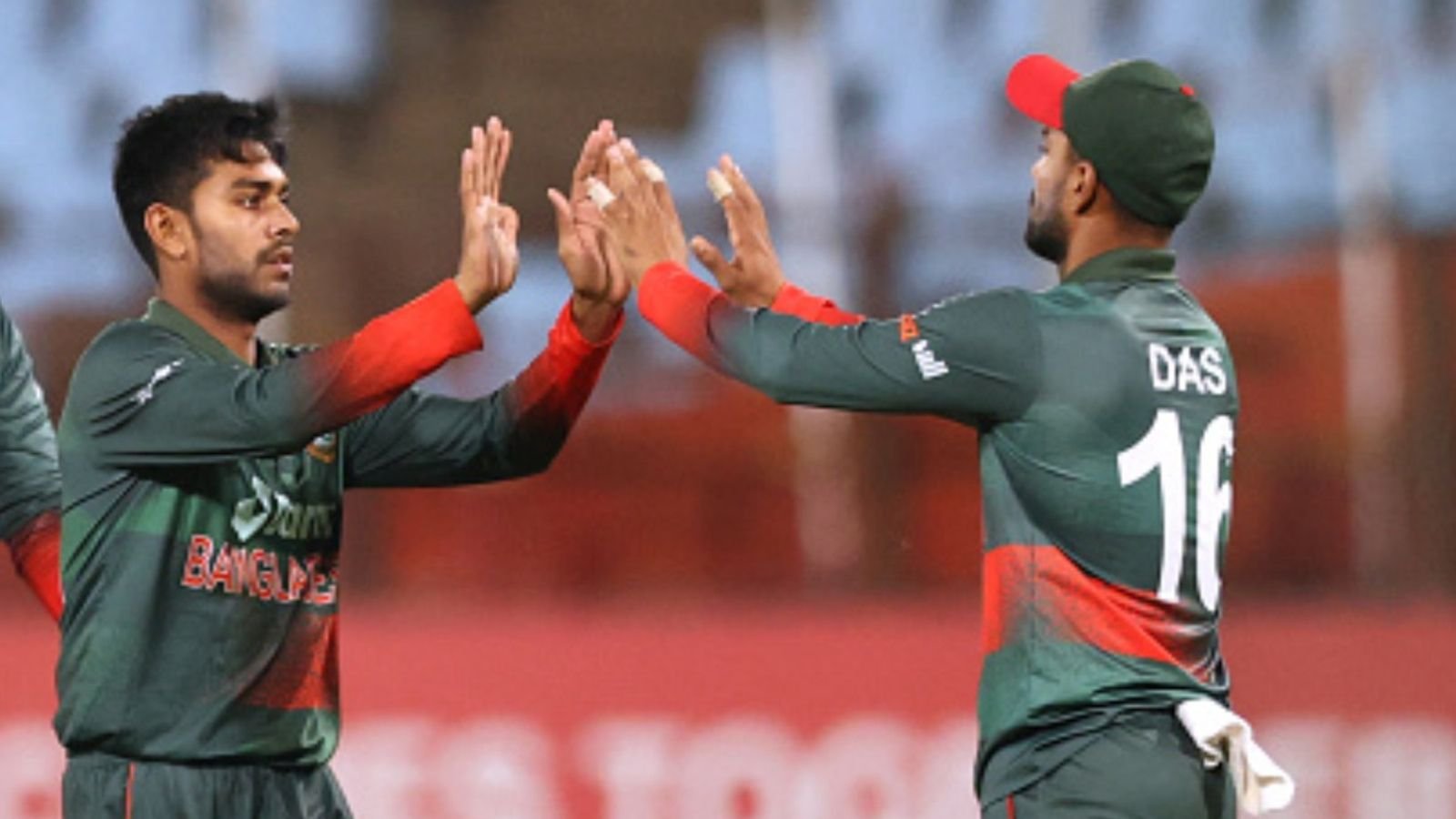
The Litton Das Bangladesh ODI captain appointment marks one of the biggest leadership decisions in Bangladesh cricket ahead of the 2027 ICC Cricket World Cup. The Bangladesh Cricket Board (BCB) has handed the experienced wicketkeeper-batter the responsibility of leading the national side in One-Day Internationals, replacing all-rounder Mehidy Hasan Miraz after less than two years in charge.
The decision goes beyond a simple captaincy change. It reflects Bangladesh’s long-term vision of creating consistency across its white-ball teams by placing both the ODI and T20I sides under one leader. With less than two years remaining before the next 50-over World Cup, the BCB is prioritizing stability, tactical continuity, and a unified playing philosophy as Bangladesh aims to establish itself among cricket’s strongest limited-overs nations.
Litton Das now faces perhaps the biggest challenge of his international career—transforming a talented but inconsistent Bangladesh side into genuine World Cup contenders.
Why Bangladesh Appointed Litton Das as ODI Captain
The Bangladesh Cricket Board’s decision is based on more than recent results. While Mehidy Hasan Miraz guided the team through several memorable victories, the board has chosen to simplify its leadership structure by giving one captain responsibility for both white-ball formats.
Modern international cricket demands consistency in planning, squad selection, tactical preparation, and player development. By appointing Litton Das as captain of both the ODI and T20I teams, Bangladesh hopes to build a clear long-term identity instead of operating under separate leadership groups.
The move also allows players to adapt to one leadership style across bilateral series and major ICC tournaments.
Bangladesh’s New Leadership Structure
| Format | Captain | Vice-Captain |
|---|---|---|
| Test Cricket | Nazmul Hossain Shanto | As Announced by BCB |
| One-Day Internationals | Litton Das | Towhid Hridoy |
| T20 Internationals | Litton Das | As Announced by BCB |
Who Is Litton Das?
Litton Das has long been regarded as one of Bangladesh’s most technically gifted batters. Known for elegant stroke play, quick reflexes behind the stumps, and calm decision-making under pressure, he has become a key figure in Bangladesh’s batting lineup across formats.
Over the years, Litton has evolved from a naturally talented batter into one of the team’s senior leaders. His experience across home and overseas conditions makes him one of the most qualified candidates to guide Bangladesh through the next World Cup cycle.
Beyond his batting ability, teammates frequently praise his composed approach and tactical understanding of the game—qualities essential for modern captaincy.
Why the Change Came as a Surprise
The leadership transition surprised many observers because Bangladesh had recently enjoyed impressive ODI success, including notable home series victories against strong opposition.
Mehidy Hasan Miraz had helped build a competitive unit capable of challenging top teams in familiar conditions. However, Bangladesh continued to struggle away from home, highlighting the need for further improvement before the 2027 World Cup.
The BCB appears to have concluded that making a leadership change now provides enough time for the new captain to establish his methods before the next global tournament.
Mehidy Hasan Miraz’s Captaincy Record
Although his tenure has come to an end, Mehidy Hasan Miraz leaves behind several positive contributions.
During his time as captain, Bangladesh strengthened its reputation as a difficult team to beat in home conditions. The side produced disciplined performances, particularly with the ball, and continued developing younger players.
However, performances outside Bangladesh remained inconsistent. Success in overseas conditions is often considered one of the defining characteristics of elite international teams, and improving in this area is expected to become one of Litton Das’ primary objectives.
Litton Das’ Previous Experience as ODI Captain
Litton Das is not entering unfamiliar territory.
He previously captained Bangladesh in One-Day Internationals when regular skipper Tamim Iqbal was unavailable due to injury. During that period, Bangladesh recorded a memorable ODI series victory over India, one of the country’s most celebrated achievements in the format.
Although the sample size was relatively small, the experience provided Litton valuable insight into tactical decision-making, squad management, and leadership under pressure.
That earlier success likely strengthened the selectors’ confidence in handing him the role permanently.
Why Dual White-Ball Captaincy Can Benefit Bangladesh
Several successful international teams have preferred one captain across limited-overs cricket.
The advantages include:
- Consistent tactical planning.
- Similar playing philosophy across formats.
- Improved communication between coaching staff and players.
- Better workload management.
- Clearer long-term squad development.
- Smoother preparation for ICC tournaments.
With ODI and T20 cricket increasingly sharing similar strategic elements, unified leadership can simplify decision-making throughout the cricket calendar.
The Road to the 2027 ICC Cricket World Cup
The appointment comes at a crucial stage of Bangladesh’s World Cup preparations.
The next two seasons will feature bilateral ODI series, regional tournaments, and qualification pathways that will help shape Bangladesh’s final World Cup squad.
For Litton Das, every series now becomes an opportunity to refine combinations, identify future match-winners, and develop a flexible game plan capable of succeeding in different conditions.
Unlike short-term captaincy appointments, this decision provides valuable time to build a settled team before cricket’s biggest 50-over event.
Challenges Facing Litton Das
Taking over as captain brings enormous responsibility.
Litton must balance several priorities simultaneously:
- Maintaining his own batting consistency.
- Improving Bangladesh’s overseas performances.
- Developing young players.
- Managing experienced senior cricketers.
- Building tactical flexibility against stronger opponents.
- Preparing the team for high-pressure ICC tournaments.
Successfully handling these responsibilities will largely determine how Bangladesh performs over the next World Cup cycle.
What Bangladesh Needs to Improve Before 2027
While Bangladesh has become increasingly competitive at home, consistent success on foreign pitches remains the next major step.
Improvement areas include:
- Top-order consistency.
- Middle-order finishing ability.
- Death-over bowling.
- Fielding standards.
- Adaptability across different conditions.
- Winning crucial away series.
Addressing these areas will require not only tactical planning but also strong leadership capable of building confidence within the squad.
How Litton Das’ Leadership Style Could Influence the Team
Litton Das is generally regarded as a calm and analytical cricketer rather than an emotional leader.
Modern captaincy increasingly relies on communication, data analysis, and strategic adaptability rather than aggressive on-field behavior.
His composed personality could help Bangladesh remain disciplined during pressure situations, particularly in closely contested ODI matches where decision-making often determines the outcome.
Comparison: Bangladesh’s White-Ball Leadership Evolution
Over the past decade, Bangladesh has transitioned through several influential captains, each bringing different strengths.
From experienced leaders who built the team’s competitive identity to younger captains focused on modernization, each phase has contributed to Bangladesh’s development as a respected international side.
Litton Das now inherits a team with significantly higher expectations than previous generations. The challenge is no longer simply competing with elite teams—it is consistently defeating them.
Future Outlook
The appointment of Litton Das represents a long-term investment rather than a reaction to recent results. The Bangladesh Cricket Board has clearly prioritized continuity ahead of the 2027 ICC Cricket World Cup, giving its new captain sufficient time to establish his leadership philosophy.
If Bangladesh can translate its home dominance into consistent overseas success, the team could emerge as one of the most dangerous dark horses at the next World Cup.
Much will depend on Litton’s ability to unite an experienced core with emerging young talent while maintaining strong individual performances with the bat.
Conclusion
Litton Das’ appointment as Bangladesh’s ODI captain signals the beginning of an important new chapter in the country’s white-ball cricket journey. By unifying the ODI and T20I captaincy under one experienced leader, the Bangladesh Cricket Board has emphasized long-term planning over short-term adjustments.
Replacing Mehidy Hasan Miraz was not simply about changing captains—it was about creating a stable leadership structure capable of guiding Bangladesh toward sustained success on the international stage. With the 2027 ICC Cricket World Cup approaching, Litton Das now has the opportunity to shape the future of Bangladesh cricket and lead one of the nation’s most talented squads into its next major era.
For breaking news and live news updates, like us on Facebook or follow us on Twitter and Instagram. Read more on Latest Sports on thefoxdaily.com.






COMMENTS 0