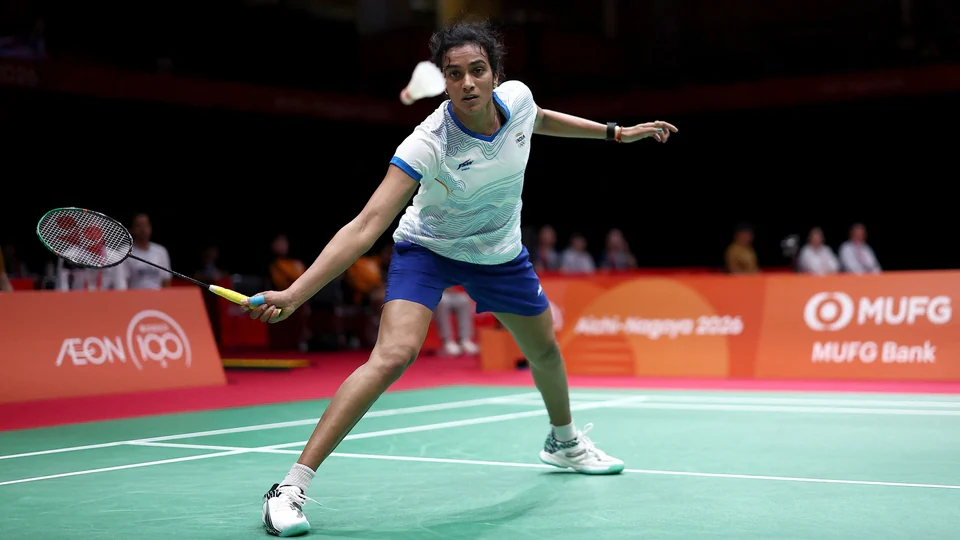
PV Sindhu’s 2026 season has marked a significant revival in her badminton career. The Indian shuttler has reached three finals, won two titles and defeated several top-ranked opponents, helping her return to world No. 6 for the first time since December 2022. After years of dealing with inconsistent results and physical challenges, the former world champion has found renewed confidence, sharper tactics and a more balanced approach to competition.
Her progress has also secured her a place in the prestigious BWF World Tour Finals, a tournament she won in 2018. It will be her first appearance at the season-ending event in five years, underlining how far she has come during a season built on patience, discipline and careful planning.
At 31, Sindhu is approaching the demands of professional badminton differently from how she did in her early twenties. Rather than playing as many tournaments as possible, she is focusing on physical condition, recovery and making informed decisions about her schedule. Her experience has become an important part of her renewed success.
‘I’m not young anymore, but 31 is the new 21’
Sindhu summed up her attitude towards age and competition with a smile during an interaction facilitated by the Badminton Association of India (BAI).
“I’m not young anymore. But 31 is the new 21. So I need to take care of my body,” Sindhu said.
The two-time Olympic medallist understands that competing at the highest level requires more than physical strength. The long international calendar can place considerable demands on players, making recovery and injury prevention essential. Sindhu has therefore moved towards a more selective tournament schedule, guided by daily assessments of her fitness.
Her support team includes strength and conditioning coach Wayne Lombard, physiotherapists Heera Mundluru and Shreyasi Sanjay, and coach Irwansyah. Together, they monitor her physical condition and help determine when she is ready to compete and when adjustments are necessary.
Explaining the approach, Sindhu said decisions about tournaments are made after considering how her body feels rather than following a fixed schedule regardless of fitness.
“We make sure we smartly take decisions of what tournaments to be played and how is the body condition; am I feeling good, am I feeling 100%? Every single day, we analyse and accordingly take decisions. If we are not 100%, we make sure we change the schedule or accordingly work on what my body condition is,” she explained.
This careful management has helped Sindhu rebuild her form after a challenging period in which results did not always match her expectations. Instead of pushing through every tournament, she and her team are prioritising consistency and long-term fitness.
She also highlighted the importance of the people working behind the scenes. Although the athlete is alone on court during a match, her performance depends on several people contributing to preparation, recovery and strategy.
“When you’re enjoying it, you just go with the flow. It’s not just me. Yes, on court, you’ll see it’s just me playing. But a lot of people don’t see what’s going on off-court… all aspects coming together allow me to give my 100%,” Sindhu said.
How badminton has changed over the years
Having competed against several generations of leading players, Sindhu has witnessed major changes in the way women’s badminton is played. Her career has included contests against former stars such as Tai Tzu Ying and Carolina Marin, as well as current leading players Chen Yufei and An Se-young.
According to Sindhu, the sport has gradually moved towards longer rallies and greater patience. Earlier, attacking play was a more prominent feature, while today’s players often need to remain composed and construct points carefully before finding an opportunity to attack.
“Badminton as a sport has definitely changed. And I am happy that I was able to compete back then with that generation and also now with this generation. Back then it was more of an attacking game. But now it’s more of these rallies, you know, staying more patient on court,” she said.
That change has also required experienced players to adapt their approach. Power and attacking ability remain important, but controlling rallies, managing energy and recognising the right moment to take risks have become increasingly significant.
Sindhu’s own progress this season reflects that evolution. Her return to the top six has come through a combination of improved performances, tactical adjustments and a better understanding of how to manage demanding matches and tournaments.
15-point scoring system could make matches more intense
Another major development on the horizon is the proposed shift to a 15-point scoring system. Sindhu believes the change could have a considerable impact on match strategy because players will have less time to settle into a contest.
Under the shorter format, every point could carry greater importance, particularly in the opening stages. Players would need to remain focused from the first rally rather than relying on a longer game to recover from a slow start.
“In the new system, it’s important that you have to be alert from the beginning. Half the game is over in 15 points. So, it is definitely going to be very intense from the beginning. You’ll need to be on your toes,” Sindhu said.
Her comments reflect the challenge that a shorter scoring format could create for players. Quick starts, concentration and the ability to make decisions under pressure may become even more important. Players will also need to adjust their preparation and match strategies to suit the changed format.
As chair of the BWF Athletes’ Commission, Sindhu has also been involved in representing players and raising their concerns as badminton considers changes to the sport. Her experience across different generations gives her a perspective on how adjustments to the rules could affect athletes at the highest level.
Sindhu welcomes the rise of young Indian women’s players
While discussing changes in international badminton, Sindhu also spoke positively about the growing depth in India’s women’s singles category. She believes several young players are developing well and could help strengthen the country’s presence in international competitions.
She specifically mentioned Ashmita Chaliha, Anmol Kharb, Unnati Hooda and Tanvi Sharma as players who have been making progress. Their development is an encouraging sign for Indian badminton as the sport prepares for another season under the evolving playing conditions.
“We are seeing a lot of youngsters and I am happy that there are 4-5 girls who are coming up and are doing really well. Ashmita has done really well and Anmol had been doing really well. Of course, Unnati and Tanvi too,” Sindhu said.
The emergence of younger players provides greater competition within the national setup and creates more opportunities for India to develop talent in women’s singles. Sindhu’s recognition of these players also reflects her interest in the future of Indian badminton beyond her own career.
Experience has made victories even sweeter
Sindhu’s 2026 results have brought renewed confidence, but she remains aware that defeats are an unavoidable part of professional sport. Her French Open final loss to An Se-young was one example of a match that offered valuable lessons and required a detailed review of her performance.
She acknowledged that losing can be difficult, particularly after reaching a final, but believes experience has helped her understand setbacks more clearly. At the same time, victories now carry a deeper sense of satisfaction because of the work required to return to winning form.
“When you lose, it is much harder… But now you understand what is going through and what’s happening. And at the same time, yes, getting wins now is much sweeter,” she said.
Her approach suggests a greater emphasis on learning from each performance rather than allowing one result to define her season. The combination of experience, patience and confidence has helped her navigate difficult moments and continue competing against the world’s leading players.
BWF World Tour Finals the next major target
With two titles already secured in 2026 and her ranking back up to world No. 6, Sindhu now has another major opportunity ahead at the BWF World Tour Finals. The tournament will bring together leading players from the season, giving her a chance to measure her progress against the strongest competition.
Sindhu has already won the event once, in 2018, and her return after five years adds another important milestone to her comeback season. Her immediate focus is to arrive in the best possible condition and deliver her strongest badminton when the tournament begins.
Despite the success she has enjoyed this year, the Indian star does not believe she has reached her limits. She sees room for improvement and remains motivated by the possibility of achieving more in the sport.
“The major takeaways this year would be the confidence, the passion that I can still keep pushing myself. And I just feel that there is a lot more space, a lot more room to improve. I am getting there but I’m happy,” Sindhu concluded.
For Sindhu, the message behind “31 is the new 21” is not simply about age. It reflects a new understanding of her body, her game and the demands of a long badminton career. Her 2026 resurgence has shown that experience and careful preparation can create fresh opportunities, and she will look to carry that confidence into the World Tour Finals and the challenges beyond.
For breaking news and live news updates, like us on Facebook or follow us on Twitter and Instagram. Read more on Latest Sports on thefoxdaily.com.






COMMENTS 0