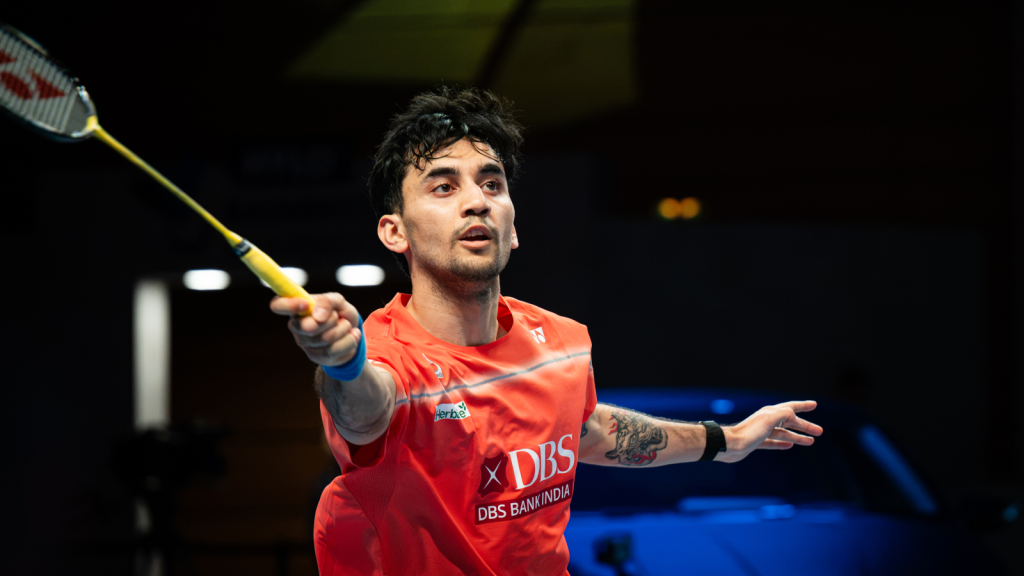
Lakshya Sen produced a remarkable comeback to win the Kumamoto Masters 2026, defeating Japan’s Koki Watanabe in a thrilling three-game final. The Indian shuttler recovered from a slow start to claim a 13-21, 21-18, 21-14 victory, securing his second consecutive title after his triumph at the Hylo Open.
One extraordinary shot captured the defining moment of the final. With Watanabe pushing him deep into the backhand corner, Sen lunged with his back to the net and somehow retrieved the shuttle just inches above the floor. His return curved through the air, appearing to drift wide before bending back inside the line. The remarkable trajectory resembled the famous swerving free kicks associated with football legend David Beckham.
Lakshya Sen’s Incredible Swerve Changes the Final
The rally took place with Sen leading 11-7 in the deciding game. Watanabe had worked the Indian from one side of the court to the other before forcing him into an extremely difficult position. Sen’s recovery seemed almost impossible, but he managed to reach the shuttle and send it back with a deceptive angle.
Watanabe dropped to his knees in disbelief as the shuttle landed inside the court. The Japanese player appeared visibly frustrated by the extraordinary retrieval, while Sen’s confidence continued to grow. The point became a turning moment in a contest that had already featured intense rallies and impressive defensive play from both players.
Sen went on to use his reflexes, quick recovery and attacking ability to put Watanabe under increasing pressure. His lunging returns, flicks and blocks repeatedly frustrated the Japanese shuttler, who struggled to maintain the same intensity during the final stages.
Watanabe Takes Control in the Opening Game
The final did not begin smoothly for Sen. Watanabe came out aggressively, establishing an early 7-2 advantage through quick movement, sharp reactions and fast attacking exchanges. The Japanese World No. 15 used his speed around the court and quick hand movements to keep Sen under pressure.
Watanabe also matched Sen in the front-court exchanges. Sen is known for his quick reflexes and ability to dominate net battles, but the Japanese player was willing to engage in those exchanges rather than allowing the Indian to control the pace.
Sen found opportunities with his hop smashes, particularly down the line, but Watanabe capitalised on several lapses by increasing the speed of rallies. He repeatedly targeted the backline and eventually extended his advantage to 9-5.
As the opening game progressed, the contest became increasingly physical, with both players fighting for control in the midcourt and near the net. Watanabe used directional changes and tight net shots to make Sen move across the court. His attacking combinations, including body smashes followed by cross-court shots, helped him maintain control.
Although Sen attempted to fight back, Watanabe’s aggressive approach proved effective. The Japanese shuttler secured the opening game 21-13, putting the home crowd firmly behind him.
Sen’s Resilience Turns the Momentum
Despite losing the first game, Sen continued to compete aggressively. His determination became particularly evident during a 47-shot rally when he was trailing 10-12. After a long exchange, the Indian produced a cleverly directed block that changed the angle of the rally and helped him stay in contention.
Another important moment came when Sen was under pressure at 12-16. Forced to move backwards, he managed to produce a powerful attacking return from an awkward position. The shot demonstrated his ability to generate attacking power even when his balance and court position were far from ideal.
These moments helped Sen regain confidence and gradually disrupt Watanabe’s rhythm. The Indian began to find more opportunities to attack, while his defensive reactions made it increasingly difficult for the Japanese player to finish rallies.
Second Game Gives Lakshya Sen the Breakthrough
Sen raised his level considerably in the second game. His attacking shots became more consistent, and he started finding winners with greater frequency. His down-the-line smash at 14-10, which narrowly landed inside the line, highlighted the precision he was bringing to his game.
He followed that with a powerful attacking finish to strengthen his position. Watanabe continued to fight, but Sen’s improved control and faster reactions made the difference during the crucial stages.
The Indian eventually closed out the second game 21-18, levelling the match at one game apiece. The result shifted the pressure onto Watanabe, who had initially looked comfortable in front of his home supporters.
Deciding Game: Sen Finishes the Comeback
The third game saw Sen carry his momentum forward. His reflexes, anticipation and ability to retrieve difficult shots continued to trouble Watanabe. The Indian also found ways to attack from unbalanced positions, preventing his opponent from taking complete control of the rallies.
The extraordinary backhand-corner retrieval that produced the swerving return became one of the defining points of the match. Watanabe appeared to lose confidence after the shuttle landed inside the boundary, while Sen responded with growing energy and aggression.
Sen continued to build his advantage and eventually secured the deciding game 21-14. His victory completed a comeback from one game down and silenced a passionate Japanese crowd in Kumamoto.
Second Consecutive Title Strengthens Sen’s World Tour Finals Chances
The Kumamoto Masters victory marked Sen’s second successive tournament title following his success at the Hylo Open. Winning back-to-back events represents an important achievement for the Indian shuttler, particularly as he continues his push towards qualification for the BWF World Tour Finals.
Sen’s victory also improved his position in the World Tour Finals qualification race, moving him into sixth place. With the season reaching a crucial stage, the result gives him valuable momentum and strengthens his position in the race for a place among the tournament’s qualified players.
Against Watanabe, Sen demonstrated several qualities that have become central to his playing style: sharp reflexes, quick movement, attacking instincts and the ability to remain competitive under pressure. His remarkable swerve return may have provided the most memorable image of the final, but the title was built on his resilience throughout all three games.
From losing the opening game 13-21 to winning the next two 21-18 and 21-14, Lakshya Sen delivered a comeback that secured the Kumamoto Masters crown and continued his impressive run of form.
For breaking news and live news updates, like us on Facebook or follow us on Twitter and Instagram. Read more on Latest Sports on thefoxdaily.com.






COMMENTS 0