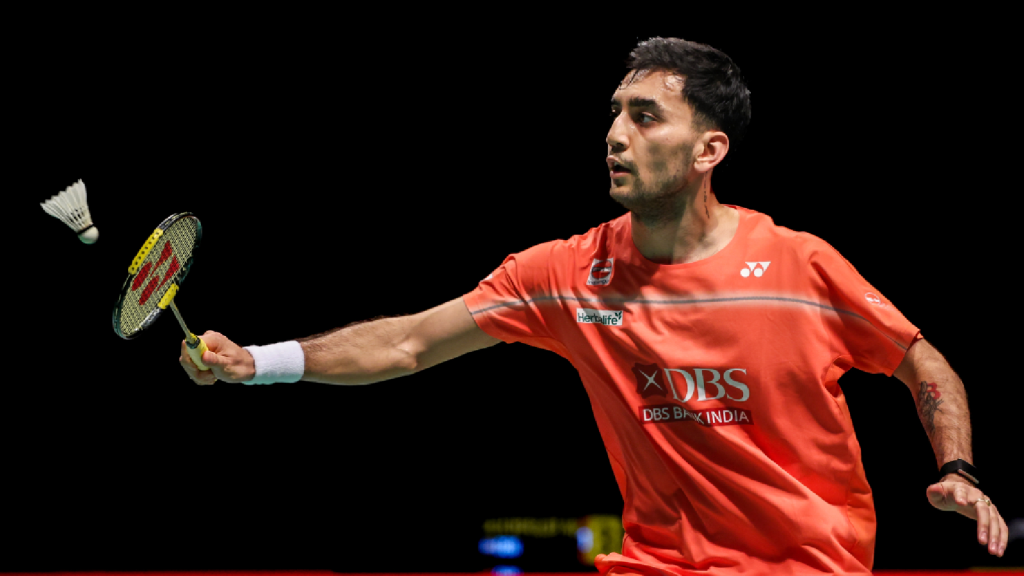
Lakshya Sen produced an impressive performance to defeat World No. 10 Alwi Farhan and secure his place in the men’s singles final of the Kumamoto Masters Japan 2026. The Indian shuttler used a fast, flat attacking game and aggressive net play to overcome the Indonesian 21-12, 15-21, 21-10 in a 70-minute semifinal.
The victory marked Sen’s second consecutive Super 500 final appearance following his recent title-winning campaign at the Hylo Open. More importantly, it was his first victory over Farhan after losing their previous two meetings. Ranked World No. 13, Sen delivered a performance that demonstrated his ability to compete against the world’s leading players and strengthened his hopes of qualifying for the BWF World Tour Finals.
Lakshya Sen’s Fast Drives Disrupt Alwi Farhan’s Attacking Game
Sen entered the semifinal knowing that Farhan’s deceptive overhead shots and attacking ability had troubled him in their previous encounters. The Indonesian, ranked World No. 10, had won both earlier meetings without dropping a game against the Indian.
This time, Sen adopted a different approach. Instead of allowing Farhan to create opportunities for powerful overhead attacks, the Indian relied on fast, flat drives and quick pushes to keep the shuttle travelling straight across the court.
The strategy prevented Farhan from getting into comfortable attacking positions. Sen also used sharp net play to control the rallies, forcing the Indonesian to react rather than dictate the exchanges.
His tactical approach reflected the influence of his coach, Yoo Yong-sung, a former doubles specialist. Sen frequently used the kind of quick, parallel exchanges associated with doubles Badminton, denying Farhan the time and elevation he needed to unleash his powerful smashes.
The Indian’s cross-court lifts also lacked the slow, high trajectory that would have allowed Farhan to attack comfortably. By keeping the shuttle flat and fast, Sen restricted his opponent’s options and controlled the opening game from start to finish.
Sen Dominates the Opening Game 21-12
Lakshya Sen established his authority early in the match, using aggressive movement and precise shot placement to keep Farhan under pressure. His dominance around the net made it difficult for the Indonesian to take control of rallies.
Sen repeatedly targeted the parallel areas of the court, making Farhan move and preventing him from setting up his preferred attacking shots. The Indian also maintained a strong defensive position whenever the Indonesian attempted to increase the pace.
Farhan’s biggest strength is his ability to turn rallies into attacking opportunities, but Sen’s tactical discipline limited those chances. The Indian remained aggressive without rushing his shots and secured the first game comfortably at 21-12.
Alwi Farhan Fights Back to Take the Second Game
Farhan responded in the second game by increasing his intensity and using his speed to stretch Sen across the court. The Indonesian found better opportunities to attack and managed to disrupt the Indian’s rhythm.
Despite Sen’s efforts to maintain his fast-drive strategy, Farhan gradually gained control and took the second game 21-15, forcing the semifinal into a deciding third game.
However, the scoreline did not tell the entire story. Sen had already made Farhan work hard for attacking opportunities, and the Indonesian appeared increasingly frustrated by the Indian’s ability to keep the shuttle away from his preferred hitting positions.
422 km/h Smashes and Aggressive Net Play Help Sen Take Control
Sen raised his level in the deciding game, combining sharp net exchanges with powerful attacking shots. While Farhan is known for producing smashes in the 390 km/h range, the Indian also demonstrated his attacking strength, reportedly reaching speeds of up to 422 km/h.
Sen particularly targeted Farhan’s backhand side, sending powerful shots down the line and making it difficult for the Indonesian to organise his defence. His ability to mix fast drives with deep smashes prevented Farhan from settling into a consistent rhythm.
The Indonesian also wasted both of his challenges during the deciding game, adding to the pressure as Sen continued collecting points. The Indian celebrated his winners with visible intensity, using fist pumps and loud roars to maintain his momentum.
Sen built a commanding 16-9 lead by moving quickly towards the net and forcing Farhan into uncomfortable positions. His sharp reflex backhand flicks helped him extend the advantage to 18-9.
Farhan struggled to recover as Sen continued controlling the exchanges. The Indian eventually closed out the decider 21-10, completing a significant victory over the World No. 10.
Second Consecutive Super 500 Final for Lakshya Sen
The victory takes Sen into his second successive BWF Super 500 final, continuing the strong form he discovered at the Hylo Open in Germany earlier this month.
Sen won the Hylo Open title after defeating Indonesia’s Jonatan Christie 21-17, 21-10 in the final on November 1. That triumph ended his wait for a BWF Tour title since the Australian Open in November 2025.
His performances in Japan suggest that the Indian has carried that confidence into another important tournament. Before defeating Farhan, Sen also recorded convincing straight-game victories over Chi Yu Jen, Dong Tian Yao and Japanese player Yushi Tanaka.
The semifinal against Farhan was arguably a tougher tactical challenge, particularly because Sen had never previously defeated the Indonesian. His ability to change his approach and dominate the deciding game made the victory even more significant.
World Tour Finals Qualification Race: Sen’s Next Big Target
Sen’s run in Kumamoto is important not only because of the opportunity to win another title but also because of the ongoing race for qualification to the BWF World Tour Finals.
The Indian was placed 12th in the World Tour Finals Race ahead of the semifinal, while only the top eight players qualify for the season-ending tournament in China. Reaching another final gives Sen an opportunity to improve his position, and winning the Kumamoto Masters would provide a significant boost to his campaign.
However, Sen still needs to overcome competition from players around him in the qualification standings. Japan’s Koki Watanabe is also part of the race, making the remaining tournament results important for the final qualification picture.
Who Will Lakshya Sen Face in the Kumamoto Masters Final?
Sen will face either Japan’s Koki Watanabe or Thailand’s second seed Kunlavut Vitidsarn in Sunday’s men’s singles final. The two players are scheduled to meet in the other semifinal, with the winner earning the opportunity to challenge the Indian for the championship.
A victory in the final would give Sen two consecutive BWF Tour titles and provide further momentum ahead of the season-ending competitions. It would also strengthen his position in the World Tour Finals qualification race.
Lakshya Sen’s Victory Sends a Strong Message
Lakshya Sen’s semifinal performance against Alwi Farhan was more than just another tournament victory. The Indian identified the Indonesian’s biggest strengths, adjusted his tactics and used fast drives, sharp net play and powerful smashes to take control.
After losing both previous meetings, Sen finally found a way to overcome Farhan’s attacking style. His dominance in the deciding game showed how much confidence he has gained during his recent late-season revival.
With a second successive Super 500 final secured, Sen now has an opportunity to turn his impressive run into another championship. A victory in Kumamoto would strengthen his World Tour Finals ambitions and mark another important step in his return to consistent top-level badminton.
For breaking news and live news updates, like us on Facebook or follow us on Twitter and Instagram. Read more on Latest Sports on thefoxdaily.com.






COMMENTS 0