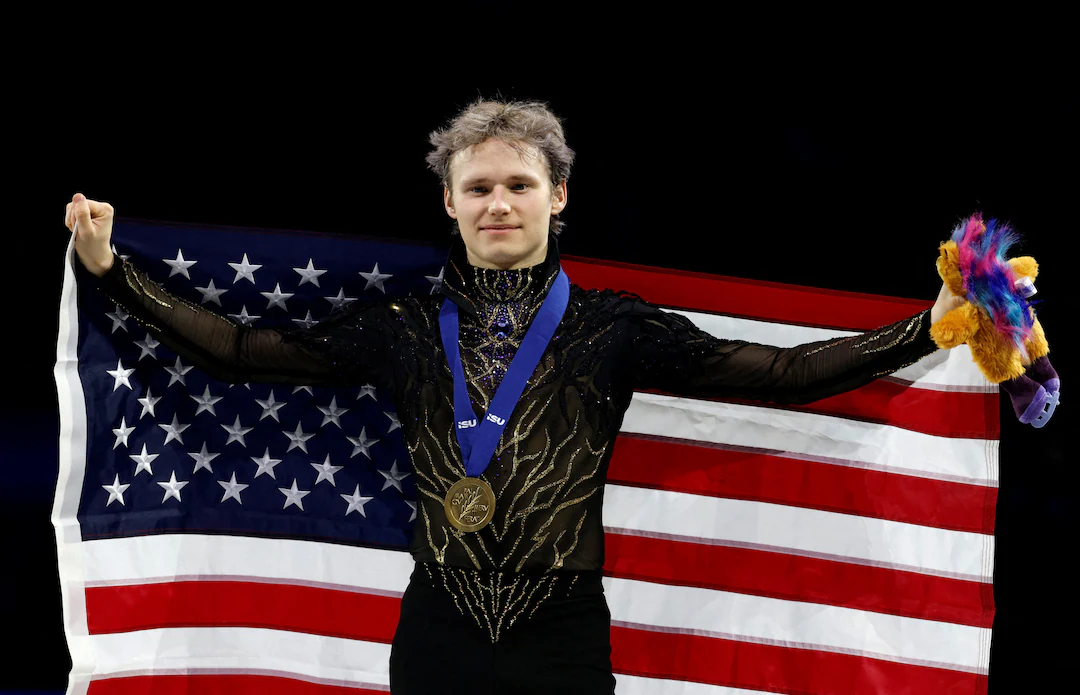
The figure skating Grand Prix circuit begins in France this week, opening a new Olympic cycle with a significantly reshaped competitive landscape following a wave of retirements and breaks from competition after the Milano Cortina Winter Olympics. With several Olympic medallists stepping away, returning champions and emerging contenders will have an opportunity to establish themselves as the sport’s leading performers over the next four years.
The six-event series starts with the Grand Prix de France in Angers this weekend before moving to Canada, China, the United States, Finland and Japan. The circuit will culminate in December with the Grand Prix Final in Chongqing, China, where the top six skaters or couples in each discipline will compete for one of the season’s major international titles.
Although only eight months have passed since the Milano Cortina Games, the competitive picture has already changed considerably. Olympic women’s champion Alysa Liu will sit out the season, while Japanese star Kaori Sakamoto has retired. Men’s Olympic silver medallist Yuma Kagiyama is also taking a break, and the pairs discipline has lost its Olympic champions, Riku Miura and Ryuichi Kihara.
These absences create opportunities across all four disciplines: men’s singles, women’s singles, pairs and ice dance. At the same time, established stars such as American Ilia Malinin and Olympic men’s champion Mikhail Shaidorov of Kazakhstan will look to build on their recent achievements as the new Olympic cycle gets underway.
Grand Prix Series Begins a New Four-Year Olympic Cycle
The Grand Prix circuit is an important part of the international figure skating calendar, giving elite athletes opportunities to compete against leading rivals, build momentum and qualify for the season-ending Grand Prix Final.
The series consists of six events spread across several countries, with skaters competing in selected events before the leading performers advance to the final. Qualification is based on results across the circuit, making consistency and strong performances particularly important for athletes seeking a place in Chongqing.
This season carries additional significance because it follows the Milano Cortina Olympics. The period immediately after an Olympic Games often brings changes in competitive line-ups, as athletes reassess their careers, take time away from the sport or decide to retire after reaching the highest level.
The latest transition has affected every discipline to varying degrees. The women’s singles field has lost its Olympic gold and silver medallists for the season, the men’s competition will begin without its Olympic runner-up, and the pairs event must adjust to the retirement of its Olympic champions.
For younger skaters, these departures could create a faster route into medal contention. However, replacing Olympic champions is difficult, and the returning field will still include athletes with world championship experience, Olympic medals and established reputations.
Women’s Singles: Alysa Liu and Kaori Sakamoto Step Away
The women’s singles competition will look markedly different without the two leading finishers from the Milano Cortina Games.
American Alysa Liu, who won Olympic gold, will sit out the current season. Japan’s Kaori Sakamoto, the Olympic silver medallist, has retired from competitive skating. Their absence removes two of the discipline’s biggest recent names from the Grand Prix circuit and leaves the field open to new challengers.
At the Olympics, Liu finished ahead of Sakamoto and Japanese teenager Ami Nakai, who also emerged as one of the notable performers in the women’s event. With the Olympic champion taking a break and the silver medallist retiring, the new season offers Nakai and other competitors an opportunity to strengthen their positions in international figure skating.
However, the absence of Liu and Sakamoto does not automatically make the women’s competition predictable. Grand Prix events can produce different results depending on technical execution, consistency and the ability to manage pressure across short and free programmes.
The opening events will provide an early indication of which skaters are ready to take on leadership roles in the post-Olympic field. Strong performances across the circuit could also help emerging athletes establish themselves before the sport’s next major championship cycle develops.
The broader challenge for women’s figure skating will be maintaining the competitive standard set by the Olympic finalists while allowing new contenders to build their own profiles. The coming months will show whether a clear frontrunner emerges or whether the discipline develops into a more open contest.
Men’s Singles: Ilia Malinin Returns After Olympic Disappointment
The men’s competition will also begin without one of its most prominent Olympic performers. Japan’s Yuma Kagiyama, who won silver at the Milano Cortina Games and finished runner-up at the 2026 World Figure Skating Championships, announced in April that he would take the competitive season off.
Kagiyama said he wanted to rediscover his enjoyment of skating and pursue new challenges. His decision removes a major contender from the immediate Grand Prix picture, but it also reflects the personal and professional decisions athletes can face after an intense Olympic campaign.
American Ilia Malinin, meanwhile, will return to competition after a difficult Olympic experience. Malinin finished eighth at the Games, a disappointing result for a skater widely regarded as one of the leading figures in men’s figure skating. He subsequently responded by winning his third world title, reinforcing his status as a major force in the discipline.
Malinin has indicated that his ambitions extend beyond winning medals. Speaking to Dazed magazine about his Olympic disappointment, he emphasised his desire to change the sport and attract greater attention to figure skating.
“Medals don’t define a person. That’s the mindset I have now.”
He also explained that his priorities had evolved beyond collecting titles.
“It’s not (about) winning medals any more. I want to change the sport. I want to push figure skating to a new level of attention. I’m starting to see that now.”
The comments suggest that Malinin wants to use his technical ability and public profile to influence how audiences engage with figure skating. His return will therefore be watched not only for his competitive results but also for how he approaches the sport after the contrasting experiences of Olympic disappointment and world championship success.
Malinin’s Grand Prix Schedule
Malinin will open his season at Skate America, scheduled for November 13-15, before travelling to Japan for the NHK Trophy two weeks later. The two appearances will give him opportunities to test his form against international opposition and build momentum during the first half of the season.
He will face a competitive men’s field that includes Olympic champion Mikhail Shaidorov of Kazakhstan, Olympic bronze medallist Shun Sato of Japan, twice European champion Adam Siao Him Fa of France, and Americans Jason Brown and Andrew Torgashev.
Shaidorov enters the new cycle with the confidence of an Olympic champion after producing one of the biggest surprises of the Milano Cortina Games by winning the men’s title. His victory demonstrated that the discipline remains open to major shifts in the competitive hierarchy.
The contrast between Shaidorov’s Olympic triumph and Malinin’s subsequent world championship victory sets up an intriguing storyline for the season. One arrives as the reigning Olympic champion, while the other has recently reaffirmed his standing at the World Championships.
With Kagiyama absent for the season, the Grand Prix events could provide additional opportunities for other skaters to challenge for major titles. The combination of established champions and emerging contenders should make the men’s competition one of the circuit’s most closely watched disciplines.
Pairs Skating Faces a Major Changing of the Guard
The pairs discipline has experienced one of the most significant changes following the Olympics, with Japan’s Riku Miura and Ryuichi Kihara retiring from competitive skating at the end of last season.
Miura and Kihara captured the Olympic title in Milan and had already won two world championships. Their decision to retire was particularly notable because the pair revealed in April that they had been considering ending their careers even before the Games.
After achieving Olympic gold, they felt they had nothing more to give competitively. Their departure closes a successful chapter for Japanese pairs skating and leaves a major gap at the top of the discipline.
Their absence creates an opportunity for other leading teams to establish themselves as the principal contenders in the new Olympic cycle. Georgia’s Anastasiia Metelkina and Luka Berulava, who won Olympic silver, and Germany’s Minerva Hase and Nikita Volodin, the Olympic bronze medallists, will enter the season among the leading pairs.
Both teams have already demonstrated that they can compete at the highest level. With the Olympic champions no longer in the field, their performances will attract particular attention as the Grand Prix circuit develops.
Pairs skating requires a combination of technical precision, timing, trust and coordination between partners. Teams must execute difficult elements while maintaining consistency and presenting a coherent performance. The transition to a new competitive hierarchy therefore depends on more than the retirement of one leading pair; the remaining teams must demonstrate that they can deliver strong results repeatedly.
The Grand Prix series will provide an early test of which partnerships are best positioned to take advantage of the opportunity. A strong start could help establish a new leading team, although the competitive picture may remain unsettled as the season progresses.
Ice Dance: French Olympic Champions Look to Set the Pace
Ice dance presents a different picture because the Olympic and world champions, Laurence Fournier Beaudry and Guillaume Cizeron of France, will compete during the new season.
The French team won the Olympic title in Milan in their first season competing together, immediately establishing themselves as the leading partnership of the moment. Their continued presence gives the discipline a prominent team around which the early-season competition can develop.
However, several leading rivals will be absent from the Grand Prix circuit. Americans Madison Chock and Evan Bates, who won Olympic silver behind the French team, have decided not to compete this season. They have not announced their retirement, making their absence a break from competition rather than a confirmed end to their careers.
Canada’s Piper Gilles and Paul Poirier, who won Olympic bronze, are also sitting out the Grand Prix circuit. Their decision further changes the line-up and removes another established partnership from the immediate contest for Grand Prix results.
These absences give Fournier Beaudry and Cizeron an early opportunity to consolidate their position at the top of ice dance. A successful Grand Prix campaign could strengthen their standing as the partnership to beat during the new four-year Olympic cycle.
Nevertheless, the absence of leading rivals does not eliminate the need for strong performances. Ice dance results depend on technical execution, interpretation, rhythm and consistency, and the French team will still need to deliver at a high level to convert their Olympic success into sustained dominance.
British Partnership Hopes to Capitalise
Britain’s Lilah Fear and Lewis Gibson will also look to benefit from the changing competitive landscape. The pair won world bronze in 2025 and have experience competing against the strongest teams in international ice dance.
With Chock and Bates and Gilles and Poirier sitting out the Grand Prix circuit, Fear and Gibson have an opportunity to strengthen their position among the discipline’s leading partnerships. Strong performances could help them build momentum and challenge for important results during the season.
Their progress will be one of the storylines to follow as ice dance adjusts to the new competitive order. While Fournier Beaudry and Cizeron enter the campaign with Olympic gold behind them, other teams will aim to use the changing field to close the gap.
What to Expect From the Grand Prix Season
The opening Grand Prix de France in Angers will provide the first opportunity to assess how the reshaped field is developing. The remaining events in Canada, China, the United States, Finland and Japan will then offer further chances for skaters to establish consistency and secure qualification for the Grand Prix Final.
The absence of several Olympic champions and medallists makes this season particularly important for athletes who were previously competing behind established stars. In women’s singles, new contenders will look to fill the gap left by Liu and Sakamoto. In men’s singles, Malinin and Shaidorov will headline a field that also includes experienced international performers. Pairs skating will move forward without Miura and Kihara, while ice dance offers Fournier Beaudry and Cizeron a chance to establish early control.
The six-event format also places a premium on preparation and consistency. A single strong performance can establish momentum, but qualification for the final requires athletes to deliver competitive results across their assigned events.
For the sport as a whole, the new Olympic cycle represents both a challenge and an opportunity. Retirements and breaks from competition can leave gaps in the field, but they also create room for younger skaters and developing partnerships to emerge. The Grand Prix circuit will help reveal which athletes are ready to take the next step.
Conclusion: A New Era Begins for Figure Skating
The 2026-27 figure skating Grand Prix season begins with a field that looks substantially different from the one that competed at the Milano Cortina Olympics. The absence of Alysa Liu, Kaori Sakamoto, Yuma Kagiyama, Riku Miura and Ryuichi Kihara has reshaped the women’s, men’s and pairs competitions, while breaks from Madison Chock and Evan Bates and Piper Gilles and Paul Poirier have changed the immediate outlook in ice dance.
At the same time, Malinin, Shaidorov, Fournier Beaudry and Cizeron will provide familiar points of reference as the new cycle gets underway. Other Olympic medallists and experienced competitors will have opportunities to build on their previous achievements, while emerging skaters can use the circuit to establish themselves internationally.
The road to the next Winter Olympics remains long, and early-season results will not determine the entire four-year cycle. However, the Grand Prix series will offer the first meaningful indication of how the competitive hierarchy is evolving after Milano Cortina. With established champions defending their positions and new contenders seeking breakthroughs, the season promises a fresh chapter for international figure skating.
For breaking news and live news updates, like us on Facebook or follow us on Twitter and Instagram. Read more on Latest Sports on thefoxdaily.com.


COMMENTS 0