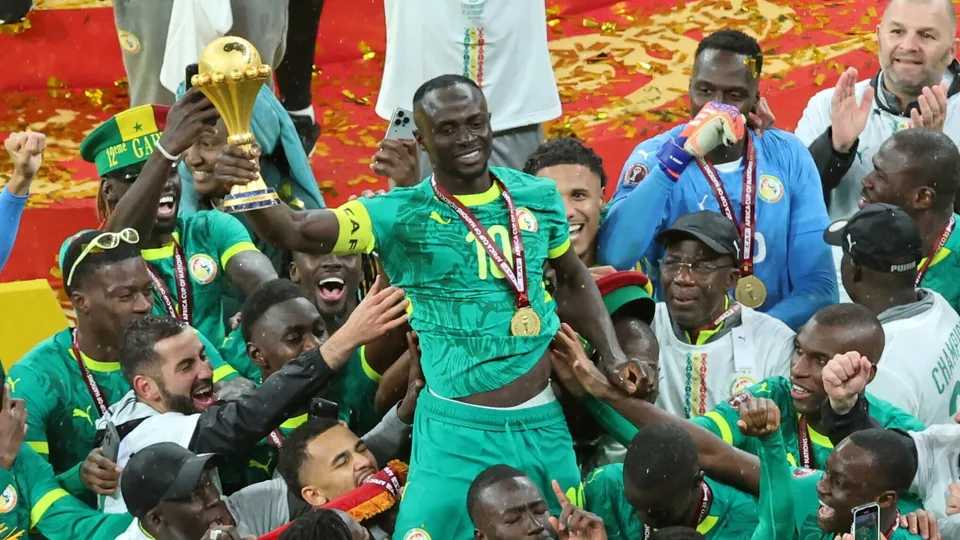
Senegal have reclaimed the Africa Cup of Nations 2025 title after the Court of Arbitration for Sport (CAS) overturned an earlier ruling that had awarded the trophy to Morocco. The decision, delivered on Tuesday, restores Senegal’s victory in a controversial final played in Morocco in January.
The dispute followed a chaotic match in which Senegal initially won 1-0 after extra time. However, the result was overturned in March by an appeals panel appointed by the Confederation of African Football (CAF), which declared Morocco 3-0 winners by default after Senegal’s players walked off the pitch in protest during second-half stoppage time.
CAS has now rejected that decision, focusing on the actions of match referee Jean-Jacques Ndala. The court concluded that the referee’s decision to allow the match to resume after the protest was not legally incorrect.
The ruling brings an end to the uncertainty surrounding the tournament’s title, although CAS decisions can be challenged at Switzerland’s supreme court on limited procedural grounds.
CAS overturns CAF appeals panel decision
The central issue in the legal dispute was whether Senegal should have been considered to have forfeited the final after its players left the field without the referee’s authorisation. The CAF appeals panel had relied on tournament regulations stating that a team refusing to play or leaving the pitch before the end of a match could be declared the loser and eliminated from the competition.
However, CAS interpreted the regulations differently. The court said the relevant provisions were intended to apply only in circumstances where a team’s conduct caused the referee to abandon the match permanently.
“When a team’s conduct leads the referee to call off the game permanently.”
According to the court, that situation did not occur during the final because Ndala allowed the players to return and the match continued. CAS stated that the referee “did not err in law” when he decided to restart the game.
The distinction was crucial to the outcome. Although Senegal’s players had temporarily walked off the field, the match was not permanently abandoned by the referee. The game resumed, Morocco’s penalty was taken and Senegal eventually secured victory in extra time.
By rejecting the earlier interpretation of the regulations, CAS overturned the legal basis on which Morocco had been awarded a 3-0 default victory.
How the controversial AFCON final unfolded
The Africa Cup of Nations final between Senegal and hosts Morocco took place in January and was marked by controversy, a lengthy interruption and disorder both on the pitch and in the stands.
The score remained 0-0 during regulation time as the match approached its closing moments. Senegal’s players reacted angrily after Morocco were awarded a penalty in the final minute of regulation time.
In protest against the decision, Senegal’s team walked off the field, bringing play to a halt for approximately 15 minutes. The incident created a tense atmosphere as officials attempted to restore order and get the match underway again.
Match referee Jean-Jacques Ndala of Congo eventually allowed the game to restart. Morocco were given the opportunity to take the penalty, with Brahim Diaz stepping forward to attempt the spot-kick.
Senegal goalkeeper Edouard Mendy saved Diaz’s penalty, keeping the score level and allowing the contest to continue. Senegal then scored during extra time to win the final 1-0 and claim the title on the field.
The match also witnessed violent clashes in the stands, adding to the disorder surrounding an already controversial final. The events became the focus of intense debate after the tournament, particularly over the players’ walk-off and the referee’s decision to resume play.
Morocco were awarded a 3-0 win in March
Although Senegal had celebrated victory after the final whistle, the result did not remain settled. In March, a CAF appeals panel overturned the match result and awarded Morocco a 3-0 victory by default.
The appeals judges relied on the AFCON tournament regulations governing teams that refuse to continue playing or leave the field before the scheduled end of a match without the referee’s permission.
The regulations stated that a team which “refuses to play or leaves the ground before the regular end of the match without the authorization of the referee, it shall be considered loser and shall be eliminated for good from the current competition.”
The panel applied that provision to Senegal’s walk-off, ruling that the team’s conduct justified the default result. The decision effectively removed Senegal’s on-field victory and handed the championship to Morocco.
Senegal challenged the ruling, taking the dispute to CAS. The legal process examined how the tournament regulations should be interpreted and whether the CAF appeals panel had correctly applied them to the events of the final.
The case became particularly significant because the referee had allowed the match to continue after the players returned. CAS ultimately concluded that the regulations cited in the earlier decision were intended for situations involving permanent abandonment, rather than a temporary interruption followed by a restart.
Referee’s decision becomes central to the ruling
Ndala’s decision to restart the final was central to CAS’s reasoning. The court considered the fact that the referee did not permanently call off the match after Senegal’s players walked off the pitch.
Instead, play resumed following the 15-minute delay. Morocco were allowed to take their penalty, Senegal’s goalkeeper saved it and the match continued into extra time, where Senegal scored the winning goal.
CAS said the referee “did not err in law” when he allowed the game to resume. That finding undermined the argument that the final should automatically be treated as a forfeit under the tournament regulations.
The ruling does not erase the controversy surrounding the players’ protest or the events that followed the penalty decision. Rather, it addresses the legal question of whether the CAF appeals panel was justified in replacing the result of a completed match with a 3-0 default victory.
The court’s interpretation means Senegal’s original 1-0 victory after extra time stands, restoring the title to the team that won the final on the pitch.
What happens after the CAS decision?
The decision restores Senegal’s status as Africa Cup of Nations champions after months of uncertainty. Morocco, who had been declared winners following the CAF appeals ruling in March, have lost the title awarded to them through that process.
CAS verdicts can be challenged at Switzerland’s supreme court, but only on limited procedural grounds. This means any further legal challenge would be restricted rather than providing a general opportunity to reopen every aspect of the case.
The written ruling is expected to set out the judges’ full reasoning behind the decision. The court had heard evidence during a one-day hearing last month and promised to deliver its verdict by the end of November.
The case has also highlighted the importance of how football regulations are interpreted when teams temporarily refuse to continue playing. The difference between a match being interrupted and being permanently abandoned proved decisive in determining the final result.
Next AFCON tournament scheduled for June
Attention will now gradually turn towards the next men’s Africa Cup of Nations, which is scheduled to begin in June. Kenya, Uganda and Tanzania will co-host the tournament, bringing the competition to East Africa.
The latest CAS decision means Senegal can approach the next edition as the restored champions of the 2025 tournament. The ruling also closes a prolonged dispute that began with the dramatic events of the final and continued through CAF’s appeals process and the subsequent legal challenge.
For Senegal, the decision represents the restoration of a title they originally secured with a 1-0 extra-time victory. For Morocco, it reverses the 3-0 default result awarded in March. The outcome ultimately rests on CAS’s finding that the referee’s decision to resume the match was legally valid under the circumstances.
For breaking news and live news updates, like us on Facebook or follow us on Twitter and Instagram. Read more on Latest Football on thefoxdaily.com.






COMMENTS 0