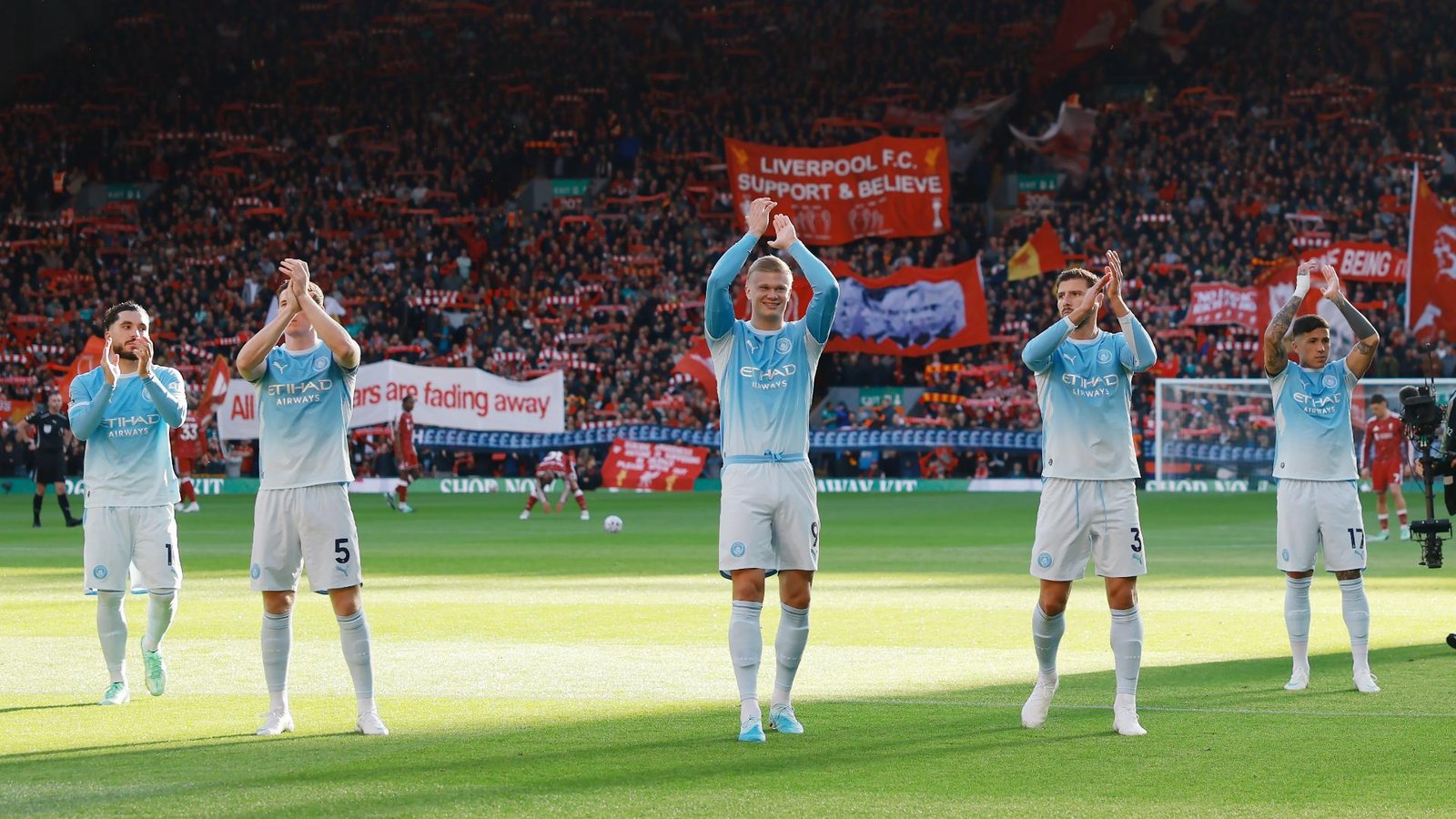
Manchester City‘s financial controversy has exposed a fundamental contradiction at the heart of English football: the Premier League promotes competition through promotion and relegation, yet its financial structure gives the wealthiest clubs a significant advantage over their rivals. While the allegations against Manchester City raise serious questions about financial regulation and sporting integrity, they also highlight a broader problem with a system that has never guaranteed a level playing field.
The origins of this inequality date back to the creation of the Football League in 1888. Its founders wanted to make football more organized, predictable and appealing to supporters. However, the competition’s commitment to regular fixtures and promotion and relegation was never matched by an equally strong commitment to financial equality.
More than a century later, football has become a multibillion-dollar global industry. The Premier League generates enormous broadcasting and commercial revenues, while the richest clubs benefit from established international fan bases, lucrative sponsorship agreements and the ability to attract the world’s best players.
Manchester City’s rise has brought these inequalities into sharper focus. The club’s financial case concerns allegations of breaching league regulations, but the controversy also raises a difficult question: can football genuinely be considered fair when the rules themselves allow the richest clubs to maintain substantial advantages over everyone else?
How the Football League Began in 1888
In 1887, English football had no national league. Instead, clubs competed in numerous regional and knockout tournaments, including the Birmingham Cup, Staffordshire Cup, Lancashire Cup, English Cup, Welsh Cup and FA Cup.
This fragmented arrangement created considerable scheduling problems. Teams eliminated early from several competitions could find themselves without enough matches to play. Clubs that progressed deep into the FA Cup might also have to cancel regional fixtures because they could not predict how far they would advance.
William McGregor, a Scottish-born businessman who moved to Birmingham around 1870, recognized the need for a more organized structure. He owned a small drapery shop and eventually became an administrator at Aston Villa, one of the area’s leading football clubs.
McGregor described the central problem as a lack of “fixity of fixtures.” Supporters were also frustrated by the inconsistent schedule, which made it difficult for clubs to provide regular entertainment throughout the season.
In his account of football’s early development, McGregor explained that he believed a fixed programme of home-and-away matches between leading clubs would produce more interesting football than the average game available at the time.
In March 1888, he proposed that 12 clubs establish a competition based on regular fixtures. By September, the Football League had begun playing matches, introducing a model that would transform the sport.
Historians have suggested that McGregor drew inspiration from cricket, another popular British sport. However, Andrew Zimbalist and Stefan Szymanski, authors of National Pastime: How Americans Play Baseball and the Rest of the World Plays Soccer, argued that the success of baseball’s National League in the United States may have been a more direct influence.
Despite that possible inspiration, English football developed a very different structure from American professional sports. The Football League operated within the broader authority of the Football Association and developed a system in which clubs could eventually move between divisions according to their sporting results.
The Original Vision of Fair Competition Was Never Fully Realized
The Football League established an important principle: clubs would compete under a common schedule, with their performances determining their positions in the standings. Promotion and relegation later became defining characteristics of English football, creating a pathway for successful lower-division clubs to reach the top flight.
McGregor also proposed a financial arrangement that could have helped distribute matchday income more equally. At the time, attendance revenue was the principal source of income for clubs. He suggested that home and visiting teams should share gate receipts equally, reflecting his belief that football could operate according to the joint principles of self-interest and mutual advantage.
However, 10 of the 12 Football League clubs rejected his proposal.
That decision illustrated an important distinction between sporting competition and financial equality. Although football developed a system in which clubs could rise or fall based on their results, it did not establish a comprehensive mechanism to ensure that every participant had comparable financial resources.
As the sport expanded, that gap became increasingly significant. Clubs could theoretically earn promotion through sporting achievement, but the financial rewards of success made it progressively harder for teams with limited resources to challenge established powers.
The Premier League’s modern financial hierarchy can therefore be understood partly as the consequence of a system that guarantees access to competition in principle without guaranteeing equal opportunities to succeed.
Which Is More Competitive: The NFL or the Premier League?
The debate surrounding Manchester City highlights the differences between European football and major American sports leagues. Both systems aim to deliver entertaining competitions, but they approach financial regulation, membership and competitive balance in fundamentally different ways.
American leagues such as the NFL, NBA and Major League Baseball operate as closed competitions. Teams generally retain their places regardless of how poorly they perform, while expansion requires approval from existing stakeholders and substantial financial investment from new owners.
These leagues also use mechanisms designed to distribute talent and control spending. Salary caps, luxury-tax systems and annual drafts are intended to prevent wealthy teams from gaining unlimited advantages over their rivals.
The draft system is particularly important because struggling teams can receive earlier selections and improve their chances of acquiring highly rated amateur players. Although the effectiveness of these measures varies, the broader objective is to make sustained dominance more difficult.
European football follows a different model. Clubs compete within a promotion-and-relegation pyramid, with their positions determined by results over the course of a season. Teams that finish near the bottom of the Premier League risk relegation, while successful clubs in lower divisions can earn promotion.
This open structure theoretically allows ambitious clubs to progress through the football pyramid without needing permission to join an exclusive top-flight competition. It also explains why professional and semi-professional clubs exist throughout England, including a large concentration of teams in London.
Supporters benefit from the opportunity to follow local clubs with deep community connections. Promotion battles and relegation struggles also create meaningful stakes for teams across the standings.
However, the same structure creates significant financial pressure. A club that loses too many matches risks losing its Premier League status, along with the broadcasting income, commercial opportunities and player-market advantages associated with competing at the highest level.
As a result, owners and executives can feel compelled to spend aggressively to avoid relegation or secure European qualification. Unlike teams in many American sports leagues, Premier League clubs cannot rely on guaranteed membership to protect their long-term commercial position.
The distinction is important. American leagues may promote competitive balance through spending restrictions and talent distribution, while European football prioritizes sporting mobility and an open competitive structure. Neither model eliminates inequality, but each produces different incentives for owners, players and supporters.
Why Financial Inequality Is a Problem for English Football
The Premier League’s open structure works best when clubs have a realistic opportunity to compete. If financial resources become concentrated among a small group of teams, promotion and relegation can preserve access to the competition without ensuring that all participants have a meaningful chance of winning it.
Clubs with larger budgets can recruit from a wider pool of players, offer higher wages, maintain deeper squads and absorb the financial consequences of expensive mistakes. Smaller clubs have less room for error, and a poor transfer window or disappointing season can have long-lasting consequences.
Even when all clubs follow the rules, their opportunities can be radically different. A team with a global following, established sponsorship agreements and regular Champions League participation can generate considerably more revenue than a newly promoted club.
That additional income creates greater spending capacity, which can be used to recruit better players and improve performances. Stronger performances can then generate even more revenue, creating a cycle in which financial advantages reinforce sporting success.
The original analysis points to a striking pattern among Premier League title winners: four of the five clubs identified as having won multiple titles had never been relegated from the competition. Manchester City was the exception, having experienced relegation before its modern period of success.
This does not mean financial resources are the only factor behind winning championships. Coaching, recruitment, tactics, player development and effective management remain crucial. However, money can make it easier for clubs to acquire and retain the people needed to compete at the highest level.
Why Premier League Clubs Feel Pressure to Spend
For a wealthy owner of a mid-table Premier League club, spending decisions involve enormous risks. Reducing the wage bill might improve short-term profitability, but it could weaken the team and increase the possibility of relegation.
Relegation can dramatically reduce broadcasting income and commercial appeal. It can also affect a club’s valuation, making the consequences of a failed sporting strategy much more severe than a disappointing season in a closed American sports league.
These pressures intensified as football became a global entertainment industry. The expansion of television broadcasting, the development of the UEFA Champions League and the creation of the Premier League in 1992 opened new opportunities for clubs to generate revenue.
The Champions League also expanded beyond a competition restricted to domestic league champions, creating additional opportunities for clubs from Europe’s strongest leagues. Meanwhile, improvements in broadcasting technology brought English football to increasingly large international audiences.
The combination transformed the sport. Premier League membership became a valuable commercial asset, while qualification for the Champions League offered clubs the prospect of additional income and international exposure.
Football’s open structure therefore produced an unusual economic outcome. The financial risks encouraged clubs to spend heavily in pursuit of success, but the competition for talent and the emotional connection between supporters and their teams helped create a television product that broadcasters and advertisers were willing to pay enormous sums to access.
That commercial success also increased the consequences of falling behind. Clubs that reached the Premier League or qualified for European competition could enter a more lucrative financial environment, while those that failed to do so risked losing ground to their rivals.
The financial pressure was already evident before modern spending controls were introduced. According to UEFA figures cited in the original analysis, Europe’s first-division clubs collectively recorded losses of €1.67 billion in 2011.
Those losses illustrated the dangers of a system in which clubs could commit substantial resources in the hope of achieving future success. Investing heavily in a squad was not simply a matter of sporting ambition; it was also an attempt to protect or increase the club’s long-term financial value.
Financial Fair Play Was Designed to Control Spending
UEFA introduced Financial Fair Play, commonly known as FFP, to address concerns about excessive losses and the financial sustainability of European football clubs. The rules sought to limit how much clubs could lose relative to their permitted financial resources.
Subsequent financial regulations have continued to pursue a similar objective: restricting spending according to a club’s income and financial position.
The basic principle is understandable. If clubs cannot continually rely on wealthy owners to cover unlimited losses, they may have stronger incentives to operate sustainably, manage their wage bills and avoid accumulating excessive debt.
There is evidence that financial controls have contributed to improved profitability across European football. In 2017, first-division clubs reported profits exceeding €1 billion. Following the financial disruption caused by the COVID-19 pandemic, aggregate profits and losses moved closer to balance in the period discussed in the original analysis.
However, determining how much of that improvement resulted directly from FFP is difficult. Rising broadcasting revenues and other commercial income have also played major roles in strengthening clubs’ finances.
Research examining FFP has found that the rules improved clubs’ profitability but did not necessarily reduce their indebtedness. Accounting practices surrounding transfer fees also complicate the picture: selling clubs may record transfer income immediately, while buying clubs generally spread the cost over the duration of a player’s contract.
More importantly, financial sustainability and competitive fairness are not the same thing.
A club that generates hundreds of millions of pounds annually can spend considerably more than a rival whose revenue is a fraction of that amount, even when both operate within the rules. Revenue-based spending restrictions may therefore protect clubs from financial instability while preserving the existing hierarchy between the richest and less wealthy teams.
How Financial Regulations Can Protect Established Clubs
Critics argue that spending restrictions based largely on revenue make it more difficult for ambitious clubs to challenge established powers. A club with a large global following, an established commercial operation and regular Champions League participation can generate substantially more income than a smaller rival.
That additional revenue creates greater spending capacity, which can be used to attract elite players, retain key performers and improve the squad. Stronger performances can then generate more commercial income, creating a cycle in which financial advantages reinforce sporting success.
Clubs without those advantages may find themselves trapped. They need to invest in players to improve their results, but financial regulations can restrict the scale of that investment. Without stronger performances, they struggle to increase revenue enough to close the gap.
The timing of modern football’s financial regulations is also significant. Chelsea became one of Europe’s wealthiest clubs after Roman Abramovich acquired the club in 2003 and invested heavily in its squad. Abu Dhabi United Group acquired Manchester City in 2008, while Qatar Sports Investments took control of Paris Saint-Germain in 2011.
These ownership changes demonstrated how substantial investment could transform a club’s sporting ambitions and commercial standing. They also intensified debate about whether wealthy owners should be allowed to use their personal fortunes to finance squads that would otherwise be beyond a club’s means.
Once spending restrictions became more influential, clubs that had already established large revenue streams retained a major advantage. Their ability to generate income from supporters, sponsors, broadcasters and international commercial partnerships helped them remain competitive without depending on unlimited financial injections from their owners.
Supporters of financial regulations argue that the rules prevent reckless spending and protect clubs from financial collapse. Critics counter that they can entrench the advantages of established teams by limiting the ability of new challengers to invest their way into the elite.
Both concerns can exist simultaneously. Financial controls may improve sustainability while leaving the sport’s competitive balance largely unchanged or even making it worse.
A study of 24 European first-division leagues by researchers at Sheffield Hallam University, as described in the original analysis, found evidence of declining competitive balance after FFP was introduced. Seven leagues experienced a statistically significant increase in league concentration, 14 saw a decline in the number of different teams finishing in the top four, and 13 recorded fewer unique title winners.
The researchers concluded that the evidence indicated FFP had adversely affected competitive balance in several European football leagues.
Those findings do not establish that financial regulations alone caused every change in competitive balance. Nevertheless, they highlight a central weakness in the assumption that requiring clubs to spend according to their revenue will automatically produce a fairer competition.
Manchester City’s Financial Case Exposes the Contradictions
Manchester City’s financial controversy has become one of the most prominent examples of the tensions between regulation, ownership wealth and sporting ambition.
The club’s transformation following its 2008 takeover by Abu Dhabi United Group brought sustained investment, major player acquisitions and a period of domestic success. City developed into one of the strongest teams in English football, winning multiple Premier League titles and establishing themselves among Europe’s elite.
However, the Premier League brought serious allegations against the club concerning its financial reporting and compliance with league rules. The charges included allegations relating to the accuracy of financial information, sponsorship revenue, payments and cooperation with the league’s investigation.
The controversy has been particularly significant because the league’s financial rules are intended to establish a common regulatory framework for all participating clubs. If a club can circumvent those rules, the competitive advantages created by its spending may undermine confidence in the entire system.
The original analysis characterizes the allegations as involving approximately $1 billion in additional spending and 114 alleged rule breaches. Those figures reflect the argument being made about the scale of the controversy, rather than an independent calculation of proven financial misconduct.
It is important to distinguish allegations from final legal or regulatory findings. Claims of fraudulent accounting, deliberate deception and other specific misconduct should not be treated as established facts unless confirmed through the relevant proceedings.
Nevertheless, the broader issue is clear: financial regulations can only protect the integrity of a competition if they are consistently enforced and clubs are held accountable when violations are established.
The Premier League faces a difficult balancing act. Failing to impose meaningful sanctions for proven violations could undermine confidence in the rules. At the same time, any punishment must be determined through the league’s established procedures rather than assumptions about a club’s ownership or sporting success.
Why Chelsea’s Spending History Is Different
Chelsea’s experience under Abramovich provides a useful comparison. The club’s major spending programme began before modern financial controls became fully established, allowing it to build a powerful squad during a period when wealthy owners had greater freedom to finance losses.
That investment helped Chelsea become a major force in English and European football. The club continued spending after financial regulations were introduced, but the timing of its transformation remains an important distinction when comparing its history with Manchester City’s subsequent rise.
Abramovich was forced to sell Chelsea in May 2022 following Russia’s invasion of Ukraine. Under the club’s new ownership, historical financial information was reported to the relevant authorities after potential irregularities were identified.
The original analysis notes that Chelsea received a fine in connection with the matters discussed. However, a fine in one case does not establish that every club’s conduct was identical or that all financial breaches should result in the same punishment.
The key issue is whether the rules are applied consistently, taking into account the nature of the violations, the evidence, the timing and the circumstances surrounding each case.
Other ambitious clubs, including Newcastle United and Aston Villa, have also faced restrictions on their spending ambitions under financial regulations. Such rules can force clubs to sell players, reduce wage commitments or rebuild their squads rather than simply invest additional owner funds.
These restrictions may frustrate clubs seeking to challenge the established elite, but they also demonstrate why enforcement matters. If regulations are binding on some clubs but can be bypassed by others, the credibility of the competition suffers.
Should Wealthy Owners Be Allowed to Transform Football Clubs?
The debate surrounding Manchester City also raises questions about the role of wealthy investors in professional football. Major investment can improve facilities, strengthen squads, support youth development and help clubs compete for trophies.
However, ownership backed by sovereign wealth or enormous private fortunes can also turn football clubs into vehicles for broader commercial, political or reputational ambitions. Critics often describe this practice as sportswashing, particularly when a club’s success helps improve the international image of an owner or state.
Manchester City, Chelsea and Paris Saint-Germain have all become central to discussions about the influence of exceptionally wealthy ownership in modern football, although their individual circumstances and histories differ.
It would be misleading to portray these owners as heroes simply because their investment has challenged the traditional order. Allowing every club to depend on a billionaire, sovereign wealth fund or technology tycoon would not necessarily create a healthier or more equitable sport.
Instead, it could intensify the spending race, further increase transfer fees and player wages, and make clubs more dependent on the priorities of their owners.
The question is not simply whether rich owners should be allowed to spend money. It is whether football’s financial system can encourage investment while preserving sustainable clubs, meaningful competition and accountability.
Why the Premier League’s Competitive Balance Remains a Problem
The Premier League’s popularity is built partly on the belief that every club competes under a common set of rules. The promotion-and-relegation system gives teams across the football pyramid a route to the top, while the league’s global audience makes its title race one of the sport’s most closely watched competitions.
Yet access to the Premier League does not guarantee equal opportunities once a club arrives. Teams with established international fan bases, extensive commercial partnerships and regular European participation can generate more revenue and attract better players than newly promoted or historically smaller clubs.
That disparity helps explain why the same group of wealthy teams repeatedly competes for the biggest prizes.
Money is not the only factor behind success, but it can help clubs recruit from a wider pool of players, maintain greater squad depth and absorb the cost of expensive mistakes. Smaller clubs have less room for error, and a single poor transfer window or disappointing season can have lasting consequences.
Even when the rules are followed, the result may be a competition in which sporting merit operates within financial boundaries that differ dramatically from one participant to another.
What the Manchester City Case Could Mean for English Football
The Manchester City controversy presents the Premier League with two connected but distinct challenges. The first is enforcing its existing financial regulations. The second is addressing the structural inequalities that allow the richest clubs to enjoy enduring advantages over their rivals.
These problems require different solutions. If Manchester City is found to have breached specific rules, any sanctions should reflect the established findings and the league’s regulatory framework. That process is essential to maintaining confidence that financial requirements apply to every club.
However, punishing a club would not automatically resolve the wider debate about whether revenue-based spending restrictions create a fair competition. The league could enforce its rules consistently and still operate in a system where the biggest clubs enjoy enormous structural advantages.
Potential reforms would therefore need to consider both financial sustainability and competitive balance. Any approach would have to address how clubs generate revenue, how much they can spend, the role of owner investment and the consequences of violating financial requirements.
Reform also presents difficult trade-offs. More permissive rules could help ambitious clubs challenge established powers, but they might encourage reckless spending and increase financial risks. Tighter spending restrictions could protect clubs from unsustainable losses, but they could also reinforce the advantages of teams that already generate the most income.
There is no simple solution that guarantees both financial stability and equal sporting opportunities. Nevertheless, the distinction between those objectives should remain central to any serious debate about the future of English football.
Conclusion: Manchester City’s Case Reveals a Deeper Problem
William McGregor’s vision for the Football League was built around regular fixtures, organized competition and mutual advantage. The introduction of promotion and relegation later gave English football a distinctive structure in which clubs could rise and fall according to their results.
But financial equality was never fully embedded in that model. As football became a global business, broadcasting income, commercial opportunities and wealthy ownership transformed the financial landscape. The Premier League grew into one of the world’s richest competitions, while the gap between its most powerful clubs and their rivals became increasingly difficult to overcome.
Financial Fair Play and subsequent regulations sought to make clubs more sustainable, but revenue-based restrictions can also preserve the advantages of established teams. That contradiction lies at the heart of the modern debate over competitive fairness.
Manchester City’s financial case brings the issue into sharper focus. The league must address any proven violations through a credible and consistent disciplinary process, but the broader challenge extends beyond one club or one ownership group.
Ultimately, winning a Premier League title requires more than money. Excellent coaching, smart recruitment, tactical discipline and strong team culture all matter. Yet financial power can help clubs acquire and retain the players and staff needed to compete at the highest level.
The uncomfortable reality is that football can offer an open route to the top while still providing vastly unequal opportunities once clubs arrive. The Manchester City controversy is therefore not only a debate about alleged rule-breaking. It is also an opportunity to examine whether the Premier League’s financial structure delivers the competitive fairness that its sporting ideals promise.
Until that distinction is addressed, English football will continue to face the same difficult question: can a competition be truly fair when its rules allow the wealthiest clubs to maintain such a substantial advantage over everyone else?
For breaking news and live news updates, like us on Facebook or follow us on Twitter and Instagram. Read more on Latest Football on thefoxdaily.com.






COMMENTS 0