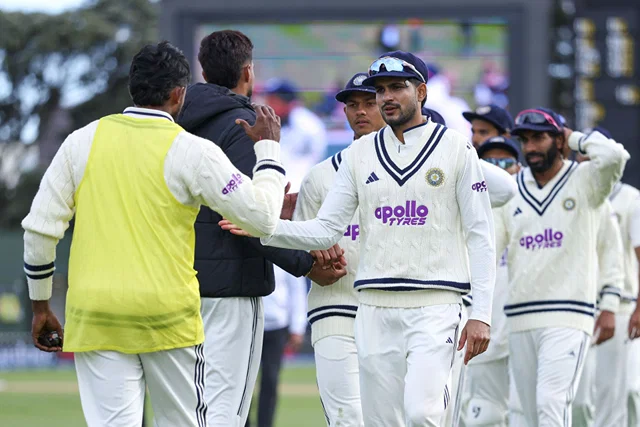
New Zealand fast bowler Matt Henry has backed India captain Shubman Gill‘s decision to shake hands and call an early draw in the first Test at Basin Reserve in Wellington. With the bowlers carrying a heavy workload and the next match approaching quickly, Henry felt there was little reason to continue searching for a late breakthrough.
The first Test ended in a draw after a final day that produced only three wickets. Both teams collected four points each in the World Test Championship (WTC) standings, while India’s hopes of securing a 1-0 series lead through a possible innings victory came to an end.
India had entered the final day in a commanding position after declaring on Day 4 with a substantial 352-run lead. The visitors had close to four sessions available to dismiss New Zealand’s remaining batters and secure victory. However, the pitch remained flat, offering little lateral movement or inconsistent bounce, while India’s new-ball attack failed to create sustained pressure.
New Zealand eventually reached 239-5 after facing 120 overs, holding on for a draw. Although India found a breakthrough when Tom Blundell was caught behind following a successful review, the hosts continued to resist.
Matt Henry backs Shubman Gill’s decision to call an early draw
Glenn Phillips and Daryl Mitchell played a crucial role in ensuring New Zealand survived the final stages. The pair added 63 runs from 258 balls for the sixth wicket, frustrating India’s bowlers and making further progress difficult.
With the partnership continuing and his fast bowlers having already completed a demanding workload, Gill decided against pushing for a late breakthrough. Henry, who understood the situation from New Zealand’s perspective, supported the decision and pointed to the amount of cricket still ahead in the series.
Speaking during the pre-match press conference, Henry said the Indian bowlers had worked hard throughout the match and that protecting their fitness was an understandable consideration.
“Daryl and Glenn were pretty defiant, and I think that the situation, and the (Indian) bowlers had a lot of work as well. Their bowlers had bowled a lot of overs, and it’s a big series with a lot of cricket still to be played. So, the decision was to shake hands, which I think we’re probably not reading too much (into),” Matt Henry said.
Henry’s comments reflected the demanding conditions faced by India’s bowling attack. The visitors had spent long periods in the field, while the surface offered limited assistance to the seamers. With another Test scheduled after a short turnaround, continuing for a few additional overs could have increased the workload without guaranteeing a result.
India’s fast bowlers faced a demanding workload in Wellington
The bowling figures from the first Test highlighted the physical demands placed on India’s pace attack. The Indian fast bowlers delivered 81 of the 120 overs in New Zealand’s second innings. They had also bowled 101 of the 121 overs during the hosts’ first innings.
All four Indian pacers crossed the 40-over mark during the match. According to the supplied figures, there had been only 15 previous instances of Indian fast bowlers reaching that workload since 2020, underlining how demanding the contest had been for the visitors’ seamers.
The flat nature of the pitch made the challenge even greater. Without consistent movement or unpredictable bounce, India’s bowlers had to work hard to create chances. New Zealand’s batters were able to defend patiently, particularly during the partnership between Phillips and Mitchell.
India had created an opportunity through Blundell’s dismissal, but the remaining batters managed to limit further damage. As the final session progressed, the prospect of taking the remaining wickets became increasingly difficult, especially with the bowlers showing signs of fatigue.
Shubman Gill explains why India did not use the extra playing time
Gill also addressed the decision during the post-match presentation. The India captain explained that the condition of the pitch, the workload of the fast bowlers and the short gap before the next Test all influenced his thinking.
He indicated that the situation might have been different if the surface had offered more assistance to the bowlers. However, with all four fast bowlers having delivered close to 50 overs during the match, Gill did not believe that extending the game by another five to 10 overs would significantly improve India’s chances.
“If there was a little bit more in the wicket, maybe, but fast bowlers were tired, they have bowled almost 50 overs in the match, all of them. So, and also keeping, there’s a quick turnaround with the next match in only three days with travel tomorrow. So, we wanted to keep all our bowlers fresh. And, didn’t really think having 5-10 extra overs would have helped that much,” Shubman Gill said during the post-match presentation.
Gill’s explanation highlighted India’s focus on managing the bowling resources ahead of the next assignment. The team faced a quick turnaround, with travel scheduled for the following day and only three days before the second Test. Continuing to bowl in search of a result could have left the pacers with less recovery time.
The captain’s decision therefore reflected a balance between pursuing a possible win and keeping the attack fresh for the remainder of the series. New Zealand’s resistance, combined with the lack of assistance from the pitch, had made a late victory increasingly challenging.
New Zealand and India turn their attention to the second Test
With the opening match ending in a draw, the series remains level at 0-0. Neither side managed to secure an advantage in the two-match contest, leaving the second Test as the final opportunity to claim the series victory.
The teams will now move to Hagley Oval in Christchurch for the second and final Test of the tour. The match is scheduled to begin on Friday, November 27, giving both sides a limited period to recover and prepare.
For India, managing the fast bowlers’ recovery will be an important part of the preparation after their extensive workload in Wellington. The visitors will also look to find ways to create more pressure if the Christchurch conditions provide greater assistance to the seamers.
New Zealand, meanwhile, will take confidence from the resistance shown by Phillips and Mitchell. Their long partnership helped the hosts protect the draw despite India’s strong position at the end of Day 4.
Henry’s support for Gill’s decision also underlines the practical considerations involved in managing players across a closely scheduled Test series. After a demanding first match, both teams will now shift their focus to Christchurch, where the final result will determine the outcome of the tour’s Test series.
For breaking news and live news updates, like us on Facebook or follow us on Twitter and Instagram. Read more on Latest Cricket on thefoxdaily.com.






COMMENTS 0