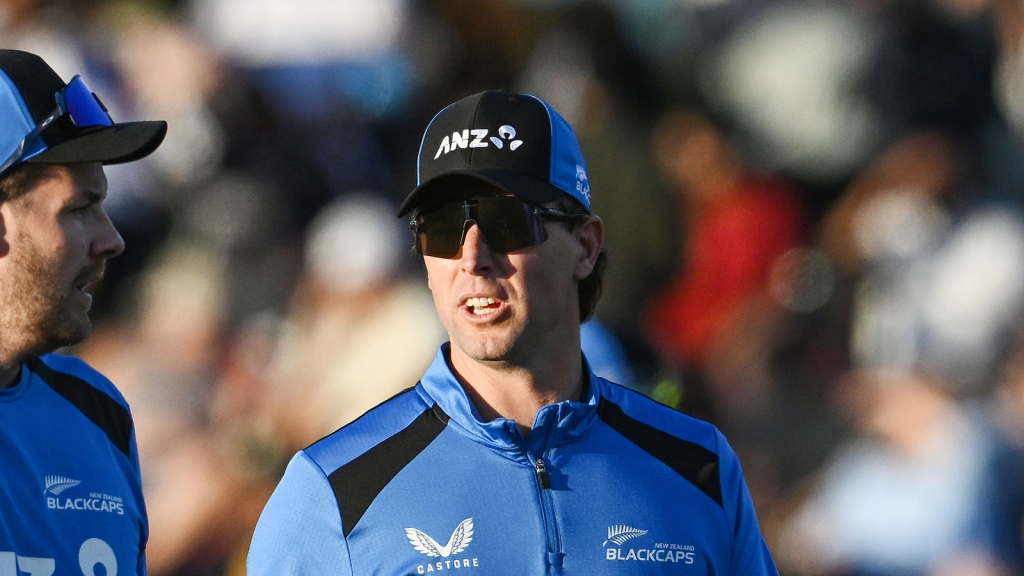
New Zealand have suffered a setback in their ongoing T20I series against India, with fast bowler Matt Henry ruled out of the remaining matches. New Zealand Cricket (NZC) confirmed that Henry will remain in Christchurch before joining the squad for the upcoming ODI series, scheduled to begin on November 4.
Henry bowled only two overs in the second T20I before leaving the field, prompting concerns about his availability for the rest of the series. His absence adds to the workload-management decisions facing New Zealand’s pace attack as the team prepares for a demanding schedule across T20 internationals, one-day internationals and Test cricket.
New Zealand are already trailing India 2-0 in the T20I series. After two defeats in Christchurch, the hosts must adjust their plans for the remaining matches while looking to compete against an Indian side that has demonstrated its ability to chase challenging targets and recover from difficult situations.
The team management will also have to account for the availability of Lockie Ferguson and Kyle Jamieson, whose schedules differ from Henry’s. While Ferguson is expected to rejoin the squad for the final two T20Is, Jamieson is set to play the third match before returning to domestic cricket. These changes make squad depth and the management of fast-bowling workloads important considerations for New Zealand.
Why Matt Henry’s Absence Matters for New Zealand
Henry’s absence is significant because he is one of New Zealand’s established fast bowlers and an important option across international formats. His ability to bowl with the new ball and operate during crucial stages of an innings gives the team flexibility when setting or defending a total.
In T20 cricket, a bowler’s contribution cannot be measured by wickets alone. The ability to restrict scoring, create pressure and force batters into difficult decisions can influence the outcome of a match. Losing an experienced pacer therefore requires adjustments to both the bowling combination and the responsibilities assigned to the remaining players.
However, Henry’s withdrawal should be understood in the context of New Zealand’s broader schedule. The team is preparing for five ODIs and two Test matches against India after the T20I series. Preserving the availability of key fast bowlers across this sequence may be more valuable than asking them to play every match in the shortest format.
New Zealand have not announced that Henry will miss the ODI series. Instead, the decision is for him to remain in Christchurch before assembling with the ODI squad in Auckland on November 2. His inclusion in the subsequent squad does not, by itself, guarantee that he will be fit to play every scheduled match.
What Happened to Matt Henry in the Second T20I?
Henry bowled only two overs in the second T20I on Saturday before leaving the field. New Zealand captain Mitchell Santner subsequently indicated that the bowler had experienced a tight calf. The development prompted further attention to his availability for the remaining matches.
For a fast bowler, calf tightness can affect the ability to run in, land at the crease and complete the repeated movements required during a spell. Fast bowling places substantial physical demands on the lower body, making it important for team medical and coaching staff to assess a player’s condition before deciding whether he should continue competing.
Nevertheless, leaving the field with discomfort does not automatically establish the severity of an injury. The information available in the announcement does not provide a detailed medical diagnosis, a recovery timetable or a confirmed date for Henry’s return to competitive action.
The clearest confirmed development is his withdrawal from the remaining T20Is. New Zealand have arranged for him to join the ODI group instead, leaving the team to manage the immediate demands of the T20I series without one of its established pace options.
New Zealand’s Fast-Bowling Plans After Henry’s Withdrawal
Henry is not the only fast bowler whose schedule has changed. New Zealand are also adjusting the availability of Lockie Ferguson and Kyle Jamieson, reflecting a broader approach to managing their pace resources during a busy international period.
Lockie Ferguson to Miss the Third T20I
Ferguson also left the field during the second T20I. New Zealand have decided that he will not feature in the third match in Wellington before rejoining the squad for the final two games in Auckland and Hamilton.
His schedule differs from Henry’s. While Henry will remain in Christchurch and prepare to join the ODI squad, Ferguson is expected to return for the closing stages of the T20I series.
Ferguson’s availability for those matches gives New Zealand another experienced fast-bowling option. His return could help the team distribute overs more effectively, particularly if the remaining bowlers are asked to take on larger roles in the absence of Henry.
Even so, a planned return to the squad should not be confused with a guarantee of selection or a specific bowling workload. Those decisions will depend on the team’s requirements and the player’s condition.
Kyle Jamieson to Play the Third T20I
Jamieson’s schedule is different again. The fast-bowling all-rounder, who had not played in the first two matches, is set to feature in the third T20I before remaining in Wellington for a domestic Ford Trophy fixture with Canterbury.
As a result, he will miss the final two T20Is against India. He is then expected to return to the national setup for the ODI series.
This arrangement allows New Zealand to use Jamieson for the third match while also giving him an opportunity to participate in domestic cricket. It demonstrates that squad planning involves more than simply selecting the strongest available names for each international fixture.
Players may have different commitments, recovery requirements and preparation needs. Managing those factors becomes especially important when international matches are scheduled across several formats in a relatively short period.
Rob Walter Explains New Zealand’s Workload Management Strategy
New Zealand head coach Rob Walter has emphasised the value of having enough depth in the squad to rotate fast bowlers and manage their workloads.
Walter described the opening matches as competitive contests and said the team had plenty of cricket ahead. He also highlighted the importance of being able to call on different players to help manage the demands on the pace attack and keep them well placed to perform throughout the upcoming schedule.
The approach reflects a practical challenge for international teams. Fast bowlers cannot be expected to operate at maximum intensity indefinitely without consideration of recovery, particularly when a series moves quickly from one format to another.
Workload management does not necessarily mean a player has suffered a serious injury. It can involve adjusting match participation, training demands and recovery periods to reduce physical strain. In Henry’s case, however, his early departure from the second T20I and subsequent withdrawal make his individual fitness an important consideration alongside the team’s wider planning.
New Zealand’s strategy also highlights the importance of squad depth. A team with several capable pace options can distribute responsibilities more easily when one or more players become unavailable. That flexibility can help prevent a single absence from forcing a complete change to the bowling plan.
India Take a 2-0 Lead in the T20I Series
Henry’s withdrawal comes as New Zealand attempt to recover from a difficult start to the series. India won the first two T20Is, taking a 2-0 lead in the five-match contest.
The opening match in Christchurch produced a high-scoring finish. New Zealand posted 225 for four in their 20 overs, but India chased down the target by reaching 230 for six in 19.4 overs, winning by four wickets.
India’s successful chase demonstrated the importance of maintaining composure when pursuing a large total. Even after New Zealand established a substantial score, the Indian batting lineup found a way to finish the match before the final over was completed.
The second T20I provided another close contest. India were under pressure during much of their chase, but Tilak Varma and Nitish Kumar Reddy helped turn the match around. Their contributions allowed the visitors to secure another four-wicket victory and extend their advantage to two matches.
For New Zealand, the defeats present two separate challenges. The first is tactical: the team must identify how to defend totals more effectively and prevent India from building momentum during the closing stages. The second is logistical: it must make those adjustments while managing changes to the availability of several fast bowlers.
Can New Zealand Recover From a 2-0 Deficit?
New Zealand still have three T20Is remaining, giving them opportunities to improve their performances and attempt to reduce India’s lead. However, the margin for error has narrowed considerably after two consecutive defeats.
The hosts will need contributions from both their batters and bowlers. Producing another competitive total may not be sufficient if India continue to find ways to finish difficult chases. Equally, stronger bowling figures will have limited value if New Zealand fail to score enough runs to put the visitors under sustained pressure.
Henry’s absence makes the bowling selection more complicated, but it does not determine the outcome of the remaining matches. New Zealand retain other pace options, and the coaching staff can adjust the balance of the attack according to the conditions and the opposition’s batting approach.
The return of Ferguson for the final two matches could provide additional experience, while Jamieson is available for the third T20I. Other squad members will also have opportunities to take on greater responsibility.
The key question is whether New Zealand can execute their plans more consistently. Against a team that has already chased 226 and won another close contest, controlling the middle overs and the final stages of an innings will be particularly important.
Upcoming India vs New Zealand T20I Schedule
The remaining fixtures will take the teams from Wellington to Auckland and then Hamilton. The change of venue gives New Zealand an opportunity to reset after the first two matches, although the team must also work around its revised bowling plans.
- Third T20I: Wellington, October 27, 2026.
- Fourth T20I: Auckland, October 30, 2026.
- Fifth T20I: Hamilton, November 1, 2026.
After the T20I series, the teams are scheduled to begin a five-match ODI series on November 4. Henry is expected to join the ODI squad in Auckland on November 2, while Ferguson and Jamieson are also scheduled to return to the national setup for the 50-over matches.
The ODI leg will be followed by a two-match Test series beginning on November 19. This sequence makes the management of player fitness particularly relevant, as the demands of T20, ODI and Test cricket differ significantly.
Why the ODI Series Matters for Matt Henry
Henry’s planned return for the ODI leg gives New Zealand a potential boost for the next stage of the tour. His experience in the 50-over format could be valuable as the team moves away from the shorter game and prepares for longer bowling spells and different tactical demands.
ODI cricket places a different emphasis on pace bowling. Fast bowlers must manage their spells across a longer innings, adapt to changing conditions and balance wicket-taking opportunities with control over the scoring rate. The ability to use variations and maintain accuracy becomes important as batters adjust their approach.
However, New Zealand’s priority will be ensuring that Henry is ready to return rather than treating the ODI series as an automatic deadline for recovery. His scheduled reporting date provides a clear point in the team’s plans, but his match availability will depend on his fitness and the decisions made by the coaching and medical staff.
The broader schedule also explains why New Zealand are making changes now rather than attempting to keep every senior fast bowler involved in every T20I. A player who is unavailable for one part of a tour may still have a significant role in its later stages if the team manages his workload carefully.
What Happens Next for New Zealand?
The immediate focus will be on the third T20I in Wellington, where New Zealand will attempt to respond to India’s early dominance. The hosts must make the most of their available resources while adjusting their plans around Henry’s absence and the revised schedules of Ferguson and Jamieson.
Further attention will be on how effectively the remaining bowlers share responsibilities. Changes to the pace attack can affect the use of the new ball, the allocation of overs in the middle and the options available at the death. The coaching staff will need to ensure that the revised combination can cover each phase without placing excessive pressure on individual players.
For India, the situation presents an opportunity to maintain their winning momentum. Their ability to chase substantial targets in the first two matches has put New Zealand under pressure, but the visitors will still need to perform consistently as the series moves to different venues.
For Henry, the next milestone is joining the ODI squad in Auckland on November 2. His withdrawal from the remaining T20Is is confirmed, while his precise recovery progress and readiness for international competition remain separate questions.
New Zealand’s decision ultimately reflects the balance teams must strike between immediate results and longer-term player availability. With the T20I series still underway and ODI and Test cricket approaching, the hosts will need both tactical improvements and careful workload management to make the most of the cricket that remains.
For breaking news and live news updates, like us on Facebook or follow us on Twitter and Instagram. Read more on Latest Cricket on thefoxdaily.com.






COMMENTS 0